
Crawl Space Vapor Barrier in Georgetown, TX
A crawl space vapor barrier is a reinforced polyethylene sheet installed directly on the soil floor – and often up the stem walls – of your crawl space to block ground moisture before it migrates into your home’s framing, insulation, and living areas. In Georgetown, most homes with uncovered or poorly covered crawl spaces are dealing with elevated humidity by spring, and that moisture accelerates wood rot, mold growth, and pest activity faster than most homeowners expect. If your crawl space smells musty, your floors feel soft near the edges, or your energy bills have been climbing without a clear explanation, Crawl Space Encapsulation & Vapor Barrier services from a properly installed vapor barrier is usually the first fix – not the last.
At Topside Attic Insulation Georgetown, we’ve installed vapor barriers in crawl spaces across Georgetown, Leander, Round Rock, and the surrounding Williamson County area since 2016, and every job starts with a written price before anyone touches a tool. That’s not a sales line – it’s Haven Standard Clause 1, and it applies here the same as it does on every other job we do. For a free estimate or to talk through what we found in your crawl space, call us at (254) 970-2136.
This page covers vapor barriers specifically. If you’re also weighing full encapsulation with a conditioned air supply, drainage matting, or a dehumidifier, our Crawl Space Encapsulation & Vapor Barrier in Georgetown page covers the broader scope.
When You Need a Crawl Space Vapor Barrier
Georgetown’s climate – hot, humid summers and a clay-heavy soil profile that holds water long after a rain – creates the conditions that turn a damp crawl space into an active moisture problem. Here are the signs we see regularly on jobs across Sun City, Berry Creek, Teravista, and older neighborhoods near the Square:
- A persistent musty odor inside the home. If the smell is strongest near the floor or in closets on the first floor, it’s usually rising from below. Uncovered soil in a crawl space exhales moisture vapor continuously, and that air has to go somewhere.
- Soft or springy spots in hardwood or engineered floors. The subfloor sits directly on the joists above the crawl space. When those joists absorb moisture year after year, they swell, then dry, then begin to lose structural integrity. We’ve documented this in crawl spaces throughout the Madrone Canyon and Cimarron Hills areas after consecutive wet springs.
- Visible mold or efflorescence on the foundation walls. White mineral deposits (efflorescence) on block or concrete walls are ground moisture working its way through the masonry. Mold spores follow the same path.
- High indoor humidity readings despite running the HVAC. If your system is doing its job and your indoor humidity is still above 55-60% in summer, the crawl space is a likely contributor. Ground moisture bypasses the air handler entirely unless it’s blocked at the source.
- Deteriorating existing vapor barrier. Older polyethylene sheeting – anything thinner than 6-mil, or the standard 4-mil sheets common in Georgetown homes built in the 1980s and 1990s – tears easily, sags at the seams, and stops working as a moisture barrier long before it looks visibly damaged.
- Evidence of pest activity in the crawl space. Subterranean termites and rodents favor damp, dark spaces with exposed soil. A missing or failed vapor barrier is one of the most consistent features we document in crawl spaces that have also had pest problems.
Our Crawl Space Vapor Barrier Process
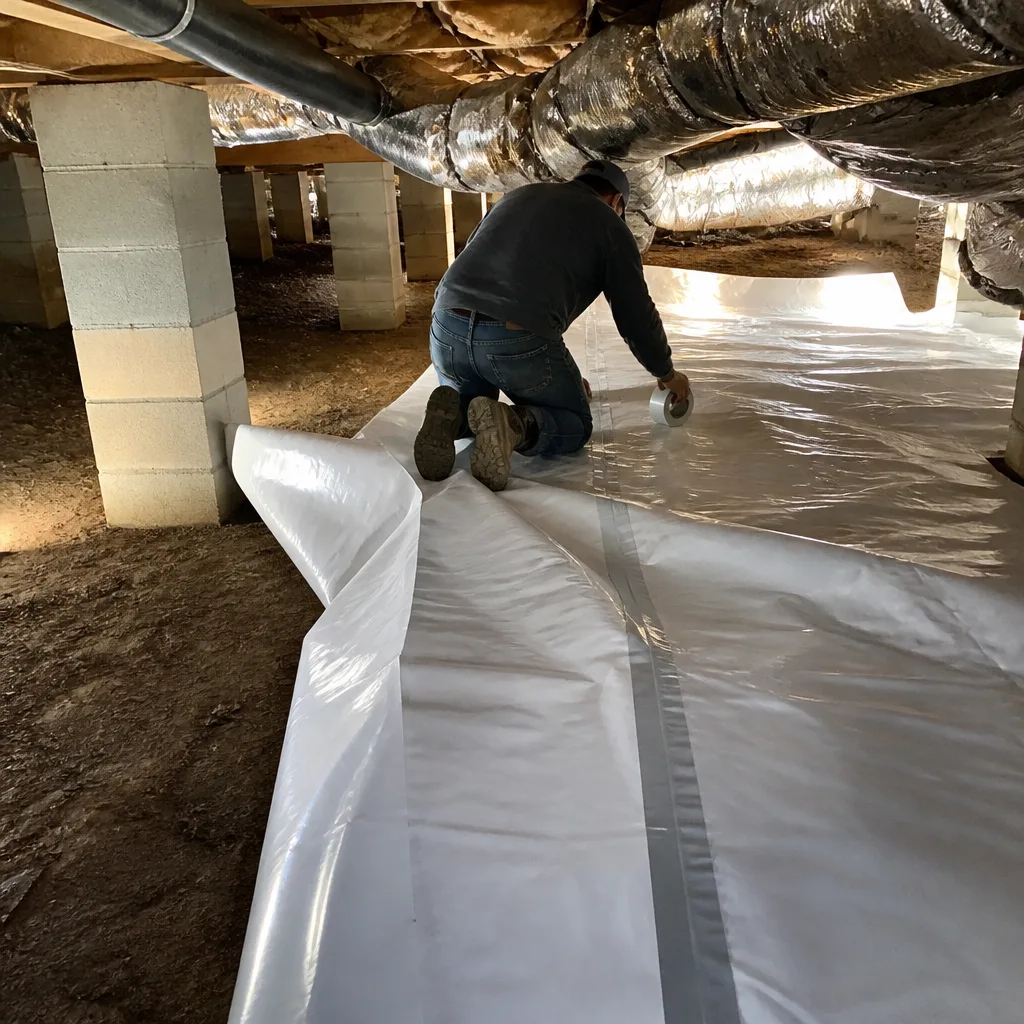
We don’t install a vapor barrier and leave. What you get is a documented, measured result – photos before and after, a written scope, and a crew that has done this work in Georgetown’s specific soil and climate conditions since 2016. Here’s the process:
- Crawl space inspection and documentation. Before any material is cut or moved, we photograph the existing conditions – the current barrier (if any), the soil, the joists, the foundation walls, any visible mold, standing water, or pest evidence. You receive this photo record. It’s not available on request; it’s included on every job under the Haven Standard.
- Debris removal and site prep. Rocks, construction debris, old torn sheeting, and organic material are cleared from the soil floor. A vapor barrier laid over debris doesn’t seal – it bridges gaps and tears. This step adds time, but skipping it produces a failure within two to three years.
- Moisture reading and baseline documentation. We take wood moisture content readings on the floor joists and subfloor before installation begins. In Georgetown crawl spaces after a wet season, we regularly read wood moisture content above 19% – the threshold at which mold becomes likely. Those baseline numbers go into your job record.
- Barrier installation – floor and stem walls. We install a minimum 12-mil reinforced polyethylene vapor barrier across the full crawl space floor, lapped at seams by at least 12 inches and sealed with a compatible seam tape. The barrier runs up the stem walls and is mechanically fastened to the foundation – not just leaned against it. This is where a lot of discount installations cut corners; a barrier that ends at the base of the stem wall allows vapor to bypass the sheeting entirely and enter the crawl space through the wall-floor junction.
- Penetration sealing. Pipes, piers, and columns that pass through the barrier are individually cut to and sealed so there are no open gaps around them. Each one is a potential moisture path if left open.
- Post-installation photo record and written summary. Once the barrier is down and sealed, we photograph the completed installation from multiple angles and document it in your job record. You’ll be able to see exactly what was installed and where before we leave your property.
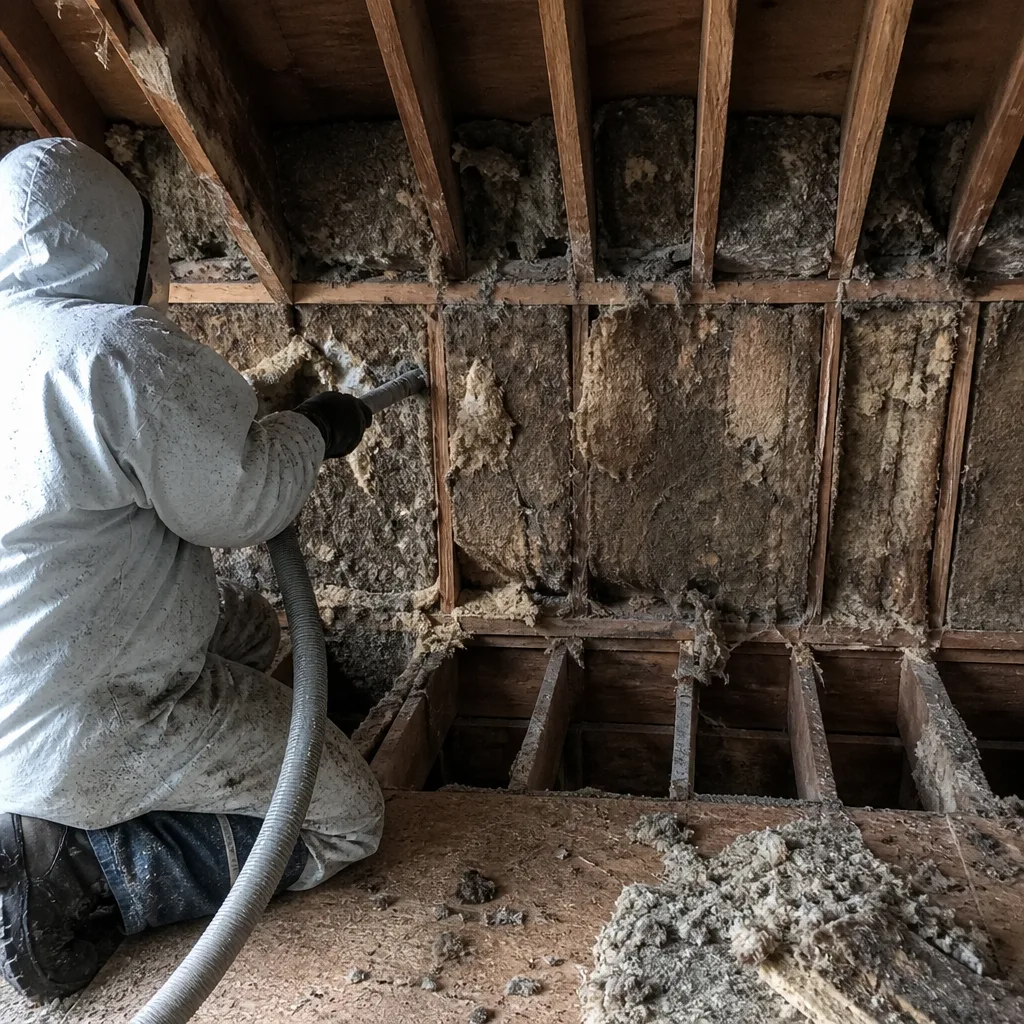 Before
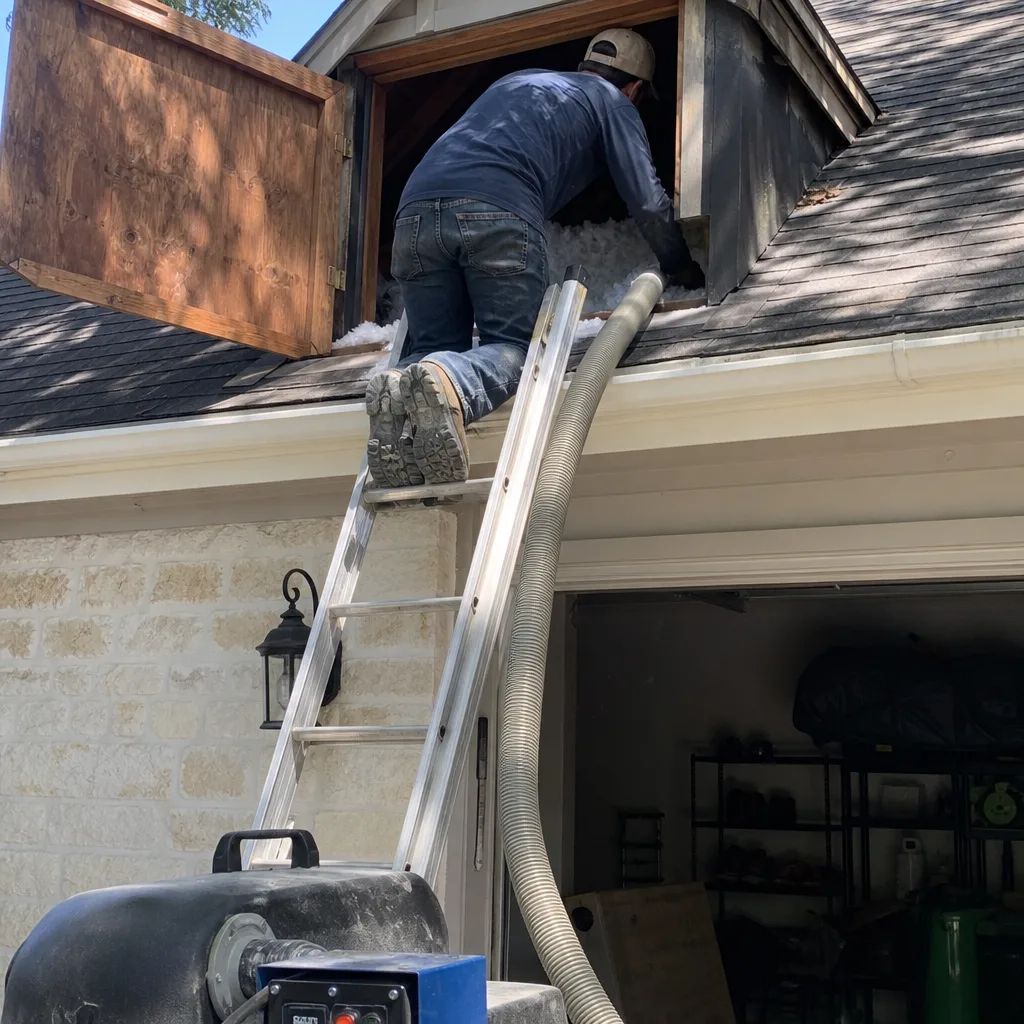 After
AfterCrawl Space Vapor Barrier Pricing in Georgetown
Crawl space vapor barrier installation in Georgetown typically runs between $1,200 and $4,500 for most residential jobs. Here’s how that range breaks down:
- Small crawl space (under 800 sq ft): $1,200 – $1,800. Common in older Georgetown homes near the downtown Square and along Williams Drive.
- Mid-size crawl space (800 – 1,500 sq ft): $1,800 – $3,000. The most common range for homes in Sun City, Serenada, and Berry Creek.
- Large or complex crawl space (1,500+ sq ft, or with significant prep work): $3,000 – $4,500+. Includes homes where the old barrier needs full removal and disposal, where standing water or debris adds significant prep time, or where the stem walls require additional sealing material.
What drives cost up or down:
- Barrier thickness and grade. A 12-mil reinforced barrier costs more than a 6-mil sheet, and it’s not a cosmetic difference – the thicker material resists puncture from rocks and foot traffic during future HVAC or plumbing service calls, and it holds its seal at seams for far longer.
- Crawl space height and access. A 36-inch clearance is very different to work in than an 18-inch clearance. Low-clearance crawl spaces take longer and cost more to install correctly.
- Existing barrier removal. If there’s an old torn barrier that needs to be pulled out and disposed of, that’s typically $200 – $600 added to the base price depending on volume.
- Stem wall coverage. Running the barrier up the stem walls and mechanically fastening it adds cost but also adds significantly to moisture control performance. We’ll tell you plainly whether your crawl space warrants it.
- Mold remediation or wood treatment. If we find active mold on the joists or subfloor during inspection, that’s a separate scope. We document it, explain what we found, and you decide how to proceed – that scope will have its own written price before any work starts.
Every estimate from Topside Attic Insulation Georgetown is a flat, written price – not a range you get to negotiate down after the crew arrives. That’s Haven Standard Clause 1. If you’ve already received a written estimate from another contractor, call us at (254) 970-2136 and we’ll review it with you at no charge – that’s our Free Second Opinion offer, and it applies to any written competing quote.
FAQs – Crawl Space Vapor Barrier
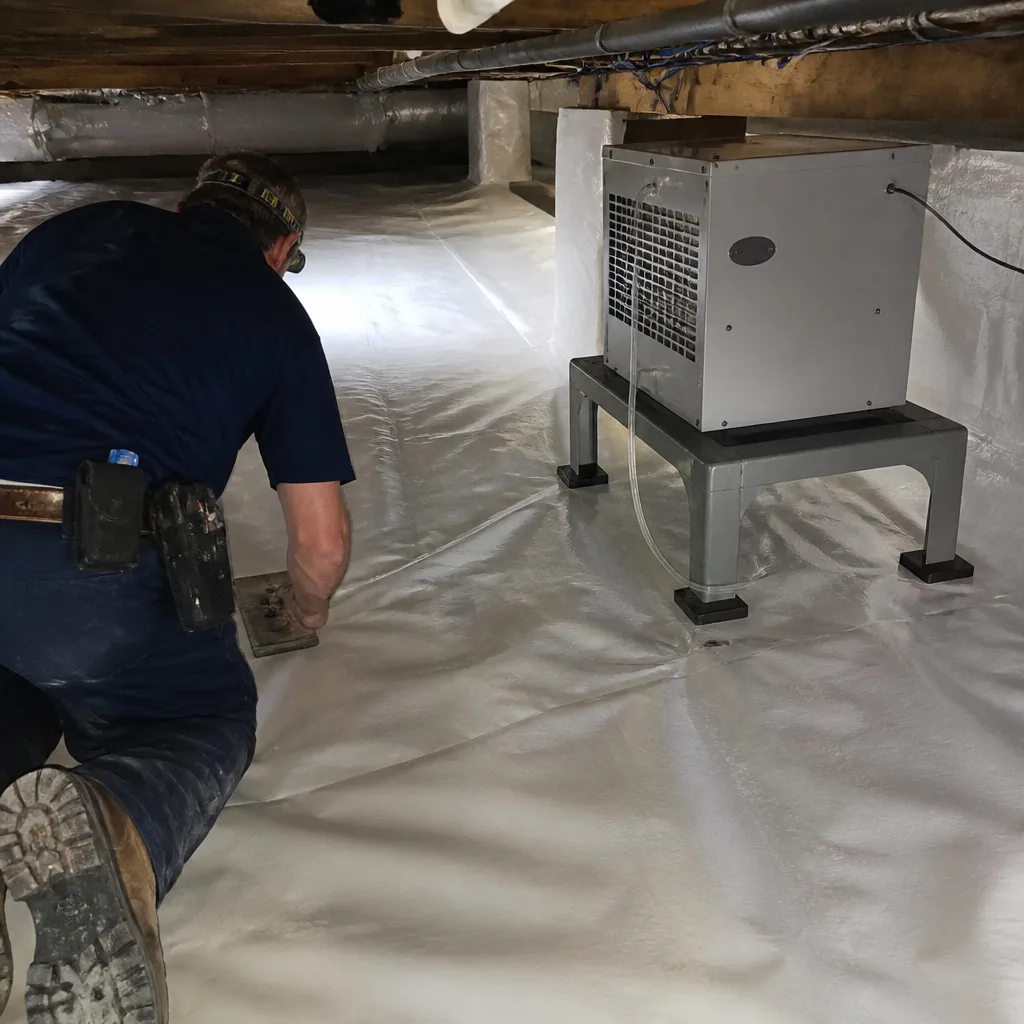
What thickness of vapor barrier does Georgetown, TX actually need?
We pair our Crawl Space Insulation with a minimum 12-mil reinforced polyethylene barrier on Georgetown crawl spaces, and we won’t go thinner. The 6-mil and 8-mil sheets you’ll see quoted at lower prices meet minimum code in some jurisdictions, but they tear around rocks, HVAC drain pans, and pier footings – all of which are common in Georgetown crawl spaces. Once torn, moisture moves through the gaps freely, and the repair often costs as much as the original installation. Georgetown’s soil also retains Blackland Prairie clay in many neighborhoods, which holds water at the surface longer after rain events; that sustained moisture load is harder on lighter sheeting. For any job we complete, we can show you exactly what was installed in your documented photo record before we leave. Call (254) 970-2136 for a written estimate that specifies the material grade.
Is a vapor barrier the same as full crawl space encapsulation?
No – a vapor barrier and full encapsulation are related but distinct scopes. A vapor barrier covers the ground floor and stem walls to block moisture vapor from the soil. Full encapsulation goes further: the crawl space is sealed from the outside environment (vents closed or sealed), often with a conditioned air supply or a dedicated dehumidifier added to keep the air inside the crawl space dry year-round. In many Georgetown homes with vented crawl spaces, a vapor barrier alone is a meaningful improvement. Whether full encapsulation makes sense depends on your crawl space’s current air flow configuration, the degree of existing moisture damage, and your goals. Our Crawl Space Encapsulation & Vapor Barrier in Georgetown page covers the full scope, or call (254) 970-2136 and we’ll explain the difference based on what we actually find in your crawl space.
How long does a crawl space vapor barrier last?
A properly installed 12-mil reinforced barrier, sealed at seams and mechanically fastened at the stem walls, typically lasts 20 years or more under normal conditions. The failures we see on older Georgetown properties are almost always tied to one of three things: undersized material (4-mil or 6-mil) that tore within a few years, unsealed seams that separated as the soil shifted seasonally, or barriers that were laid but not run up the stem walls – leaving the wall-floor junction open. The 365-Day Done Right Promise applies to every job we complete, and the written scope you receive before work starts describes exactly what was installed so there’s no ambiguity later.
Can I install a crawl space vapor barrier myself?
The installation itself isn’t physically dangerous the way working around a live electrical panel or high-tension spring is, but the details that determine whether it actually works are easy to get wrong. Seam laps need to be a minimum of 12 inches and properly taped with a compatible adhesive. The barrier needs to be pulled tight against the foundation and fastened – not just draped. Every pipe, pier, and column penetration needs to be cut and sealed individually. And the stem wall coverage needs to terminate above the soil line, not at it. A barrier that’s loosely laid with open seams is not much better than no barrier at all; we see that regularly in Georgetown crawl spaces that were “done” a few years ago by a previous owner. If you’re comfortable doing a careful job and want to do it yourself, we’ll tell you honestly what the spec should be. If you’d rather have it done with a written scope and a photo record, call (254) 970-2136.
What You Walk Away With
When a Topside Attic Insulation Georgetown crew finishes a vapor barrier job, you have three things in hand: a documented photo record of the completed installation, a written scope that describes exactly what was installed (material grade, seam overlap spec, stem wall coverage), and the 365-Day Done Right Promise in writing. If something isn’t right within that year, we make it right – no ambiguity about what “right” means, because it’s already written down before work starts.
We’ve completed this work in crawl spaces across Georgetown – from Sun City and Berry Creek to older homes near the Georgetown Square – and the before-and-after wood moisture readings we document tell the story more clearly than anything we could say about our own work. A joist reading 22% moisture content before installation and 14% six weeks after the barrier is in – that’s the number that matters.
If you’re comparing estimates, bring us a competing written quote. We’ll read it with you, explain what’s specified and what isn’t, and give you a written price on the same scope. That’s the Free Second Opinion, and it costs you nothing.
Call (254) 970-2136 to schedule your free estimate. A live person answers – no voicemail, no callback window. You’ll get a named technician, a text when they’re on the way, and a written price before anyone lifts a tool. That’s how every job at Topside Attic Insulation Georgetown starts, and it’s been that way since we opened in 2016. We’re part of the broader home services network dedicated to building-envelope performance – and crawl space moisture control is one of the most impactful places to start.
Written by Wes Okafor, Owner at Topside Attic Insulation Georgetown, serving Georgetown.