
Crawl Space Insulation in Georgetown, TX
Crawl space insulation in Georgetown, TX typically runs between $1,800 and $4,500 depending on square footage, current insulation condition, and whether air sealing is completed first. Most Georgetown homes with a standard crawl space under 1,500 square feet land in the $2,200 to $3,400 range when the job is scoped and priced correctly before anyone picks up a tool.
At Topside Attic Insulation Georgetown, we treat crawl space insulation as one half of a two-part job. The other half – air sealing – always comes first. Insulating over an unsealed crawl space is like putting a down jacket on a screen door: the R-value on the label means nothing if conditioned air is still moving freely through every rim joist gap and floor penetration. That sequence – seal first, then insulate – is how we’ve approached every crawl space job since 2016, and it’s reflected in the before-and-after numbers we document for every applicable job.
This page is part of our full Crawl Space Encapsulation & Vapor Barrier in Georgetown service. If you’re trying to figure out whether insulation alone is enough or whether full encapsulation makes more sense for your home, we can walk through that on the phone or in person – no obligation, no sales pressure, and a written price before any work starts. Call us at (254) 970-2136. A live person answers, every time.
When You Need Crawl Space Insulation
Not every crawl space problem announces itself clearly. Some show up as a $280 electricity bill in August. Others show up as a floor that feels cold in January even when the thermostat reads 70. Here are the concrete signs that crawl space insulation is likely the issue – or part of it:
- Floors that feel cold or uneven in winter. Georgetown winters are mild compared to the Texas panhandle, but a January low in the mid-30s is enough to pull heat right through an uninsulated subfloor. If the kitchen tile or hardwood near the exterior walls feels noticeably colder than the center of the room, the crawl space below is the usual reason.
- Higher-than-expected cooling costs through summer. The clay-heavy soils in Georgetown and many parts of Williamson County hold moisture and release it slowly. An uninsulated crawl space in this area acts as a heat sink that works against your air conditioner from May through September.
- Existing insulation that has fallen, sagged, or gotten wet. Batts installed between floor joists are supposed to stay in contact with the subfloor. When the vapor barrier fails or ground moisture gets high enough, batt insulation absorbs water, sags, and eventually drops entirely. At that point it’s providing near-zero R-value and may be trapping moisture against the wood.
- Moisture or mold smell coming up through floors or HVAC vents. If you can smell it, the crawl space humidity is already elevated. Insulation doesn’t fix that on its own – air sealing and a proper vapor barrier come first – but deteriorated or absent insulation makes the humidity problem spread faster into the conditioned space.
- A home built before 1990 with original crawl space insulation. Many Georgetown homes in the Westinghouse Road corridor, around Berry Creek, and in older sections near Williams Drive were built with batt insulation that has never been replaced. After 30-plus years, that insulation is typically well below its original R-value even if it hasn’t fallen.
- Recent encapsulation without a new insulation layer. Encapsulating a crawl space – sealing the ground and walls with a liner – changes how the space is conditioned. If the original floor insulation was left in place after encapsulation, it may now be in the wrong position or the wrong type for the new thermal boundary. We see this frequently on older Georgetown homes where encapsulation was done without updating the insulation strategy.
Our Crawl Space Insulation Process
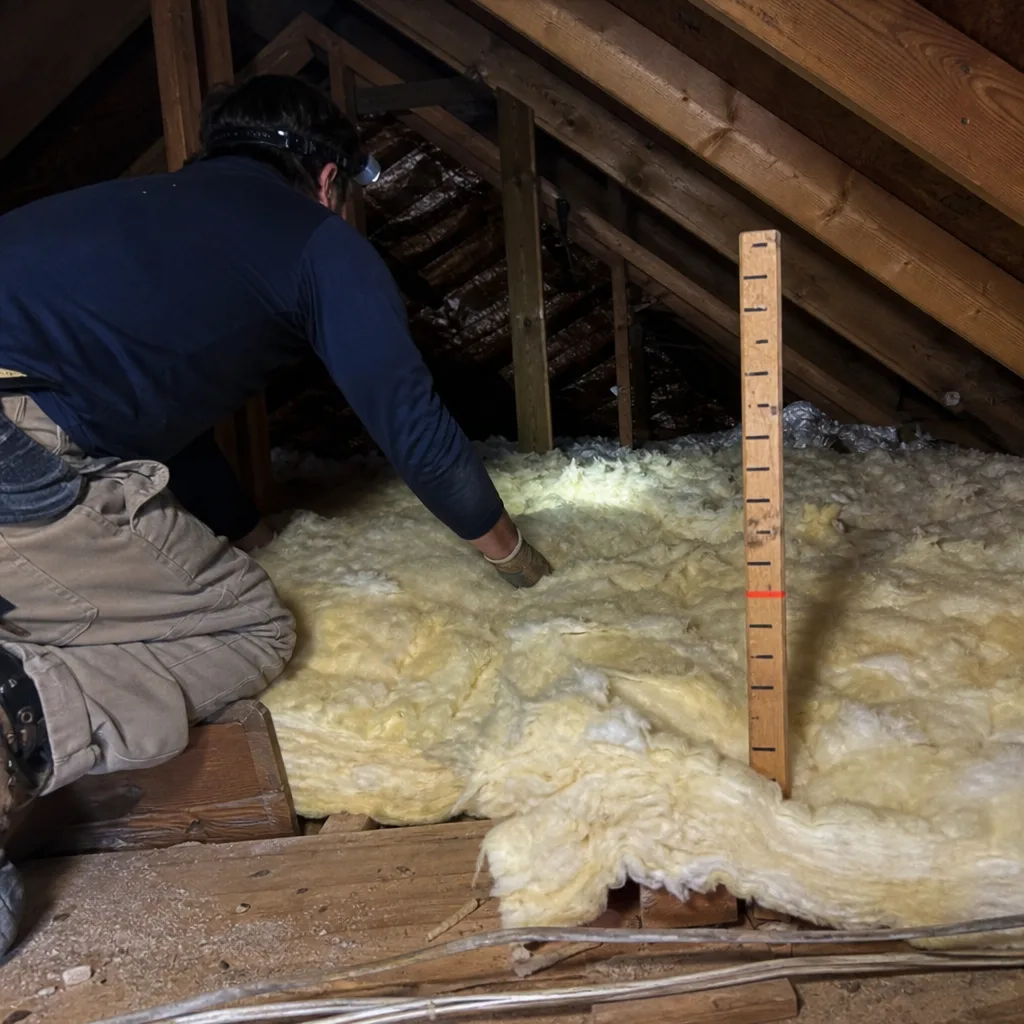
The steps below reflect how we actually work – in sequence, with documentation at each stage. Under Haven Standard Clause 1, you receive a written price and written scope before we begin. The process doesn’t start until you have that document in hand.
-
Written Scope and Price Before Anything Starts
Wes Okafor or a designated technician visits the property, accesses the crawl space, and measures the square footage, joist depth, current insulation condition, and any visible air-sealing gaps. You receive a flat written price and a written scope of work. No ranges, no “it depends after we start.” If the scope changes after we open the wall, we stop and update the written price before continuing.
-
Air Sealing at the Rim Joist and Floor Penetrations
This is the step most insulation contractors skip or treat as optional. We don’t. Before any insulation material goes in, we seal the rim joist – the framing that sits on top of the foundation wall – with closed-cell spray foam, which functions simultaneously as an air barrier and a thermal barrier at the perimeter. Pipe penetrations, HVAC chases, and electrical runs through the floor are sealed with appropriate materials before we move to the next step. On applicable jobs, we record a blower-door reading at this stage so there’s a documented baseline.
-
Removal of Damaged or Degraded Existing Insulation
If existing batts have fallen, absorbed moisture, or dropped below a functional R-value, we remove them before installing new material. Insulating over compromised insulation compounds the problem. Removed material is bagged and hauled off the property on the same day.
-
Installation of the New Insulation Layer
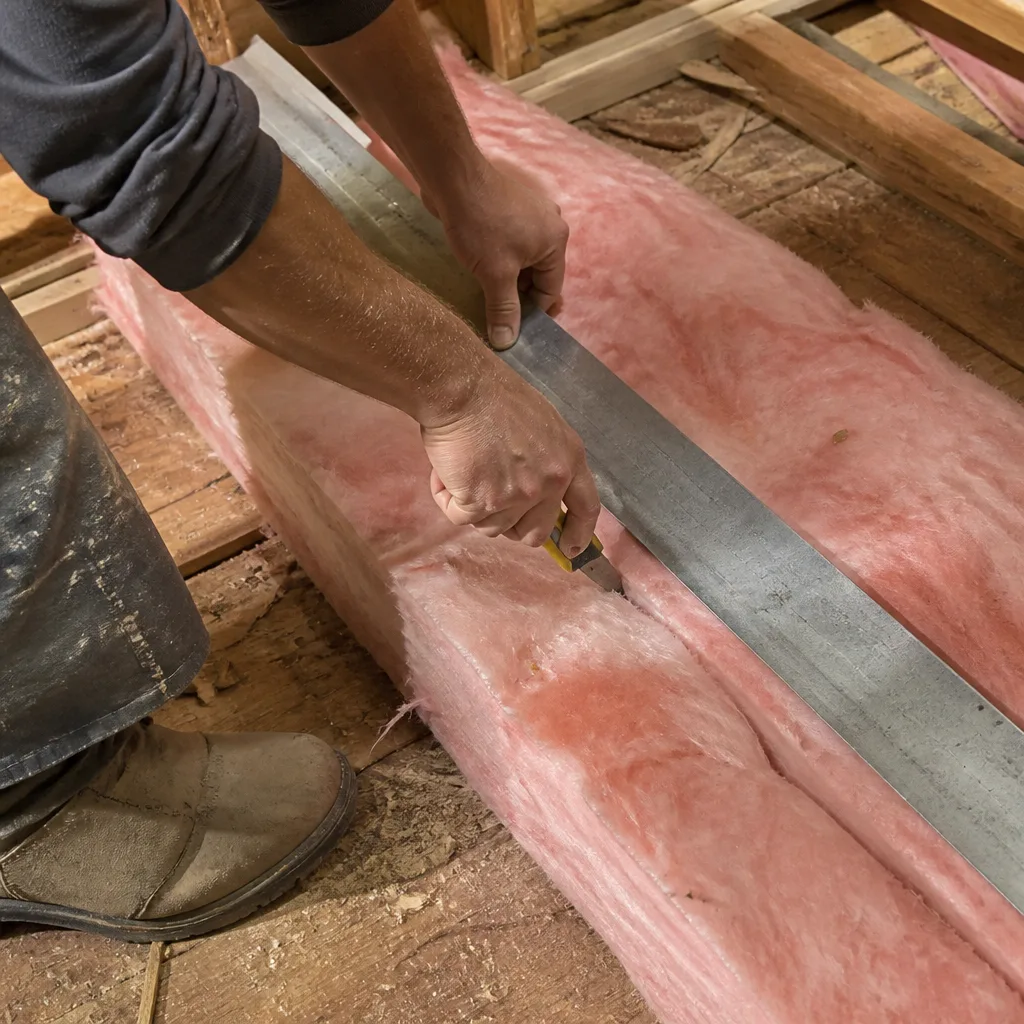
For most Georgetown crawl spaces with a vented configuration, we install friction-fit or mechanically fastened rigid mineral wool boards or unfaced batt insulation between floor joists, depending on joist depth and the project scope. For encapsulated (conditioned) crawl spaces, the insulation strategy shifts to the perimeter walls rather than the floor, and we use closed-cell spray foam or rigid foam board along the foundation walls. We source materials from brands including Rockwool and CertainTeed, chosen for the job conditions rather than for any preferred-vendor arrangement.
-
Blower-Door Verification on Applicable Jobs
A blower-door test – a pressurization measurement that shows, in one number, how much air the building envelope is losing – is run after air sealing is complete on applicable jobs. The before reading and after reading are both recorded and included in the job documentation. You can see, in actual CFM50 numbers, what changed.
-
Documented Photo Record and Written Warranty Delivery
We photograph the crawl space at the start, during air sealing, and after insulation is complete. Those photos are part of the job record you receive when we leave. The written warranty and the blower-door readings (where applicable) are delivered at closeout. Under the 365-Day Done Right Promise, if anything about the work isn’t right within a year of completion, we make it right – in writing, with no separate service call fee for the correction.
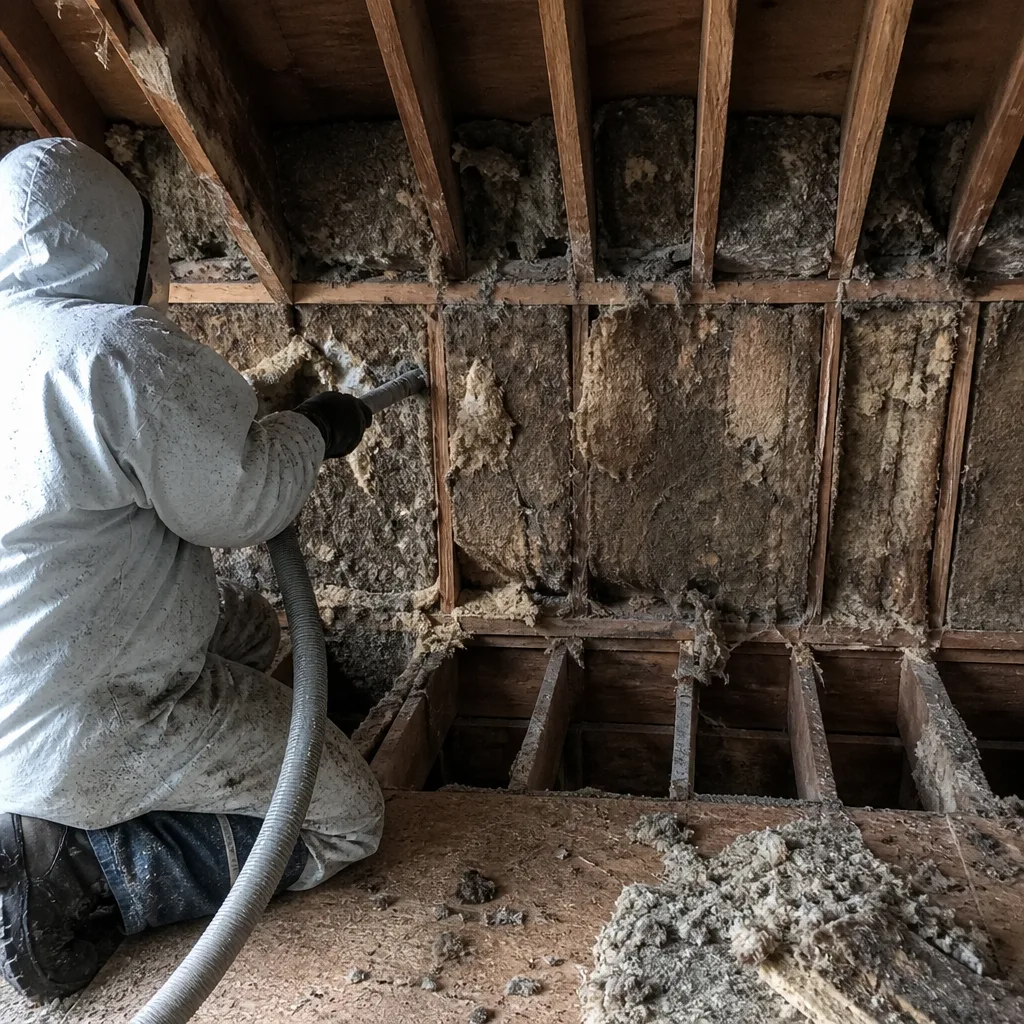 Before
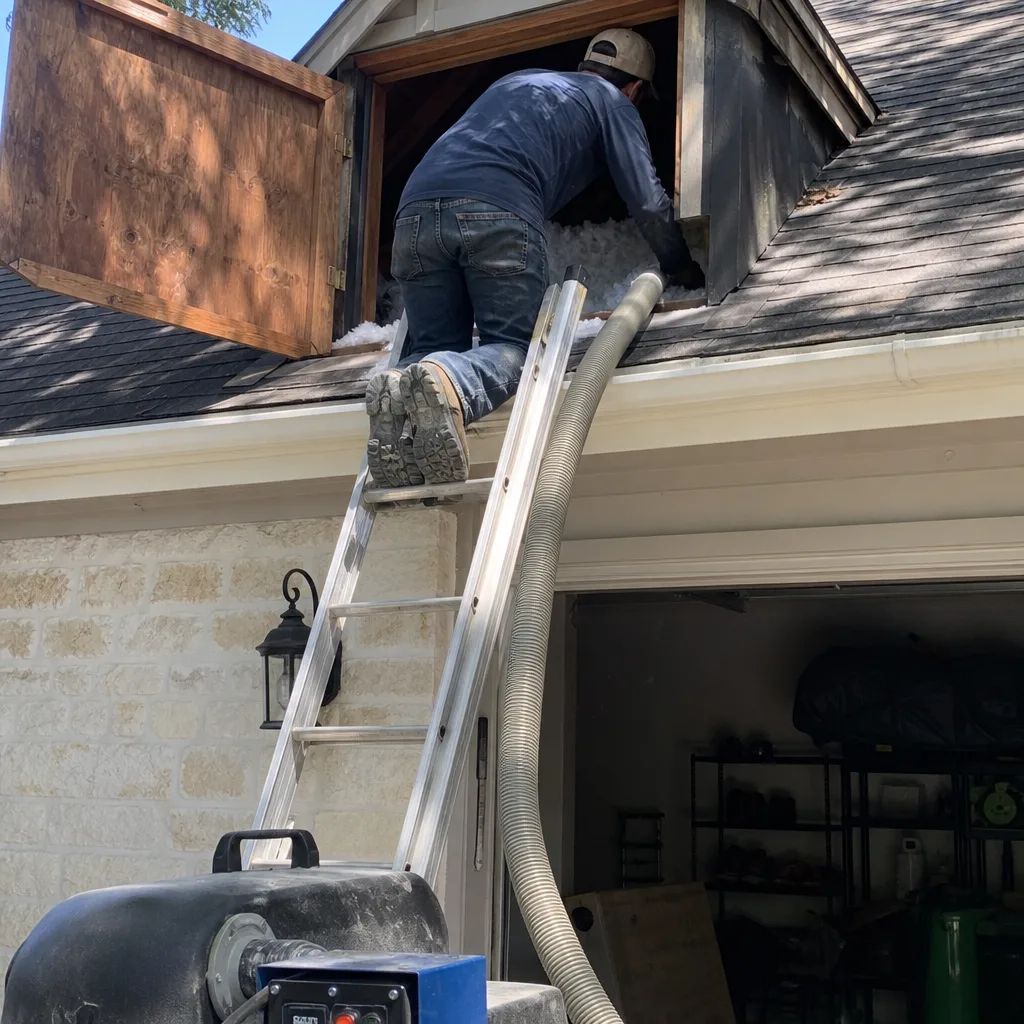 After
AfterCrawl Space Insulation Pricing in Georgetown
Crawl space insulation pricing in Georgetown depends on four main factors: the square footage of the crawl space, whether air sealing is included (it should be), whether old insulation needs to be removed, and whether the crawl space is vented or encapsulated with a vapor barrier. The table below gives honest ranges based on jobs we’ve completed in Georgetown and the surrounding Williamson County area.
| Scope | Typical Price Range |
|---|---|
| Air sealing + batt insulation, crawl space under 800 sq ft, no removal needed | $1,800 – $2,400 |
| Air sealing + batt insulation, crawl space 800-1,500 sq ft, no removal needed | $2,400 – $3,400 |
| Removal of existing damaged insulation, 800-1,500 sq ft | add $400 – $800 |
| Rim joist closed-cell spray foam (included in air sealing above) | included in air sealing line |
| Perimeter foam board for encapsulated crawl space, 800-1,500 sq ft | $2,800 – $4,500 |
| Blower-door test (before and after) | included on applicable jobs |
These are ranges, not guarantees. The only number that binds us is the one on your written scope document – which you receive before the job begins, not after. A few things that push costs toward the higher end in Georgetown specifically:
- Limited crawl space access. Older Georgetown homes – particularly those built in the 1970s and 1980s on the west side of town near the San Gabriel River – sometimes have access hatches that require a technician to work in tight conditions throughout, which adds labor time.
- Existing vapor barrier failure. If ground moisture has been unchecked, there’s often mold remediation or barrier replacement required before insulation goes in. That’s a separate scope and a separate written price.
- Joist depth. A 2×8 joist gives you room for an R-25 batt. A 2×6 limits you to R-19. Homes built before 1980 in Georgetown frequently have shallower joists, which sometimes means a combination of batt and rigid board to hit the target R-value.
We offer a Free Second Opinion on any written estimate. If you have a competing quote in hand, bring it to us – or email it – and we’ll read through it with you, line by line, and tell you exactly what’s there and what’s not. No charge for that conversation, no obligation.
FAQs – Crawl Space Insulation in Georgetown, TX
How much does crawl space insulation cost in Georgetown, TX?
Most crawl space insulation jobs in Georgetown run between $1,800 and $4,500, with the majority of standard vented crawl spaces (under 1,500 square feet, no existing insulation removal) landing in the $2,200 to $3,400 range when air sealing is included. The single biggest variable is whether old insulation needs to come out first – that adds $400 to $800 depending on square footage. Your written price is confirmed before any work starts. Call (254) 970-2136 to schedule a free on-site estimate.
What R-value does a crawl space need in Georgetown, TX?
For a vented crawl space in Central Texas, the 2021 International Energy Conservation Code – which Williamson County has adopted – requires a minimum of R-19 for floor insulation over unconditioned spaces, though R-25 or R-30 is achievable in standard 2×10 joist bays and provides a measurable reduction in floor-level heat loss during Georgetown’s winter low periods. For encapsulated (conditioned) crawl spaces, the thermal boundary shifts to the perimeter foundation walls, where R-10 continuous rigid foam is the code minimum and R-15 is what we recommend for this climate zone. If you’re unsure which configuration your crawl space is in, that’s the first thing we assess during a site visit.
Can you insulate a crawl space without encapsulating it first?
Yes – and many Georgetown homes have vented crawl spaces where floor-joist insulation is the correct approach without full encapsulation. The two methods serve different purposes: encapsulation (sealing the ground and walls with a liner) controls ground moisture; floor insulation controls heat transfer through the subfloor. That said, if your crawl space has active moisture problems, installing insulation before addressing the moisture source is a mistake – the insulation absorbs it, loses R-value, and can accelerate wood damage. We assess both conditions on every visit. For a full picture of how crawl space encapsulation and insulation interact, see our Crawl Space Encapsulation & Vapor Barrier in Georgetown page.
How long does crawl space insulation installation take?
A standard Georgetown crawl space job – air sealing followed by insulation, on a home under 1,500 square feet – typically takes one day. If old insulation removal is on the scope, add two to four hours. Larger homes or crawl spaces with restricted access can run into a second day. We don’t estimate completion times loosely and then expand on-site; the written scope you receive before we start includes a projected time frame, and if that changes materially, you’re told before hours extend.
Why Topside Attic Insulation Georgetown
We’ve completed work on more than 9,000 homes since 2016 – every one of them with a written price before any work started and a documented photo record when the crew left. Wes Okafor built Topside Attic Insulation Georgetown on one conviction: that air sealing and insulation are a system, not a sequence of upsells. Every technician we send is background-checked and uniformed. When you call (254) 970-2136, a live person picks up. Not a voicemail. Not an answering service that schedules a callback in three to five business days.
The materials we use – including Rockwool for mineral wool applications and CertainTeed or Icynene products where spray foam is the right call – are chosen based on job conditions. We don’t have a preferred-vendor arrangement that steers us toward a product that’s easier for us to install but not ideal for your crawl space.
If you’ve already received a written estimate from another contractor and want a second set of eyes on it, bring it. That review is free, and it comes with no pressure to book with us. Under the Haven Standard, the documented price is what protects you – whoever you ultimately hire.
To get a written price for crawl space insulation in Georgetown, call Wes Okafor’s team at (254) 970-2136. You can also reach us through the Topside Attic Insulation Georgetown home page. We’ll confirm a visit time, send you a named technician with a text when they’re on the way, and have a written scope in your hands before we touch anything.
Written by Wes Okafor, Owner at Topside Attic Insulation Georgetown, serving Georgetown.