
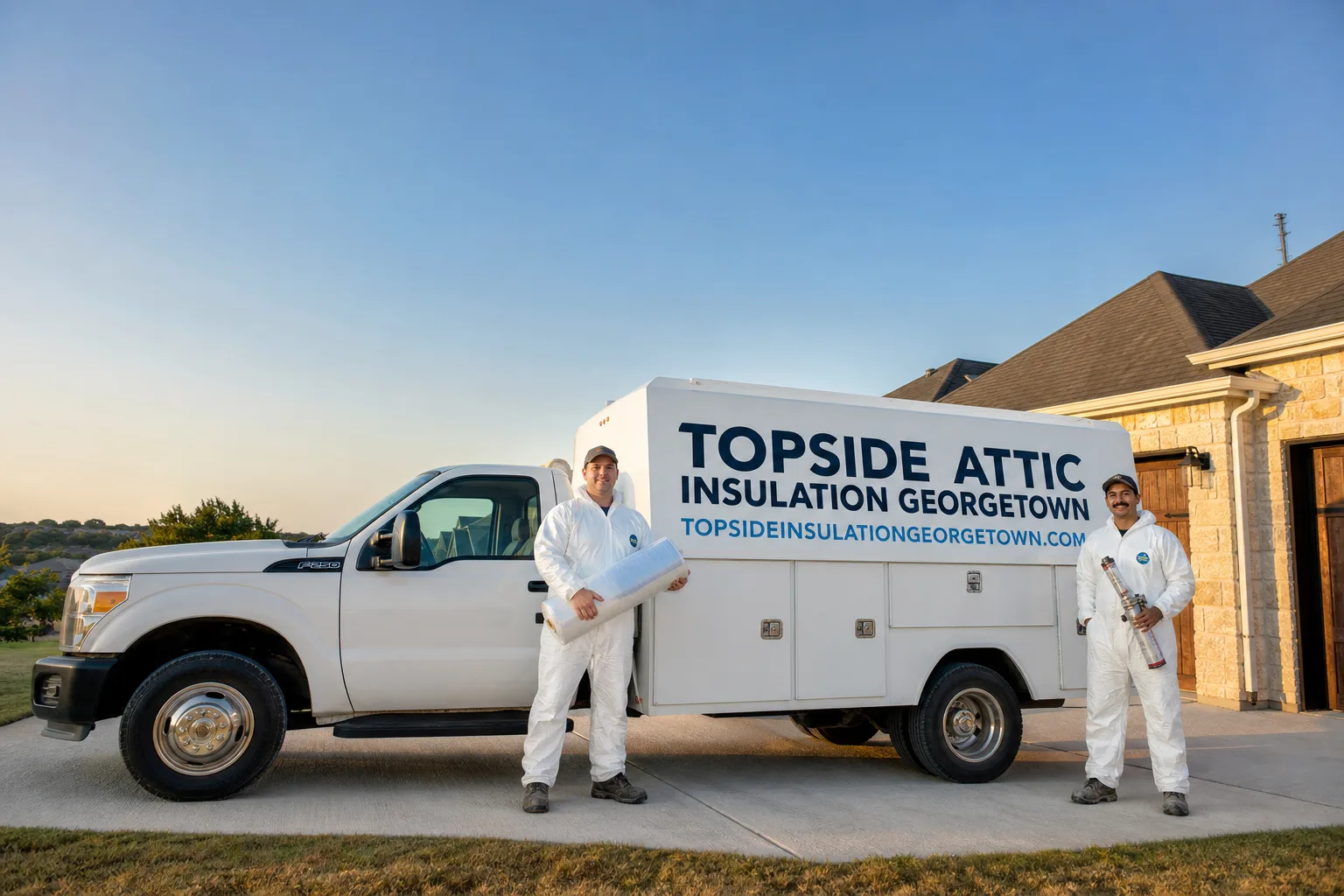
Trusted Attic Air Sealing for Georgetown Homeowners
Attic air sealing in Georgetown typically costs $1,200-$3,800 for a complete job, depending on attic size and the number of penetrations that need sealing. Most homes in Georgetown’s 2015-2025 builds have significant leakage through top plates, can lights, and duct boots that insulation alone cannot fix. We’re Topside Attic Insulation Georgetown, and we’ve sealed and insulated over 9,000 homes since 2016 under The Haven Standard - every one starting with a written price and ending with a documented record.
Georgetown’s combination of hot, humid summers and occasional hard freezes puts unusual stress on attic assemblies. We’ve found that homes in neighborhoods like Sun City, Serenada, and the Georgetown Village area often leak 30-50% more conditioned air than their owners realize, simply because the builder skipped proper Attic Air Sealing in Georgetown before blowing in insulation. That unconditioned attic air - 140°F in July, 25°F in January - flows straight into your living space through gaps you cannot see from below. We fix that with targeted sealing of the attic floor plane, followed by blower-door verification so you know exactly what changed.
Our crews are background-checked and uniformed, and a live person answers our phone 24/7 at (254) 970-2136. Same-day appointments are often available for Georgetown homeowners, and every estimate includes a written price before any work starts - no exceptions, no surprises.
What Our Attic Air Sealing Service Includes
Attic Floor Air Sealing
The attic floor is the primary pressure boundary between your conditioned living space and the unconditioned attic. In most Georgetown homes, this boundary is riddled with gaps at the perimeter, around plumbing chases, and where interior walls meet the ceiling. We seal these leaks with fire-rated caulk, spray foam, and rigid blocking - materials we select based on the gap size and what’s around it. A typical 2,000-square-foot attic floor in Georgetown takes our crew 4-6 hours to seal properly, and we don’t leave until the blower-door test confirms the reduction.
When do you need this? If your energy bills spike every July and your upstairs rooms never cool evenly, the attic floor is almost certainly leaking. We’ve seen homes in Georgetown’s Teravista and Rancho Sienna developments where the attic floor leaked enough to equal a 2-foot-square hole open to the outside year-round. After sealing, those same homes dropped 800-1,500 CFM50 on the blower door - a measurable, documented improvement you can hold in your hand.
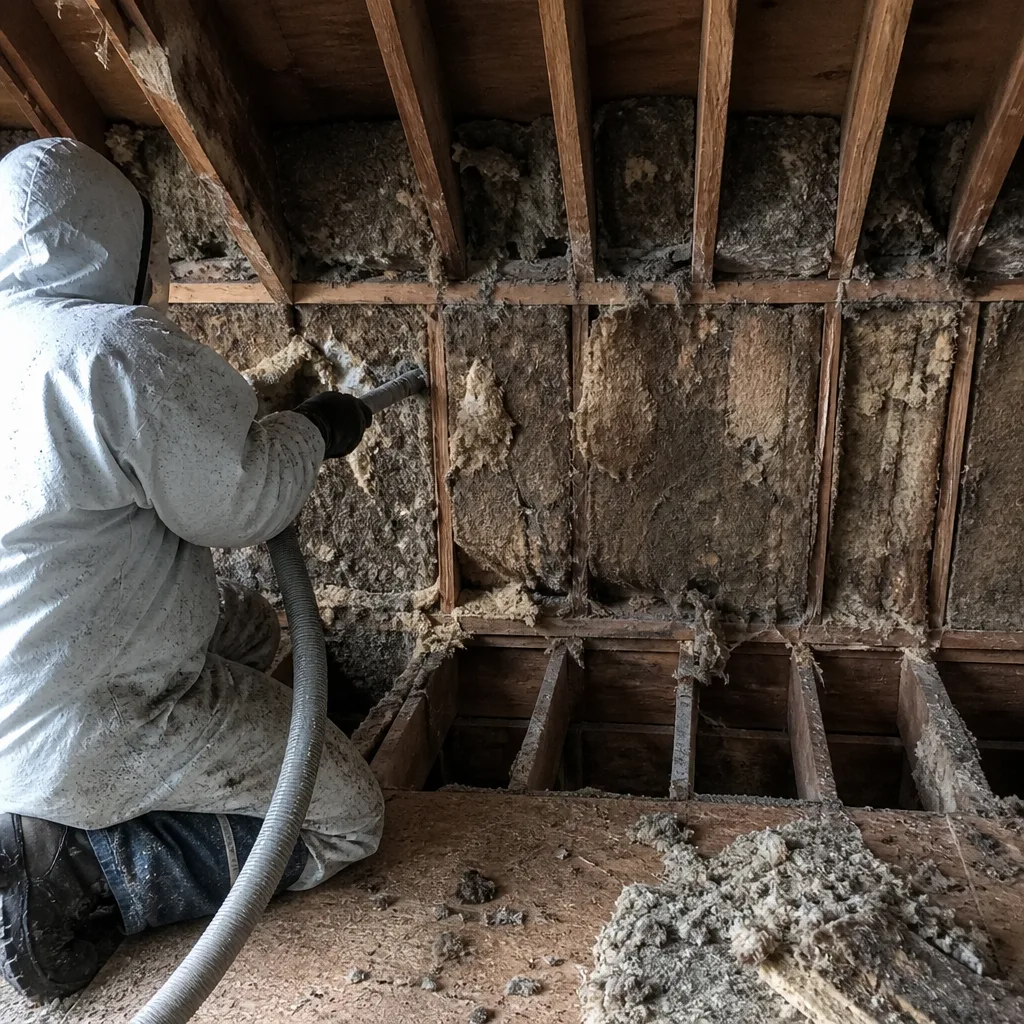
What we do specifically: We pull back existing insulation to expose the full attic floor, seal every accessible gap with appropriate materials, then replace the insulation undisturbed. You get before-and-after blower-door numbers, photos of the sealed areas, and a written scope showing exactly what was sealed and with what material.
Top Plate & Penetration Sealing
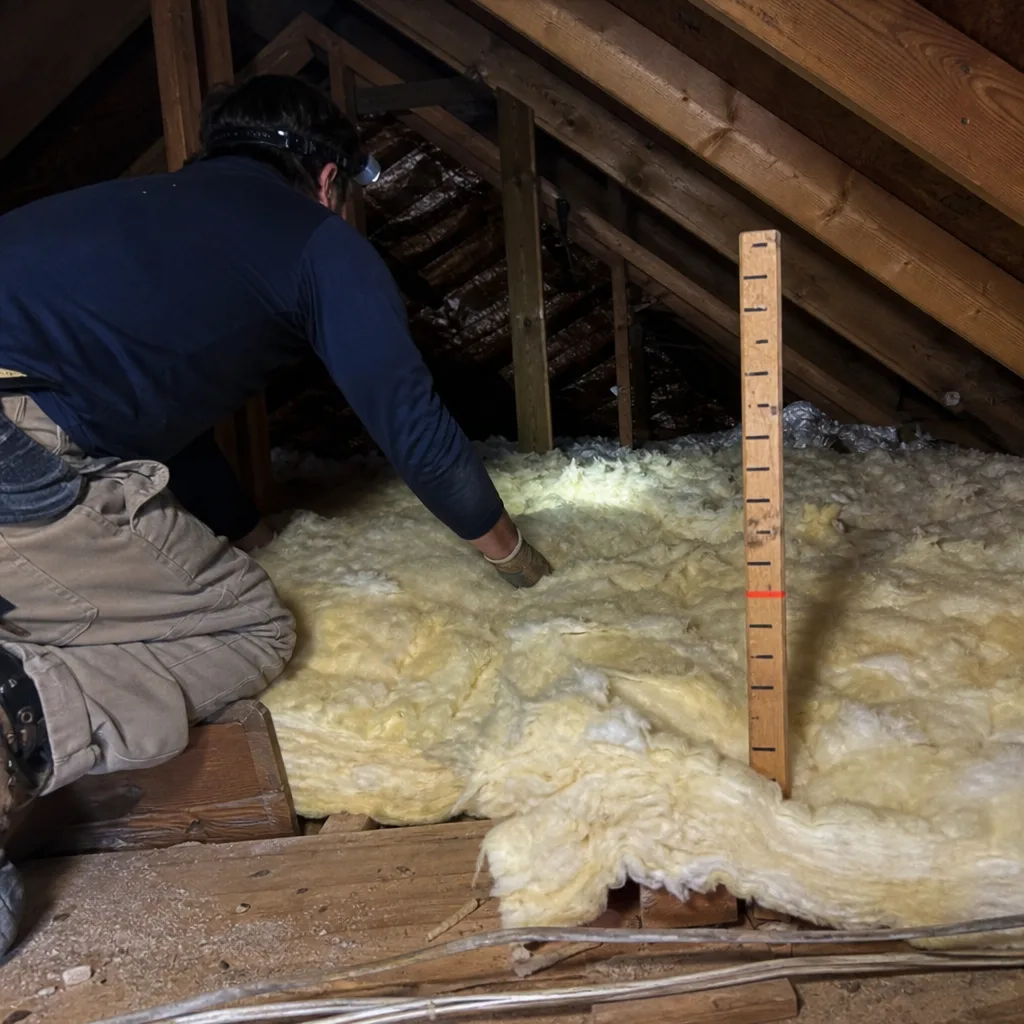
Top plates are the horizontal framing members where interior walls meet the ceiling, and they’re one of the most common leakage sites in Texas homes. Builders often leave a 1/8-inch to 1/4-inch gap along the entire length of these plates, which adds up to hundreds of square inches of open pathway into your attic. Penetrations - where wires, pipes, and flues pass through the ceiling - compound the problem.
When do you need this? If you feel drafts near interior walls in winter, or if rooms at the center of your home stay uncomfortable while perimeter rooms improve, your top plates are likely the culprit. In Georgetown’s older neighborhoods near the Square, we’ve found original 1980s and 1990s construction with virtually no top-plate sealing at all. In newer builds, the sealing is often partial or deteriorated from thermal cycling.
What we do specifically: We use expanding spray foam - typically Demilec or Icynene closed-cell products for larger gaps, fire-rated caulk for smaller penetrations near heat sources - to create a continuous seal. Every penetration is mapped on our work order, and you receive photos of each sealed location with the final documentation. We never seal around active chimney flues without proper clearance and heat shielding; that’s in our written scope before we start.
Can Light & Duct Boot Sealing
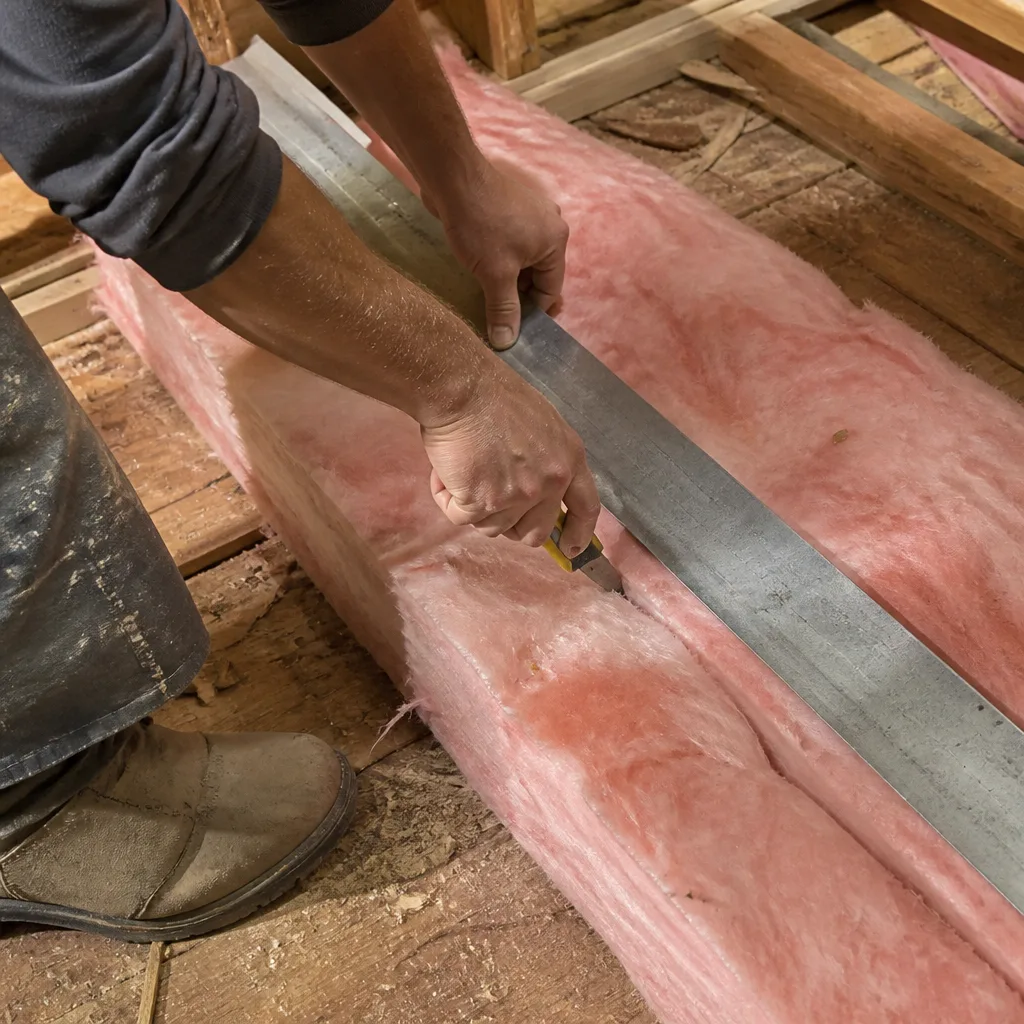
Recessed can lights are essentially holes in your ceiling, and unless they’re IC-rated (insulation contact) and properly gasketed, they leak conditioned air continuously. Duct boots - the metal transitions where your HVAC ducts meet the ceiling - are equally problematic, especially in Georgetown homes with flex-duct systems where the boot-to-drywall seal was never completed.
When do you need this? If you see dust streaking around your ceiling cans, or if certain rooms never reach set temperature despite good airflow, the boots or cans are leaking into the attic. We’ve documented cases in Georgetown’s Paloma Lake and Berry Creek neighborhoods where a single unsealed can light leaked 50 CFM50 - equivalent to leaving a window cracked year-round.
What we do specifically: For non-IC cans, we install fire-rated covers or replace with sealed, IC-rated fixtures depending on your preference and budget. For duct boots, we seal the boot-to-drywall joint with mastic or foam, then verify with a smoke pencil or theatrical fog to confirm no leakage. The work is photographed, and the blower-door test captures the aggregate improvement. We carry covers and sealants from Rockwool and CertainTeed for applications where their specific properties - fire resistance, acoustic damping, or thermal performance - add value.
Attic Hatch Sealing
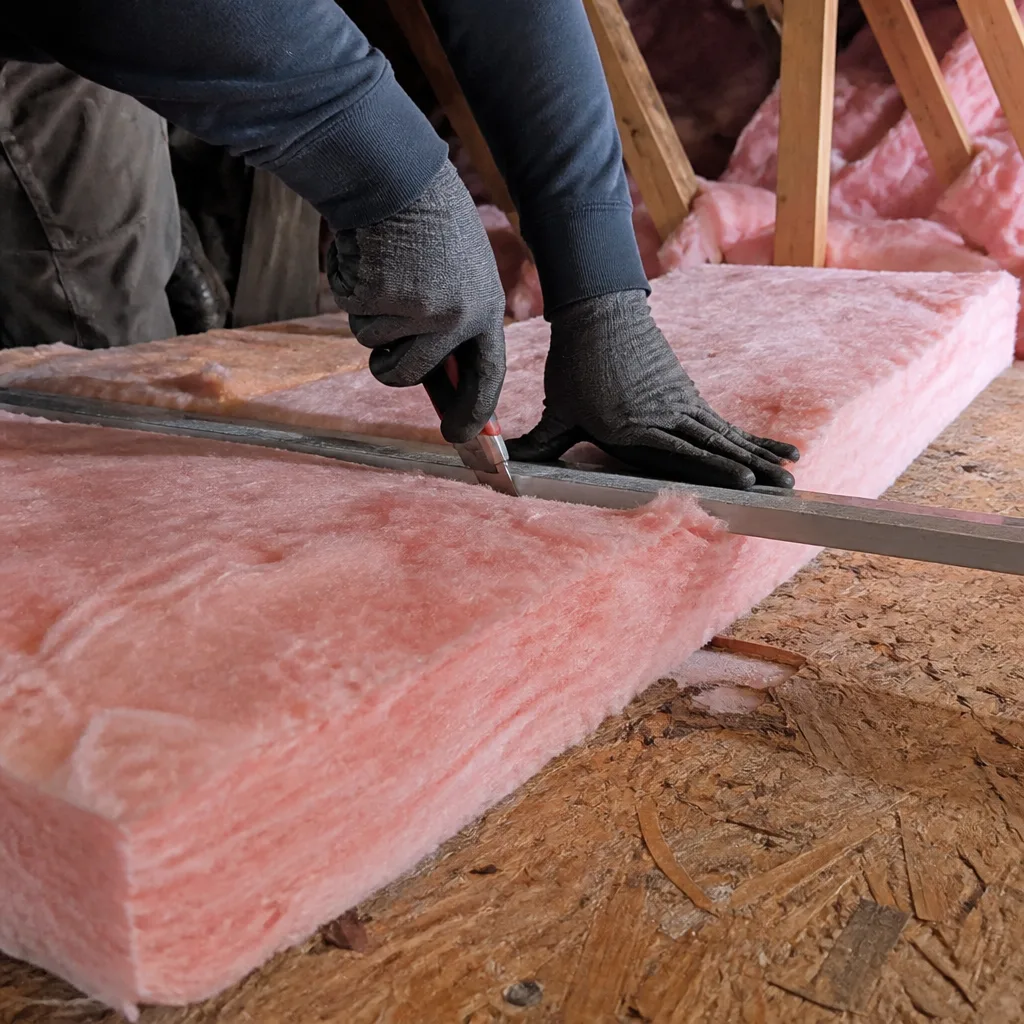
The attic hatch is the most obvious hole in your ceiling, and it’s almost never sealed properly. Standard pull-down stairs have gaps of 1/4 inch or more around the perimeter, and the door itself is usually uninsulated thin plywood. Even scuttle holes with removable panels leak significantly if the panel doesn’t sit on a gasketed stop.
When do you need this? If you feel a draft when you walk under the hatch, or if your attic access is in a conditioned hallway that stays uncomfortable, the hatch is leaking. In Georgetown’s two-story homes, which are increasingly common in the Wolf Ranch and MorningStar areas, the hatch is often located in a central hallway where leakage affects multiple rooms.
What we do specifically: We install weatherstripped dams around scuttle openings, replace or supplement pull-down stairs with insulated, gasketed units where appropriate, and ensure the hatch sits on a positive seal. For existing stairs that are structurally sound, we build a sealed box from rigid foam board and attach it to the frame. You get photos of the before condition, the completed seal, and the thermal image if we find significant temperature differential - all in your Documented Photo Record.
What happens when you call
- 1
A real person answersNo phone trees - you reach a local pro.
- 2
You get an upfront price rangeHonest numbers before anyone is dispatched.
- 3
A background-checked tech heads outLicensed & insured, dispatched right away.
- 4
You approve before work beginsNothing starts until you say go.
Brands We Service for Attic Air Sealing
We’ve worked with insulation and air-sealing materials from every major manufacturer, and we select products based on the specific application rather than pushing a proprietary line. For fire-blocking and high-temperature penetrations near chimneys or furnace flues, we regularly use Rockwool mineral wool - its 2,150°F melting point and non-combustible rating make it the right choice where foam products cannot safely go. We’ve installed Rockwool in hundreds of Georgetown attics, typically where the original builder left a combustible gap that needs correction.
For spray foam applications in irregular cavities and around complex penetrations, we use Icynene and Demilec open-cell and closed-cell products depending on the moisture management requirements and the R-value we’re targeting. Both manufacturers publish full environmental product declarations and have been vetted through our material review process since we started under The Haven Standard in 2016. Whether your home currently has Owens Corning, Johns Manville, Knauf, or any other manufacturer’s insulation, we can evaluate the assembly and seal it properly without disturbing material that should stay in place. We don’t claim exclusive or preferred status with any brand - we claim appropriate application, documented.
 Before
 After
AfterSigns You Need Attic Air Sealing Right Now
- Your upstairs rooms are 8-12°F warmer than downstairs in summer. This isn’t normal in a properly sealed home. In Georgetown’s climate, temperature stratification this severe almost always indicates significant attic floor leakage, where hot attic air is being pulled into the conditioned space through ceiling gaps. The harder your AC runs, the stronger the stack effect becomes, pulling more hot air down. We’ve measured attic floor leaks in Georgetown homes that added the equivalent of a half-ton to the cooling load - equipment you paid for but shouldn’t need.
- Your energy bills spike every July and August despite reasonable thermostat settings. Georgetown’s electricity rates from providers like Oncor and Bluebonnet Electric aren’t the issue; it’s the volume of conditioned air you’re losing. A typical 2,400-square-foot home with an unsealed attic can lose 3,000-5,000 CFM50 through the ceiling plane alone. At Georgetown’s summer design temperature of 99°F, that’s a continuous heat gain your AC must overcome. After proper air sealing, we’ve seen summer bills drop 15-30% without any insulation upgrade.
- You see dust streaking around ceiling can lights or bathroom fans. Those streaks are the visible evidence of air moving through the gap. The dust particles are too large to travel through intact drywall; they’re being carried by air leaking around the fixture. In Georgetown’s windy spring months, these streaks often appear suddenly as pressure differentials shift. Each streak marks a hole in your thermal and air barrier that you’re paying to condition.
- Your insulation looks settled or disturbed directly above interior walls. When air leaks through top plates, it carries fine insulation particles with it, creating bare spots or depressions in the blown-in material. If you peek into your attic and see what looks like “paths” or bare strips above walls, those are leakage highways. We’ve found this pattern in nearly every Georgetown home built 2010-2018 that we’ve inspected - the builder blew insulation over unsealed top plates, and the air movement has been eroding the coverage ever since.
- Your HVAC system runs constantly but never reaches set point on extreme days. This is the end-stage symptom. Your equipment is sized correctly, but the building envelope is so leaky that the load exceeds capacity. In Georgetown, this typically manifests on days above 100°F or during hard freezes below 20°F. Before you replace a “undersized” system - a $8,000-$15,000 mistake - have the attic air sealing evaluated. We’ve saved multiple Georgetown homeowners from unnecessary equipment replacement by sealing the envelope first and proving the load reduction with a Manual J recalculation.
Our Attic Air Sealing Process - Step by Step
- 1
Schedule and confirm. Call (254) 970-2136 and a live person will answer, 24/7. We’ll confirm your address in Georgetown, ask about your primary symptoms, and schedule a technician visit. Under Haven Standard: Arrive on schedule, you get a named technician and a text when they are on the way. You’ll know who’s coming and when.
- 2
Diagnostic assessment and blower-door test. Our technician arrives with a blower door - a pressurization rig that shows, in one number, how much air your building envelope is losing. We run the test with the attic access sealed to isolate ceiling-plane leakage, then again with it open to quantify attic contribution. We also use an infrared camera to map thermal bypasses and a smoke pencil to locate active leaks. You get the baseline CFM50 number in writing before we propose any work.
- 3
Written price and scope. Based on the diagnostics, we provide a flat price for the specific sealing work your home needs - not a range, not an estimate that balloons later. The scope lists every location to be sealed, the material for each, and the target blower-door reduction. This is Haven Standard Clause 1: flat price, written scope, written warranty before anyone lifts a tool. No work starts without your signature on this document.
- 4
Air sealing execution. Our crew arrives on the scheduled date, lays protective covering, and begins sealing according to the written scope. We pull back insulation only where necessary, seal with appropriate materials, and photograph every sealed location. The crew lead runs quality checks with a smoke pencil as work progresses. For a typical Georgetown home, this takes one day; complex jobs with extensive can-light sealing may extend to two.
- 5
Post-work verification and documentation. We rerun the blower-door test and compare to baseline. The after number, improvement percentage, and photos of all sealed areas are compiled into your Documented Photo Record, delivered electronically within 24 hours. If the target reduction wasn’t achieved, we find the remaining leaks and seal them - under our 365-Day Done Right Promise, we don’t leave until the documented result matches the written scope.
How Much Does Attic Air Sealing Cost in Georgetown?
Most complete attic air sealing jobs in Georgetown run $1,200-$3,800 depending on how much Attic Air Sealing costs. Here’s how that breaks down by scenario:
- Basic attic floor sealing only: $1,200-$1,800. Covers perimeter sealing, plumbing chases, electrical penetrations, and basic top-plate gaps in a single-story home under 2,000 square feet. Typical in Georgetown’s older neighborhoods like Georgetown Village and the areas near Southwestern University.
- Standard sealing with can lights and duct boots: $2,000-$2,800. Adds sealing for 6-12 recessed cans, 3-5 duct boots, and the attic hatch. This is our most common scope for 2010-2020 builds in Sun City, Teravista, and Serenada.
- Comprehensive sealing with hatch replacement: $2,800-$3,800. Includes everything above plus insulated hatch or stair replacement, complex penetration sealing, and fire-blocking corrections. Typical for larger two-story homes in Wolf Ranch, Rancho Sienna, and MorningStar, or homes with significant builder shortcuts.
What affects the price: attic accessibility (steep roof pitch or limited clearance adds time), number of penetrations, whether existing insulation must be temporarily removed and replaced, and whether fire-rated materials are required near heat sources. Homes in Georgetown’s newer developments often have more complex rooflines with multiple dormers and valleys, which create additional top-plate junctions to seal.
How to avoid overpaying: Get a written scope that specifies locations and materials, not just a lump-sum price. Anyone quoting “attic sealing” without a blower-door baseline is guessing. We provide a Free Second Opinion on any written estimate - bring us a competing quote and we’ll read it with you, line by line, to compare scope and materials.
What’s included in our free estimate: the diagnostic blower-door test, infrared scan, written scope with flat price, and no obligation to proceed. Call (254) 970-2136 to schedule.
Attic Air Sealing Near Georgetown - Our Service Area
We serve Georgetown homeowners with typical response times under 45 minutes for emergency assessments and same-day or next-day availability for standard estimates. Our primary service radius includes Round Rock to the south, Brushy Creek to the southwest, Leander and Cedar Park to the west, Hutto and Manor to the east, and Pflugerville and Wells Branch to the southeast. We also regularly work in Taylor, Jollyville, Lago Vista, and the unincorporated areas between. If you’re unsure whether your address falls in our coverage, call (254) 970-2136 - a live person will confirm immediately.
Serving Georgetown, TX - Our Local Coverage Area
We’re based in the Georgetown area and know this community well. Use the map below to see our service coverage - if you’re nearby, we can almost certainly help.
Frequently Asked Questions - Attic Air Sealing in Georgetown
Attic air sealing closes the gaps and cracks in your ceiling plane that allow conditioned air to escape into the attic and unconditioned attic air to leak into your living space. Insulation slows heat transfer through solid materials but does almost nothing to stop air movement; in fact, blown insulation over unsealed gaps often makes leaks harder to find and fix later. We seal first, then insulate - in that order - and we never blow insulation over an unsealed attic floor.
Most residential attic air sealing jobs in Georgetown are completed in one working day, with larger or more complex homes occasionally requiring a second day. The diagnostic visit including blower-door testing takes 60-90 minutes. We schedule execution within 3-5 business days of scope approval, and you’ll receive a text when your technician is en route. Under Haven Standard: Arrive on schedule, every time.
Complete Round Rock Attic Air Sealing and Georgetown jobs typically costs $1,200-$3,800 depending on home size, attic accessibility, and the number of penetrations. A basic attic floor seal for a smaller single-story home starts around $1,200, while comprehensive sealing with can-light covers and hatch replacement for a larger two-story home can reach $3,800. Every job begins with a free diagnostic and written flat price - no surprises, no escalation. Call (254) 970-2136 for your specific estimate.
Yes. We use CertainTeed fiberglass and mineral wool products for fire-blocking and specific high-temperature applications, and Rockwool mineral wool where non-combustible material is required by code or safety best practice - typically within 3 inches of chimney flues and other heat-producing penetrations. We also use Icynene and Demilec spray foam products for general air sealing. We don’t push any single brand; we select based on the application and document what we used in your written scope.
Yes. A live person answers our phone 24/7, and we maintain same-day availability for urgent situations - typically a home where the HVAC cannot maintain safe temperatures due to extreme envelope leakage, or where a homeowner has received an alarming energy audit and needs immediate verification. Call (254) 970-2136; if we cannot reach you today, we’ll give you a specific tomorrow appointment, not a callback window.
All completed work is covered by our 365-Day Done Right Promise - if it’s not done right, we make it right. This is backed by a written warranty delivered before work starts, not available on request. The warranty covers material failure and workmanship defects; it does not cover new damage from roof leaks, pest intrusion, or subsequent contractor work. Your warranty term and exclusions are specified in the written scope you receive before any work begins.
Clear a path to your attic access and ensure we can reach all rooms below ceiling penetrations. If you have recent energy bills, have them available - they help us correlate consumption patterns with leakage findings. Pets should be secured; our technicians carry equipment that cannot be exposed to animals. You do not need to clear attic contents; we work around stored items and will note if anything blocks access to critical sealing locations. After the work, you’ll receive your Documented Photo Record electronically - no paperwork to track.
Schedule Your Attic Air Sealing Service in Georgetown Today
Call (254) 970-2136 now and speak with a live person, 24/7. We’ll schedule your free diagnostic with blower-door testing, provide a written flat price before any work starts, and deliver documented proof of the improvement when we’re done. Every job is backed by our 365-Day Done Right Promise and The Haven Standard: Have it in writing. No voicemail loops, no callback windows, no surprises.
Written by Wes Okafor, Owner at Topside Attic Insulation Georgetown, serving Georgetown, Round Rock, Hutto Attic Air Sealing, Brushy Creek, and surrounding communities since 2016.