
How Much Does Attic Air Sealing Cost in Georgetown, TX?
Attic Air Sealing services in Georgetown, TX typically run between $800 and $2,200 for a standard single-story home, with most jobs landing around $1,200 to $1,500 when the attic is accessible and the leakage points are typical. That price covers sealing top plates, can-light penetrations, plumbing and electrical chases, and the blower-door test – a pressurization reading that shows, in one number, how much conditioned air your building envelope is losing before and after the work. Larger homes, attics with heavy prior insulation that needs to be moved, or houses built before 1995 with older framing details often push the total higher.
If you’ve already got a written estimate from another contractor, we’ll read it with you – our Free Second Opinion offer applies to any written quote, and there’s no charge for that conversation. Under the Haven Standard, you also receive a written price before any work starts, so there’s never a number that surprises you at the end of a job.
Attic Air Sealing Cost Breakdown (2026 Georgetown Market)
Attic air sealing in Georgetown costs what it costs because it’s labor-intensive close-up work, not a volume spray. A crew member is crawling into tight corners, applying two-part spray foam around every top plate penetration, and waiting for cure times before the blower-door is re-run. Below is how the numbers typically break out for Georgetown homes in 2026.
| Scope of Work | Typical Cost Range (Georgetown, TX) |
|---|---|
| Basic air sealing only – small home under 1,400 sq ft, accessible attic, standard penetrations | $800 – $1,050 |
| Mid-range air sealing – 1,400 to 2,200 sq ft, typical can lights, plumbing/HVAC penetrations | $1,100 – $1,600 |
| Larger home air sealing – 2,200 to 3,000 sq ft, multiple HVAC chases, open-web truss attic | $1,600 – $2,200 |
| Air sealing + blown-in insulation (combined scope, same visit) | $2,400 – $4,800 depending on R-value target and attic size |
| Air sealing only, existing insulation pulled back and reset | Add $300 – $700 to any tier above |
| Before-and-after blower-door test (included on applicable jobs at Envelope) | $0 additional – included |
| Attic hatch weatherstripping and insulation dam | $75 – $150 |
| Foam dam around recessed lights (per fixture, if not already baffled) | $18 – $35 per fixture |
A few things move these numbers in Georgetown specifically. Homes in Sun City Georgetown – many of them built in the early 2000s – tend to have a high density of recessed can lights in vaulted and flat ceilings, and each one is a direct conditioned-air leak point. A house with 24 recessed fixtures takes meaningfully longer to seal than a house with six. Georgetown’s newer subdivisions like Wolf Ranch and Morningstar were built under more recent energy codes, so the penetrations are fewer, but the attics are often loaded with blown-in insulation already, which has to be carefully moved aside before sealing can happen. The labor cost of relocating that insulation is real and should be on any honest estimate you receive.
One pattern Wes Okafor sees regularly in Georgetown’s older neighborhoods east of I-35: original construction from the 1970s and 1980s used rough-framed top plates with very little attention to air continuity. The gap between the drywall ceiling and the top plate on an interior partition wall can run the full length of the house. Sealing those open cavities requires more material and more time than a newer build, and it’s where the biggest efficiency gains come from – but it’s also where costs drift toward the upper end of the range.
What Affects Attic Air Sealing Pricing in Georgetown
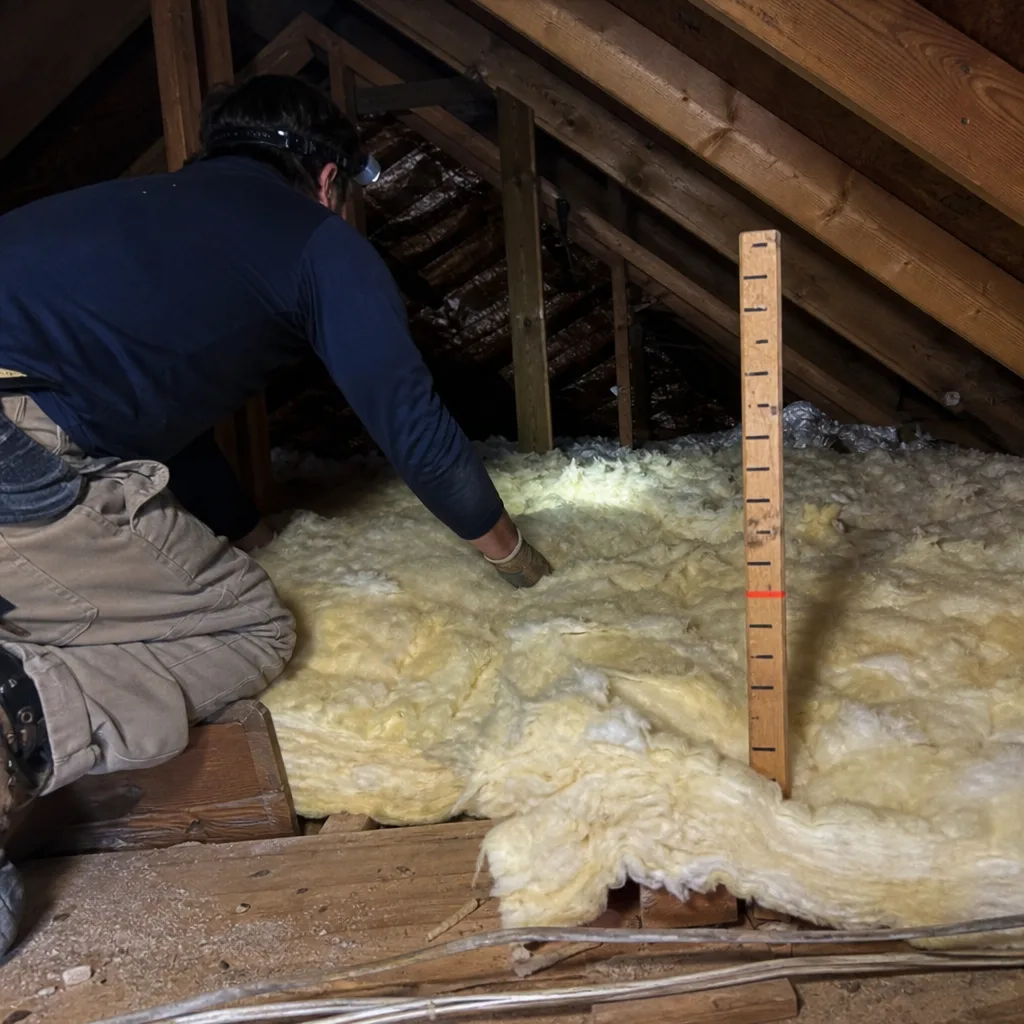
- Home square footage and attic footprint. Air sealing is priced by the amount of linear sealing work, not strictly by square footage, but larger homes have more top plates, more partition walls, and more penetrations to seal. A 2,800 sq ft home in Estrella on Georgetown’s west side is going to take nearly twice the material and labor of a 1,400 sq ft home in the same zip code.
- Number of recessed can lights. Every old-style recessed fixture that opens directly into the attic space is a conditioned-air chimney. Georgetown homes built between 1998 and 2010 are particularly dense with them. Sealing each one with an airtight foam dam or installing an IC-rated cover takes time per fixture, and a home with 30 cans adds a meaningful line item.
- Whether existing insulation needs to be moved. If your attic already has blown-in insulation sitting over the floor, a crew has to hand-rake it away from the sealing surfaces, complete the foam work, let it cure, and then redistribute the insulation. That adds $300 to $700 to almost any job in Georgetown. It’s the right way to do it – you can’t effectively seal through a foot of fiberglass – but it takes more time.
- Attic accessibility and framing type. Cut-and-stack rafter attics with a full 30 inches of clearance at the ridge are fast to work in. Low-slope hip roofs over single-story ranch homes – common in Georgetown’s older neighborhoods near the courthouse square – give a technician very little room near the eaves, where some of the worst air leakage lives. Tight spaces slow every step.
- HVAC chases and ductwork penetrations. Homes where the air handler sits in the attic (common in Georgetown’s tract housing from the 1990s) have additional penetrations where refrigerant lines, condensate lines, and electrical conduits pass through the ceiling plane. Each one needs to be sealed with two-part foam, not just caulk. Georgetown’s climate also means these areas get cycled through temperature extremes repeatedly, so the sealing material matters.
- Georgetown’s climate context. Central Texas heat loads are significant – Georgetown averages 100-plus degree days between June and September. An attic that reads 140 degrees in July is also pumping hot air through every unsealed top-plate gap into the living space below. That thermal pressure is one reason air sealing here pays back faster than in milder markets, and it’s also why the work needs to be done with materials rated for high-heat environments. Closed-cell two-part foam, not basic caulk, is the appropriate material for most of these penetrations.
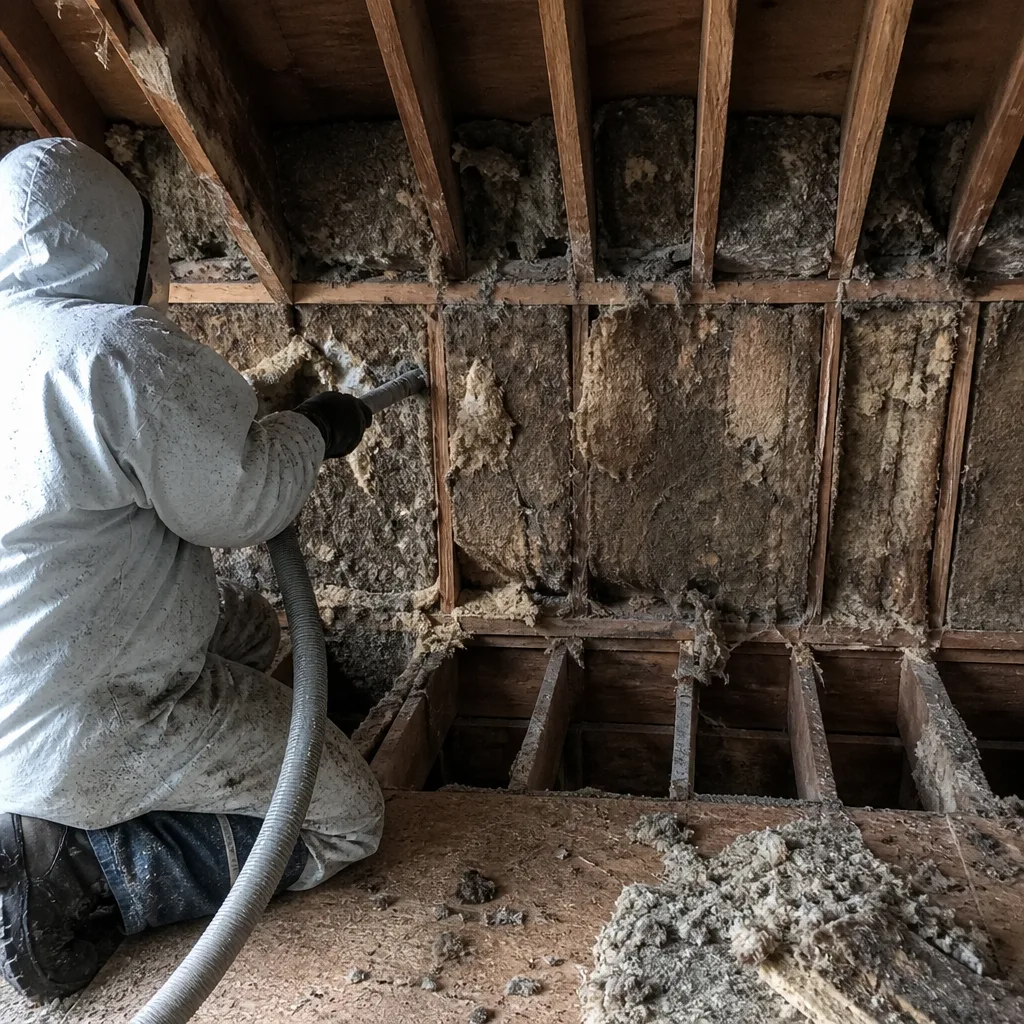 Before
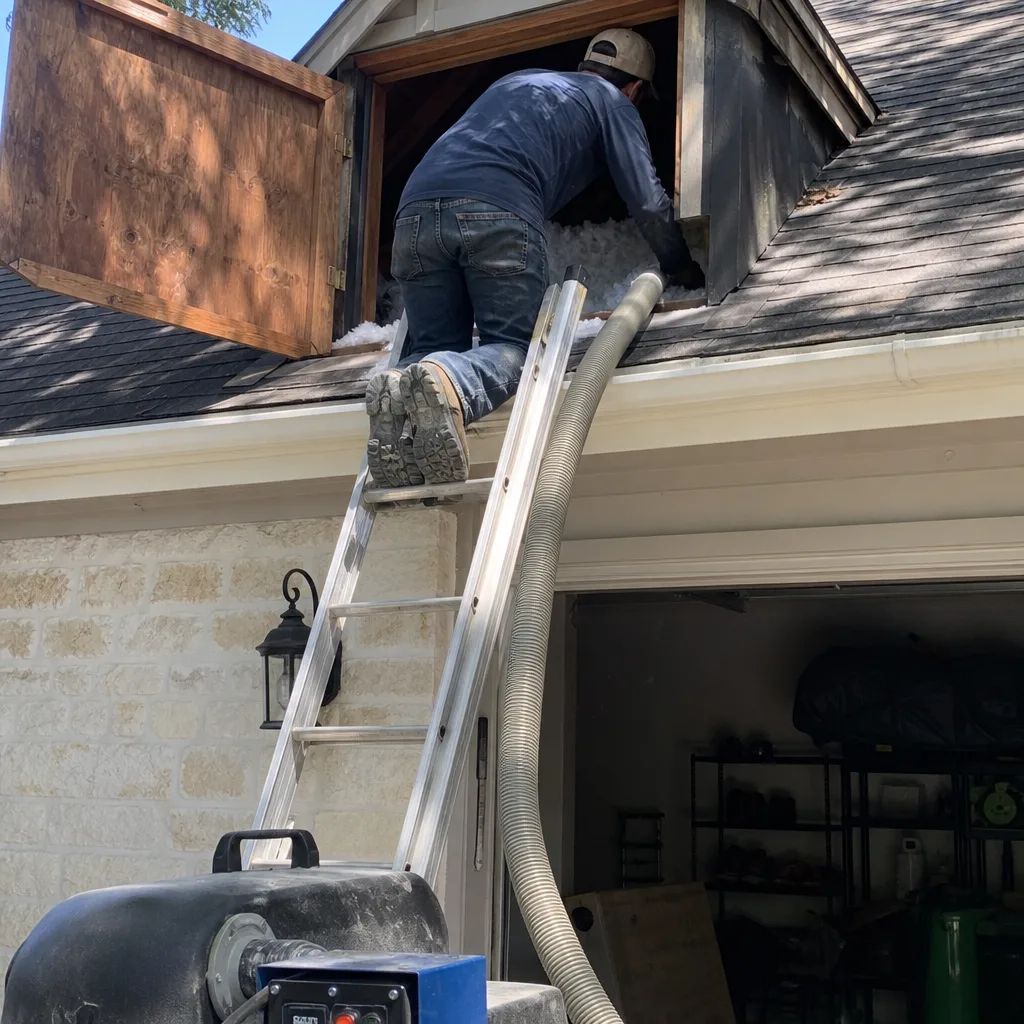 After
AfterHow to Save on Attic Air Sealing in Georgetown
The single most reliable way to keep costs down is to have the air sealing done before new insulation goes in, not after. At Envelope Insulation Co., we treat this as a hard rule rather than a recommendation: we will not blow insulation over an unsealed attic floor. Doing it in the right order means the sealing crew works on a clear surface and doesn’t have to move anything. If your current insulation is already in place, the cost of the job will include the labor to temporarily relocate it – that’s honest, and it goes on the written scope before work starts.
Second, bundle the blower-door test with the sealing work rather than treating it as a separate visit. When you’re having air sealing done, the test should happen at the beginning and at the end of the same appointment so you have documented before-and-after numbers. We include this on applicable jobs as a standard deliverable – it’s not an add-on. Having those numbers also gives you something concrete if you later apply for a Pedernales Electric Cooperative rebate or a federal energy-efficiency tax credit under current IRS guidance for home energy improvements.
Third, get a written estimate that specifies exactly which penetrations are being sealed and with what material. Vague scope creates budget surprises. Under the Haven Standard at Envelope, the written price lists the work item by item – if a penetration isn’t on the scope, it won’t be sealed, and you’ll know that before anyone arrives.
Combining attic air sealing with attic insulation installation on the same visit reduces the total mobilization cost. A job that would cost $1,300 for sealing and $2,200 for blown-in insulation as separate visits often comes in around $3,100 to $3,400 when scheduled together. That’s a real dollar difference, and it reflects the efficiency of having one crew complete both scopes without a second drive-out and setup.
Finally, ask specifically about available utility rebates before signing anything. Pedernales Electric Cooperative has offered air sealing rebates in past program years, and Texas Gas Service has run similar programs for customers on gas heat. Program availability changes annually, so the question is worth asking at the estimate stage. We can walk you through what’s currently posted for Georgetown-area customers when we’re on-site. For a no-obligation written price, call us at (254) 970-2136 – estimates are free, and you’ll have a number on paper before we leave.
Do I Actually Need Attic Air Sealing, or Just More Insulation?
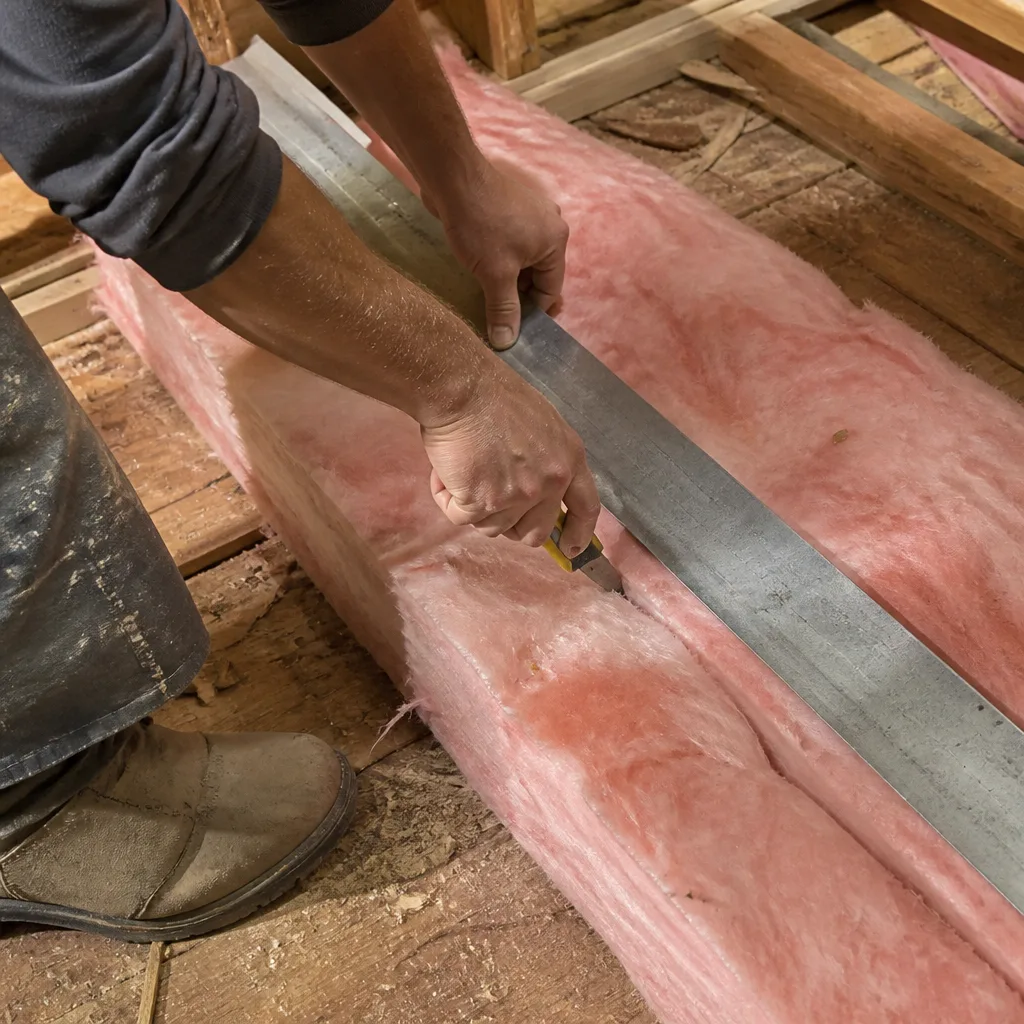
This comes up often enough in Georgetown that it deserves its own section. The short answer: insulation slows heat transfer, but it doesn’t stop air movement. Air sealing stops air movement. You need both, and the order matters.
Here’s the practical version. If your attic currently has R-19 insulation and you add R-19 more on top of it, you now have R-38. On a hot Georgetown afternoon, that extra insulation slows heat conduction through the attic floor. But if the top plates along your interior partition walls are open – no foam, no caulk, just a gap between the drywall and the framing – hot attic air is moving directly into the wall cavities and from there into the living space. More insulation doesn’t fix that. It just makes the rest of the thermal envelope work harder.
A blower-door test – again, that pressurization measurement that gives you one number for total envelope leakage – will tell you whether air infiltration or conductive heat transfer is the bigger problem in your specific home. Georgetown homes built before 2004 almost universally show meaningful air leakage at the attic floor. Homes built after 2012 are better, but rarely airtight. If the test reads above 2,000 CFM50 on a typical single-story Georgetown house, air sealing before adding insulation is the move that will change how the house actually feels in July.
Wes Okafor started Envelope with a specific position: seal first, then insulate. Not as a marketing point – as a technical one. You can add all the Owens Corning blown fiberglass or Knauf EcoStar you want, but if the air leaks stay open, a meaningful fraction of what you paid for conditioned air is leaving through the attic floor every time the HVAC runs.
What the Job Actually Looks Like – From Written Price to Documented Record
For Georgetown homeowners who want to know what they’re buying before they sign anything, here’s the sequence of a typical attic air sealing job under the Haven Standard.
Before the crew arrives, you’ve received a written scope and a flat price. It lists which penetrations are being addressed, which materials are being used (two-part closed-cell foam for structural penetrations, fire-rated caulk for drywall-to-framing interfaces where appropriate), whether existing insulation is being moved, and whether the blower-door test is included. That document is the job. Nothing happens that isn’t on it, and nothing on it gets skipped.
On the day of the job, you get a text with your technician’s name when they’re on the way – Haven Standard: Arrive on schedule. The crew starts with a blower-door test to establish the baseline CFM50 reading. That number is recorded and goes into your documentation. Then the attic work begins: top plates sealed, can lights addressed, plumbing and electrical chases foamed, attic hatch weatherstripped if that’s in scope. A cure period follows where necessary. Then the blower-door runs again, and the post-sealing number is recorded.
What you walk away with: a documented photo record of the work completed, before-and-after blower-door readings in writing, and a copy of the 365-Day Done Right Promise – if something isn’t right, we make it right, no ambiguity about what that means. The warranty is in writing. The scope was in writing. The price was in writing. That’s what Haven Standard Clause 1 looks like in practice.
Georgetown Neighborhoods Where Attic Air Sealing Pays Back Fastest
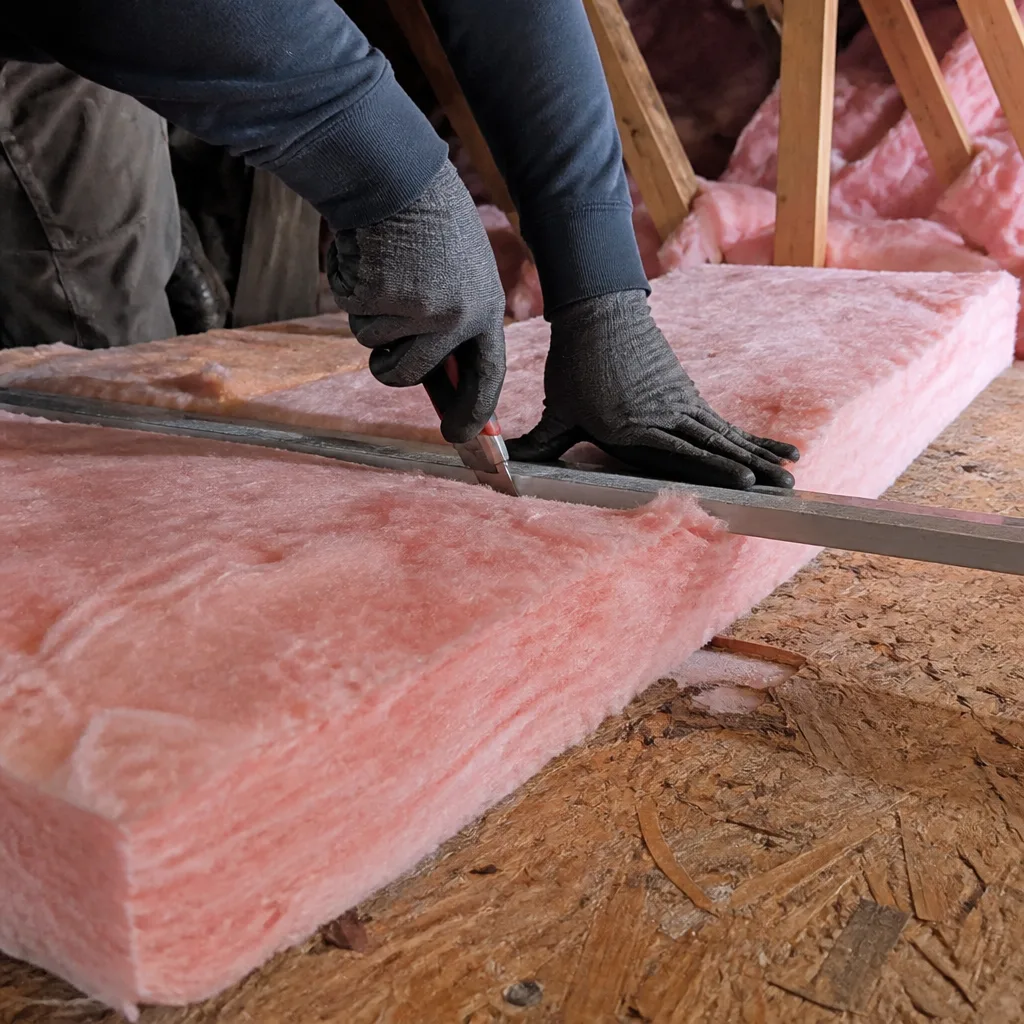
Not every neighborhood in Georgetown is the same when it comes to attic performance. Based on the homes Envelope has worked in across Williamson County since 2016, a few patterns show up consistently.
Berry Creek and Georgetown Village – homes built in the late 1990s and early 2000s with vaulted ceilings and high densities of recessed lighting. These attics typically test at 3,500 to 5,500 CFM50 before sealing, and the improvement after a thorough air sealing job is often 40 to 55 percent. That’s the kind of before-and-after number that shows up as a real change in monthly energy cost.
Sun City Georgetown – the Del Webb community on Georgetown’s northwest side has a large stock of single-story homes built between 1996 and 2015 under varying energy codes. Earlier Sun City homes have the highest leakage rates. Because these homes tend to be well-maintained and their owners research decisions carefully, the combination of air sealing plus radiant barrier is common here, and the payback math is favorable given Georgetown’s cooling-dominated climate.
Wolf Ranch and Morningstar – newer construction, typically post-2015, with better baseline air sealing from the builder. These homes still benefit from a professional seal on the attic floor because builder-grade foam work is often incomplete at can-light penetrations and partition top plates. The test might read 1,800 CFM50 where a comparable older home reads 4,200 – but 1,800 is still meaningful leakage, and sealing it down to 900 to 1,000 is achievable.
Older Georgetown near downtown and the courthouse square – homes from the 1960s through 1980s, often with original framing, no prior air sealing work done, and attics that haven’t been touched since the house was built. These jobs run toward the upper end of the cost range because there’s more work to do, but the performance gain is also the largest. A home reading 6,000 CFM50 that comes down to 2,800 after sealing is a different house to live in through a Georgetown summer.
FAQs: Attic Air Sealing Cost in Georgetown, TX
How much does attic air sealing cost in Georgetown, TX in 2026?
Most Georgetown attic air sealing jobs run between $800 and $2,200, with the midpoint for a typical 1,600 to 2,000 sq ft single-story home around $1,200 to $1,500. Larger homes, attics with heavy prior insulation that needs to be moved, or older construction with open top-plate cavities push costs toward the upper end. That price should include a before-and-after blower-door test – if it doesn’t, ask why. Call (254) 970-2136 for a written estimate specific to your home; there’s no charge for the estimate.
Is attic air sealing worth it in Georgetown’s climate?
Yes, and the payback is faster here than in cooler markets. Georgetown averages more than 100 days a year above 90 degrees, and attic temperatures regularly reach 135 to 145 degrees between June and September. Unsealed top plates and can-light penetrations act as direct pathways for that heat to enter the living space. Homes that test at 4,000 CFM50 before sealing and come down to 2,000 after typically see a 15 to 25 percent reduction in cooling load – which shows up in the electric bill over a Georgetown summer. The blower-door numbers document that change precisely.
How long does attic air sealing take in a typical Georgetown home?
A standard 1,400 to 2,200 sq ft Georgetown home takes 4 to 7 hours for a full air sealing job, including the blower-door test at the start and end. Larger homes or attics where existing insulation needs to be relocated can run 8 to 10 hours. This is full-day work for one or two technicians – it isn’t a two-hour job, and any estimate that implies otherwise should prompt a close look at what’s actually being quoted.
Can I just add more insulation instead of air sealing?
No – and this distinction matters. Insulation slows heat conduction; air sealing stops air movement. If your attic floor has open top-plate gaps, every recessed light is an uncovered hole, and your plumbing chases run straight to the ceiling cavity, adding insulation won’t fix the air infiltration. You’ll have a warmer blanket on a drafty house. The correct sequence is seal first, then insulate – which is why we won’t blow insulation over an unsealed attic floor. A blower-door test will confirm which problem is larger in your specific home before any money is spent.
Does Topside Attic Insulation Georgetown offer free estimates for attic air sealing?
Yes – estimates are free, written, and itemized. Under the Haven Standard, you receive a flat written price and a written scope before any work starts. There’s no pressure to commit on the day of the estimate, and if you have a competing written quote, we’ll read it with you as part of our Free Second Opinion offer. Call (254) 970-2136 to schedule your written estimate in Georgetown.
What does a before-and-after blower-door test tell me?
A blower-door test measures how much air your building envelope is losing under a controlled pressure difference – the result is expressed in CFM50 (cubic feet per minute at 50 Pascals of pressure). A typical older Georgetown home might read 4,500 CFM50 before sealing. After a thorough attic air sealing job, that same home might read 2,400 CFM50. The difference – 2,100 CFM50 – is the leakage that was closed. That’s a documented, verifiable result, not an estimate of how much better the house might feel. We include before-and-after blower-door readings on applicable jobs and put both numbers in writing as part of your documented record.
Key Takeaways for Georgetown Homeowners
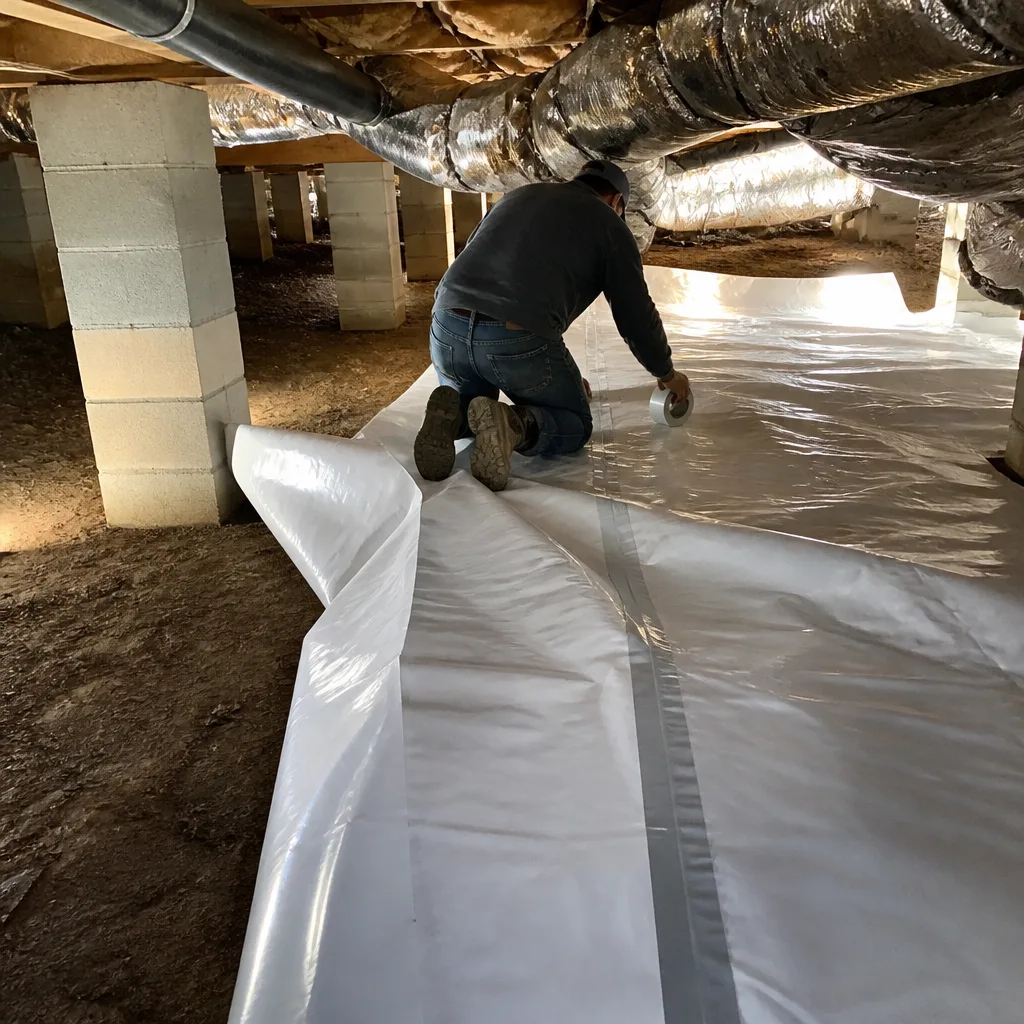
- Attic air sealing in Georgetown, TX runs $800 to $2,200 for most homes, with the typical single-story job landing between $1,200 and $1,500.
- Cost drivers include home size, number of recessed can lights, whether existing insulation needs to be relocated, and the age and framing type of the home.
- Georgetown’s extreme summer heat makes air sealing one of the highest-ROI envelope improvements available – the payback in cooling-cost reduction is measurable and documented with blower-door numbers.
- Air sealing and insulation are both necessary, but sealing comes first. Adding insulation over unsealed penetrations doesn’t stop air movement.
- Under the Haven Standard, every Envelope job starts with a written price and ends with a documented photo record and before-and-after blower-door readings. The 365-Day Done Right Promise applies to all completed work.
- Combining air sealing with blown-in insulation in a single visit reduces total cost compared to scheduling them separately.
- Georgetown-area utility rebates from Pedernales Electric Cooperative may apply – worth asking about at the estimate stage.
If you’re ready to see exactly what attic air sealing would cost for your Georgetown home, start with a free written estimate. We’ll give you a flat price with a written scope before anyone touches a tool – that’s Haven Standard Clause 1, and it applies to every job. Learn more about how we approach Attic Air Sealing in Georgetown or visit our home to see the full range of building-envelope services we provide across the Georgetown market. To schedule your estimate, call (254) 970-2136. A live person will answer.
Written by Wes Okafor, Owner at Topside Attic Insulation Georgetown (operating under Envelope Insulation Co.), serving Georgetown, TX since 2016. Pricing reflects the Georgetown, TX market as of 2026. Topside Attic Insulation Georgetown offers free estimates – call (254) 970-2136.
What Our Customers Say
"They air-sealed the attic floor before insulating and showed me the blower-door number before and after. The upstairs is finally the same temperature as downstairs."
- Marisol D."They photographed rodent damage in the old insulation that we had no idea about, and priced the exclusion work separately so we could decide."
- Harriet N."Crawl space encapsulation done properly. Photographs of the vapour barrier at every seam, and the damp smell in the hallway is gone."
- Ainsley P.