
Last updated September 24, 2026
How to Hire a Insulation Contractor in Georgetown: A Step-by-Step Guide
Ask the last five insulation contractors you get quotes from this single question: “Can you show me the before-and-after blower-door test results from a job you completed in the last 90 days?” Four of the five will explain why that’s not standard practice. That explanation tells you everything you need to know. Georgetown homeowners shopping for attic insulation, spray foam, or crawl space work have dozens of contractors to choose from, but insulation is a performance product, not a cosmetic one. A contractor who cannot produce a pressurization number proving the building envelope tightened has no objective way to demonstrate their work performed. This guide - and our more guides & resources - teaches you to screen for evidence, not assurances.
Quick Answer
Hiring an insulation contractor in Georgetown starts with verifying they hold a Texas insulation contractor license and carry general liability insurance, then progresses to demanding a written scope that enumerates air sealing locations, material R-values, and square footage before any work begins. The best contractors in the Georgetown market will provide before-and-after blower-door test results from recent jobs, publish a written price before lifting a tool, and deliver a documented photo record plus test report when the crew leaves. Anyone who treats air sealing as optional or asks you to “call for pricing” is signaling a process that cannot be verified.
Table of Contents
- Why the Blower-Door Test Separates Real Contractors From Sales Teams
- The Three License Categories in Texas: What Actually Governs Quality
- The Five-Question Pre-Hire Phone Script
- What a Legitimate Written Price and Scope Must Include
- Your Post-Job Documentation Packet: What’s Required vs. What’s Missing
- The Two Most Common Upsell Tactics in Georgetown (and When Each Is Justified)
- Georgetown Climate, Code, and Neighborhood Considerations
- Common Mistakes to Avoid
- When to Call a Professional
- Frequently Asked Questions
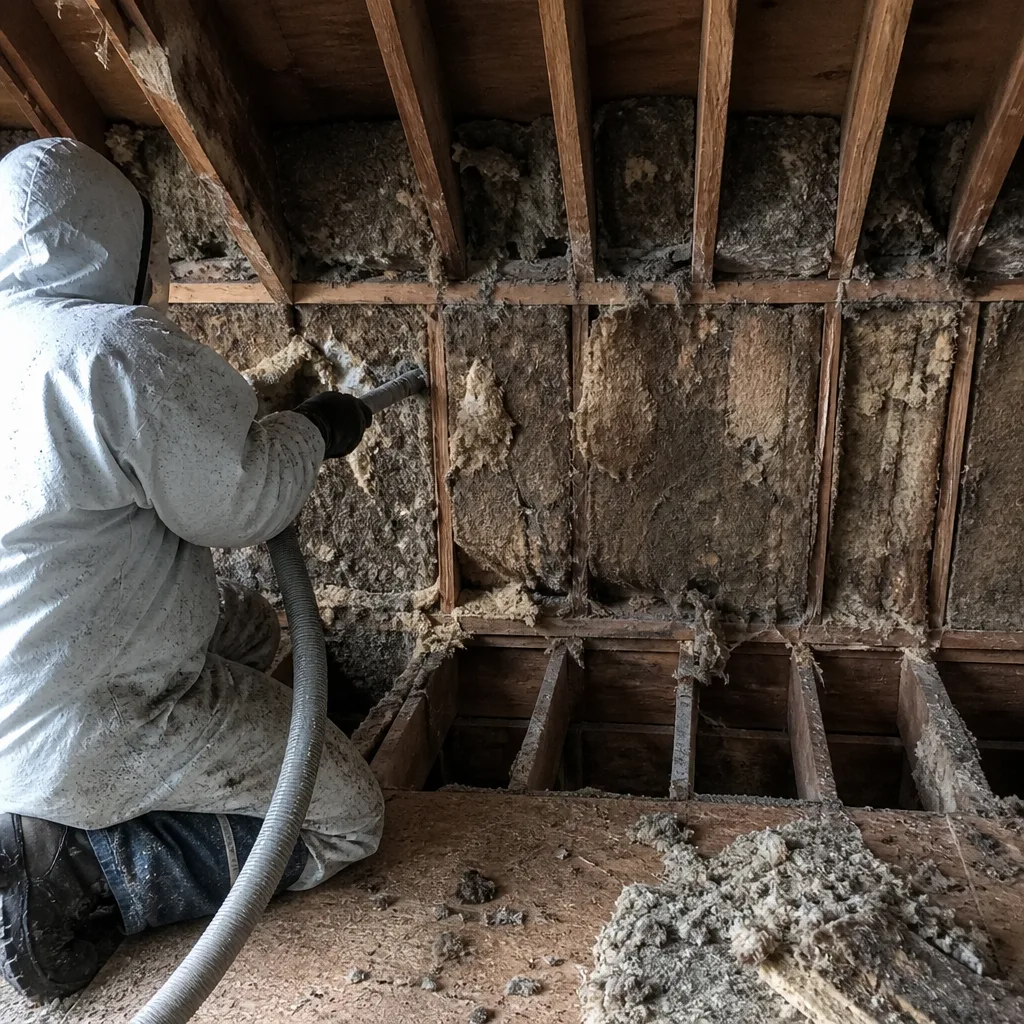 Before
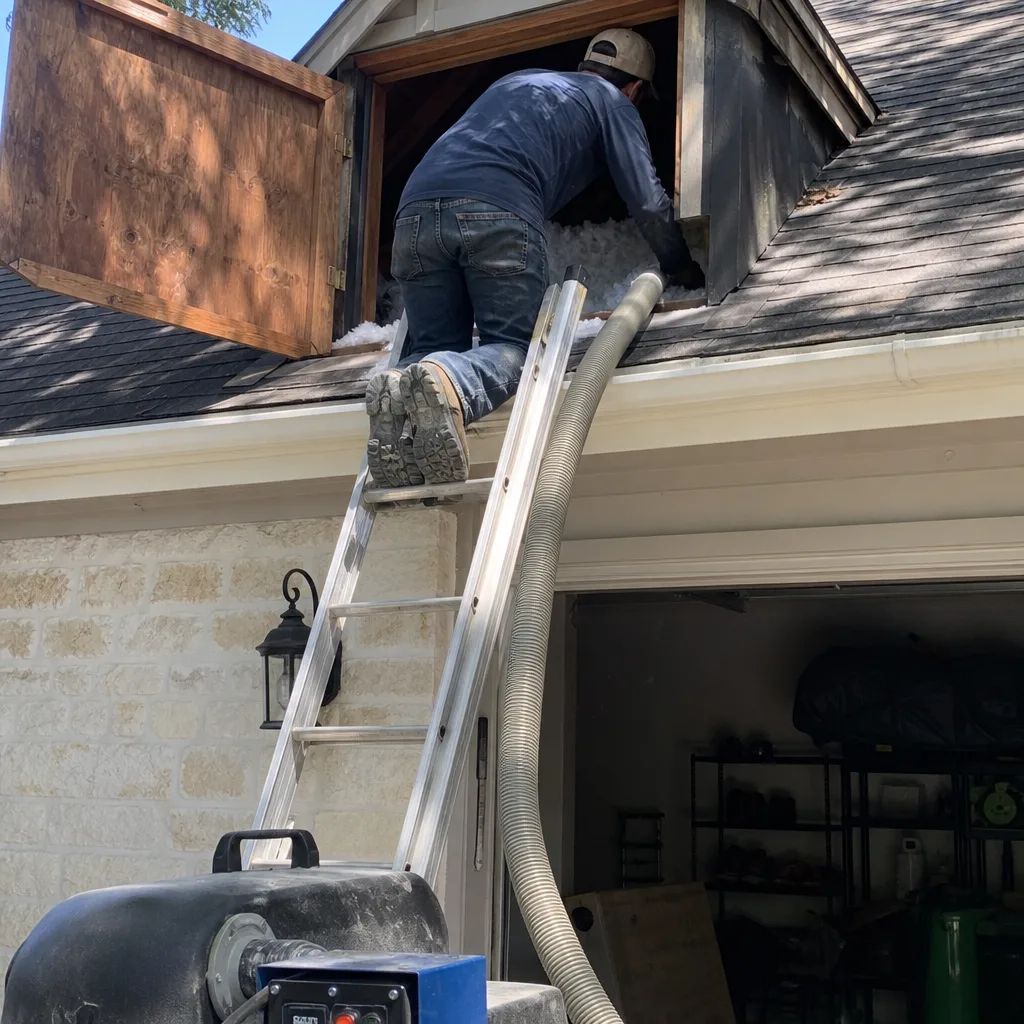 After
AfterWhy the Blower-Door Test Separates Real Contractors From Sales Teams
A blower-door test is a pressurization reading that shows, in one number, how much air your building envelope is losing. The technician mounts a calibrated fan in an exterior door frame, depressurizes the house to a standard 50 Pascals, and measures the airflow in cubic feet per minute - CFM50. A typical 1970s Georgetown ranch in the Sun City area might read 4,500 CFM50 before work. After proper air sealing of top plates, can lights, and plumbing penetrations, that same house should drop to 2,200-2,800 CFM50 depending on foundation type and duct location.
Here’s why this matters for hiring. A contractor who cannot or will not produce recent blower-door numbers is asking you to trust a process they do not measure. We’ve completed over 9,000 homes since 2016, and every applicable job publishes before-and-after readings so the homeowner can verify the air-sealing result. A Topside Attic Insulation Georgetown home evaluation includes this test as standard, not optional.
Four insulation warning signs that a contractor treats the blower-door as an afterthought:
- They describe it as “available upon request” rather than standard protocol
- They confuse it with a “visual inspection” or smoke pencil walkthrough
- They claim new insulation alone will “seal everything up”
- They cannot name the last three neighborhoods in Georgetown where they ran the test
In Georgetown’s climate - 95°F days common from May through September, with humidity that pushes dew-point concerns into October - air leakage is not an efficiency problem alone. It’s a moisture-management problem. Unsealed top plates in the attic allow humid outside air to contact cooled drywall in summer, producing condensation that breeds mold. A contractor who skips the blower-door is a contractor who cannot quantify whether they solved this.
Ask to see a recent report. A legitimate report shows: the date, address (redacted for privacy), pre-work CFM50, post-work CFM50, the technician’s BPI or RESNET certification number, and weather conditions during testing. Anything less is a partial record.
The Three License Categories in Texas: What Actually Governs Quality
Texas does not license insulation contractors at the state level through a dedicated trade board. Instead, three credential categories overlap this work, and understanding which governs quality control versus which functions as marketing will save you from hiring a crew that knows how to blow material but not how to design an assembly.
Category 1: Insulation Contractor Registration
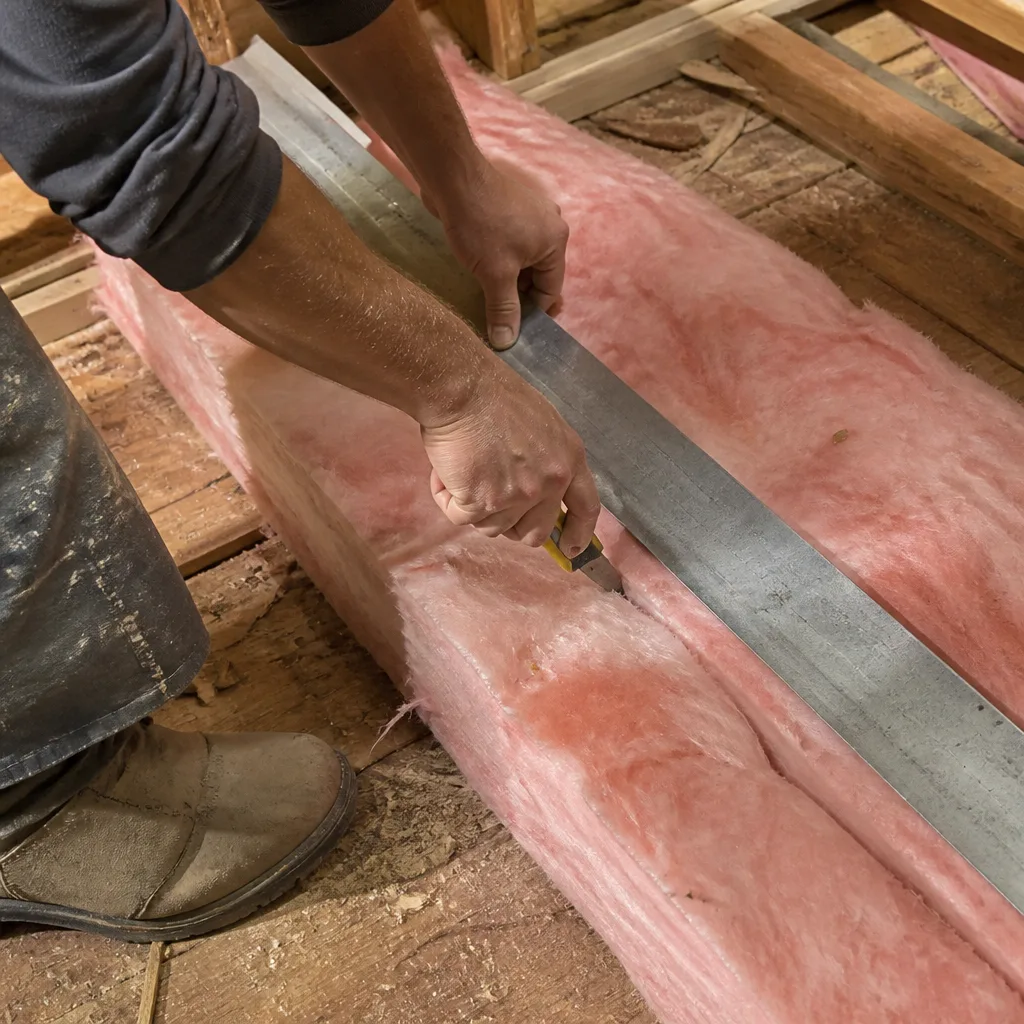
Most Georgetown-area insulation companies register as general contractors or specialty contractors with the Texas Department of Licensing and Regulation (TDLR) or operate under local business licensing. This registration allows them to perform the physical installation of batt, blown-in, or spray foam insulation. It does not require training in building science, moisture dynamics, or combustion safety. A crew can hold this registration and still blow fiberglass over unsealed can lights, creating a fire hazard and thermal bypass.
Category 2: Air Sealing Specialist Credentialing
Air sealing is the distinct trade of finding and closing leakage paths - top plates, sill plates, rim joists, duct boots, electrical penetrations - before insulation goes in. The Building Performance Institute (BPI) certifies technicians in air sealing and whole-house envelope improvement. A BPI Building Analyst or Envelope Professional has passed both written and field exams demonstrating they understand pressure boundaries, thermal boundaries, and the interaction between insulation and ventilation. When a contractor employs BPI-certified staff, they have invested in quality control that registration alone does not guarantee.
Category 3: BPI-Certified Building Analyst
This is the credential that governs diagnostic work. A Building Analyst can design the scope, interpret blower-door results, calculate the appropriate insulation levels for Georgetown’s climate zone (IECC Zone 2), and identify combustion safety issues before sealing makes them worse. If your home has gas appliances in the attic or a sealed crawl space with a furnace, this certification matters for your safety.
What we look for when we hire: at least one Building Analyst on staff who reviews every scope, and every crew leader with BPI Envelope Professional or equivalent. The Haven Standard requires this because a written price without technical oversight is just a guess in writing.
Marketing designations to treat skeptically: “Energy Star Partner” (a program participation, not a technician credential), “Owens Corning Preferred Contractor” (a volume and training program, not a quality guarantee - and we do not claim exclusive or preferred status with any named brand), and any “certified” badge that traces back to a manufacturer’s sales division rather than an independent standards body.
The Five-Question Pre-Hire Phone Script
Call five contractors. Ask these five questions in order. Record the answers. The pattern of evasion or specificity will tell you more than any online review.
- “Will you air seal before insulating, and can you show me your written protocol for what gets sealed?”
Listen for: a specific list - top plates, electrical penetrations, can lights, duct boots, chimney chases, plumbing stacks. Red flag: “We check for major leaks” or “We seal the big stuff.” There is no “big stuff” standard. Either the scope enumerates locations or it doesn’t exist. - “Do you run a blower-door test before and after, and will I receive the report?”
Listen for: “Yes, every job” or “Yes, on request” with a clear fee structure. Red flag: “We can add that” or “It’s not really necessary for insulation.” In Georgetown’s climate, it is necessary. A contractor who cannot measure does not know if they succeeded. - “What does your written price include - materials, R-value, square footage, and air sealing locations?”
Listen for: a description of a multi-line scope document. Red flag: “We’ll give you a quote when we see it” or a one-line email with a single dollar figure. Under Haven Standard Clause 1, every job begins with a written price that specifies what is being done, where, and with what material. No exceptions since 2016. - “What documentation do I receive when the crew leaves?”
Listen for: photo log, test report, product data sheets, warranty terms. Red flag: “We’ll email you the invoice” or silence. A Attic Insulation in Georgetown job from a thorough contractor ends with a packet that proves what was installed. - “Can I see before-and-after blower-door results from a Georgetown job in the last 90 days?”
Listen for: an offer to share (with client permission) or a description of typical results. Red flag: “We don’t usually share client information” - a privacy concern that takes two minutes to solve with a redacted report. The real reason is usually that no recent test exists.
How to interpret evasive answers: contractors who pivot to “we’ve been in business X years” or “we have great reviews” are substituting reputation for process. Years in business and positive reviews correlate with quality but do not guarantee it. A five-year-old company with blower-door discipline outperforms a twenty-year-old company without it.
What a Legitimate Written Price and Scope Must Include
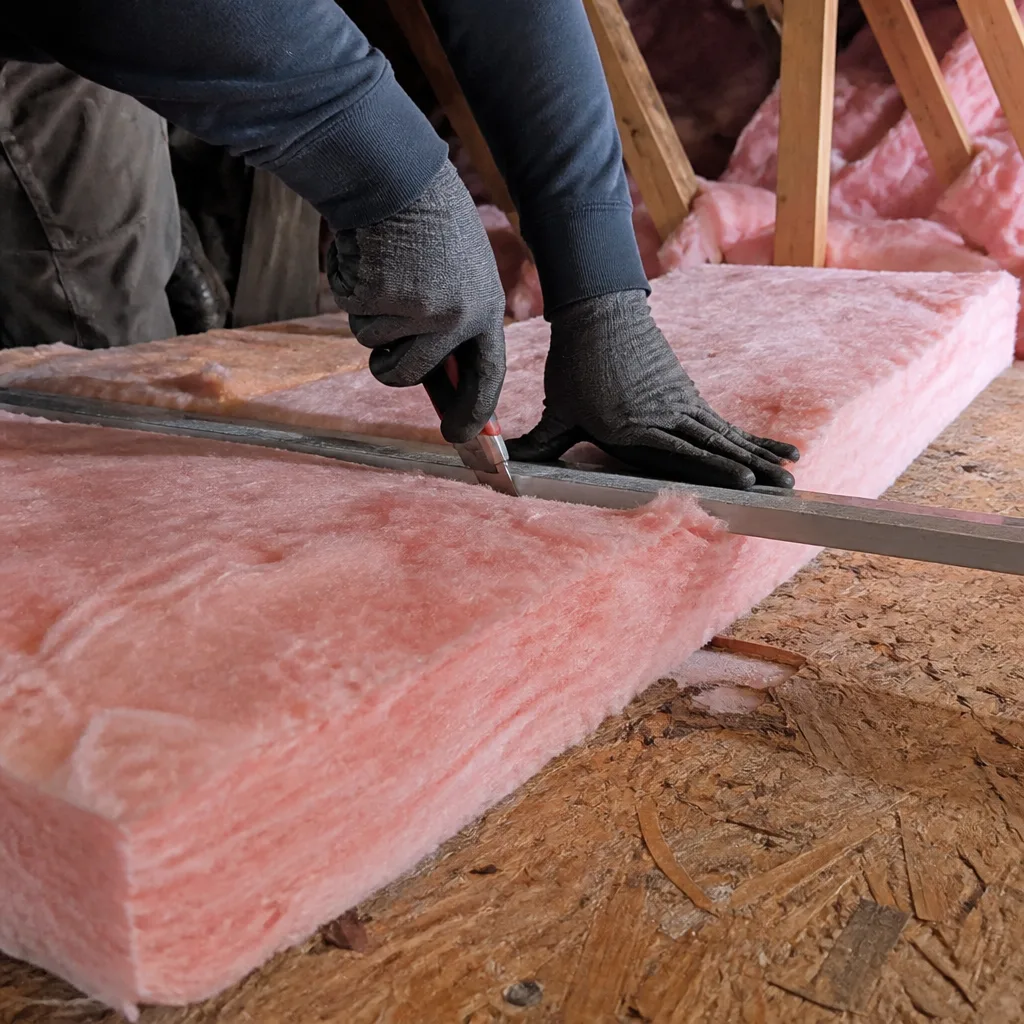
A written price before any work starts is the foundation of Haven Standard Clause 1. But not all written prices are equal. Here’s what separates a document that protects you from one that exposes you.
Required elements:
- Material specification by brand and product line. “R-38 blown-in insulation” is insufficient. “Knauf Jet Stream Ultra fiberglass blown-in to R-38 per ASTM C764” is sufficient. Product data sheets should be referenced or attached.
- Square footage and location. “Attic: 1,240 sq ft at R-38.” “Crawl space: 680 sq ft at R-19 walls.” Without location and area, you cannot verify material delivery quantities or compare quotes.
- Air sealing locations enumerated. “Air seal all accessible top plates, electrical penetrations, can lights, duct boots, and plumbing stacks in attic floor.” This is the minimum. “Air sealing as needed” is a blank check.
- R-value and installation method. R-value is meaningless without the installation standard. Blown-in fiberglass settled density, spray foam thickness and pass count, batt friction fit or staple - these determine actual performance.
- Exclusions and assumptions. “Assumes attic is walkable and free of active rodent infestation.” “Excludes HVAC repair or duct sealing.” This protects both parties.
- Total price, payment terms, and warranty terms. The 365-Day Done Right Promise should be described in writing, not referenced verbally.
What a one-line quote looks like: “$3,200 for attic insulation.” This tells you nothing about whether the contractor understands your house. It is a price for a commodity, not a scope for a performance improvement.
In Georgetown’s market, we’ve reviewed competitor quotes that specified “spray foam” without naming open-cell or closed-cell, without thickness, and without density. Open-cell Icynene at 3.5 inches performs differently than closed-cell Demilec at 2 inches. The homeowner who does not know to ask pays for a product they cannot evaluate.
Our process: every evaluation produces a written scope with line-item pricing. The homeowner reviews it, asks questions, and approves before any work is scheduled. No verbal estimates. No “we’ll figure it out when we get there.”
Your Post-Job Documentation Packet: What’s Required vs. What’s Missing
The documentation you receive when the crew leaves determines whether you can claim energy-efficiency rebates, prove work quality to a future buyer, or hold the contractor accountable if performance fails. Here’s what a complete packet contains and why each piece matters.
The blower-door test report. Pre-work CFM50, post-work CFM50, test date, technician certification, weather conditions. This is your proof of performance. Without it, you have a receipt for materials, not evidence of improvement. Georgetown utilities and some federal rebate programs require this documentation for incentive claims.
Product data sheets. Manufacturer specifications for the exact material installed - thermal resistance per inch, fire rating, moisture absorption, VOC emissions. If you sell your home, the buyer’s inspector may request this. If you file an insurance claim for roof damage, the adjuster needs to verify what was installed.
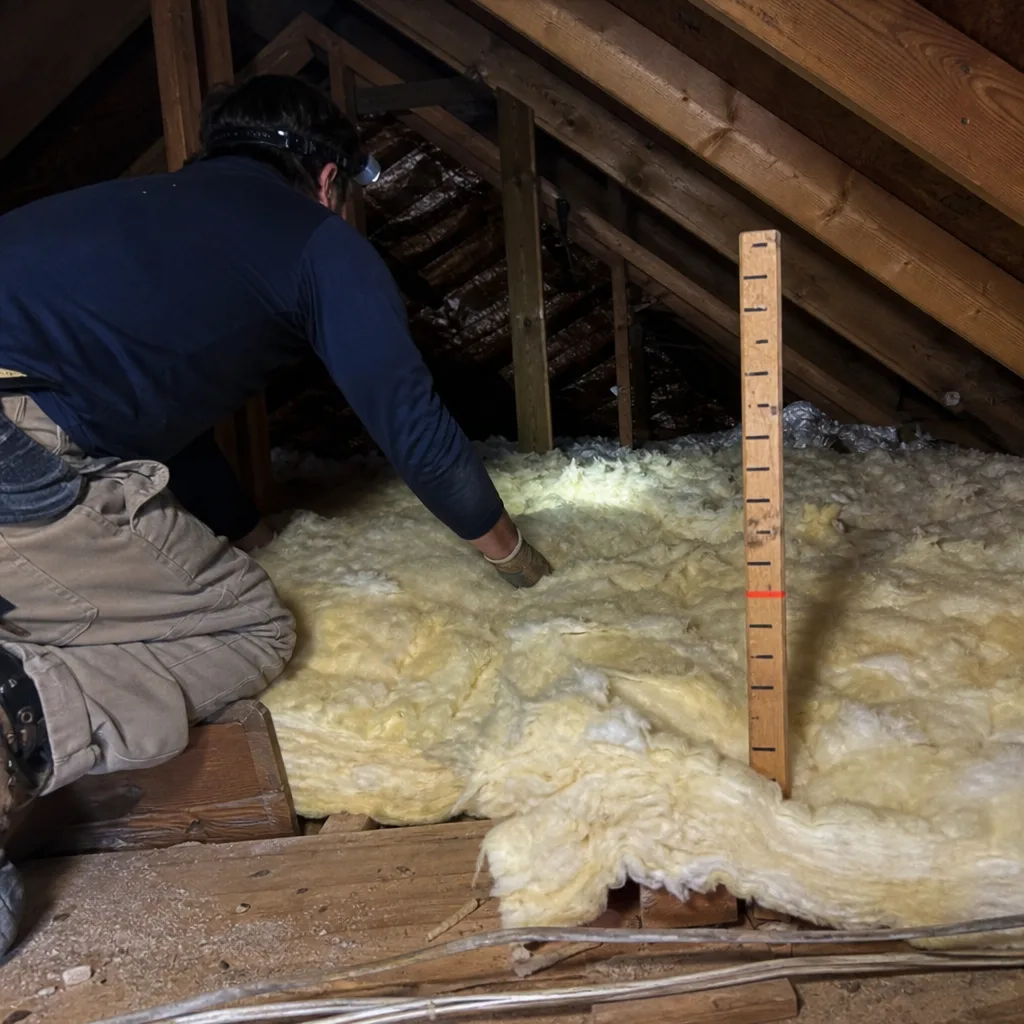
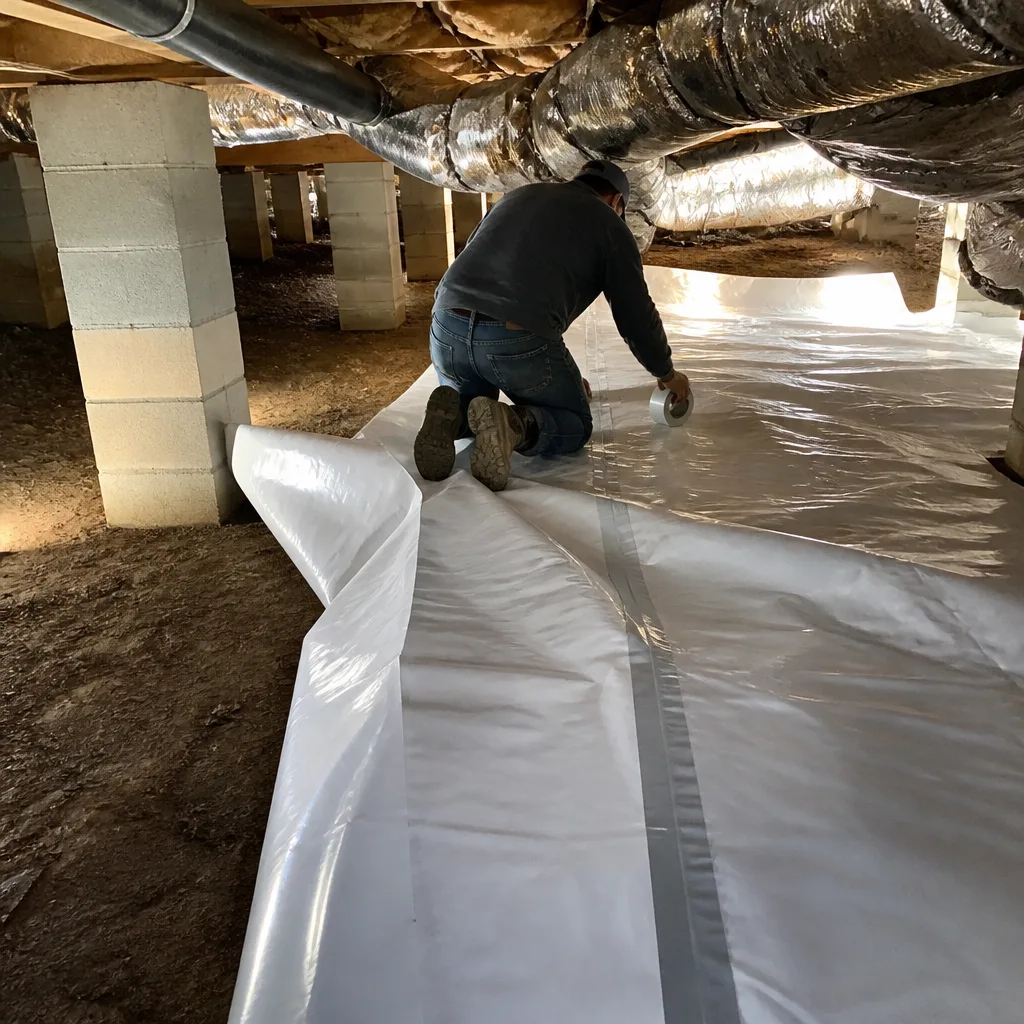
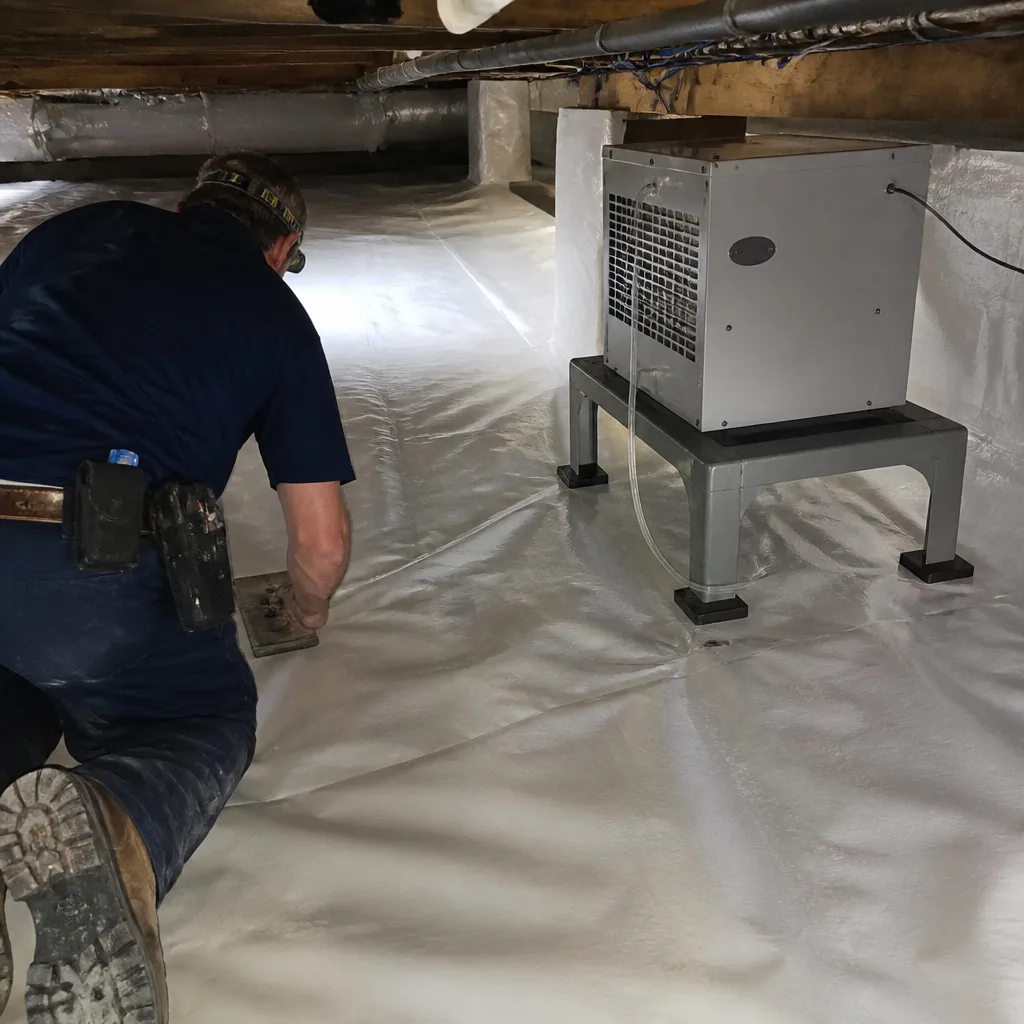
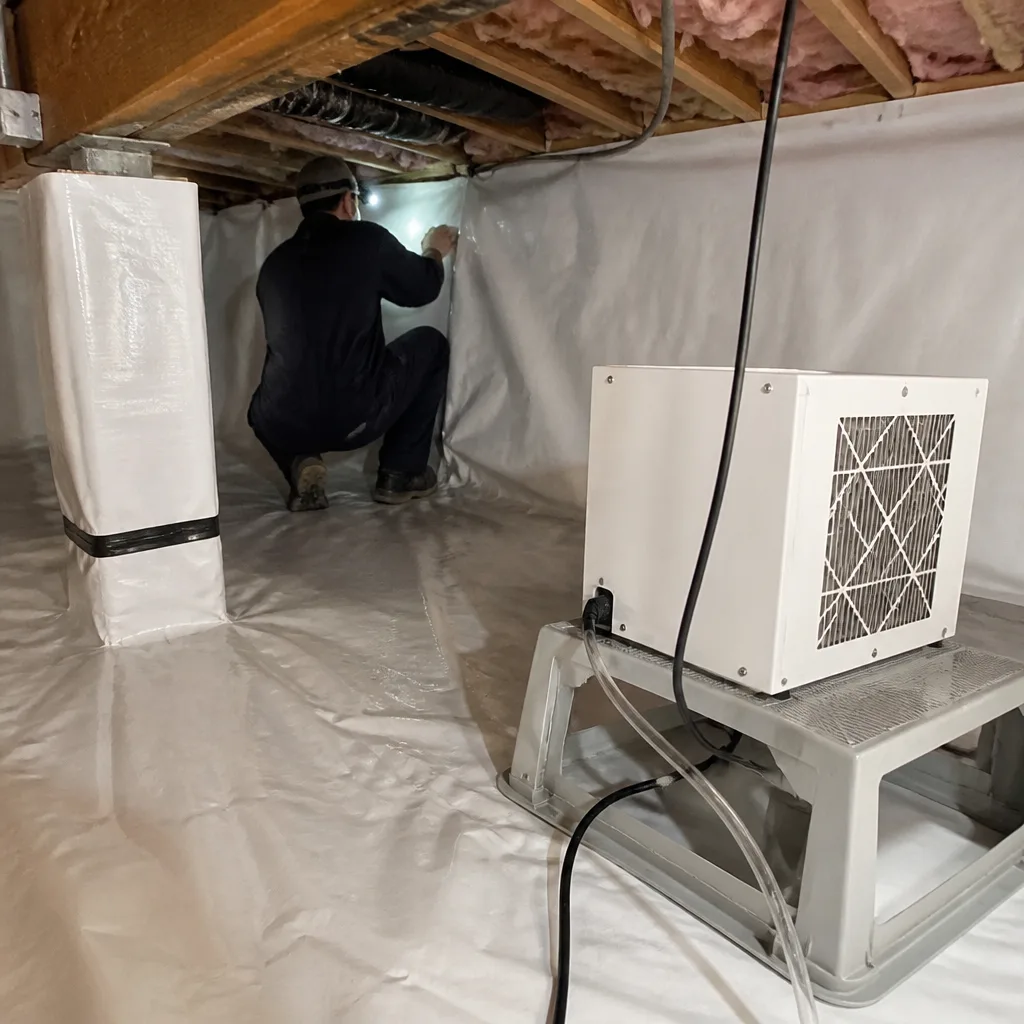
Photo log. Date-stamped images of: attic before (showing condition and existing insulation), air sealing in progress (showing sealed locations), insulation installation (showing complete coverage and depth markers), and attic after. A Crawl Space Encapsulation & Vapor Barrier in Georgetown job should include crawl space photos showing vapor barrier seams, wall insulation, and dehumidifier placement if applicable.
Warranty terms. Written description of what is covered, for how long, and the process for claims. The 365-Day Done Right Promise covers workmanship defects - if it’s not done right, we make it right. Material warranties come from the manufacturer and vary by product.
Written scope as-built. Any changes from the original scope, initialed by the homeowner or documented with a change order. This prevents disputes about what was agreed versus what was delivered.
What its absence means: if a contractor delivers only an invoice, you have no evidence for rebate claims, no proof for resale, and no leverage if the attic develops a mold problem in year two. We’ve been called to fix jobs where the previous contractor “couldn’t find the paperwork” when the homeowner discovered unsealed can lights buried under new insulation. Without documentation, that conversation goes nowhere.
Our standard: Documented Photo Record on every visit, included, not available on request. Before-and-after blower-door numbers on every applicable job. Written scope and warranty delivered before anyone lifts a tool.
The Two Most Common Upsell Tactics in Georgetown (and When Each Is Justified)
The Georgetown insulation market has two recurring upsells that are sometimes appropriate and sometimes unnecessary. Knowing the data behind each protects you from paying for performance you won’t receive.
Upsell Tactic 1: Radiant Barrier on Already-Sealed Attics
Radiant barrier - typically a reflective foil or metallized film applied to roof decking or laid over attic insulation - reduces radiant heat transfer from hot roof surfaces to the attic floor. In Georgetown’s climate, this sounds sensible: summer roof temperatures exceed 150°F, and any reduction helps.
But the physics matter. Radiant barrier provides benefit proportional to the temperature difference between the roof and the attic floor. If your attic is already well air-sealed and insulated to R-38 or above, the attic floor temperature stays relatively close to indoor conditions. The radiant heat transfer mechanism becomes less significant compared to conductive heat flow, which insulation already addresses. Department of Energy modeling shows radiant barrier savings drop substantially in attics with R-30+ insulation and complete air sealing.
When it’s justified: unsealed attics with R-19 or less, where the attic floor runs hot and HVAC ducts traverse the space. When it’s not: after proper air sealing and insulation upgrade, where the marginal savings do not justify the installed cost. A contractor pushing radiant barrier without running a blower-door first is selling a product, not solving a measured problem.
Upsell Tactic 2: “Premium” Blown-In Brands
Some contractors designate certain fiberglass or cellulose products as “premium” with corresponding price premiums. The actual performance difference between a standard Knauf Jet Stream and a “premium” line from the same manufacturer is often minimal in residential applications - sometimes a slight density improvement or lower dust formulation for the installer.
What matters more than brand tier: installed density, complete coverage, and proper depth. A standard product installed to specification outperforms a premium product installed thin or with gaps. We’ve seen “premium” blown-in in Georgetown’s Riverview neighborhood installed at 30% below labeled density because the crew rushed the job. The brand on the bag did not matter.
When brand upgrade is justified: specific performance characteristics like formaldehyde-free binder (relevant for chemically sensitive occupants), higher recycled content for LEED or similar programs, or manufacturer-backed extended warranty. When it’s not: generic “better quality” claims without spec sheet comparison.
Our approach: materials sourced from Knauf, Rockwool, CertainTeed, Icynene, and other manufacturers - no proprietary product lock-in. We specify by performance requirement, not by brand tier, and we show you the product data sheet before you decide.
Georgetown Climate, Code, and Neighborhood Considerations
Georgetown sits in IECC Climate Zone 2, the warmest zone in Texas’s central corridor. This determines code-minimum insulation levels, but code minimum is not performance optimum for every house.
Climate realities: summer design temperature of 99°F, with 70+ days above 95°F annually. Cooling dominates energy use. Attic insulation in older Georgetown neighborhoods like the Downtown Historic District or University Avenue area often sits at R-19 or less, installed when heating degree days drove design. These homes benefit disproportionately from air sealing plus insulation upgrade because the cooling load reduction is substantial.
Neighborhood-specific patterns:
- Sun City and retirement communities: slab-on-grade construction, minimal crawl space concerns, but frequent ductwork in attic with flex duct degradation. Blower-door testing often reveals return plenum leaks that dominate the leakage budget.
- Teravista and newer developments (2005-2020): better baseline insulation but builder-grade air sealing. Top plates and electrical penetrations rarely sealed during original construction. These homes test at 3,500-4,500 CFM50 and drop to 2,500-3,000 with proper work.
- Pre-1990 neighborhoods: may contain vermiculite insulation (possible asbestos content) or knob-and-tube wiring active in attic. Insulation removal and replacement requires specific protocols; blowing new material over either creates fire or health hazards.
Code and permit context: Georgetown requires permits for spray foam insulation and for any work involving structural modification or electrical penetration; see Insulation Permits, Codes & Inspections in TX: What You Need to Know. A contractor who suggests skipping permits to save time is exposing you to resale liability and potential code enforcement. Legitimate contractors factor permit costs into the written price and handle the application.
Rebate landscape: Georgetown Utility Systems and some statewide programs offer incentives for air sealing and insulation improvements that meet specific performance thresholds. These typically require pre- and post-work documentation, including blower-door results. A contractor unfamiliar with these programs cannot help you capture available funding.
Spray Foam Insulation in Georgetown jobs in particular require attention to climate-specific details: open-cell foam must be protected from bulk water in roof assemblies, and closed-cell applications in crawl spaces need vapor permeance calculations that account for our extended cooling season.
Common Mistakes to Avoid
- Hiring based on price per square foot alone. A low price for R-38 blown-in means nothing if the crew skips air sealing, installs at insufficient density, or leaves gaps around chases. The meaningful comparison is cost per CFM50 reduction plus cost per R-value at proper coverage.
- Accepting verbal estimates or “ballpark” figures. In Texas, a contractor who will not put price and scope in writing before work starts is not operating under any standard you can enforce. The Haven Standard requires written price before any work starts always; this should be your minimum expectation of any contractor.
- Ignoring the air sealing prerequisite. Georgetown’s humidity makes unsealed attics moisture problems waiting to happen. Insulation contractors who treat air sealing as an upsell rather than a prerequisite are installing material that will underperform and potentially degrade.
- Not verifying insurance. Ask for a certificate of insurance naming you as additional insured for the project duration. General liability and workers compensation are baseline requirements. A crew working in your attic without coverage exposes you to liability for falls, electrical contact, or fire.
- Skipping the post-job walkthrough. You should see the completed work, review the photo log, and receive the documentation packet before final payment. A contractor who pressures for payment before delivery of documentation is signaling that the documentation may not exist.
- Assuming all “insulation contractors” do the same work. Some Georgetown companies are HVAC contractors adding insulation as a sideline. Some are pest control companies offering attic cleaning with insulation as an add-on. The technical depth varies enormously. Ask about their primary trade and what percentage of revenue comes from building envelope work.
- Neglecting to ask about material sourcing. Contractors who use proprietary products you cannot price-check or verify create information asymmetry. We source from multiple manufacturers so the specification drives the product, not the other way around.
When to Call a Professional
Call a professional insulation contractor when your energy bills spike without usage changes, when rooms develop persistent temperature stratification, when you find moisture staining on ceiling drywall, or when your attic inspection reveals degraded, displaced, or insufficient material. In Georgetown’s climate, these symptoms rarely resolve without envelope improvement. Topside Attic Insulation Georgetown offers free estimates in Georgetown - call (254) 970-2136. We provide a Free Second Opinion on any written estimate, and every evaluation includes a documented photo record whether or not you proceed with work. Calls are answered by a live person, 24/7, with background-checked, uniformed technicians who arrive on schedule with a text when they’re on the way.
Frequently Asked Questions
Most attic insulation jobs in a Georgetown home of 1,800-2,400 square feet run between $2,800 and $5,400 for air sealing plus blown-in fiberglass to R-38, depending on accessibility, existing material condition, and whether removal is required; for detailed pricing factors, see our Insulation Cost Breakdown: The Georgetown Homeowner’s Reference for 2026. Spray foam applications range higher based on open-cell versus closed-cell specification and thickness. Call (254) 970-2136 for an exact quote - estimates are free, and we provide a written price before any work starts.
No, but you should plan to vacate the work zone and expect some noise and temporary HVAC interruption. Blown-in fiberglass installation generates dust that we contain with barriers and negative air pressure; spray foam requires occupant evacuation during application and curing, typically 24 hours. We coordinate timing so you’re not surprised by either requirement.
A typical attic air sealing and blown-in insulation job on a Georgetown single-family home completes in one day. Spray foam applications may extend to two days for prep, application, and curing. Jobs requiring insulation removal, rodent remediation, or extensive air sealing in confined crawl spaces may run longer. We specify duration in the written scope so you can plan.
IECC Climate Zone 2 requires R-30 minimum in attics for new construction, but performance retrofit work typically targets R-38 to R-49 for cooling-dominated homes. The optimal R-value depends on your duct location, air leakage rate, and whether the attic is conditioned. We calculate this during evaluation rather than applying a universal recommendation.
Sometimes, but only after verifying the existing material is dry, uncontaminated, and compatible. Wet or moldy insulation must be removed. Vermiculite requires asbestos testing. Fiberglass over cellulose is acceptable; cellulose over fiberglass may compress the fiberglass and reduce its effective R-value. We inspect and document existing conditions before recommending addition versus removal.
Insulation provides modest sound attenuation, particularly dense-pack cellulose or Rockwool mineral wool, but it is not designed as a primary noise-control measure. Significant noise transmission through walls or floors requires dedicated soundproofing assemblies with decoupling and mass-loaded barriers. If noise is your primary concern, we can evaluate whether insulation upgrade will provide meaningful benefit or whether you need a different approach.
The Bottom Line
Hiring an insulation contractor in Georgetown is not about finding the lowest quote or the longest track record. It is about finding a contractor who measures performance, documents results, and puts every promise in writing before work begins. Demand before-and-after blower-door numbers. Demand a written scope that enumerates air sealing locations, materials, and R-values. Demand a documentation packet that proves what was delivered. Four out of five contractors will struggle with these requests. The fifth is the one worth hiring. We’ve operated under The Haven Standard since 2016, completing over 9,000 homes with written prices, documented records, and published blower-door results on every applicable job. If you’re evaluating quotes and want a Free Second Opinion, or if you’re ready to start with a proper evaluation, call (254) 970-2136. A live person answers, 24/7.
Written by Wes Okafor, Owner at Topside Attic Insulation Georgetown, serving Georgetown since 2016.