
Blown-In Attic Insulation in Georgetown, TX
Blown-in attic insulation is the process of mechanically depositing loose-fill material – cellulose or fiberglass – across your attic floor until it reaches the R-value your home’s envelope needs. Most Georgetown homes built before 2010 are sitting at R-19 or lower; the current IECC benchmark for Central Texas is R-38 to R-60, depending on the framing and duct configuration. Closing that gap with blown-in material typically runs between $1,800 and $4,200 for a standard single-story home in Georgetown, and How Much Does Attic Insulation Cost? (2026 Price Guide) - Georgetown, TX breaks down exactly what drives that range.
What separates a real performance upgrade from a pile of fluff in your attic is what happens before the hose goes in. At Topside Attic Insulation Georgetown, we treat air sealing as a hard prerequisite. Top plates, can light penetrations, plumbing chases, and any other bypasses get sealed first – always. Then we insulate. That sequence is the difference between a job that shows up on a blower-door test and one that doesn’t. If you want the full picture of what that means for your home, the Attic Insulation in Georgetown page covers the whole envelope approach in detail.
Wes Okafor has led every job at Topside Attic Insulation Georgetown since we opened under The Haven Standard in 2016. Over 9,000 homes sealed and insulated. Every one started with a written price and closed with a documented photo record. Call (254) 970-2136 to get a flat, written price on yours – no estimate window, no callback queue, a live person picks up.
When You Need Blown-In Attic Insulation
- Your energy bills spike every June and hold through September. Georgetown’s average July high sits above 95°F, and a Williamson County home with inadequate attic insulation is essentially running its HVAC against a hot roof with no buffer. If your summer electric bills have been climbing faster than your neighbors’, attic insulation is usually the first place to check.
- Your attic floor shows bare joists or thin, flat-looking batts. Fiberglass batt insulation compresses over time and loses R-value as it does. If you can see the top of the wood framing clearly, you’re almost certainly under the R-38 floor that Central Texas homes should maintain.
- Rooms on the top floor or under the roofline are noticeably hotter than the rest of the house. This is a common complaint in the Sun City Georgetown area and in the newer subdivisions off Williams Drive – homes where the builder installed code-minimum insulation at the time of construction and the standard has moved since.
- You’ve had an energy audit that flagged attic heat loss. If a blower-door test – a pressurization reading that shows, in one number, how much conditioned air your envelope is losing – came back high, and the auditor pointed at the attic, blown-in insulation paired with air sealing is the standard fix.
- You’re preparing to sell and want a documented improvement. Georgetown’s real estate market rewards homes with documented energy upgrades. Before-and-after blower-door numbers and a written scope of work are the kind of evidence a buyer’s inspector can’t argue with.
- Your previous insulation was disturbed during a remodel or HVAC replacement. Ductwork swaps, attic-mounted equipment installations, and rodent remediation all displace loose-fill material. If your attic has been touched by a crew in the last five years, it’s worth a physical inspection before the next Texas summer hits.
Our Blown-In Attic Insulation Process
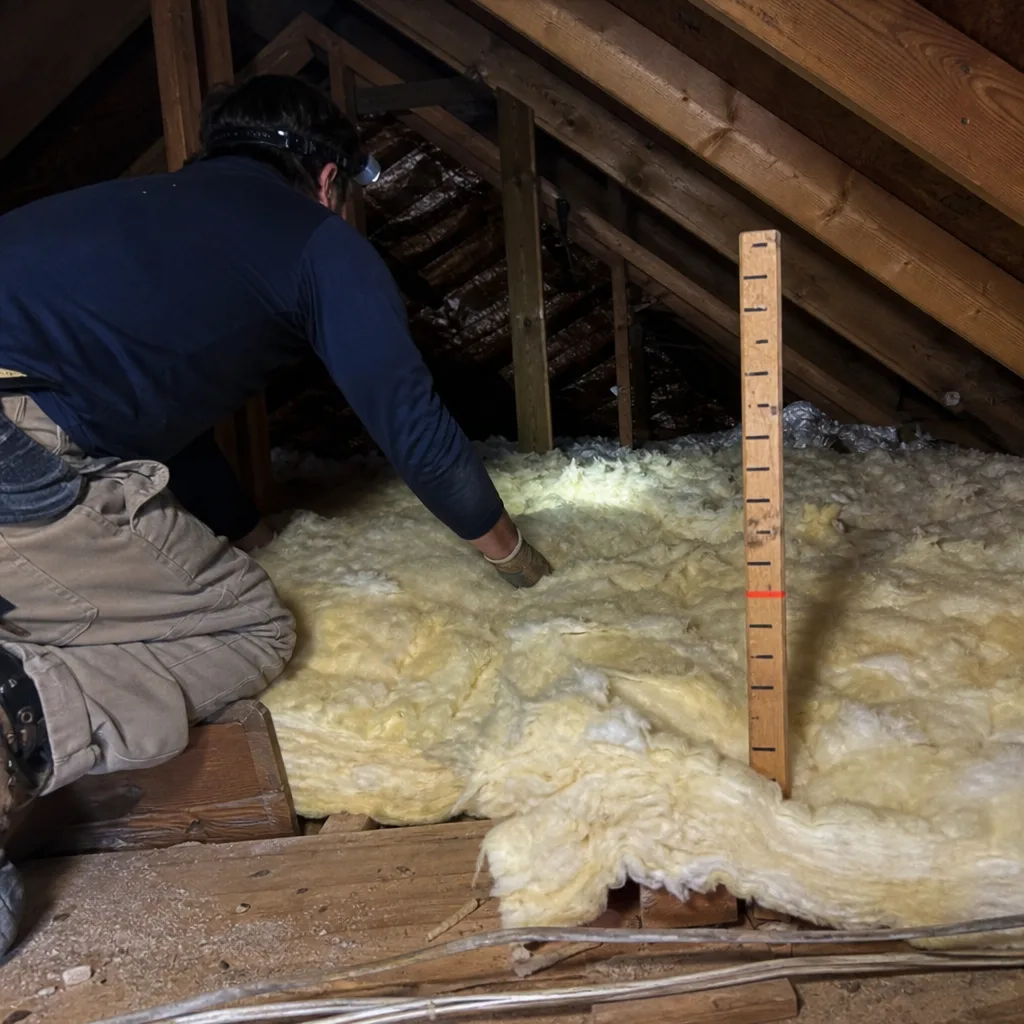
- Written scope and flat price before anything else. Under Haven Standard Clause 1, you receive a written price and written scope before any tool is lifted. That document describes exactly what material goes in, what R-value you’ll end at, and what air-sealing work will be completed first. There’s no “we’ll know more once we’re up there” revision after the fact.
- Pre-job blower-door baseline. On applicable jobs, we run a blower-door test before the crew touches the attic. The number we record – measured in CFM50, the volume of air per minute moving through your building envelope at a standardized pressure – becomes the before figure on your documented record. It’s the only honest way to measure what the air sealing actually accomplished.
- Air sealing of top plates, penetrations, and bypasses. Every can light, every plumbing stack, every top-plate gap gets sealed before a single bag of material goes in. This step typically takes longer than the insulation itself. Skipping it and blowing insulation over an unsealed attic floor is something Topside Attic Insulation Georgetown will not do, on any job, for any reason.
- Blown-in material installation to specified depth and R-value. We install GreenFiber cellulose or fiberglass loose-fill – sourced from manufacturers including CertainTeed and Rockwool depending on the job specification – to the depth required to hit your target R-value, verified with depth rulers left visible for your inspection. The hose goes in; the material is distributed evenly across the attic floor, including corners and low-clearance areas that batts can’t reach.
- Post-job blower-door measurement. After air sealing and insulation are complete, we run the blower-door test again. You get both numbers – before and after – in your documented record. If the after number doesn’t reflect meaningful improvement from the sealing work, we address it before we leave.
- Documented photo record and written warranty delivery. The job closes with a photo record of every stage – the pre-work attic condition, the sealed penetrations, the finished insulation depth at multiple points – and a written warranty. The 365-Day Done Right Promise applies: if it’s not right within the first year, we make it right.
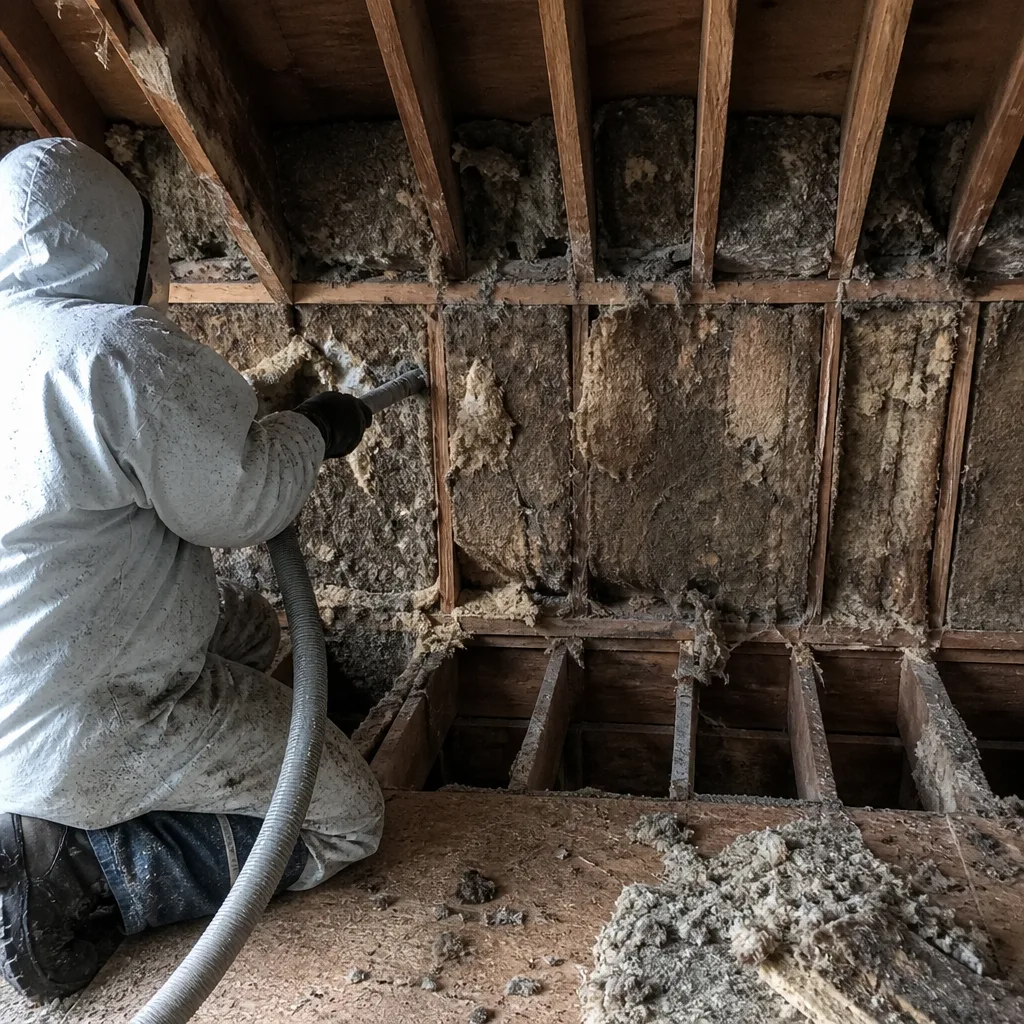 Before
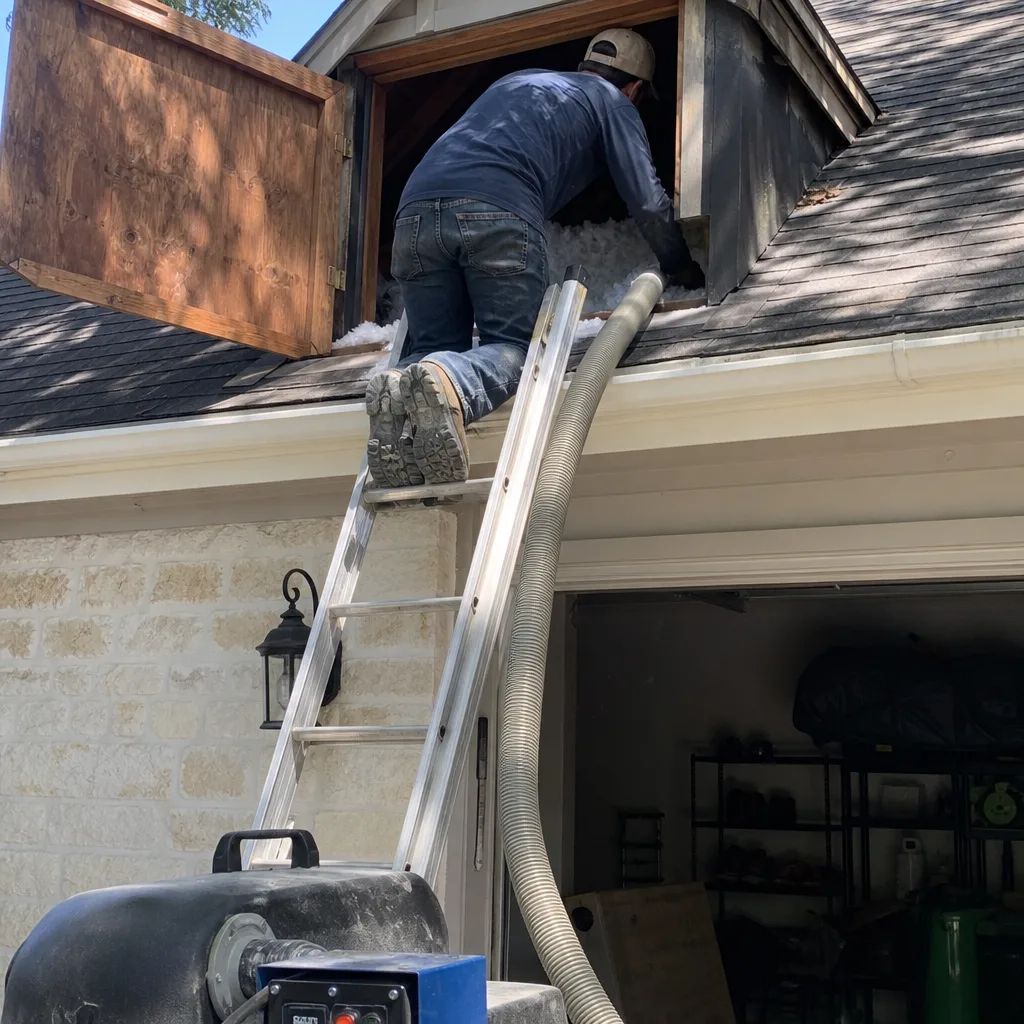 After
AfterBlown-In Attic Insulation Pricing in Georgetown
Most blown-in attic insulation jobs in Georgetown fall between $1,800 and $4,200 for a single-story home with a standard attic configuration. That range covers the air sealing step – which is included, not itemized as an add-on – plus material and labor to bring the home to R-38 or higher. Two-story homes, homes with complex hip-roof framing, or attics with significant existing debris or damaged insulation will run toward the higher end of the range or above it.
Here’s how the major cost variables break down:
| Factor | Typical Impact on Price |
|---|---|
| Square footage of attic floor | Primary driver – most jobs price per square foot of coverage area |
| Starting R-value (how much is already there) | More existing insulation means less material needed; less means more |
| Number of penetrations to seal | Older Georgetown homes with many can lights or plumbing chases take longer to air-seal |
| Attic access and clearance | Low-pitch roofs or obstructed access hatches add labor time |
| Insulation removal needed first | Damaged, wet, or rodent-contaminated existing insulation must come out before new material goes in – priced separately |
| Target R-value | R-38 to R-49 is standard for Georgetown; higher targets require more material depth |
The written price you receive before work starts is a flat price – not an estimate that grows after the crew arrives. If you have a written quote from another contractor, bring it. Under The Haven Standard, we offer a Free Second Opinion on any written estimate. We’ll read it with you, line by line, and tell you what’s there and what isn’t.
Call (254) 970-2136 to schedule a site assessment and receive your written price. The assessment is free; the price we hand you is the price you pay.
FAQs – Blown-In Attic Insulation
What R-value do I need for blown-in insulation in Georgetown, TX?
The current recommended range for Georgetown attics is R-38 to R-60. Georgetown sits in IECC Climate Zone 2, and the Department of Energy’s guidance for that zone calls for a minimum of R-38 in existing homes and up to R-60 for new construction or full replacement jobs. Most Georgetown homes we inspect are sitting between R-13 and R-22 – well short of that floor. The right target for your specific home depends on your current insulation depth, your duct configuration, and whether the attic is conditioned or unconditioned space. Your written scope will name the target R-value explicitly. Call (254) 970-2136 to get a site assessment and a flat written price.
How long does blown-in attic insulation last in Central Texas heat?
Cellulose and fiberglass loose-fill both hold their R-value for 20 to 30 years under normal conditions. The Central Texas climate does introduce one variable worth watching: cellulose is moisture-sensitive, and an attic with a roof leak or Attic Baffles & Ventilation Prep issues can see cellulose compact or develop mold. Fiberglass loose-fill is less sensitive to moisture and is sometimes the better choice in Georgetown attics where ventilation is marginal. We specify material based on your attic’s actual conditions, not on what’s cheapest to deliver. Whichever material goes in, the 365-Day Done Right Promise covers the installation work for the first year.
Do you have to remove old insulation before blowing in new?
Not always, but sometimes yes. If existing insulation is contaminated by rodents, visibly wet, or compressed to the point where adding material on top would trap moisture, it needs to come out first. If the existing material is dry and in reasonable condition, blown-in insulation can go on top of it – we treat whatever is already there as part of the starting R-value calculation. We document the condition of your existing insulation during the site assessment, which is part of your written record. You’ll know what we found and why we made the recommendation we did before any work begins.
Is blown-in insulation better than batt insulation for an attic?
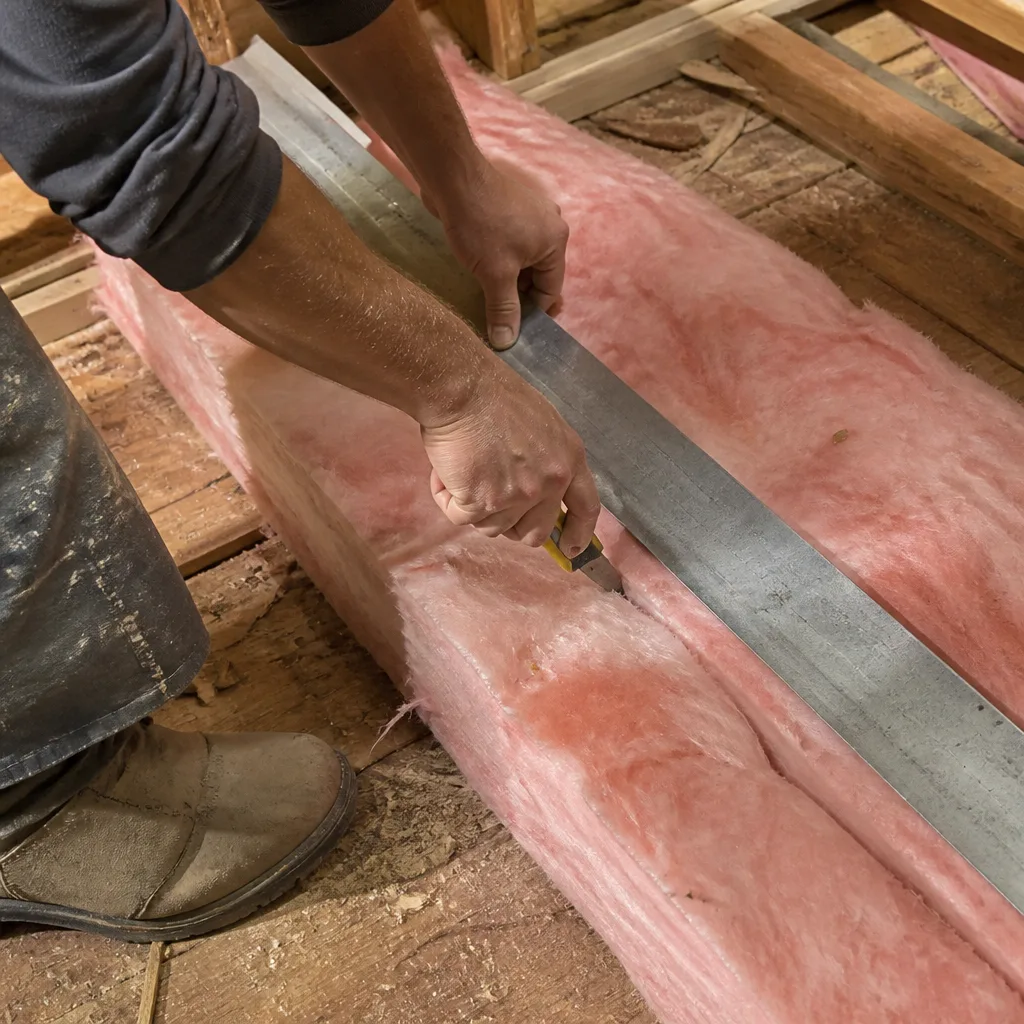
For most Georgetown attic configurations, blown-in loose-fill outperforms batts on coverage. Batts cut to fit around joists, blocking, ductwork, and pipe penetrations leave gaps at every edge. Loose-fill flows into irregular spaces and fills corners that a batt physically can’t reach. The performance gap is especially noticeable in older Georgetown homes with non-standard joist spacing or attics that have had multiple HVAC replacements over the years – where the floor framing tends to be cluttered. Attic Batt Insulation does have its place in certain wall cavity applications; for a horizontal attic floor, blown-in is generally the more reliable choice. Your written scope will specify which material and why. Call (254) 970-2136 to get your site assessment scheduled.
What You Walk Away With
Every blown-in attic insulation job at Topside Attic Insulation Georgetown produces the same set of documents. Before the crew leaves your property, you have: a written scope showing what was sealed and what was installed; a before-and-after blower-door reading (on applicable jobs) that shows the air-sealing result in a single, verifiable number; a photo record of the pre-work attic condition, the sealed penetrations, and the final insulation depth at multiple measurement points; and a written warranty backed by the 365-Day Done Right Promise.
That’s not a courtesy – it’s how The Haven Standard defines a completed job. If you want to compare that to what another contractor is offering, we’ll sit with you and look at their written estimate under our Free Second Opinion offer.
Georgetown homeowners who want to understand the broader attic envelope picture – radiant barriers, ventilation, the relationship between air sealing and duct leakage – will find more on the home page, where the full service line is laid out.
To schedule a site assessment and receive a flat, written price on our Attic Insulation services in Georgetown, call (254) 970-2136. A live person answers – no voicemail, no callback window measured in days.
Written by Wes Okafor, Owner at Topside Attic Insulation Georgetown, serving Georgetown.