
Attic Baffles & Ventilation Prep in Georgetown, TX
Attic baffles – also called rafter vents – are channels installed between roof rafters that keep soffit vents open and airflow moving from the eave to the ridge, even after insulation is blown in. Without them, blown-in insulation migrates toward the eaves over time, blocks those soffit vents, and kills the cross-ventilation your attic depends on. If you’re planning new Attic Insulation services or replacing old material, ventilation prep isn’t optional groundwork – it’s the step that determines whether the insulation actually performs.
At Topside Attic Insulation Georgetown, we complete every Attic Batt Insulation baffle installation and ventilation assessment before any insulation material goes in. That sequence matters. Blown-in cellulose or fiberglass added over a compromised vent path is wasted material that creates a moisture problem in addition to a performance problem. Georgetown’s climate – high summer attic temperatures regularly pushing past 140°F, humidity that swings sharply between April and September – makes that mistake costly in both directions: overheated air conditioning equipment and condensation that shortens roof deck life.
This page covers what baffle and ventilation prep work actually involves, what it costs in the Georgetown market, and what documentation you receive when the crew leaves. If you’d like a written price before anyone touches your attic, call us at (254) 970-2136 – a live person answers, and your estimate is free. For a full picture of our approach to attic work, see our Attic Insulation in Georgetown page.
When You Need Attic Baffles & Ventilation Prep
- You’re adding or replacing insulation and the existing baffles are absent or damaged. Most Georgetown homes built before 1995 were never fitted with baffles at all. When we open the attic hatch, we can tell within the first few minutes – loose-fill sitting flush against the roof deck at the eave line is the clearest sign.
- Your energy bills have crept up despite adequate insulation depth. If a blower-door test – a pressurization reading that shows, in one number, how much air your building envelope is losing – comes back higher than expected for a home with R-38 or more in the attic, blocked eave ventilation is a common contributing cause in Georgetown’s older Sun City and Wolf Ranch neighborhoods.
- You’re seeing moisture stains or dark streaking on roof sheathing. Condensation on the underside of the deck is a direct consequence of warm, humid indoor air reaching unventilated attic space. The streaking looks like mold on the OSB and often is. Baffles restore the airflow that dries that surface before damage sets in.
- Your HVAC equipment runs longer than it used to, even after a recent tune-up. An attic that can’t ventilate properly holds heat well past sunset. In Georgetown’s July and August, that trapped heat radiates down into the conditioned space and forces the air handler to run harder and longer. Proper vent prep is one of the cheapest ways to reduce that load.
- Ice dams formed in winter – rare but possible in Georgetown’s brief cold snaps. While Central Texas doesn’t see prolonged freezes, the February events of recent years showed that blocked attic ventilation prevents the even roof-deck temperature that stops ice from forming at eaves. If you saw ice buildup after the last hard freeze, blocked soffits are worth checking.
- You’re about to have a radiant barrier installed. Radiant barriers work by reflecting heat away from the attic floor. They’re most effective when attic air can move freely – which requires unobstructed eave-to-ridge airflow. Installing a radiant barrier into a stalled-air attic returns far less performance than the product is capable of delivering.
Our Attic Baffles & Ventilation Prep Process
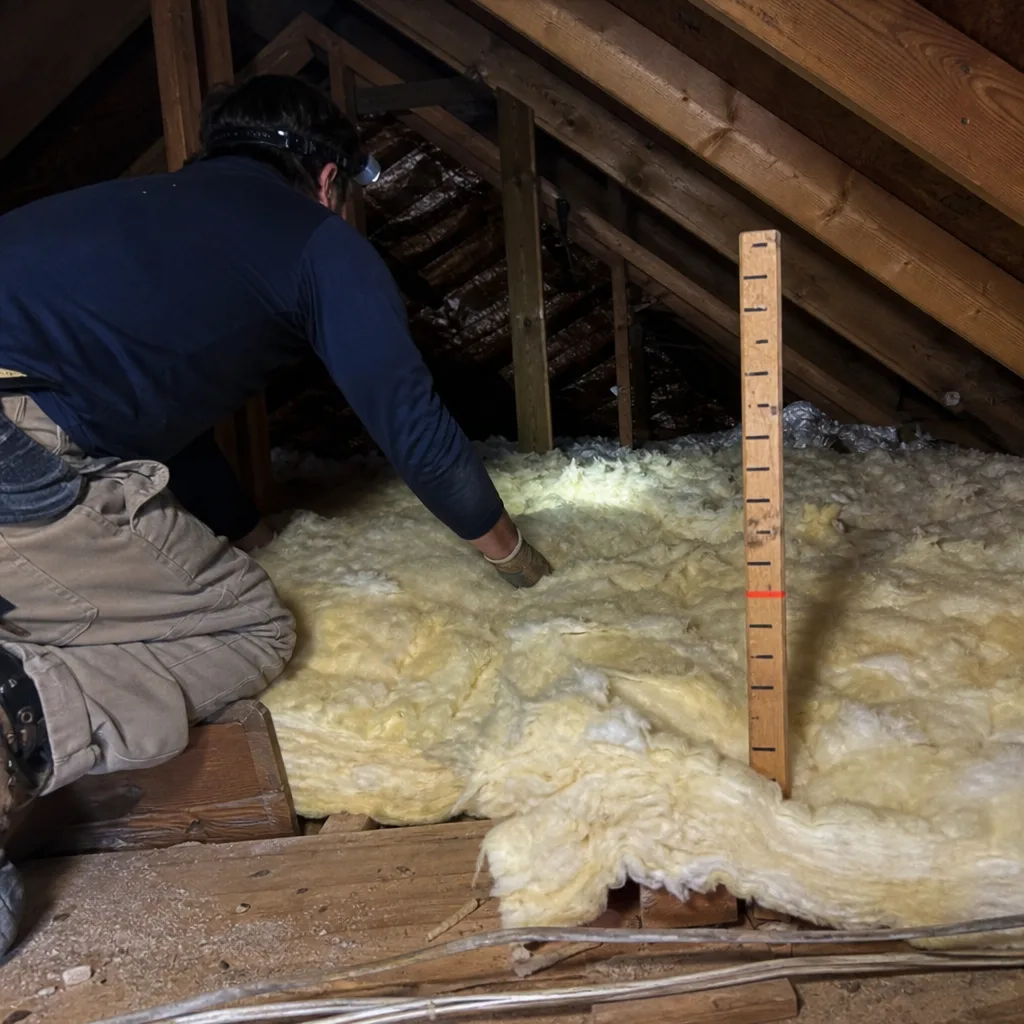
- Attic entry and initial documentation. Before any material moves, we photograph the full attic space – eave lines, ridge condition, existing insulation depth, and any visible penetrations. That photo record is yours at the end of the job, not available on request. We check the soffit intake area on all four sides of the home, note which bays already have functional baffles, and mark the ones that are blocked, collapsed, or absent.
- Ventilation math and net-free-area calculation. Texas building code and IECC guidance call for a minimum net free area – the actual open vent area after louvers and screens are accounted for – of 1 square foot of ventilation for every 150 square feet of attic floor, unless a vapor retarder is present, in which case 1:300 applies. We calculate both the intake (soffit) and exhaust (ridge or gable) sides separately. Georgetown homes with hip roofs, which are common in the Teravista and Georgetown Village developments, frequently have undersized exhaust capacity even when soffits are fully open. We identify the gap and note it in your written scope.
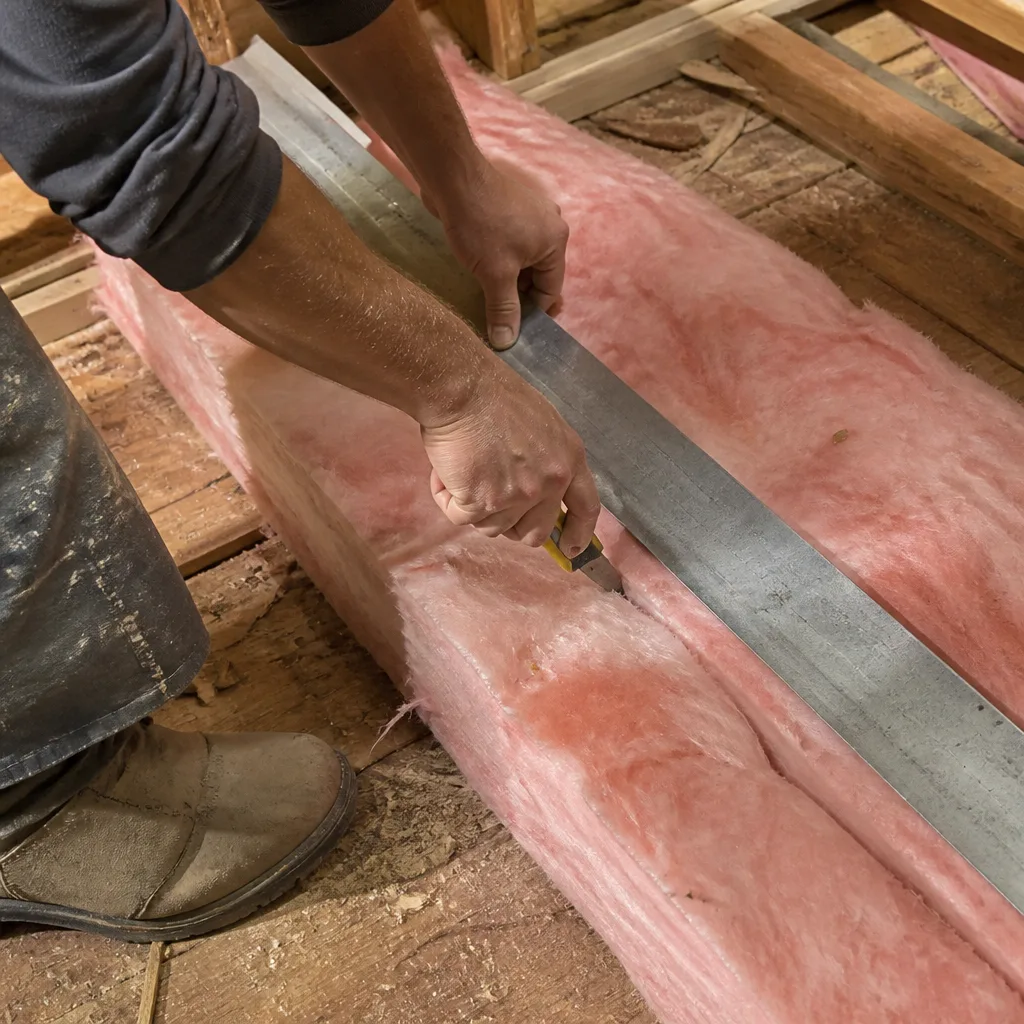
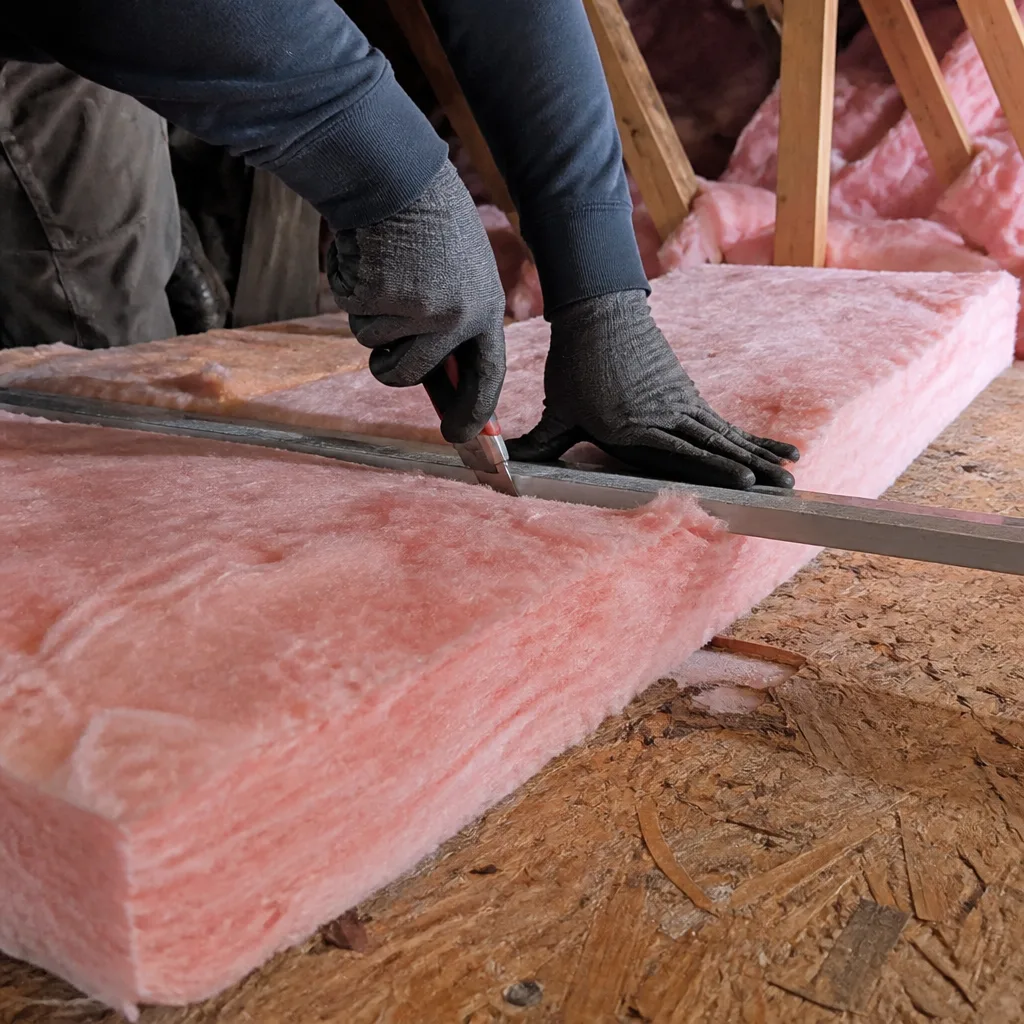
- Baffle installation by rafter bay. We install baffles – typically polystyrene or cardboard chute-style, or a formed foam baffle where the rafter bay geometry requires it – in every bay from the soffit to at least 1 inch above the top plate, maintaining the required clear airspace to the roof deck. On Georgetown homes with 2×6 or 2×8 rafter framing (common in Sun City Texas construction from the late 1990s onward), we fit baffles that preserve the full insulation depth at the eave without compressing it against the deck.
- Air sealing of top plates, can lights, and penetrations. This step happens before insulation – always. Top-plate gaps, recessed can light housings, plumbing stack penetrations, and HVAC chase openings are sealed with fire-rated foam or acoustical sealant. A top plate gap the width of a finger can lose as much conditioned air as a window left open. In Georgetown homes with older can lights – non-IC-rated fixtures that aren’t safe to cover directly with insulation – we install fire-rated, air-sealed covers before any blown-in material goes near them. This is where most contractors cut corners, and it’s where most attic performance problems originate.
- Pre-insulation blower-door reading (where applicable). On jobs where air sealing is part of the scope, we run a blower-door test before the insulation crew moves in. The reading, expressed in CFM50 – cubic feet per minute of air movement at 50 pascals of pressure – gives you and us a baseline. After sealing is complete, we run it again. Both numbers go into your job record. We don’t describe the result with adjectives; you see the before and the after figure and draw your own conclusion.
- Final inspection and written closeout. We walk the attic again after baffle installation and sealing are complete, before any insulation touches the floor. We check that every baffle is mechanically fastened (not just friction-fit), that no staples have torn through the foam at the eave, and that the ridge vent or exhaust openings are unobstructed. The written scope, documented photo record, and your 365-Day Done Right Promise documentation are delivered before the crew leaves the property – not emailed later, not available on request.
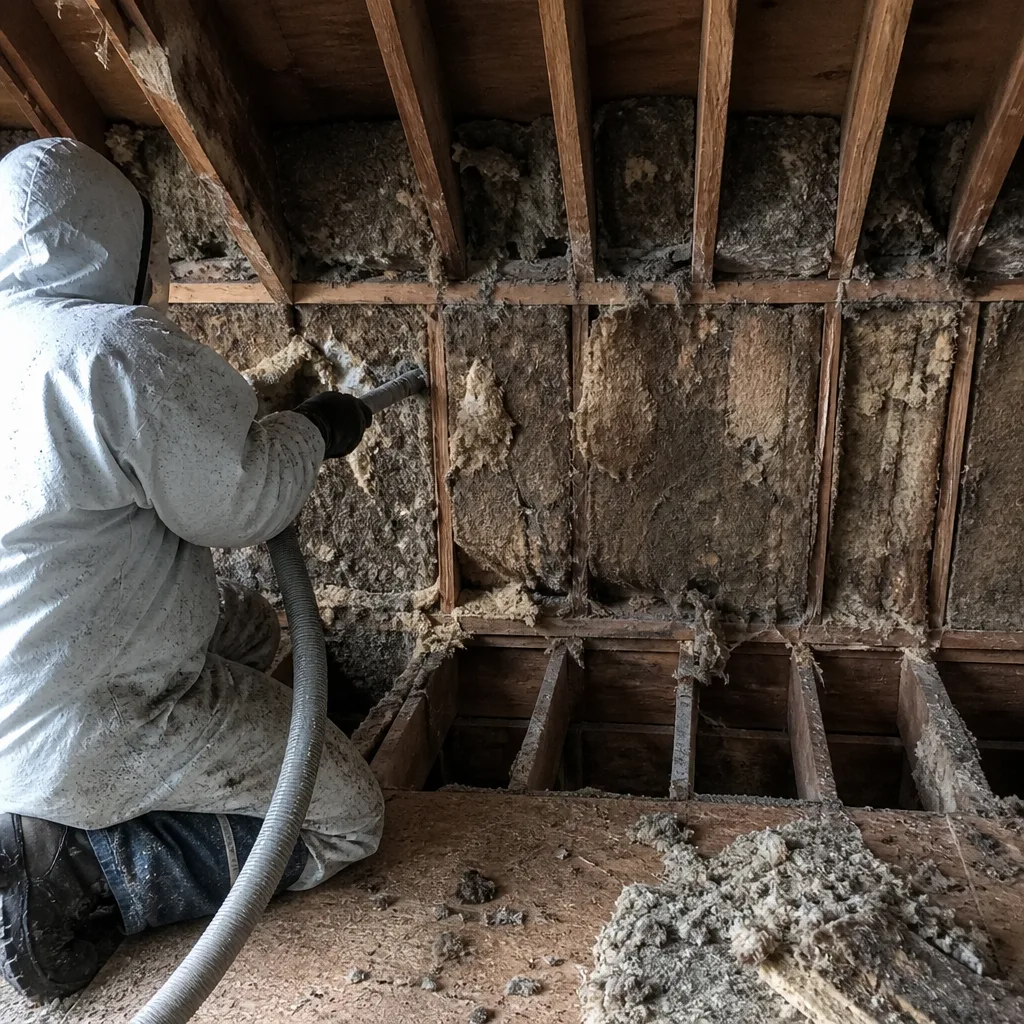 Before
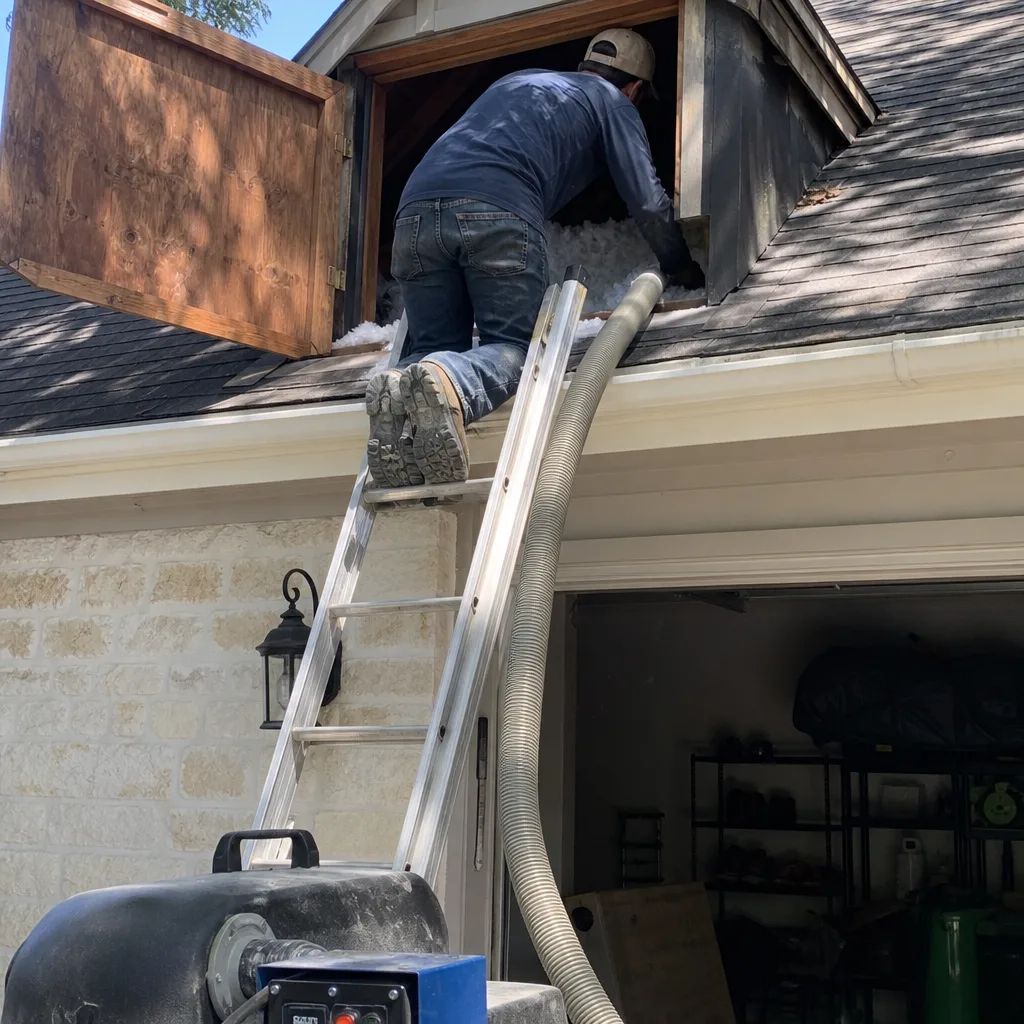 After
AfterAttic Baffles & Ventilation Prep Pricing in Georgetown
Baffle and ventilation prep costs in Georgetown depend on four things: attic square footage, the number of rafter bays requiring new or replacement baffles, whether air sealing is included in the scope, and whether any soffit or ridge vent repair is needed before the baffles go in. Most Georgetown homeowners pay somewhere in the ranges below when this work is done as part of a full insulation project; see our detailed How Much Does Attic Insulation Cost? (2026 Price Guide) - Georgetown, TX for broader pricing context.
| Scope | Typical Range (Georgetown market) |
|---|---|
| Baffle installation only (existing soffit vents functional, 1,200-1,800 sq ft attic) | $280 – $520 |
| Baffle installation + top-plate and penetration air sealing | $520 – $950 |
| Full ventilation prep including soffit or ridge vent repair/addition + baffles + air sealing (1,800-2,800 sq ft attic) | $850 – $1,600 |
| Blower-door test (before and after, with documented readings) | $180 – $300 (often bundled with air sealing scope) |
These figures reflect current Georgetown labor and material costs. Homes in developments like Serenada, Berry Creek, or the older sections of Georgetown’s historic district sometimes have non-standard rafter spacing or hip roof geometry that adds time. We’ll tell you that before any work starts – Under Haven Standard Clause 1, you receive a flat, written price and written scope before anyone lifts a tool. No price adjustments after the fact.
If you have a written estimate from another contractor, bring it to us. We offer a free second opinion on any written estimate – we’ll read it with you, line by line, and tell you what it covers and what it doesn’t. Call (254) 970-2136 to schedule. The estimate is free and the price you receive is in writing.
For context on how baffle and ventilation prep fits into the broader attic insulation project, the Envelope Insulation Co. home covers the full service line.
What Happens If You Skip Baffle Installation
We see the results regularly in Georgetown attics that had insulation added without ventilation prep. Blown-in fiberglass or cellulose shifts toward the eaves over time, which is normal – but without baffles to stop it, it plugs the soffit vent opening completely. From the outside, the soffit still looks fine. From inside the attic, the intake side of the ventilation system is closed.
What follows is predictable: attic temperatures rise, ridge vents pull air from gable vents or gaps in the building envelope rather than from soffits, and the negative pressure at the ridge begins drawing conditioned air out of the living space. Your HVAC system compensates by running more. The insulation you paid for is still there – it’s just working against a ventilation system that’s been defeated by the installation sequence.
We’ve measured the difference in homes around Georgetown’s Cimarron Hills area, where a number of 2005-2012 builds received cellulose top-offs without baffle work: blower-door readings in those homes frequently ran 20 to 35 percent higher than comparable homes where baffles were installed first. That gap represents conditioned air leaving the building – air you paid to heat or cool.
Baffles and ventilation prep aren’t an upsell. They’re the prerequisite for insulation to do what insulation is supposed to do.
Materials We Use for Baffle and Ventilation Prep
For baffle material, we use polystyrene foam chutes as the default – they hold their shape under the weight of blown-in insulation, won’t absorb moisture from the humid Georgetown summers, and can be cut precisely to fit non-standard rafter bay widths. In rafter bays with particularly tight geometry, we sometimes use a formed cardboard baffle, which is easier to work around obstructions near the eave.
For air sealing at top plates and penetrations, we use fire-rated, low-expansion foam where gaps are less than 1 inch wide, and a two-part foam system for larger openings. Recessed light covers for non-IC-rated fixtures come from the same class of materials – fire-rated, airtight, code-compliant.
When the job calls for blown-in insulation on top of the prep work, we work with Rockwool, CertainTeed, and other established manufacturers depending on what your attic conditions and performance targets call for. We don’t steer you toward a product because of margin – we match the material to the application and document the choice in your written scope.
FAQs – Attic Baffles & Ventilation Prep in Georgetown
What exactly is an attic baffle and where does it go?
An attic baffle is a rigid channel – usually polystyrene or cardboard – fastened between roof rafters at the eave end of each rafter bay. It creates a clear path from the soffit vent opening up to the open attic space, so air can flow in from the eaves and out through the ridge or gable vents regardless of how much insulation is on the attic floor. Without baffles, insulation covers the soffit opening and the entire intake side of the ventilation system stops working. In Georgetown homes with 8- or 12-inch soffit widths, a properly sized baffle maintains at least a 1-inch clear airspace between the insulation surface and the roof deck – which is the minimum the code requires and the minimum that does anything useful.
Can baffles be added to an attic that already has insulation in it?
Yes, but it requires pulling back the insulation at each eave bay, installing the baffle, and then redistributing or topping off the insulation. It’s more labor than installing baffles on a clean attic floor, which is why the job costs slightly more as a standalone retrofit than as part of a new installation. In Georgetown homes where the existing insulation is compressed, contaminated with rodent debris, or simply old enough to have settled below current performance targets, we often recommend a full removal and replacement anyway – which makes baffle installation part of a clean start rather than a retrofit. We’ll give you both options in writing before any work starts so you can compare costs and make the decision yourself.
Does ventilation prep require a permit in Georgetown, TX?
Baffle installation on its own, as part of an insulation project, typically does not require a separate permit in Georgetown under current Williamson County and City of Georgetown building codes. However, if the scope includes adding new soffit vents, modifying existing ridge vent openings, or any structural work at the eave, a permit may apply. We assess permit requirements during the initial scope review and note them in your written estimate – you’ll know before any work begins whether a permit is part of the project. Under Haven Standard, nothing about permit responsibility is left to a verbal understanding.
How do I know if my Georgetown home’s attic ventilation is adequate right now?
The clearest indicators are visible during an attic inspection: insulation flush against the roof deck at the eave line (meaning baffles are absent or blocked), dark staining on the underside of roof sheathing (moisture), and surface temperatures at the attic floor that are significantly higher in one area than another (indicating stagnant air zones). A blower-door test adds quantitative data – a reading above 3,500 CFM50 in a standard Georgetown home of 2,000 square feet, for example, often suggests significant envelope leakage that a properly ventilated attic would reduce. We can walk through what we find during the initial assessment and put the findings in writing. Call (254) 970-2136 to schedule – the estimate, including the attic assessment, is free.
Schedule Your Ventilation Prep Assessment in Georgetown
If you’re searching for Attic Insulation Near Me in Georgetown, TX to replace old material, or just trying to understand why your Georgetown home’s energy bills don’t match the insulation depth the previous owner claimed, ventilation prep is where that investigation starts. We’ll assess your attic, document what we find, and give you a written price before any work begins – Haven Standard Clause 1, no exceptions.
Wes Okafor and the Topside Attic Insulation Georgetown team have completed attic assessments and insulation projects in Georgetown neighborhoods from Wolf Ranch and Sun City to the historic downtown blocks near the square. Every job, regardless of size, ends with a documented photo record and the 365-Day Done Right Promise in writing.
Call (254) 970-2136 to schedule your free assessment. A live person answers – no voicemail, no callback window measured in business days.
Written by Wes Okafor, Owner at Topside Attic Insulation Georgetown, serving Georgetown.