
Attic Insulation Top-Up in Georgetown, TX
An attic insulation top-up adds blown-in insulation over your existing material to bring it up to the R-38 to R-60 range that Georgetown’s climate demands, without removing what’s already there. Most top-ups in a standard Georgetown home take one day and cost between $950 and $2,400 depending on current depth, attic size, and how much air sealing is needed before the first bag goes in. If your upstairs rooms run noticeably hotter than the rest of the house in July, or your energy bills have been creeping up without an obvious explanation, a top-up is usually the first place to look.
We’re Topside Attic Insulation Georgetown, and we’ve been operating under The Haven Standard since 2016 – written price before any work starts, no exceptions. Wes Okafor leads every crew, and we’ve completed more than 9,000 jobs across the area with a documented photo record on every single one. Call us at (254) 970-2136 to schedule a free assessment. For the full picture of what our attic work covers, see our Attic Insulation in Georgetown page.
When You Need an Attic Insulation Top-Up
Georgetown sits in Climate Zone 2, which means long, punishing summers and enough winter nights to matter on a heating bill. Insulation that was adequate in 2005 often isn’t adequate now, and insulation that was installed correctly can still settle and thin over time. Here are the situations we see most often in this market:
- Your existing insulation is below R-30. Current Department of Energy guidelines for Georgetown call for R-38 to R-60 in unconditioned attics. If a depth gauge reads less than 10 inches of blown fiberglass or 8 inches of cellulose, you’re losing conditioned air every hour the HVAC runs. We see this constantly in Sun City Georgetown homes built before 2005.
- Second-floor rooms are hard to keep cool in summer. When the upstairs of a Georgetown home sits 5 to 10 degrees warmer than the ground floor in June and July, thin attic insulation is almost always part of the cause. A top-up combined with attic air sealing typically closes that gap within the first billing cycle.
- Your heating and cooling costs have risen without a change in use. Insulation settles. Cellulose can compress by 15 to 20 percent over a decade, dropping your effective R-value without anything visibly wrong. If your bills have crept up gradually, the attic is the right starting point.
- A previous contractor blew over an unsealed attic floor. This is more common in Georgetown than it should be. If insulation was added without first sealing top plates, can lights, and electrical penetrations, you have an air-leaky envelope covered by a layer of fluffy material that can’t stop the air movement underneath it. We won’t touch a top-up until the sealing work is done – that’s not an upsell, it’s the job.
- You’re preparing to sell or have just received an energy audit flagging the attic. Georgetown’s resale market increasingly includes buyer requests for energy documentation. A blower-door test reading above 3,500 CFM50 in a 2,000-square-foot home is a negotiating point. A completed top-up with documented before-and-after numbers is a counter to that point.
- You have recessed can lights that were never air-sealed. Older IC-rated cans installed in Georgetown homes from the 1990s through early 2000s are often unsealed. Each one is a direct chimney from your living space to the attic. Insulating over them without sealing them first is a step we refuse to take.
Our Attic Insulation Top-Up Process
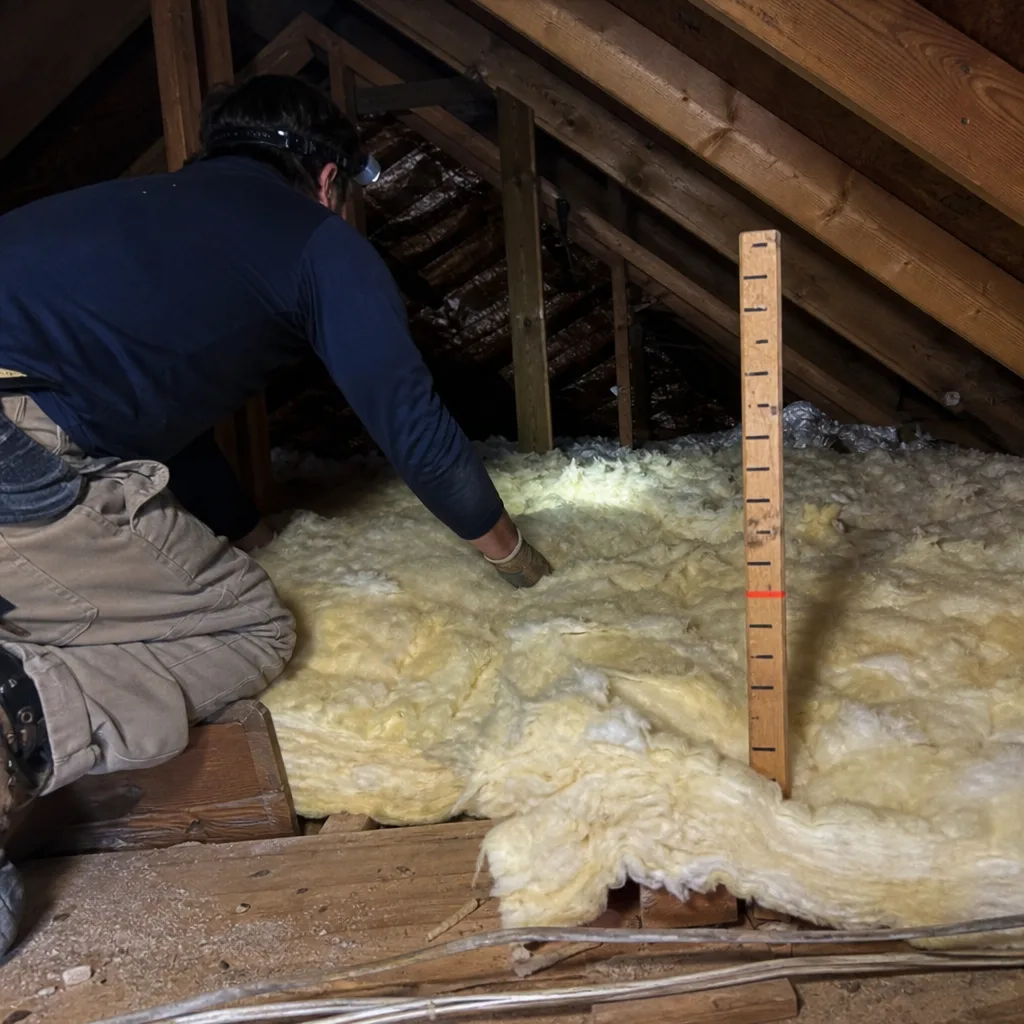
The order of operations matters here more than most contractors admit. Blowing insulation over an unsealed attic floor doesn’t improve performance – it just makes the air leaks harder to find later. Here’s exactly what happens on a Topside job:
- Initial blower-door test and attic assessment. Before we write a price or move a bag of material, we run a blower-door test – a pressurization reading that shows, in one number, how much air your building envelope is losing. We also measure existing insulation depth at multiple points across the attic floor (not just one spot near the hatch) and photograph everything. You get those photos. The blower-door reading goes in your written scope so you have a baseline to compare against when the job is done.
- Written price delivered before any work starts. This is Haven Standard Clause 1. You receive a flat written price and a written scope that names the R-value target, the material we’ll use, and the air-sealing locations we’ll address. Nothing changes from that number unless you ask us to change the scope. No invoices for “additional materials discovered during the job.”
- Air sealing of top plates, penetrations, and can lights. We seal every top-plate gap, every electrical and plumbing penetration, and every recessed light that isn’t already air-tight before insulation goes in. The material we use depends on the gap size – two-part spray foam for larger openings, fire-rated caulk for smaller ones. Skipping this step is the single most common reason a top-up fails to produce measurable results.
- Installation of blown-in insulation to the specified R-value. Depending on your attic and your goals, we’ll use blown fiberglass from Johns Manville or CertainTeed, or blown cellulose from GreenFiber. We set depth markers across the attic floor before blowing so the crew has a physical target at every point, not just at the access hatch. Georgetown attics with unusual framing configurations – particularly in some of the custom-built homes in the Berry Creek corridor – get additional depth checks at the perimeter and over knee walls.
- Post-installation blower-door test. When the insulation is in and the hatch is closed, we run the blower-door again. The reading goes on the same document as the baseline number. If the after number doesn’t show a meaningful reduction, we don’t leave the job and say “that’s the best we can do.” We find out why and we fix it.
- Documented photo record and written warranty delivered before we leave. You get a complete photo set – before, during, and after – and a written warranty. The 365-Day Done Right Promise applies: if it’s not done right, we make it right. That’s in writing, not just a line in a brochure.
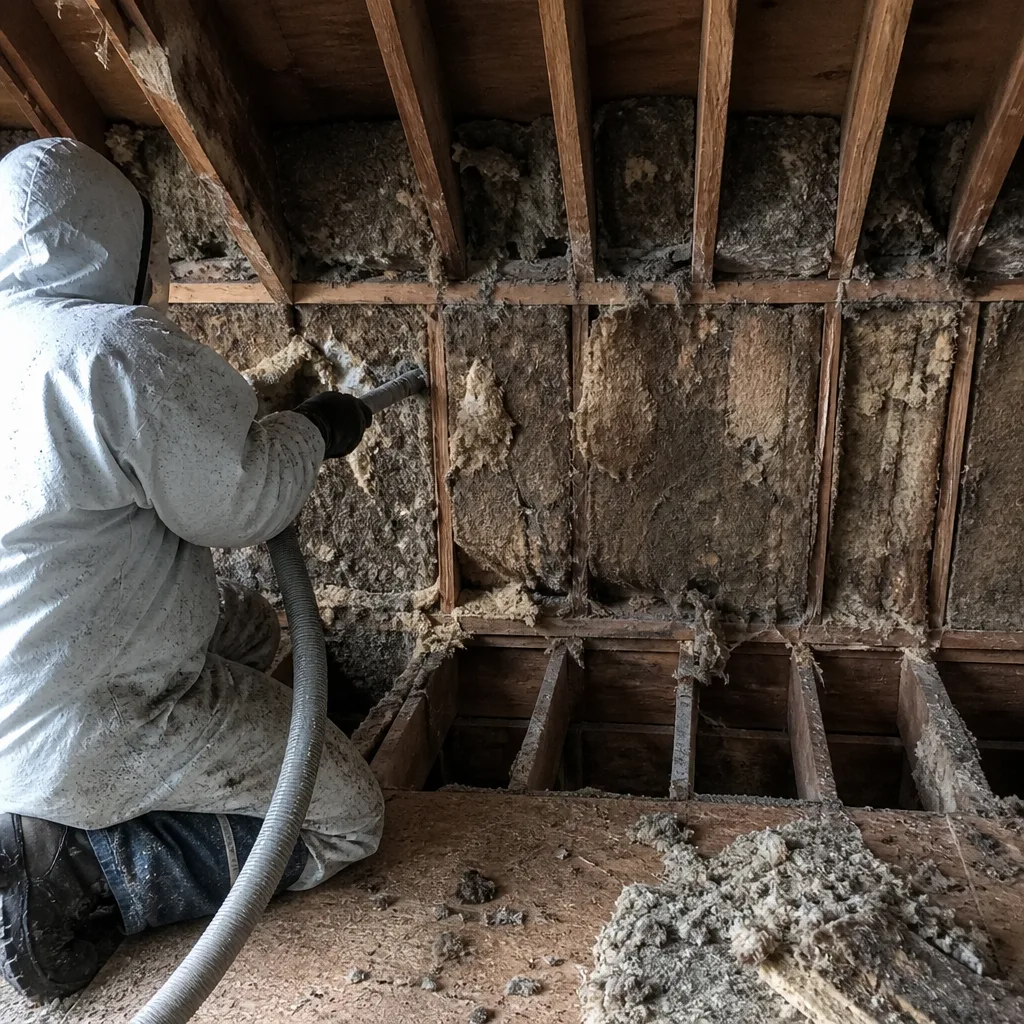 Before
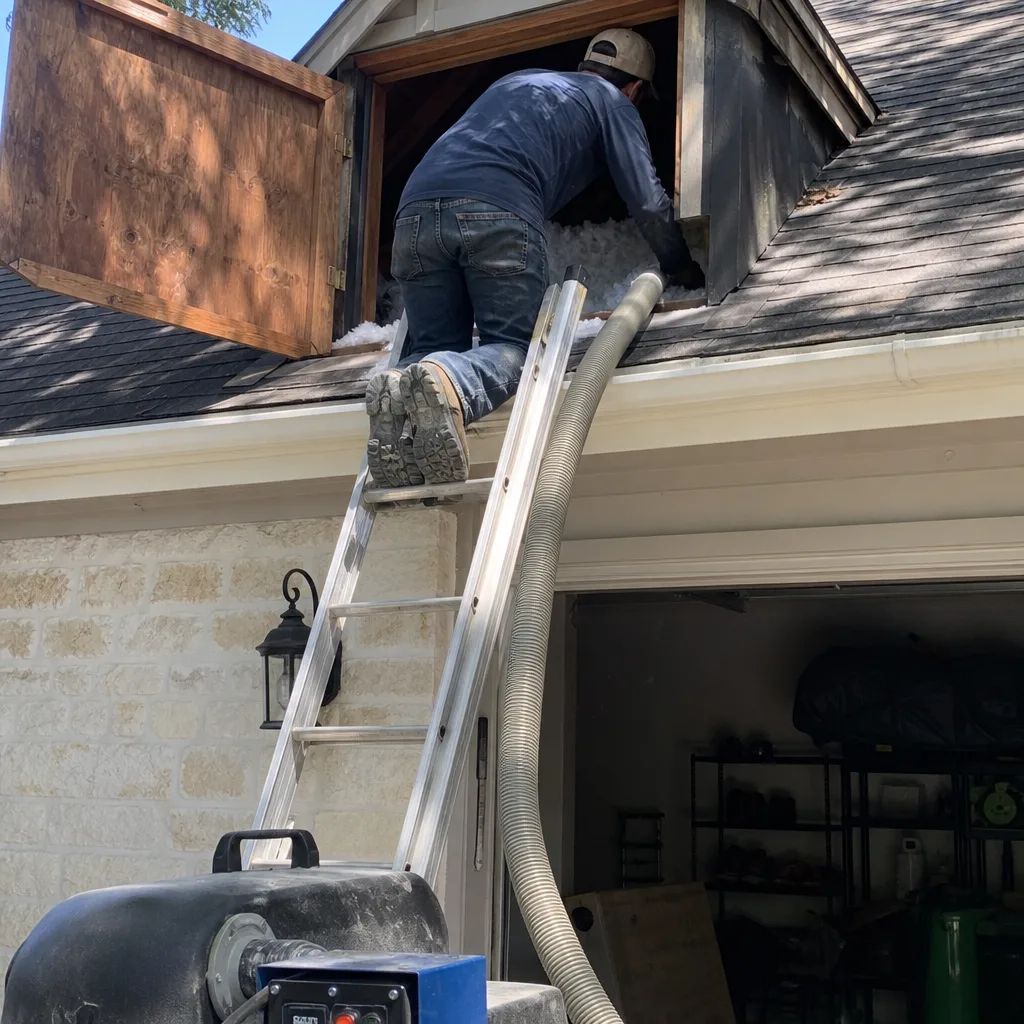 After
AfterAttic Insulation Top-Up Pricing in Georgetown
Most attic insulation top-ups in Georgetown run between $950 and $2,400 for a home in the 1,500 to 2,800 square foot range. Here’s how that number moves:
| Factor | Typical Effect on Price |
|---|---|
| Attic square footage (under 1,200 sq ft) | $950 – $1,300 |
| Attic square footage (1,200 – 2,000 sq ft) | $1,200 – $1,800 |
| Attic square footage (2,000 – 2,800 sq ft) | $1,600 – $2,400 |
| Air sealing included (top plates, cans, penetrations) | Included – not a separate line item |
| Low attic clearance or difficult access | Adds $150 – $350 depending on conditions |
| Partial existing insulation (25% or more missing or compressed) | May shift scope to full removal and replacement |
| Target R-value above R-49 | Adds $200 – $500 depending on current depth |
A few things worth naming directly. Air sealing is included in every top-up we do – it is not an optional add-on with its own line item. We have done enough Georgetown jobs to know that blowing insulation over an unsealed floor produces a bill for insulation and a house that still runs hot. We’re not interested in that outcome.
If you’ve already received a written estimate from another contractor, bring it. We offer a free second opinion on any written estimate and will read through it with you line by line – material spec, R-value target, whether air sealing is included or excluded. That’s not a sales tactic; it’s how you confirm you’re comparing equivalent scopes.
Call (254) 970-2136 to schedule your free assessment. You’ll get a blower-door reading, a depth survey, and a written price on the same visit – no follow-up call, no callback window measured in business days.
Key Takeaways
- Georgetown’s Climate Zone 2 calls for R-38 to R-60 in unconditioned attics; most older homes in this market are running R-19 or below.
- Air sealing happens before insulation on every Topside job – not as an upsell, but as a prerequisite.
- You get before-and-after blower-door numbers, a full photo record, and a written warranty before we leave the job.
- Most Georgetown top-ups run $950 to $2,400 depending on attic size, current depth, and access conditions.
- Written price before any work starts, always. That’s Haven Standard Clause 1, and it doesn’t have exceptions.
FAQs – Attic Insulation Top-Up
Can you add insulation on top of what’s already in my Georgetown attic?
Yes, in most cases existing insulation can stay in place and new material is blown on top of it, as long as the existing material is dry, uncontaminated, and the attic floor has been air-sealed first. If the existing insulation shows moisture damage, rodent activity, or mold, we’ll flag that in the assessment and give you options before any new material goes in. Georgetown homes from the 1980s and 1990s sometimes have older fiberglass batts that have compressed significantly over time; those can be topped up, but we’ll document the depth so you know exactly what you started with and where you ended up. Call (254) 970-2136 to schedule an assessment – the blower-door test and depth survey are included at no charge.
How much does an attic insulation top-up cost in Georgetown?
Most Georgetown top-ups run between $950 and $2,400 for homes in the 1,500 to 2,800 square foot range, with air sealing included. The biggest variables are attic square footage, how far below the target R-value the current insulation sits, and whether access is straightforward or involves low clearance or unusual framing. You’ll have a written flat price in hand before any work starts – that’s not a range we give you over the phone and then adjust on the invoice. Call (254) 970-2136 and we’ll schedule the assessment and deliver the written number on the same visit.
Do I need to move out or leave the house during the top-up?
No. Blown-in insulation work is confined to the attic space. Most Georgetown top-ups are completed in four to six hours, and you can be home the entire time. We ask that the attic access hatch remain clear and that pets are kept away from the work area while the blower-door equipment is running. If spray foam is part of the air-sealing scope, there’s a brief curing window – typically two to four hours – during which we recommend keeping the attic hatch closed, but you don’t need to leave the house.
Will a top-up actually lower my energy bills in Georgetown’s climate?
The honest answer is: it depends on what else is happening in your building envelope. An attic top-up with proper air sealing typically produces a measurable drop in blower-door readings, and most Georgetown homeowners see a 10 to 20 percent reduction in cooling costs during the summer months following the work. That said, if your ducts are leaking or your windows are single-pane, the attic is one piece of a larger picture. We run the blower-door before and after so you have a documented number showing the change – not an estimate of what we think the change might be. If the after reading doesn’t show meaningful improvement, we find out why before we close the job.
Written by Wes Okafor, Owner at Topside Attic Insulation Georgetown, serving Georgetown.