
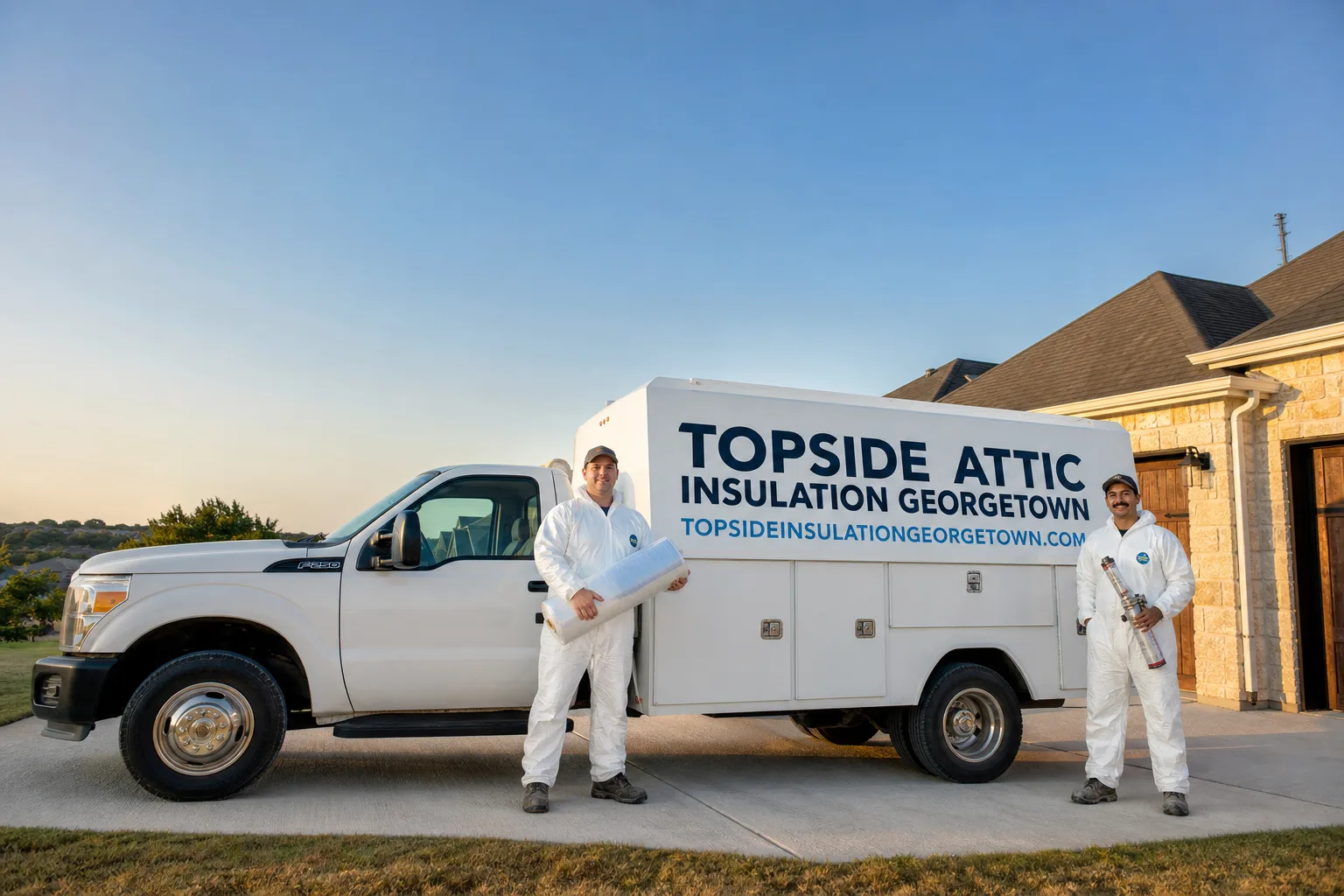
Fast, Reliable Blown-In Insulation Across Austin
Most blown-in insulation jobs in Austin run $1,800-$4,200 for a typical attic, and our crews can usually inspect and price same-day. We dispatch from our Austin office, so we’re familiar with the specific conditions that drive insulation failure here: 150°F summer attics, the pier-and-beam crawl spaces in older neighborhoods, and the settlement patterns of 1985-2005 tract-home fiberglass.
We’ve worked in Austin since 2016 - not as an out-of-town crew with a local number, but as a company that files Austin Energy rebate paperwork weekly and knows which Slaughter Lane subdivisions were built to pre-Uri code. Call us at (254) 970-2136 for a written price before any work starts.
Why Topside Attic Insulation Georgetown Is Austin’s Preferred Blown-In Insulation Company
Our reputation in Austin is built on documentation, not slogans. We’ve sealed and insulated 9,000+ homes since 2016, and every job closes with a Documented Photo Record. On applicable jobs, we publish before-and-after blower-door numbers - a pressurization reading that shows, in one figure, how much conditioned air your home was losing before and after the work. Austin homeowners read three-star reviews as carefully as five-star ones, so we leave a paper trail.
Response time matters in July. Our Austin office coordinates dispatch for the metro core and inner suburbs, so most calls get a same-day or next-day inspection slot. We answer calls with a live person, 24/7 - no voicemail loops, no callback windows measured in business days.
Local knowledge shapes every recommendation. We know which Circle C Ranch and Steiner Ranch homes were built with minimum-code blown fiberglass that has settled to R-19 or below. We know the Hyde Park bungalows with uninsulated pier-and-beam floors that lost pipes in February 2021. And we know the Austin Energy rebate structure well enough to build it into your written price from the first visit.
Our Blown-In Insulation Services in Austin
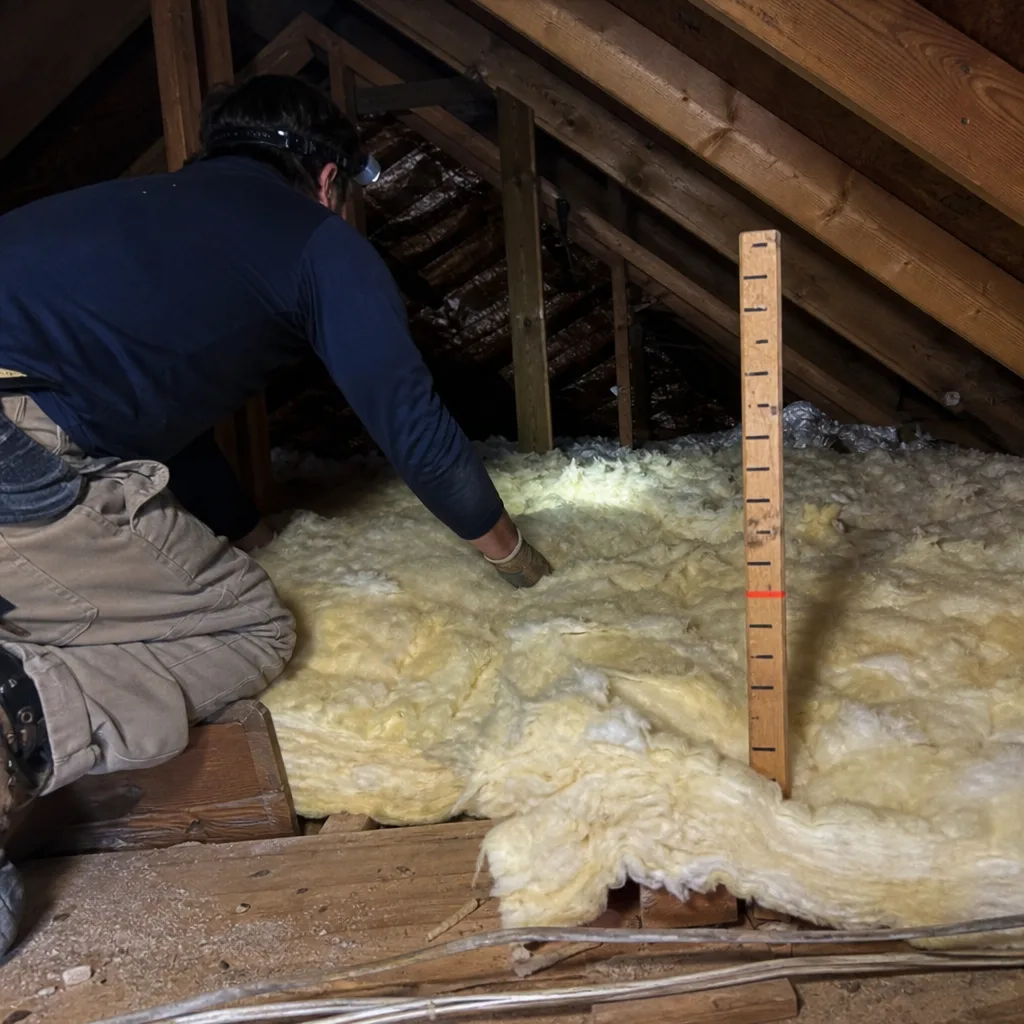
Blown-In Cellulose
Cellulose handles Austin’s attic heat better than most homeowners expect. We source from GreenFiber and other manufacturers - no proprietary lock-in - and blow it to the density that resists settling in 150°F summer conditions. In the 1998 slab-on-grade homes off Slaughter Lane, we regularly find original blown fiberglass compressed to 5 inches; we dense-pack that back to spec with cellulose, then top to R-49. The Austin Energy rebate paperwork we file covers a meaningful portion of most cellulose top-ups.
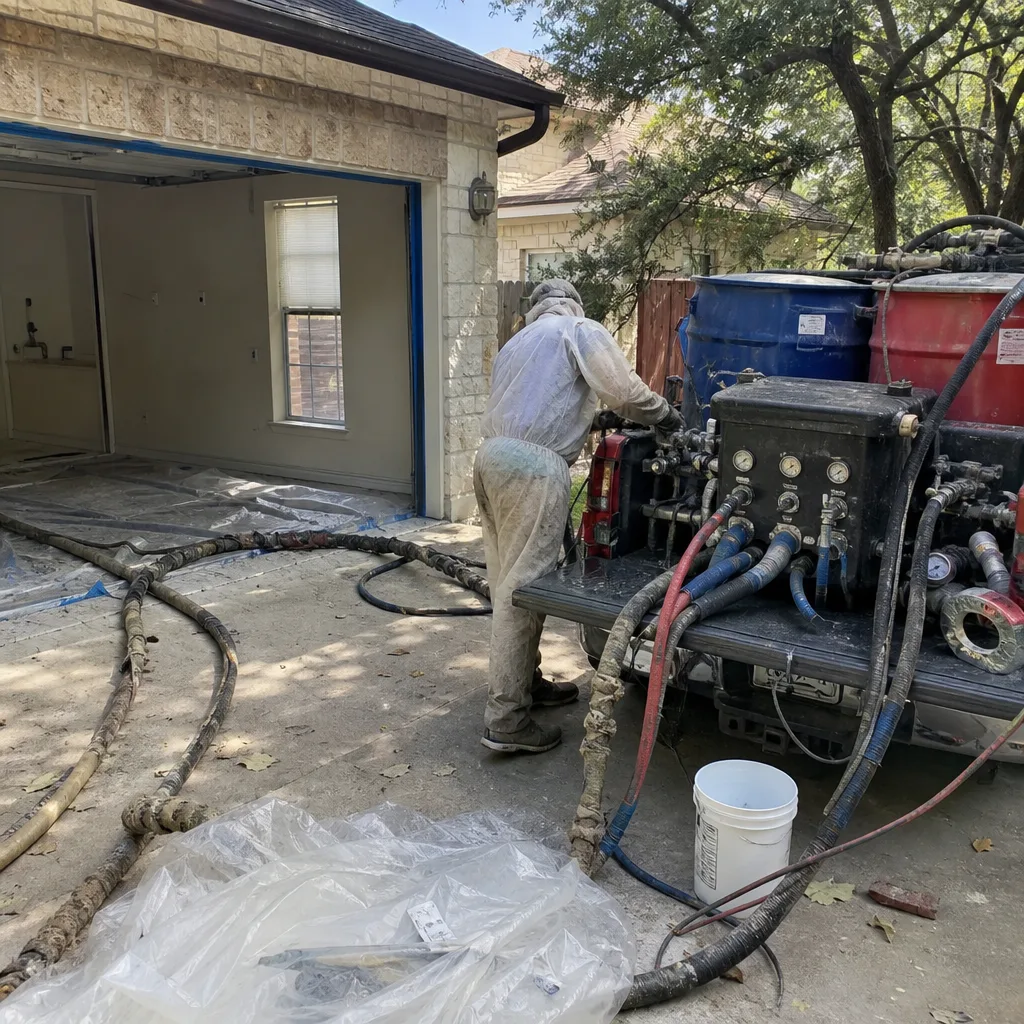
Blown-In Fiberglass
Fiberglass still has a place in Austin, particularly in new construction or where moisture management is the priority. We stock Owens Corning, Johns Manville, and Knauf products - brands we can source quickly without manufacturer delays. In the Parmer Lane corridor tract homes, we see original blown fiberglass that has degraded unevenly; we remove the compromised layer, seal the attic floor properly, and reinstall to current R-49 with fresh material. We don’t blow new insulation over unsealed top plates or can lights - that’s Haven Standard Clause 1.
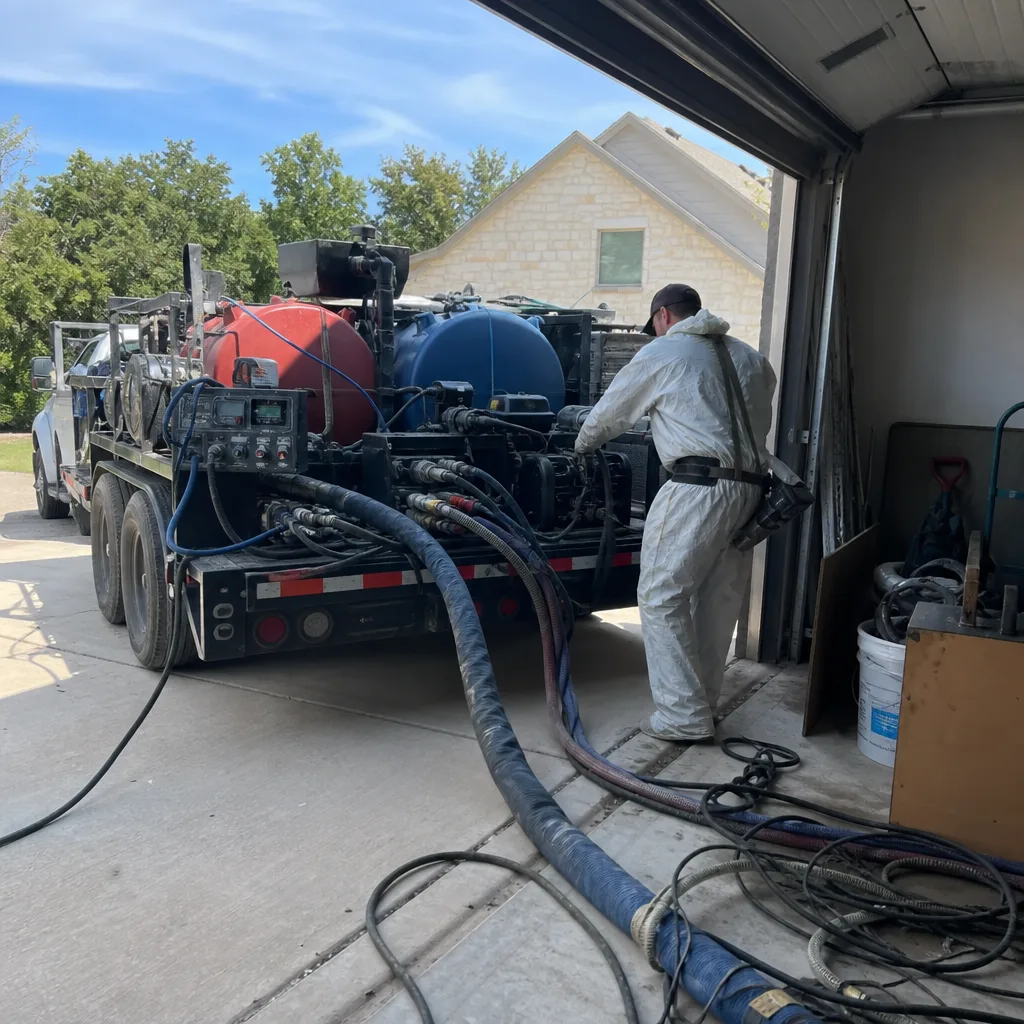
Dense-Pack Wall Insulation
Austin’s older bungalows in Brentwood and Travis Heights often have empty stud cavities or thin batts from the 1970s energy crisis. Dense-packing fills those walls with cellulose at 3.5 pounds per cubic foot - dense enough to resist settling and slow air movement through the cavity. This matters in pier-and-beam homes where the wall stack connects directly to the vented crawl space. We dense-pack after blower-door-guided air sealing, so we’re filling cavities that aren’t actively leaking.
Blown-In Top-Up
The Austin Energy rebate makes top-ups one of our most common Austin jobs. Most attics we inspect in Steiner Ranch, Circle C Ranch, and the Parmer Lane corridors are at R-19 to R-30 - well below the R-49 that triggers the rebate. A top-up brings you to code and captures the incentive, often making the project self-funding enough that the decision shifts from “if” to “how much R-value.” We measure what you have, calculate what you need, and put both numbers in writing before anyone lifts a tool.
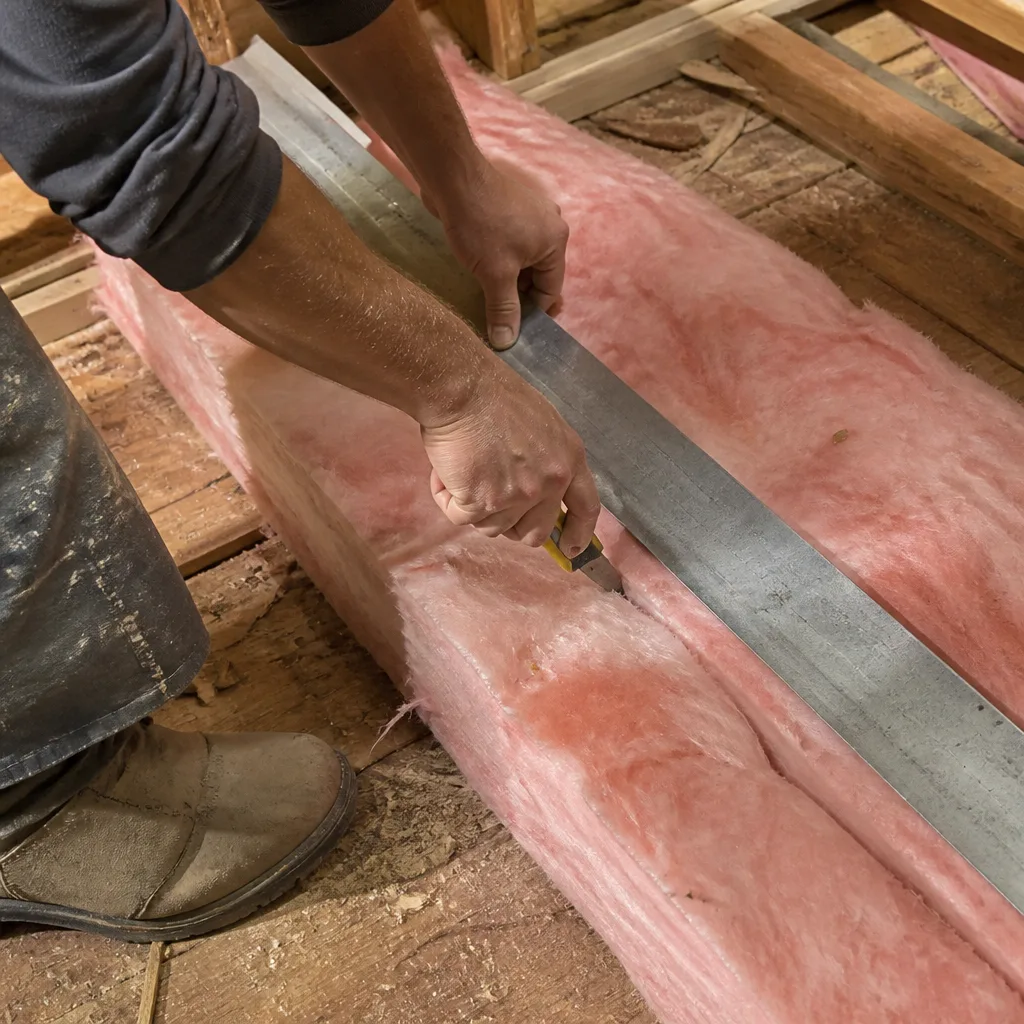
What happens when you call
- 1
A real person answersNo phone trees - you reach a local pro.
- 2
You get an upfront price rangeHonest numbers before anyone is dispatched.
- 3
A background-checked tech heads outLicensed & insured, dispatched right away.
- 4
You approve before work beginsNothing starts until you say go.
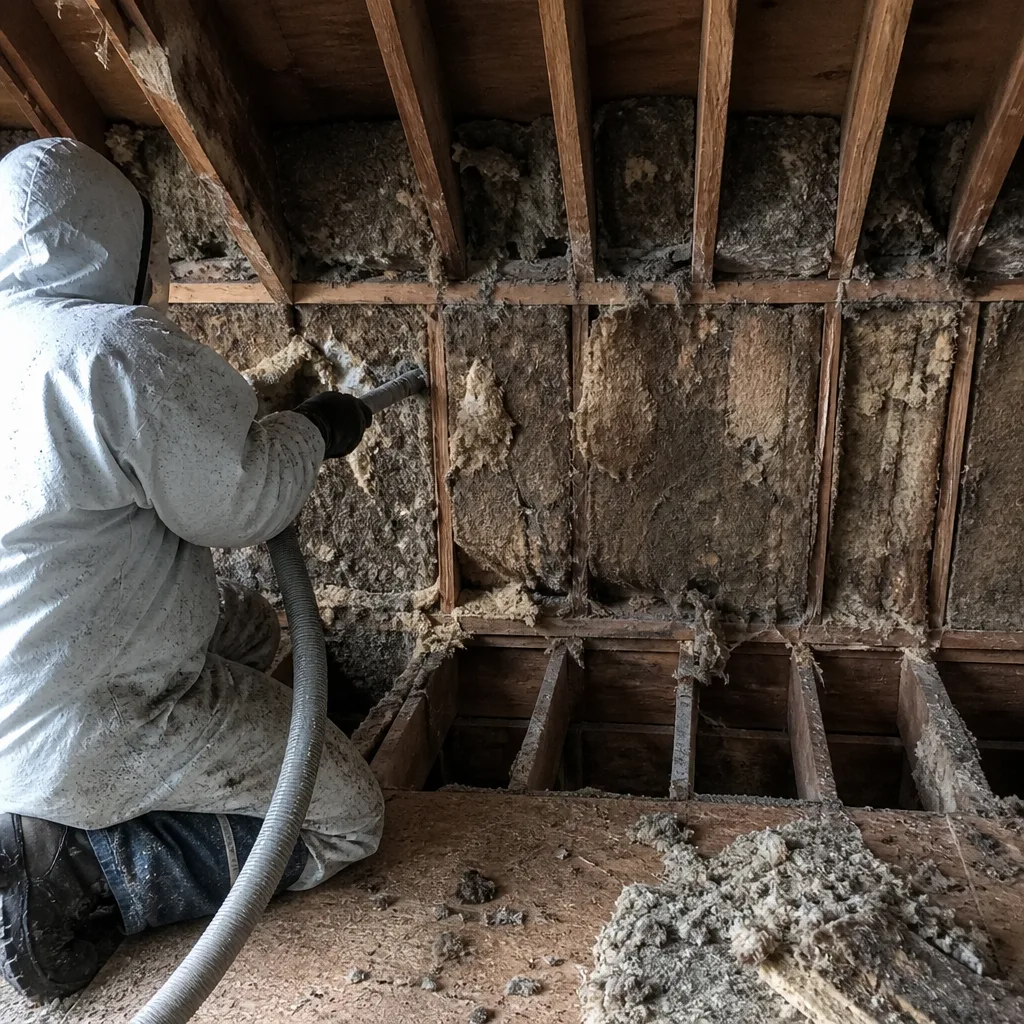 Before
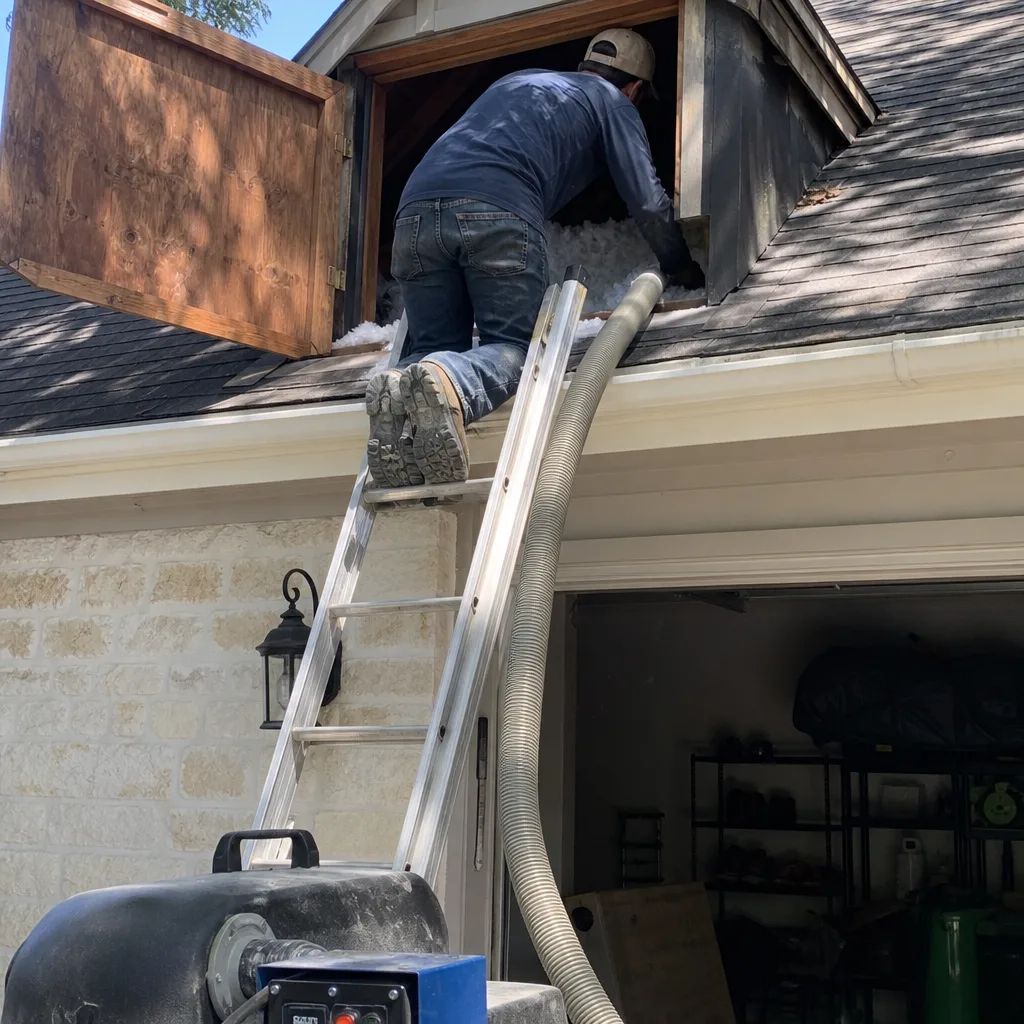 After
AfterTrusted Brands We Service in Austin
We stock and install materials from Owens Corning, Johns Manville, Knauf, CertainTeed, Icynene, Demilec, and GreenFiber - no single-source lock-in, no proprietary product requirements. For Austin customers, this means we can match the right material to the condition: GreenFiber cellulose for dense-pack wall work in Cherrywood bungalows, CertainTeed fiberglass for new construction in Cedar Park, Icynene or Demilec spray foam where air sealing priority demands it. Our Austin warehouse carries core stock for same-day starts on most blown-in jobs, and we source specialty materials within 48 hours when the scope calls for it.
Common Blown-In Insulation Problems We See in Austin Homes
- Settled fiberglass in 1985-2005 tract homes. The slab-on-grade subdivisions along Parmer Lane and Slaughter Lane were built with minimum-code blown fiberglass that settles visibly below R-38 after two decades. In summer, those attics hit 155°F by early afternoon and the AC never cycles off - a direct, quantifiable pain point.
- Uninsulated pier-and-beam floors in central Austin. The bungalows throughout Hyde Park, Cherrywood, and Travis Heights commonly have completely open crawl spaces beneath the floor deck. Conditioned air leaks straight through, and the February 2021 freeze proved how vulnerable this leaves plumbing. Most owners don’t discover the gap until an insulation audit.
- Heat-degraded kraft facing and uneven fill. Austin’s 150-160°F attic temperatures from June through September bake loose fill unevenly, leaving hot spots over recessed can lights and HVAC plenums. A blow-and-go crew misses these; we map them with thermal imaging before we add material.
- Insulation installed over unsealed air leaks. We find this everywhere, but it’s especially costly in Austin’s rebate-driven market. Homeowners pay for R-49 and get R-49’s worth of material, but the air leaking around top plates and can lights means the effective performance is far lower. We seal first, then insulate - always.
Pricing for Blown-In Insulation in Austin, TX
Most blown-in insulation jobs in Austin fall in these ranges:
| Service | Typical Range |
|---|---|
| Blown-in top-up (attic, to R-49) | $1,800 - $3,200 |
| Full attic replacement with air sealing | $3,500 - $5,800 |
| Dense-pack wall insulation (per 1,000 sq ft of wall) | $2,400 - $4,100 |
| Crawl space floor insulation (pier-and-beam) | $2,200 - $4,500 |
What moves you within these ranges: attic square footage, current insulation depth and condition, accessibility (steep pitches and tight scuttles add labor), and whether air sealing is needed before blowing. The Austin Energy rebate typically returns $800-$1,500 for R-49 attic upgrades, which we calculate into your written price during the first visit. We don’t start work without a flat price, written scope, and written warranty - Haven Standard Clause 1. Call (254) 970-2136 for a free estimate; we’ll measure, price, and file your rebate paperwork in one visit.
We Also Serve Cities Near Austin
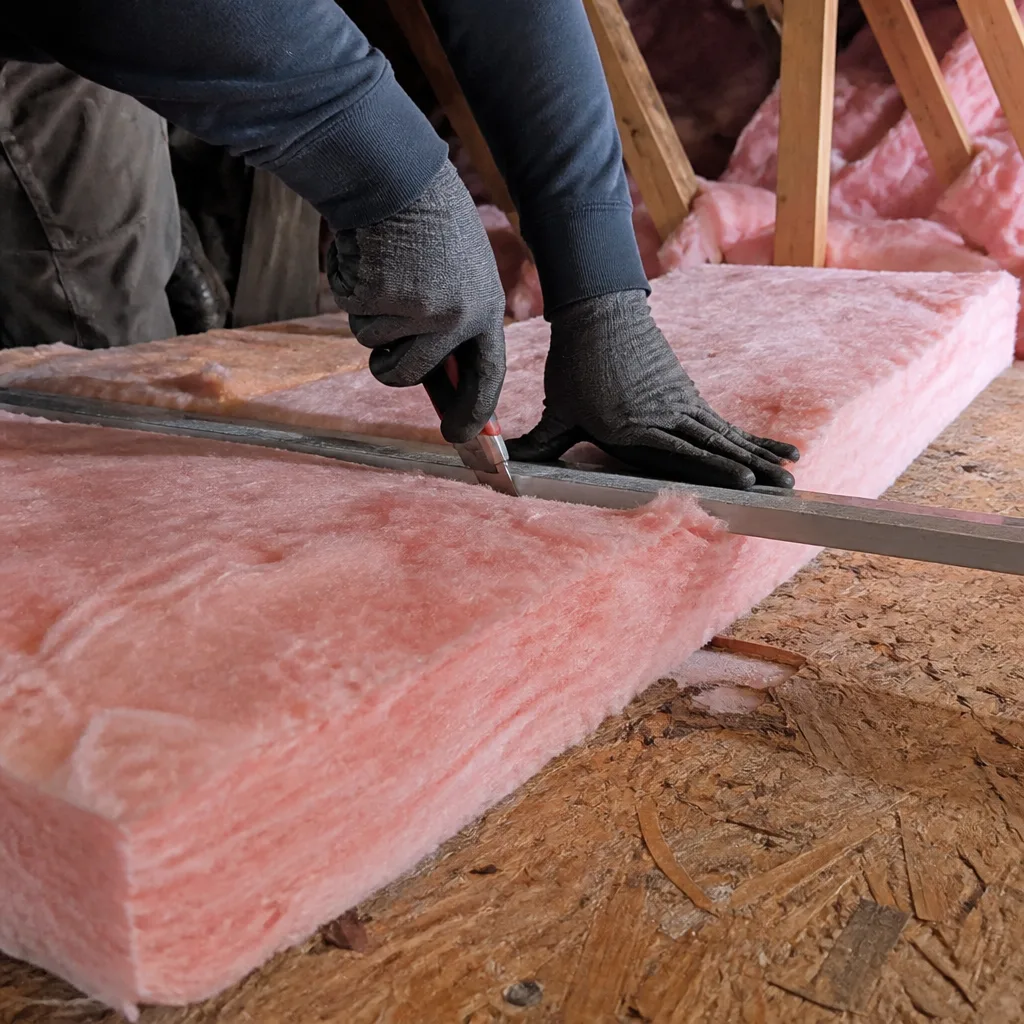
Our Austin office dispatches crews throughout the metro: Blown-In Insulation in Austin proper, plus Pflugerville, Cedar Park, Manor, and Round Rock. Same written-price standard, same documented photo record, same 365-Day Done Right Promise. Wherever you are in the Austin metro, our Blown-In Insulation team arrives with the materials and the rebate knowledge for your specific market.
Serving Austin, TX - Our Local Coverage Area
We’re based in the Austin area and know this community well. Use the map below to see our service coverage - if you’re nearby, we can almost certainly help.
FAQs - Blown-In Insulation in Austin
Most Austin attics we inspect are at R-19 to R-30, not R-49. The 1985-2005 tract homes in Steiner Ranch, Circle C Ranch, and along Parmer Lane were built to minimum code with blown fiberglass that settles significantly over 15-20 years. We measure depth and density during our free inspection, then tell you exactly what you have and what R-49 requires. Call (254) 970-2136 and we’ll check it - estimates are free.
The rebate often makes attic top-ups self-funding enough that homeowners shift from “if” to “how much R-value.” Austin Energy directly subsidizes upgrades to R-49 in a way no private Dallas or Houston utility replicates, and we file that paperwork as part of every qualifying job. Your written price includes the post-rebate cost, so you know the real out-of-pocket before anyone starts.
Yes, and we inspect the crawl space first. Those floor decks over open crawl spaces leak conditioned air year-round and created freeze losses during Uri that most owners never expected. Sealing and insulating the crawl space floor often yields more comfort gain than attic work alone in these homes. We price both scopes and let you decide the sequence.
Cellulose, properly dense-packed, resists settling and degradation in extreme attic heat better than loose-fill fiberglass. Fiberglass performs adequately when installed at proper depth with intact facing, but the 150-160°F peak temperatures from June through September accelerate degradation of kraft paper and can cause loose fill to shift. We specify the right material and density for your attic’s condition, not a one-product default.
Because insulation without air sealing is only half the envelope. We regularly find homes with adequate R-value on paper but significant leakage around top plates, can lights, and HVAC plenums - especially in the post-Uri retrofit rush, when some crews blew insulation over unsealed leaks. Our blower-door test pinpoints the real leakage; we seal it, then verify with a second test. If your AC still runs continuously after “insulation,” the air sealing was likely skipped. Call (254) 970-2136 for a free second opinion on any written estimate.
Written by Wes Okafor, Owner at Topside Attic Insulation Georgetown, serving Austin since 2016.