
Rockwool Vapor Barrier Installation: The Georgetown Owner’s Guide
Rockwool vapor barrier installation in Georgetown typically runs $1,800-$3,400 for a complete attic-floor system, depending on square footage and whether we’re sealing over existing batts or starting from the subfloor. Most Rockwool Comfortbatt and Comfortboard jobs we price in Georgetown are scheduled within 48 hours, with same-day starts available when the vapor barrier stock is on the truck. Homeowners usually discover the problem after spotting condensation on the underside of their roof decking during our humid spring months, or when their energy auditor flags a failed poly vapor retarder during a resale inspection in neighborhoods like Sun City or along the San Gabriel River corridor.
Which Rockwool Models This Applies To
Rockwool’s vapor barrier needs break down by product line, and getting this wrong means trapping moisture instead of blocking it. We work with Comfortbatt (standard 15.25″ and 23″ widths for 2×4 and 2×6 framing), Comfortboard 80 and 110 (rigid exterior applications where a weather-resistive barrier interfaces with the system), and AFB evo (interior commercial batts that still need proper poly placement on the warm-in-winter side).
The compatibility gotcha in Georgetown’s climate: Rockwool is hydrophobic - it repels liquid water - but it is not a vapor barrier by itself. The kraft facing on some Comfortbatt SKUs is a vapor retarder, not a barrier, and in our hot-humid cooling-dominant climate zone, that facing often ends up on the wrong side of the assembly after a homeowner DIY install. We check the stamp: unfaced batts need a separate 6-mil poly sheet at the ceiling plane; faced batts need the facing down toward the conditioned space in winter, which means up toward the attic in our mixed-humid zone when the house is cooling. We see this reversed in about thirty percent of Georgetown attics we open.
OEM Rockwool vapor barrier accessories include their proprietary membrane fasteners and seam tape, which run wider and stick better in attic heat than the box-store equivalents. We stock both on the truck, but we’ll tell you when the aftermarket 3M 8067 tape and standard cap staples are functionally identical and save you twelve dollars a roll. We’re an independent service provider, not affiliated with Rockwool - we source from Owens Corning, Johns Manville, Knauf, Rockwool, CertainTeed, Icynene, Demilec, and GreenFiber, and we match the part to the assembly, not the brand to the invoice.
Signs Your Rockwool Vapor Barrier Installation Is Failing
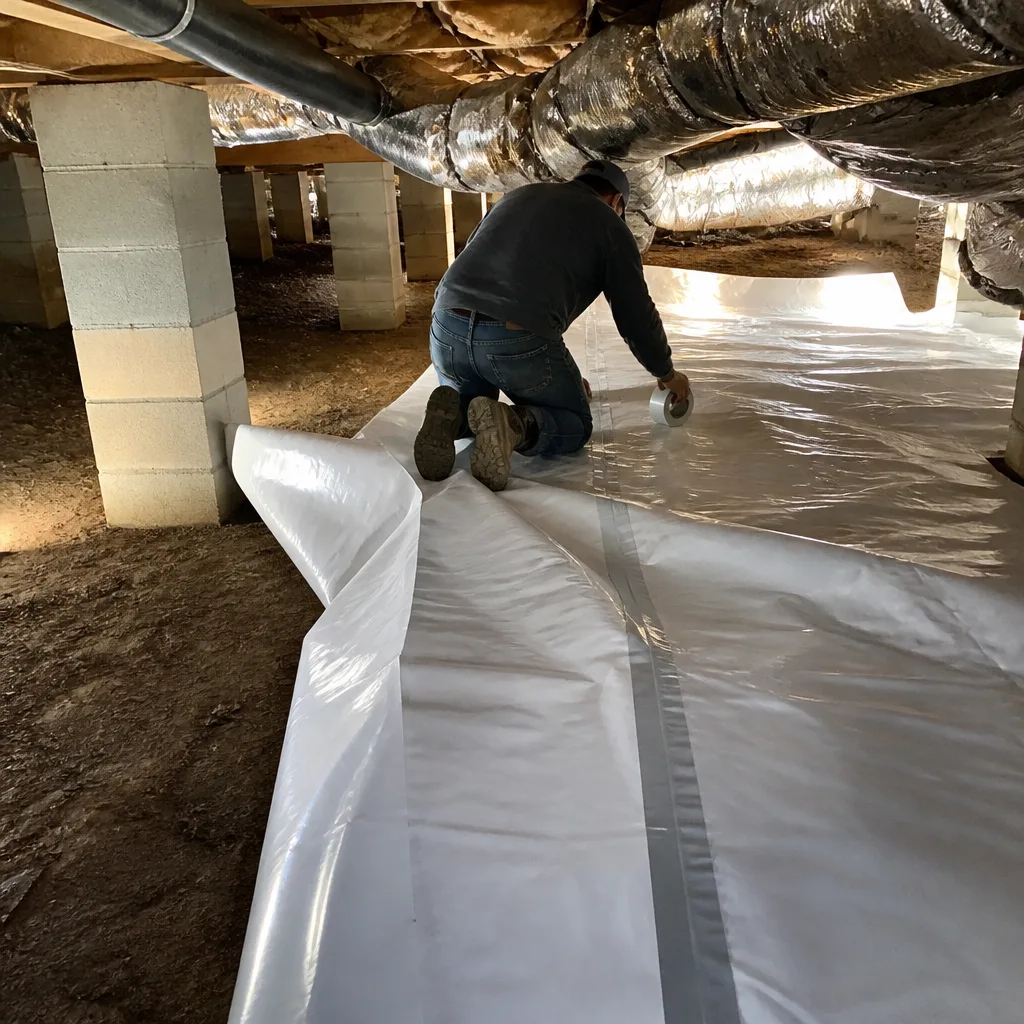
- Condensation on roof decking in spring and fall. When the vapor barrier is torn, displaced, or missing at penetrations, moist Georgetown air hits the cold roof sheathing and condenses. We find this most often in homes built 2015-2020 where the original builder-grade poly was stapled too loosely and has sagged onto the insulation, creating a cold pocket.
- Musty odor that worsens after rain. Rockwool itself won’t mold, but the drywall paper and framing lumber behind a failed barrier will. The smell peaks when attic humidity cycles above 70 percent, which happens regularly in Georgetown from March through May.
- Discolored or sagging ceiling drywall around light fixtures. This is the thermal image showing up in visible form: warm, moist air is bypassing the vapor barrier at the can-light penetration and condensing on the backside of the drywall. We document this with pre-job photos so you can see the exact path.
- Insulation that appears damp or clumped despite Rockwool’s water-repellent properties. The batts aren’t wet from liquid water; they’re holding humidity that should have been stopped at the poly plane. In Sun City Georgetown, we see this where the original install used 4-mil instead of 6-mil poly, which degrades faster in attic heat.
- Blower-door test showing elevated attic bypass leakage. The vapor barrier is part of the air barrier assembly. When it’s not sealed to the top plates with acoustical sealant or foam, the blower-door number jumps - we’ve measured 800-1,200 CFM50 of leakage attributable to vapor barrier gaps alone in 2,000-square-foot Georgetown homes.
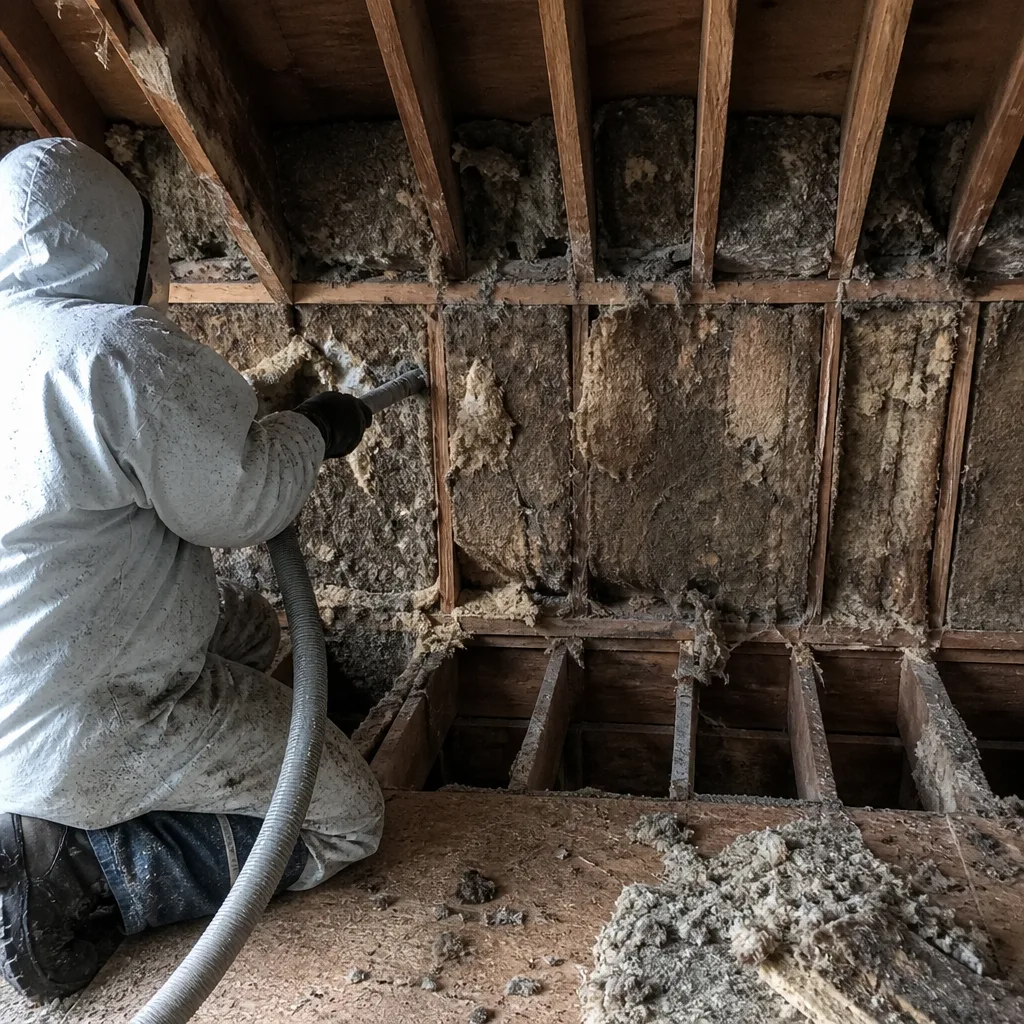 Before
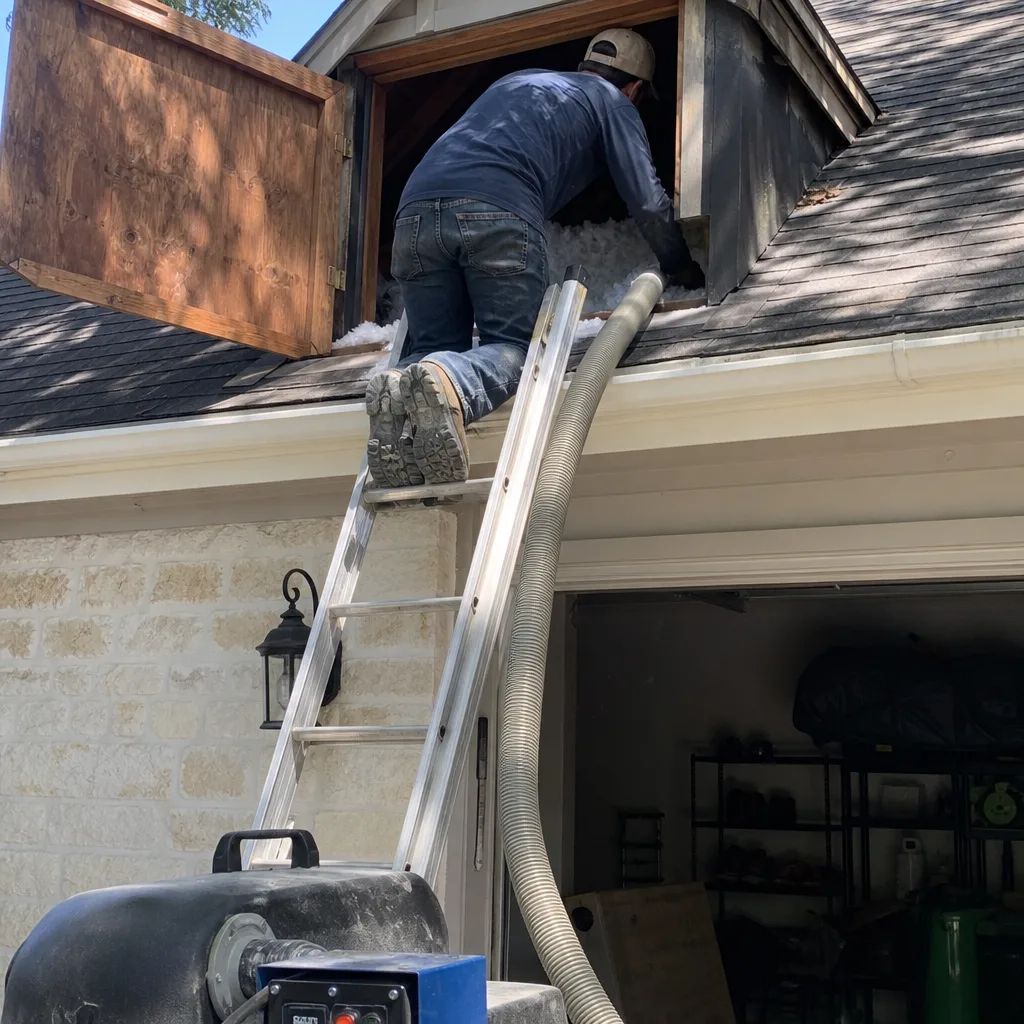 After
AfterReplacement Cost & What’s Included
Most complete Rockwool vapor barrier replacements in Georgetown run $1,800-$3,400. The low end covers a straightforward attic-floor swap in a 1,200-1,500 square foot home with clear access, existing insulation that can stay in place, and standard 6-mil poly with taped seams. The high end hits when we’re removing degraded fiberglass or cellulose first, treating for rodent damage, foam-sealing every top plate and penetration before laying new poly, and working in a tight 4:12 pitch attic in neighborhoods like Berry Creek or along the river corridor where crews are crawling.
What’s in that price: removal and disposal of failed poly, installation of new 6-mil reinforced polyethylene with Rockwool-compatible seam tape, foam or sealant at all penetrations and top plates, and a Documented Photo Record showing before, during, and after. On jobs where we’re also air-sealing, you get before-and-after blower-door numbers - a pressurization reading that shows, in one figure, how much conditioned air your building envelope was losing. The 365-Day Done Right Promise applies: if it’s not done right, we make it right. Under Haven Standard Clause 1, you get a written price, written scope, and written warranty before anyone lifts a tool. We also offer a Free Second Opinion on any written estimate - bring us a competing quote and we’ll read it with you.
DIY or Call Us?
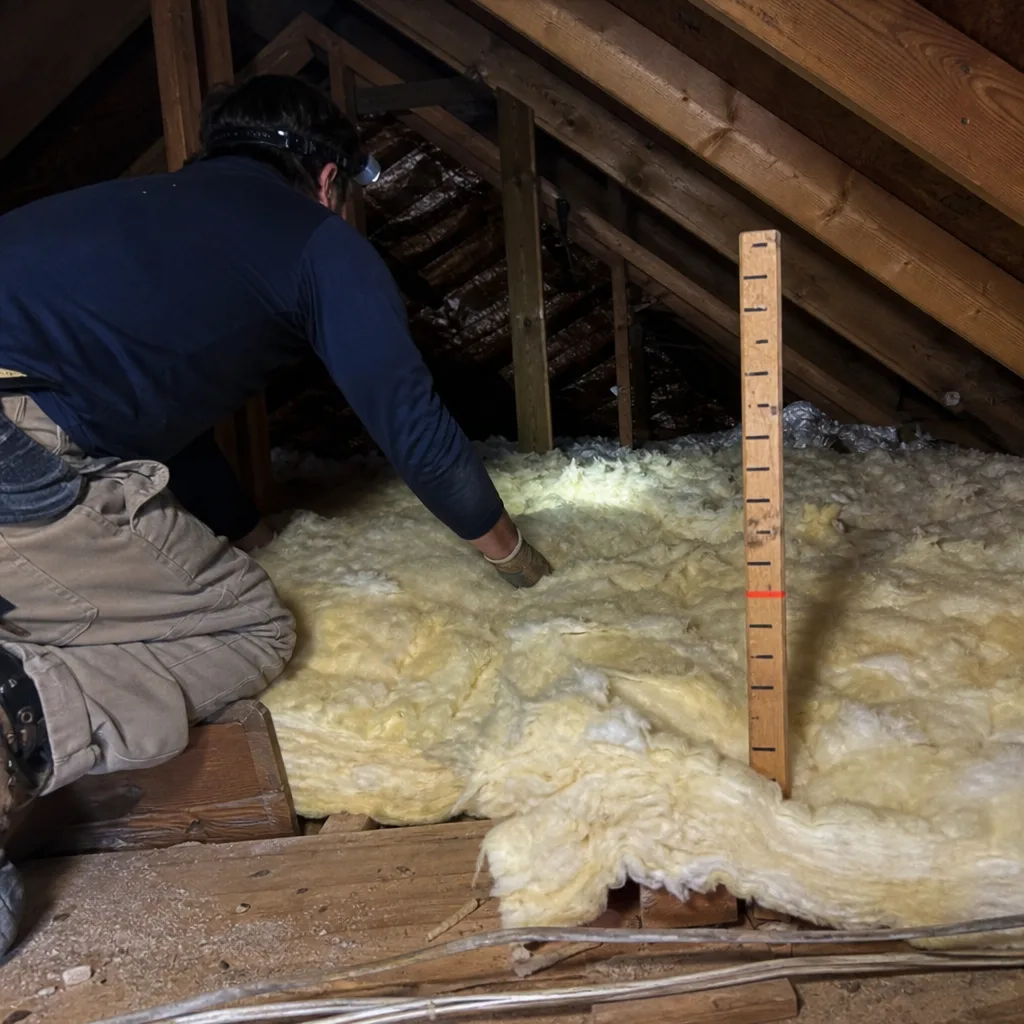
Here’s what you can safely check yourself: look for torn or sagging poly from the attic hatch with a flashlight, note any water stains on the roof decking, and verify whether your can lights are IC-rated (insulation contact) - non-IC fixtures need a sealed box or ten-inch clearance, and burying them in Rockwool without one is a fire code violation in Williamson County.
Where DIY goes wrong: vapor barrier installation is not a weekend project in a 140°F Georgetown attic. The poly must be continuous, sealed at every penetration with proper fire-rated foam or sealant, and placed on the correct side of the assembly for our climate zone. Get it wrong and you’ve trapped moisture in your walls for years. We don’t give step-by-step install instructions for this reason - the consequences of a failed vapor barrier are structural, not cosmetic. Call (254) 970-2136 and we’ll price it in writing, no charge for the visit.
FAQs
In our climate, a properly installed 6-mil poly vapor barrier lasts 20-30 years before becoming brittle, though tape seams may need attention at 10-15 years due to attic heat cycling. The bigger factor is whether the original install was done before air sealing - an unsealed attic with a vapor barrier still leaks conditioned air, just through smaller holes. Call (254) 970-2136 for an exact quote - estimates are free.
Small punctures or seam gaps can be patched with compatible tape if the surrounding poly is still supple, but widespread sagging, embrittlement, or placement on the wrong side of the assembly means full replacement. We assess this during our visit and document it with photos so you can see what we see. Call (254) 970-2136 for an exact quote - estimates are free.
A standard Georgetown attic-floor vapor barrier replacement takes one day for a two-person crew; jobs requiring insulation removal, rodent proofing, or air sealing first run two days. We arrive with the Rockwool-compatible materials on the truck and won’t start without your written price and scope in hand. Call (254) 970-2136 for an exact quote - estimates are free.
Yes - we carry 6-mil reinforced poly, Rockwool-compatible seam tape, cap staples, and fire-rated sealants on every truck serving Georgetown. For Comfortboard exterior jobs, we order the weather-resistive barrier to spec, but standard attic stock is always with us. Call (254) 970-2136 for an exact quote - estimates are free.
We also stock parts for Reflectix radiant barrier systems and can advise when a hybrid approach makes sense for your Georgetown attic.
Topside Attic Insulation Georgetown has sealed and insulated 9,000+ homes since 2016 - every one with a written price before work started and a documented record when the crew left. Our background-checked, uniformed technicians answer to Wes Okafor, who grew up on Chicago’s South Side and picked up his first blower-door numbers at Olive-Harvey College before spending nearly two decades diagnosing air-sealing failures across Central Texas. He and his crew have worked attics from Sun City Georgetown to homes backing up to the San Gabriel River corridor, and he will not add a single bag of cellulose until every penetration is foam-sealed and the pre-job thermal images are documented. Seal the holes first. Then we talk about R-value.
Ready to get it in writing? Call (254) 970-2136. A live person answers 24/7. Your written price, scope, and warranty arrive before anyone lifts a tool - that’s Haven Standard Clause 1, no exceptions.
Written by Wes Okafor, Owner, Topside Attic Insulation Georgetown at Topside Attic Insulation Georgetown, serving Georgetown and nearby areas.