
Rockwool Blown-In Insulation in Georgetown: What to Know First
We provide independent Rockwool blown-in insulation service in Georgetown, with most attic jobs completed in one day and pricing written on paper before any work starts. As an independent Rockwool service provider, we source Rockwool materials direct from authorized distributors and install to the manufacturer’s density specs, not our own. Most Georgetown homeowners with Rockwool Comfortbatt or Comfortboard systems call us when they need blown-in top-up, dense-pack wall retrofits, or full replacement after moisture damage. If you’re seeing settling above your top plates, cold spots along the San Gabriel River corridor, or your energy bills climbing despite the Rockwool label, call (254) 970-2136. We’ll read your situation and give you a written price.
How Rockwool Products Fail - and How We Fix Them
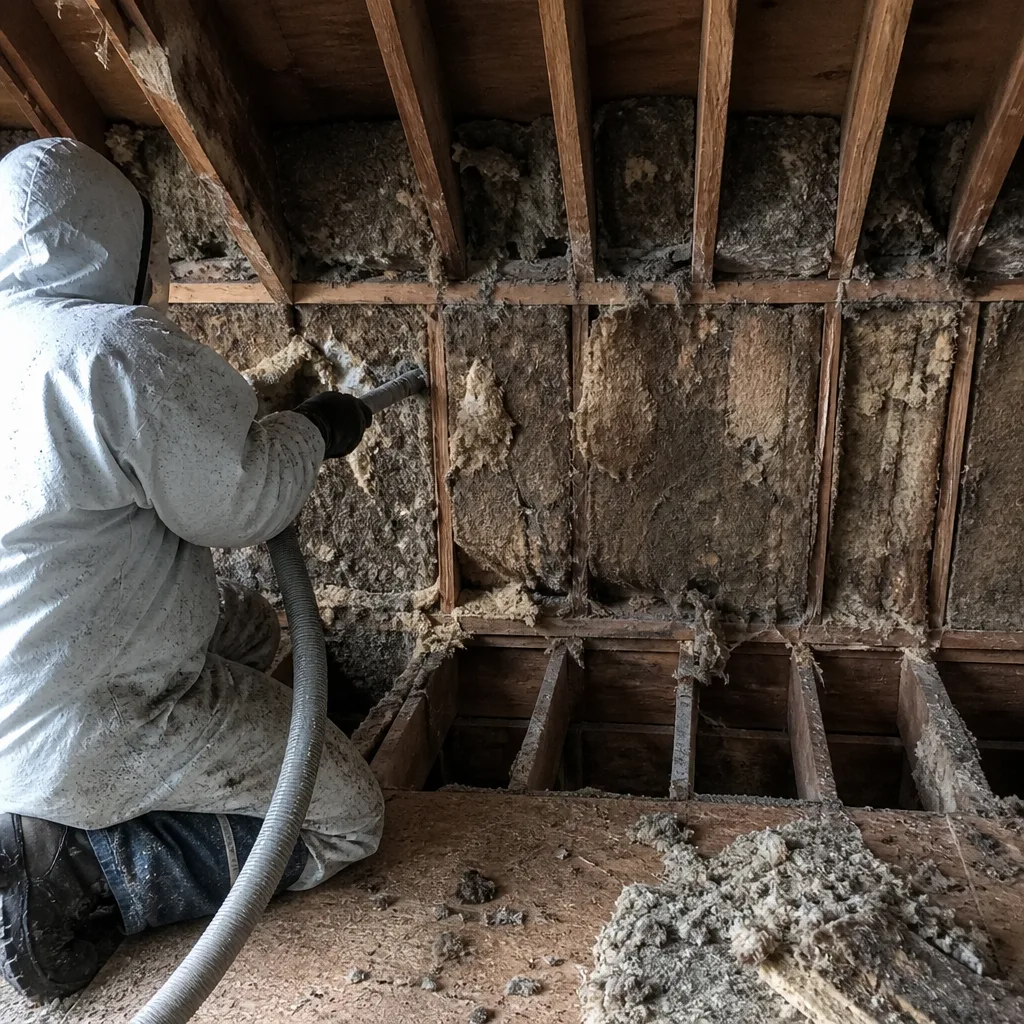
- Comfortbatt settling at exterior wall headers in older Georgetown homes. The semi-rigid batts lose edge contact when seasonal humidity swings above 70% in Central Texas spring months, creating a thermal bypass at the top plate. We pull the settled batts, foam-seal every penetration with one-part polyurethane, then dense-pack with Rockwool Comfortfill or blown-in equivalent to restore continuous R-value.
- Comfortboard IS exterior sheathing gaps from improper fastening schedules. Builders who skip the 8-inch-on-center fastener pattern create board lift in our 100°F-plus Georgetown summers; the resulting gaps show up as dark stripes on thermal imaging. We remove compromised boards, re-fasten to spec, and infill with matching Rockwool thickness so the drainage plane stays intact.
- Rockwool blown-in top-up over unsealed can lights and chimney chases. This isn’t a product failure, it’s an installation failure we see weekly in Georgetown’s 1990s-era subdivisions near Sun City. Blown Rockwool filters through gaps and accumulates on fixtures, creating a fire hazard and zero actual insulation value. We seal first with fire-rated foam and intumescent collars, then blow to depth.
- Comfortfill density loss in vented attics with poor baffle installation. When wind washing pushes loose-fill toward the eaves, the center of the attic drops below 0.5 pounds per cubic foot, the minimum Rockwool specifies for labeled R-value. We install proper rafter baffles, redistribute existing fill, and add new material to achieve design density, documenting the pounds per bag on your invoice.
- Moisture saturation in Rockwool after roof leaks in Georgetown’s spring storm season. Rockwool drains better than fiberglass, but trapped water between layers breeds mold on the paper facings of older Comfortbatt stock. We remove affected material, HEPA-vac the cavity, treat framing with botanical antimicrobial, and reinstall with a continuous vapor-smart strategy based on your actual attic dew point, not a generic chart.
Our Rockwool Blown-In Insulation Process
- 1
Call and scope. A live person answers 24/7. We ask about your home’s year built, last insulation type, and whether you’ve noticed hot ceilings or uneven room temperatures. We schedule a site visit with a written price to follow.
- 2
Attic inspection and blower-door test. We pressurize the house to measure CFM50 - the cubic feet per minute of air leakage at 50 Pascals of pressure. Wes Okafor and his crew have found Georgetown homes reading 4,800 CFM50 that dropped to 2,400 after proper sealing. We thermal-image the attic floor and mark every penetration.
- 3
Air sealing before any insulation touches the space. Top plates, wire penetrations, bath fan housings, and chimney chases get sealed with appropriate foam or fire-rated materials. Seal the holes first. Then we talk about R-value.
- 4
Material selection and written price. We specify Rockwool product, bag count, and target depth or density. The price is flat. The scope is written. The warranty is written. Haven Standard Clause 1: no work starts without it.
- 5
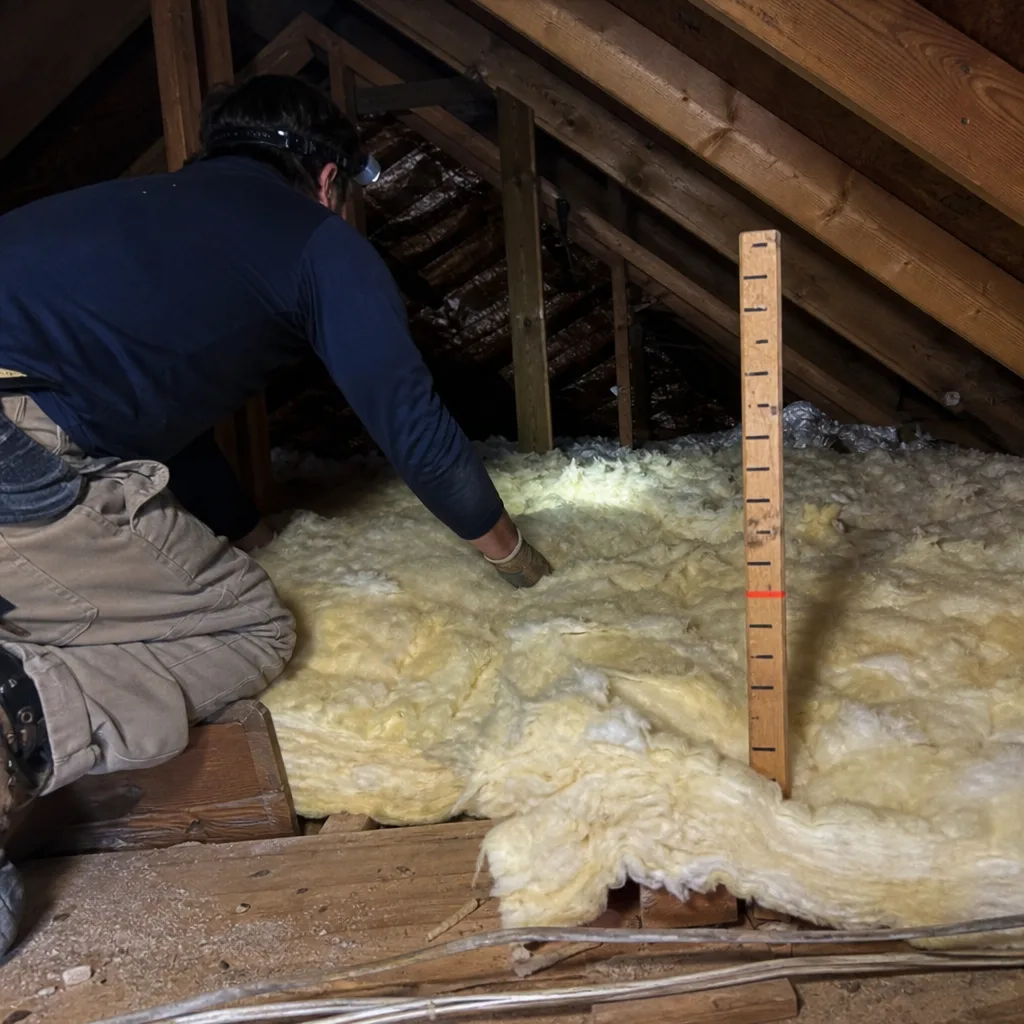
Installation and documentation. We blow to manufacturer density, verify depth with a probe in multiple attic locations, and photograph the completed work. Applicable jobs get a post-work blower-door number so you see the measured change.
- 6
Cleanup and record delivery. You receive the written scope, photo record, and any test results before we leave. The 365-Day Done Right Promise applies from that moment.
 Before
 After
AfterWhat Rockwool Blown-In Insulation Costs in Georgetown
Most Rockwool blown-in attic top-up jobs in Georgetown run between $1,800 and $3,400 for homes between 1,800 and 3,200 square feet, assuming accessible attics and no removal required. Full removal and replacement of compromised Rockwool batts or loose fill, including air sealing, typically ranges from $3,200 to $5,800 depending on attic square footage and contamination level. Dense-pack wall retrofits using Rockwool in existing Georgetown homes start around $2,400 for a single zone and scale with wall area and interior finish protection needs.
Price moves with: attic accessibility (steep pitches above 8/12 add labor), existing material condition (mold or rodent contamination requires HEPA removal), and the scope of air sealing needed before blowing. We also service Reflectix radiant barrier systems when they’re part of the same envelope upgrade, though we quote each component separately so you see where every dollar goes. Call (254) 970-2136 for a written price - estimates are free, and we offer a Free Second Opinion on any competing written estimate you bring us.
Why Georgetown Homeowners Call Topside Attic Insulation Georgetown for Rockwool Work
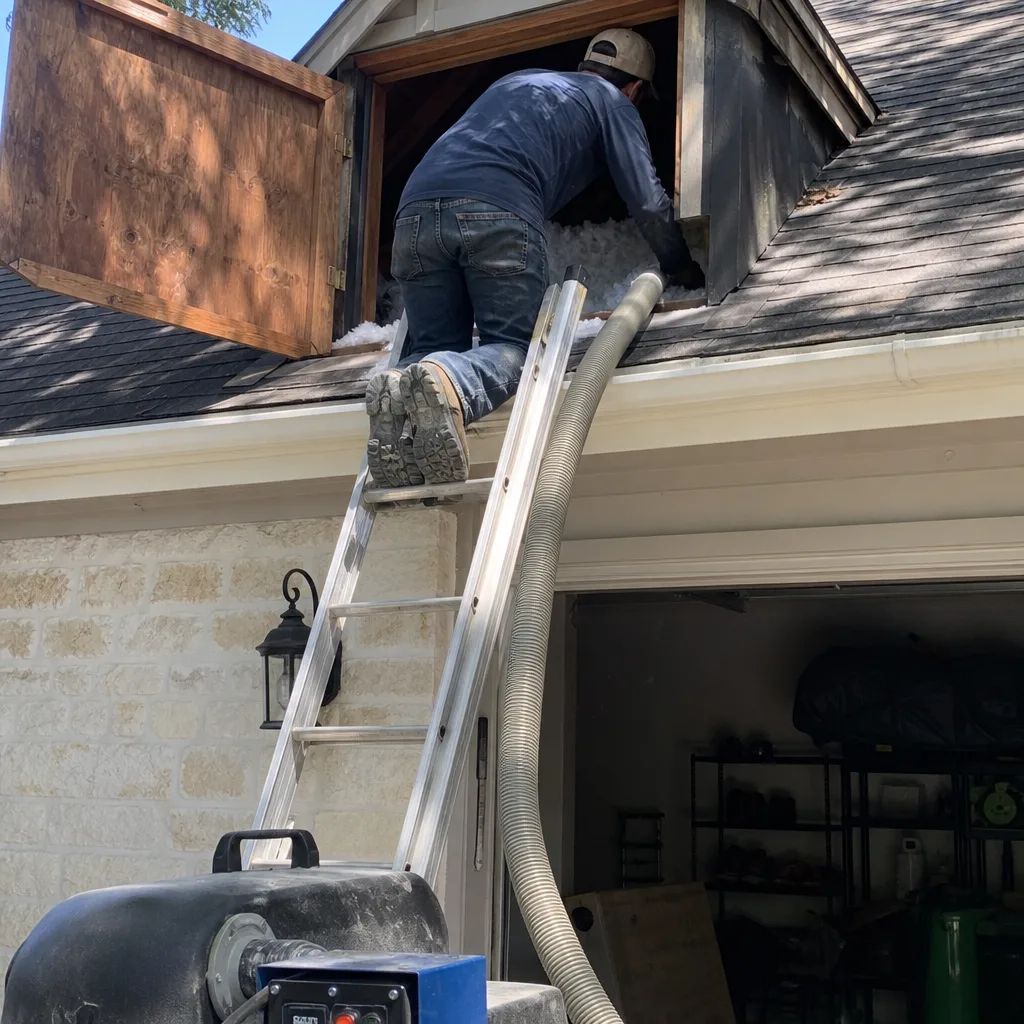
We’ve sealed and insulated over 9,000 homes since 2016, and the ones that perform best long-term are the ones where we refused to blow insulation over an unsealed attic floor. Our technicians are background-checked, uniformed, and trained on Rockwool’s specific density and coverage requirements - not generic blown-in practice. Every job closes with a Documented Photo Record and, where applicable, before-and-after blower-door numbers that show you the actual air-leakage reduction, not a promise. The 365-Day Done Right Promise means if the material settles below spec or a sealed penetration fails, we return and make it right. No voicemail loops, no callback windows measured in business days. A live person answers when you call.
FAQs
Rockwool’s product warranty covers manufacturing defects regardless of installer, provided the material is installed to their published density and coverage charts. We document bag count, target depth, and installation date on every invoice so you have the records if a claim ever arises. Call (254) 970-2136 if you need help interpreting your existing Rockwool documentation.
Most attic top-ups are completed in one day; full removal and replacement with air sealing typically takes two days. We work year-round, though summer attic temperatures above 140°F sometimes shift start times to early morning. We’ll tell you the realistic timeline in writing before anyone lifts a tool.
Repair makes sense when the material is dry, uncontaminated, and simply under-depth - we add blown-in to achieve target R-value. Removal and replacement is the right call after roof leaks, rodent infestation, or when the original batts have compressed below 50% of labeled thickness. We give you both options with prices, never a single pressured recommendation.
We source current-production Rockwool Comfortfill, Comfortbatt, and Comfortboard from authorized distributors and can match density and thermal performance even when the original SKU has been discontinued. We do not claim exclusive or preferred status with Rockwool or any manufacturer - we specify what performs, sourced transparently.
We typically schedule inspections within 48 hours for non-emergency calls and prioritize active roof leaks or HVAC failure related to insulation loss. Emergency response does not cost extra; the written price before work starts applies to every visit, including same-day calls. Call (254) 970-2136 - a live person will answer and give you a real arrival window.
Written by Wes Okafor, Owner, Topside Attic Insulation Georgetown at Topside Attic Insulation Georgetown, serving Georgetown and nearby areas.