
Rockwool Attic Air Sealing: The Georgetown Owner’s Guide
Rockwool attic air sealing in Georgetown typically runs $1,800-$3,400 installed for a complete top-plate and penetration seal on a 2,000-2,800 square foot home, and we stock Rockwool-compatible acrylic sealants, fire-stop foam, and gasket materials on every truck for same-day starts. Most Georgetown homeowners discover the failure when their second-story rooms won’t stay cool despite new insulation, or when an energy audit reveals the blower-door number hasn’t moved after a “sealed” attic job. We see this often in 2015-2020 builds near Sun City and along the San Gabriel River corridor, where Rockwool batts were installed over unsealed top plates and the thermal bypass has been cooking the ceiling for years.
Which Rockwool Models This Applies To
Rockwool’s residential attic line in Central Texas is almost entirely Comfortbatt and Safe’n’Sound, with the occasional AFB evo commercial-grade install in custom builds near the Georgetown Square historic district. The air sealing components that mate to these systems aren’t branded by Rockwool, they’re third-party compatible: fire-rated acrylic latex sealants (3M CP-25WB+ or Hilti CFS-S SIL), intumescent foam for electrical and plumbing penetrations (Hilti, STI SpecSeal), and polyethylene gasket foam for damming at soffits. The critical spec is ASTM E814 fire rating - anything less and you’re creating a code violation in Georgetown’s adopted 2021 IRC.
Here’s the compatibility gotcha we find weekly: Rockwool Comfortbatt is 3.5″ or 5.5″ thick depending on whether it’s spec’d for 2×4 or 2×6 framing. The air sealing layer must be continuous beneath the full batt depth, not just surface-sealed. We’ve pulled back batts in Teravista-area homes where a previous contractor ran a bead of caulk along the top plate edge, then compressed a 5.5″ batt into a 2×6 cavity - the seal cracked within two summers of 140°F attic cycling. The right approach is a full-coverage seal to the sheathing, then the batt, uncompressed.
OEM vs. aftermarket: Rockwool doesn’t manufacture sealants. We use Hilti and STI SpecSeal products that are listed for use with mineral wool assemblies. The “aftermarket” label is misleading here - what matters is the UL or ICC-ES listing for the specific assembly, not the brand on the tube. We carry both Hilti CFS-F Firestop Foam and SpecSeal SSP Putty on the truck; the choice depends on penetration density and whether we’re working around live electrical.
Signs Your Rockwool Attic Air Sealing Is Failing
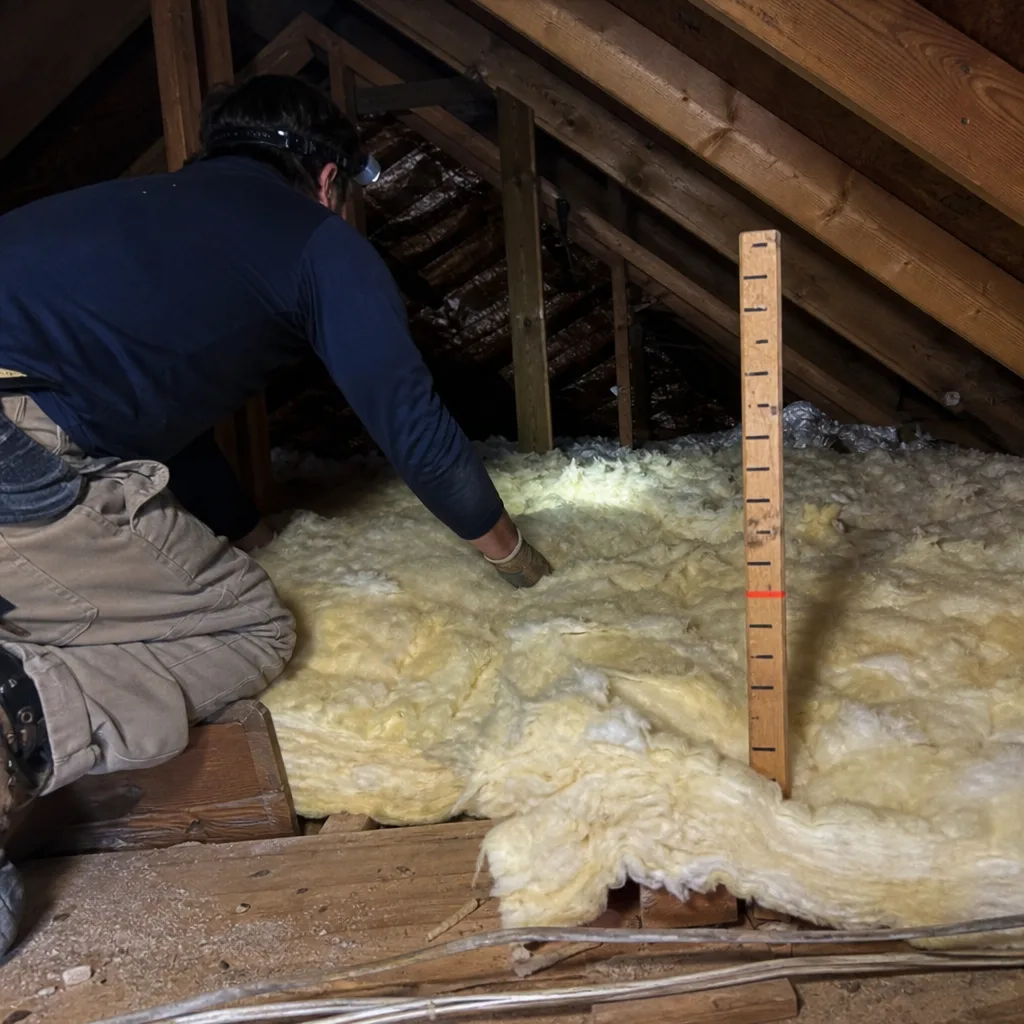
- Dust streaking at ceiling outlets and switch plates. This is filtered air - your conditioned air - escaping through the top plate into the attic, then getting drawn back down through the electrical box. In Georgetown’s caliche-heavy soil zone, that dust is often reddish-tan and unmistakable once you know to look.
- Second-story rooms 8-12°F warmer than the thermostat setting on summer afternoons. Rockwool’s R-value is real, but R-value only works when air isn’t moving through the cavity. Unsealed top plates create a thermal bypass that makes the insulation irrelevant. We’ve measured attic floor temperatures of 140°F in July; with a bypass, that heat is riding the air current straight into your bedroom.
- Ice damming or heavy frost on roof sheathing in winter. Warm, moist interior air hits the cold sheathing and condenses. In Georgetown’s occasional hard freeze, this shows as icicles at the eaves or water staining when it thaws. The Rockwool batt is often dry to the touch while the sheathing rots above it.
- Blower-door test shows minimal improvement after “air sealing” was performed. We get calls from homeowners who paid for sealing and insulation, got a verbal “looks good” from the crew, but the house still drafts. When we run our own blower-door test - a pressurization reading that shows, in one number, how much air your building envelope is losing - we regularly find 3,000+ CFM50 remaining in attics that were supposedly sealed.
- Musty odors in closets and ceiling fixtures after rain. Unsealed plumbing vent stacks and chimney chases let attic air (and humidity) migrate into wall cavities. Rockwool is hydrophobic and won’t mold, but the drywall and framing behind it will. We’ve found this pattern especially in the 2017-2019 builds east of I-35, where fast construction schedules skipped the sealing detail.
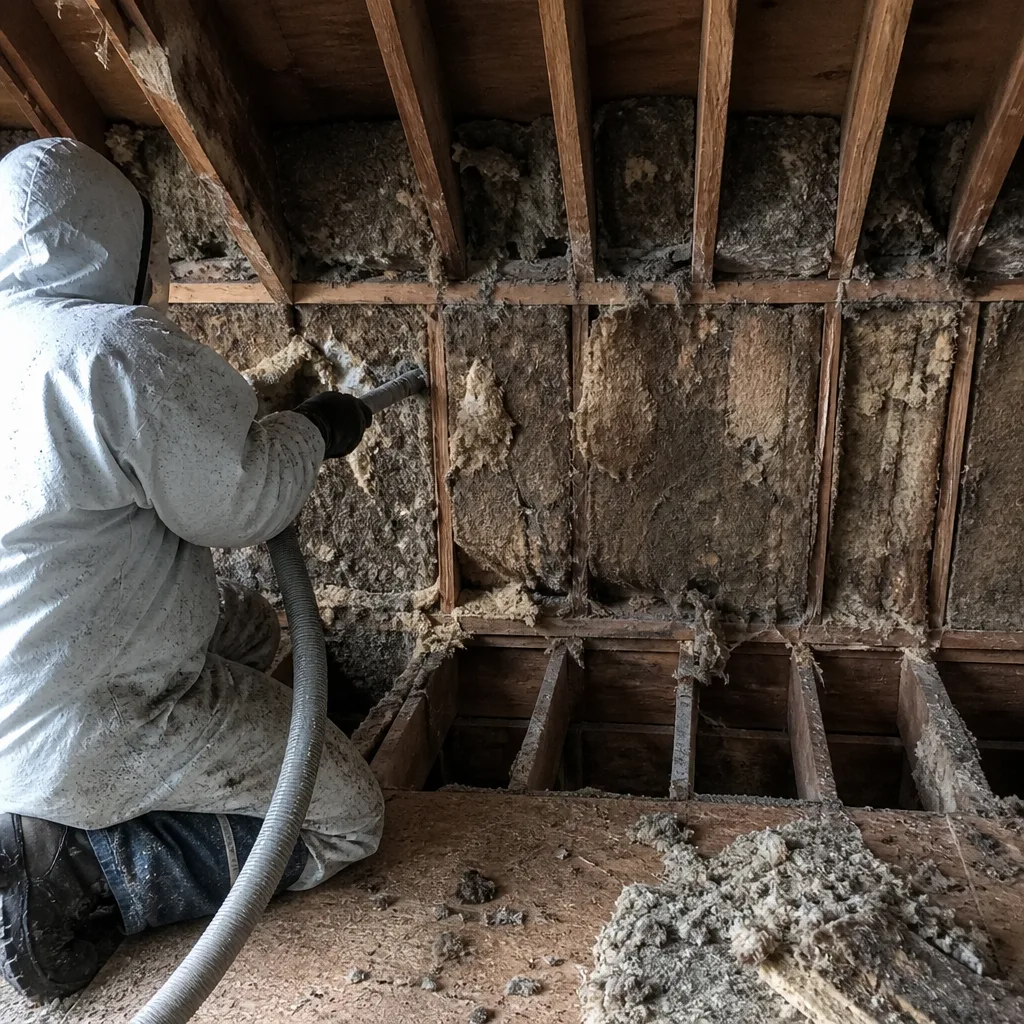 Before
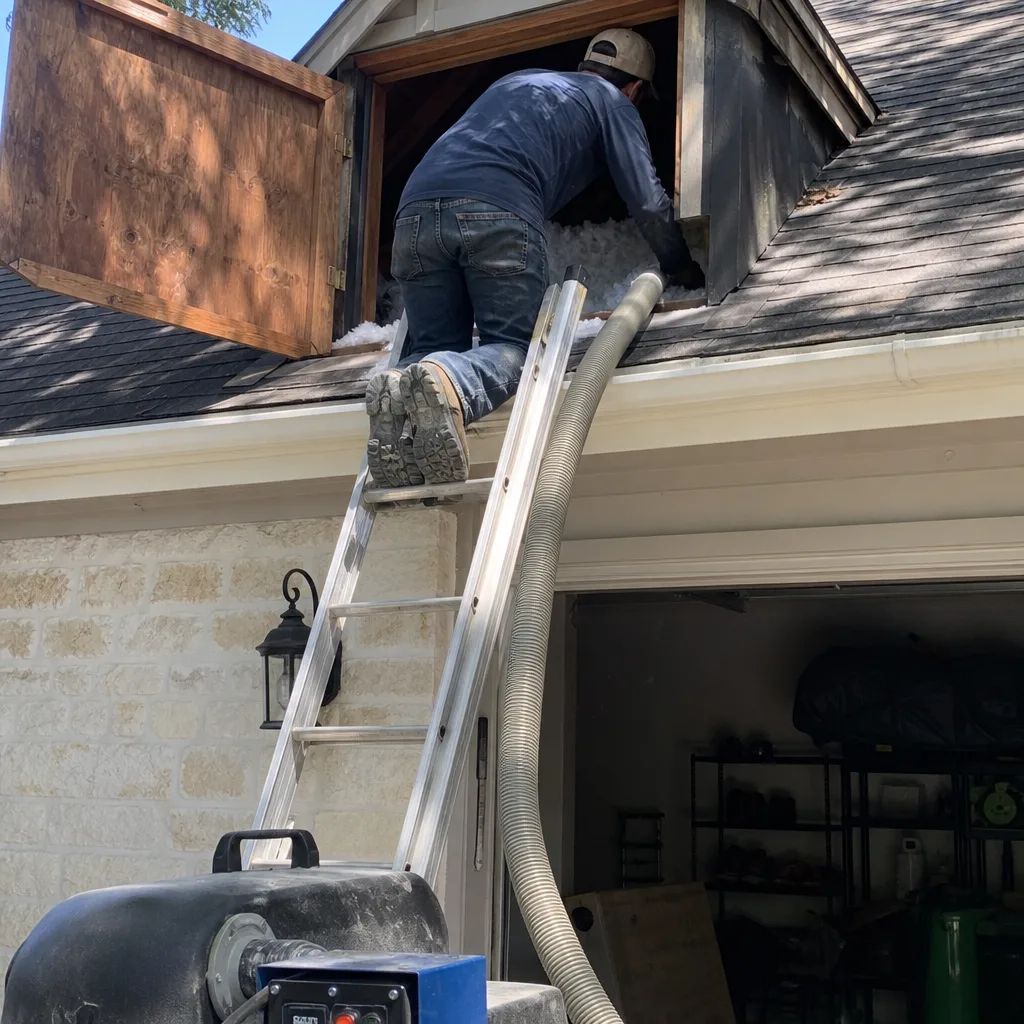 After
AfterReplacement Cost & What’s Included
| Scope | Price Range (Georgetown) | What’s Included |
|---|---|---|
| Top-plate seal only (single-story, ~1,200 sq ft attic) | $1,800-$2,400 | Remove existing insulation, foam-seal all top plates, replace insulation, blower-door test before/after |
| Full penetration seal (two-story, ~2,400 sq ft) | $2,600-$3,400 | Above plus: can lights, plumbing vents, electrical penetrations, chimney chase, duct boots, documented photo record |
| Re-insulation with new Rockwool Comfortbatt | Add $1.40-$1.90/sq ft | Material, installation to full depth, no compression, verified R-value documentation |
What drives the range: attic accessibility (truss height, existing decking), penetration density (recessed can count, multi-level plumbing stacks), and whether we’re working around live electrical that requires coordination with a licensed electrician. We don’t quote over the phone without photos or a site visit - but we do provide a written price before any work starts, always, under Haven Standard Clause 1. Every air-sealing job includes before-and-after blower-door numbers so you can verify the result. The 365-Day Done Right Promise covers all completed work.
DIY or Call Us?
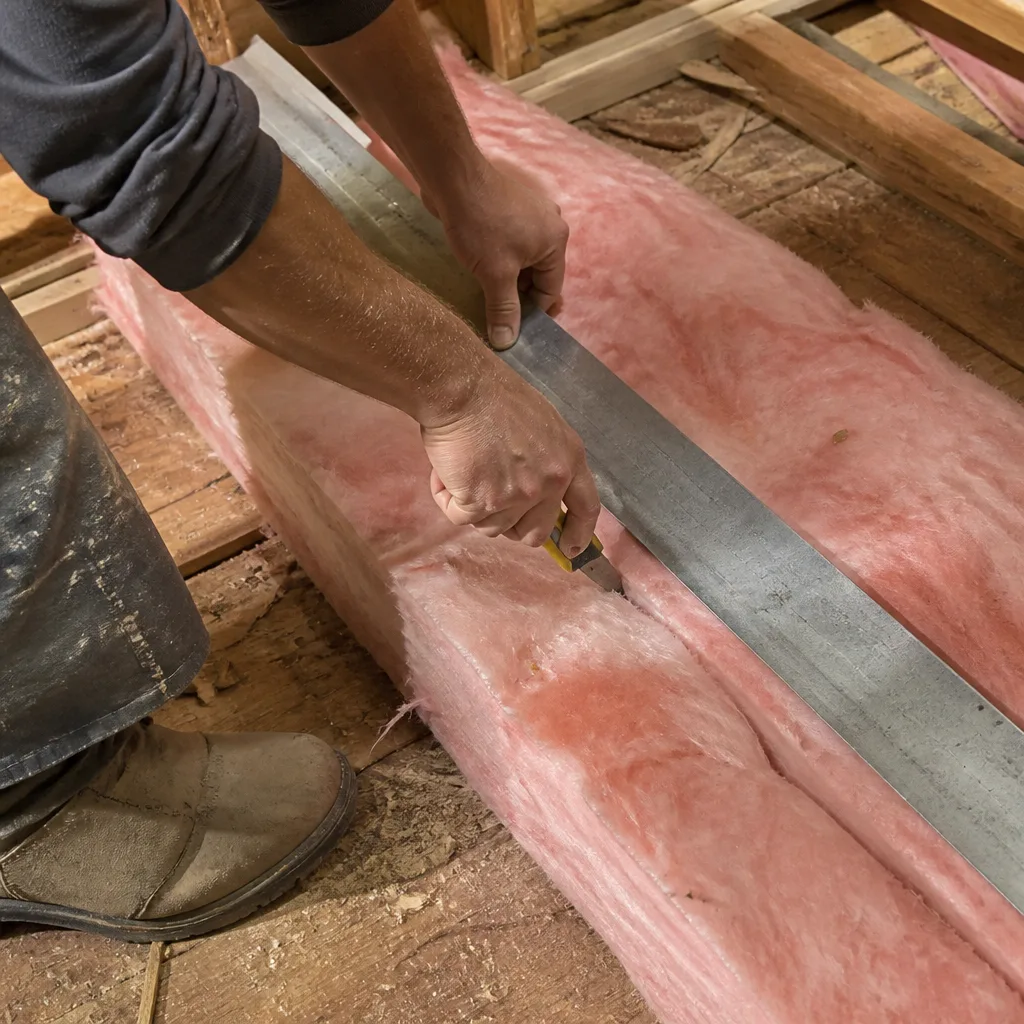
Here’s what you can safely check yourself: shine a flashlight into your attic hatch during daylight. If you see light streaming around electrical boxes, plumbing vents, or where walls meet the ceiling, you’ve got bypasses. Note the locations with your phone. That’s useful information, and it’s safe.
Here’s where DIY goes wrong: working in a 140°F attic on Georgetown’s July afternoons leads to heat exhaustion faster than most people expect. More critically, sealing around recessed can lights requires knowing whether they’re IC-rated (insulation contact) or not - non-IC cans with the wrong sealant create a fire hazard. And a blower-door test isn’t a homeowner tool; without that number, you’re guessing whether the seal worked. We’ve re-done enough DIY and cut-rate jobs that we can say this plainly: seal the holes first. Then we talk about R-value. Call (254) 970-2136 and we’ll read your existing estimate with you - free second opinion, no obligation.
FAQs
In Georgetown’s climate, quality acrylic and intumescent sealants last 20-25 years when properly applied, but thermal cycling at 140°F attic peaks can degrade lesser products in 5-7 years. We use only Hilti and STI materials with documented longevity in mineral-wool assemblies. Call (254) 970-2136 for an exact quote - estimates are free.
Partial repair is possible if the original sealant is still adhering and the failure is isolated to a few penetrations. If the previous contractor used non-fire-rated caulk or compressed the Rockwool, we remove and redo the affected areas. We won’t patch over a fundamentally wrong approach - the blower-door number will tell the story. Call (254) 970-2136 for an exact quote - estimates are free.
Most single-day jobs: a top-plate seal on a 2,000 sq ft home takes 4-6 hours with a two-person crew; full penetration sealing with documented photos and blower-door testing runs 6-8 hours. We arrive with materials on the truck, including Rockwool-compatible sealants and replacement Comfortbatt if needed. Call (254) 970-2136 for an exact quote - estimates are free.
We stock Hilti CFS-F Firestop Foam, SpecSeal SSP Putty, 3M CP-25WB+ acrylic, and polyethylene gasket foam on every truck - all listed for Rockwool mineral wool assemblies. We don’t stock Rockwool-branded sealants because Rockwool doesn’t manufacture them; we’re an independent service provider, not affiliated with Rockwool. We also stock Reflectix radiant barrier components for jobs that need both sealing and reflective insulation. Call (254) 970-2136 for an exact quote - estimates are free.
Ready to stop losing conditioned air through your attic? Call (254) 970-2136. A live person answers 24/7. We’ll schedule a site visit, provide a written price before any work starts, and leave you with before-and-after blower-door numbers, a documented photo record, and a 365-Day Done Right Promise in writing. That’s the Haven Standard.
Written by Wes Okafor, Owner, Topside Attic Insulation Georgetown at Topside Attic Insulation Georgetown, serving Georgetown and nearby areas.