
Owens Corning Crawl Space Encapsulation: The Georgetown Owner’s Guide
Most Owens Corning crawl space encapsulation systems we install in Georgetown run between $3,800 and $7,200 for a complete installation, depending on crawl space square footage and whether the foundation needs active dehumidification. We stock Owens Corning-compatible vapor barrier material, seam tape, and mechanical fasteners on every truck, and we can usually inspect and quote same-day. Homeowners typically discover a problem when they notice musty odors rising through floor registers, see condensation on ductwork, or find their hardwood cupping from below - all signs that the encapsulation barrier has torn, delaminated, or was never fully sealed at the perimeter.
Which Owens Corning Models This Applies To
Owens Corning does not sell crawl space encapsulation as a named residential system with model numbers like their roofing or attic insulation lines. What we encounter in Georgetown homes is Owens Corning ProPink or EnergyComplete material that was repurposed or mis-specified for crawl space duty, or Owens Corning Foamular NGX rigid foam board used as perimeter wall insulation in encapsulated crawls. The actual vapor barrier is usually a third-party polyethylene, not Owens Corning branded.
To identify what you have, look for the Owens Corning logo and product code on any rigid foam board - Foamular NGX 150 or 250 are common in our area, with compressive strengths of 15 psi and 25 psi respectively. For flexible barriers, check the mil thickness stamped on the polyethylene edge; 6-mil is inadequate for encapsulation and tears within 3-5 years on Georgetown’s clay soils, while 12-mil or 20-mil reinforced polyethylene is what we install. We also stock Reflectix radiant barrier for crawl space ceiling applications where ductwork needs shielding from ground moisture.
Topside Attic Insulation Georgetown is an independent service provider, not affiliated with Owens Corning. We source material from Owens Corning, Johns Manville, Knauf, and other manufacturers based on what the job actually needs, not on exclusive arrangements.
Signs Your Owens Corning Crawl Space Encapsulation Is Failing
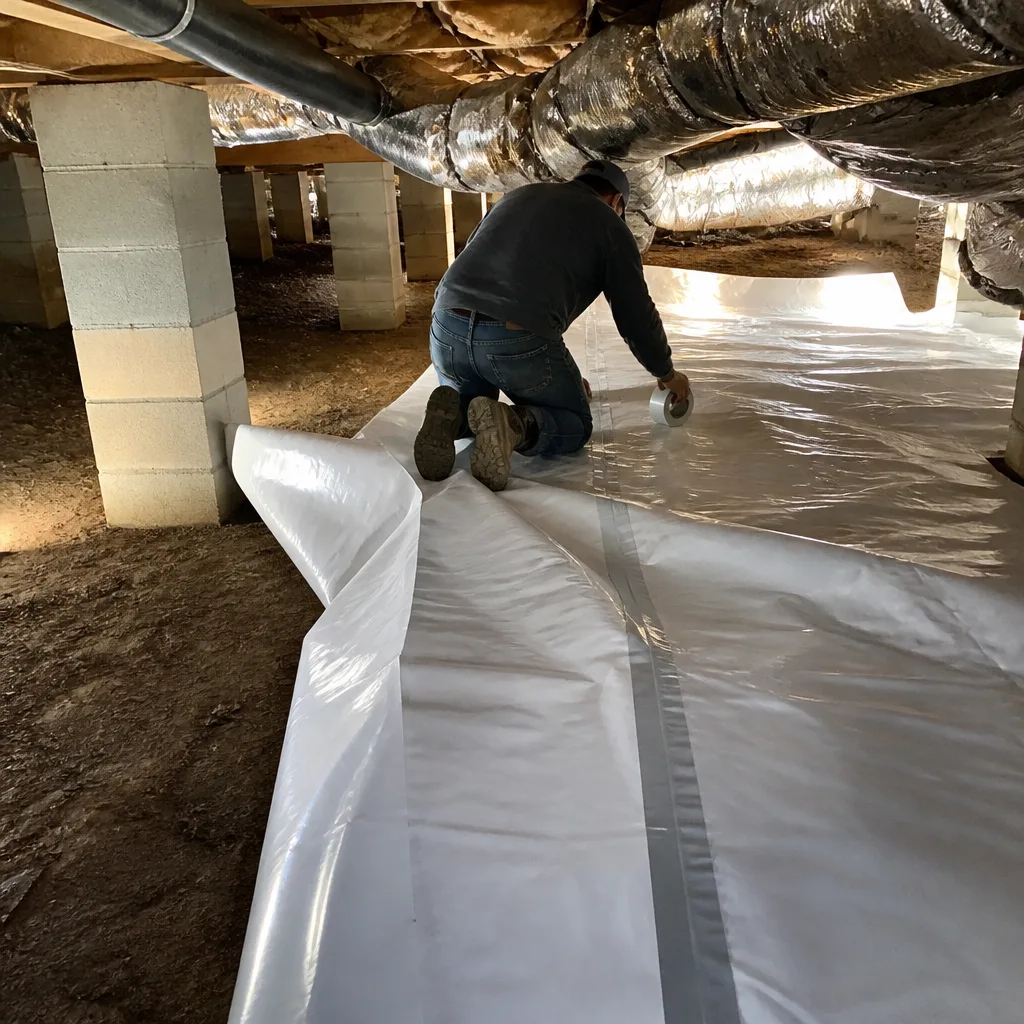
- Musty smell that intensifies after rain. Georgetown’s Blackland Prairie clay holds water for days after a storm. If your encapsulation was sealed with standard duct tape instead of butyl-backed seam tape, that tape fails where the barrier meets the foundation wall, letting soil gases and moisture bypass the barrier entirely.
- Condensation on HVAC ducts in summer. When the vapor barrier is compromised, crawl space relative humidity climbs above 70%. The cold supply ducts become the first condensation surface, and that water drips onto insulation, compressing it and dropping its effective R-value - the resistance to heat flow - by half or more.
- Soft or cupping hardwood floors, especially near exterior walls. Moisture migration up through rim joists that were never foam-sealed before the barrier went in. We see this constantly in 1990s Georgetown builds near the San Gabriel River corridor, where the original contractor skipped the air-sealing step.
- White or gray mold on floor joists. Surface mold appears when wood moisture content stays above 20% for extended periods. Owens Corning Foamular NGX does not itself support mold growth, but if it was installed without a complete vapor barrier seal, the condensation it traps against wood becomes the problem.
- Increased energy bills with no attic explanation. Wet crawl space insulation loses effectiveness, and your HVAC system works harder to compensate. We verify this with a blower-door test - a pressurization reading that shows, in one number, how much air your building envelope is losing - before and after any encapsulation repair.
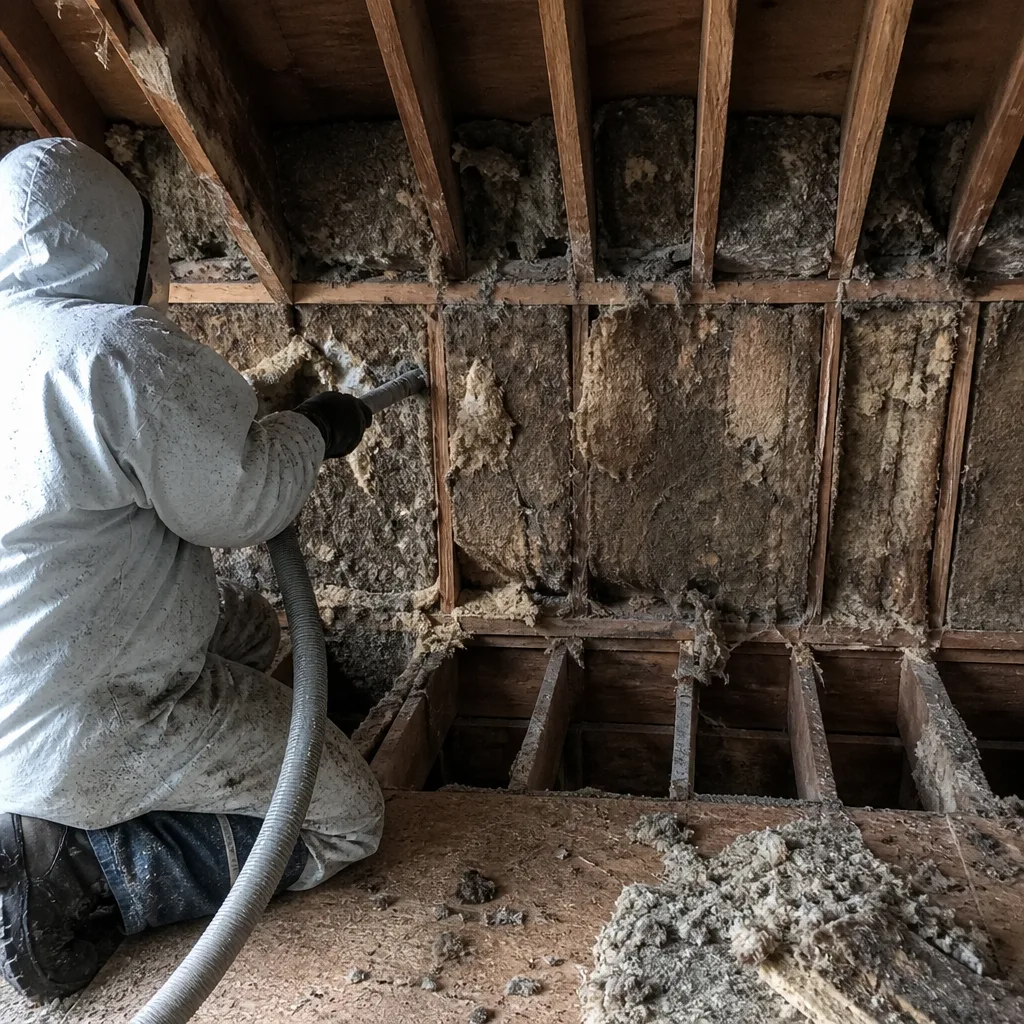 Before
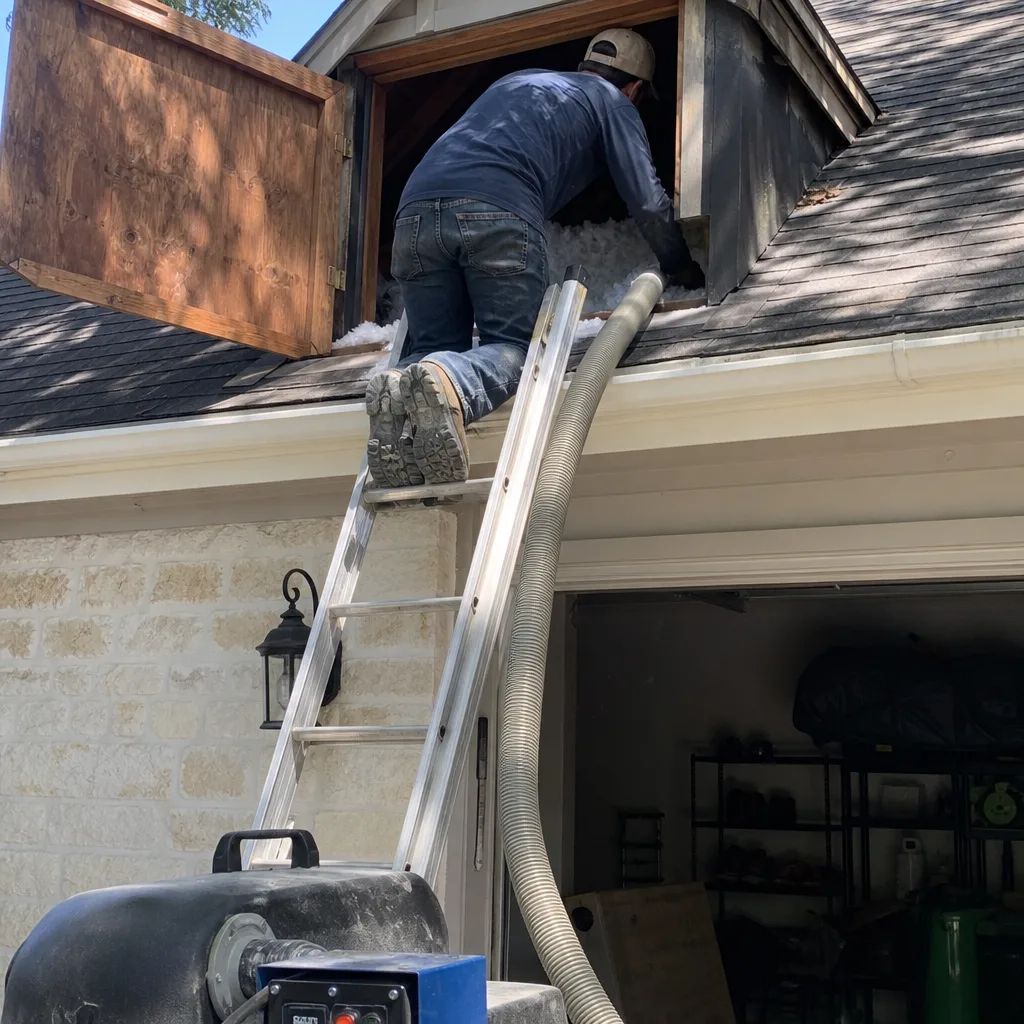 After
AfterReplacement Cost & What’s Included
In Georgetown, a partial encapsulation repair - patching tears, resealing perimeter, replacing failed tape - typically runs $1,400 to $2,800. A complete Owens Corning-compatible encapsulation with new 12-mil or 20-mil reinforced polyethylene, full perimeter sealing, and rim joist air sealing with closed-cell foam ranges from $3,800 to $7,200 for crawl spaces under 1,500 square feet. Active dehumidification adds $1,200 to $2,400 depending on capacity and drainage method.
| Component | Price Range (Installed) |
|---|---|
| Partial repair (patching, resealing) | $1,400 - $2,800 |
| Complete encapsulation, under 1,500 sq ft | $3,800 - $7,200 |
| Rim joist air sealing (closed-cell foam) | $800 - $1,600 |
| Active dehumidifier with drainage | $1,200 - $2,400 |
What drives the range: crawl space height (anything under 18 inches requires specialized equipment), existing debris removal, and whether the foundation walls need Foamular NGX rigid board. Every job gets a Written Price Before Any Work Starts - Haven Standard Clause 1 - with a flat price, written scope, and written warranty delivered before anyone lifts a tool. The 365-Day Done Right Promise covers all encapsulation work.
DIY or Call Us?
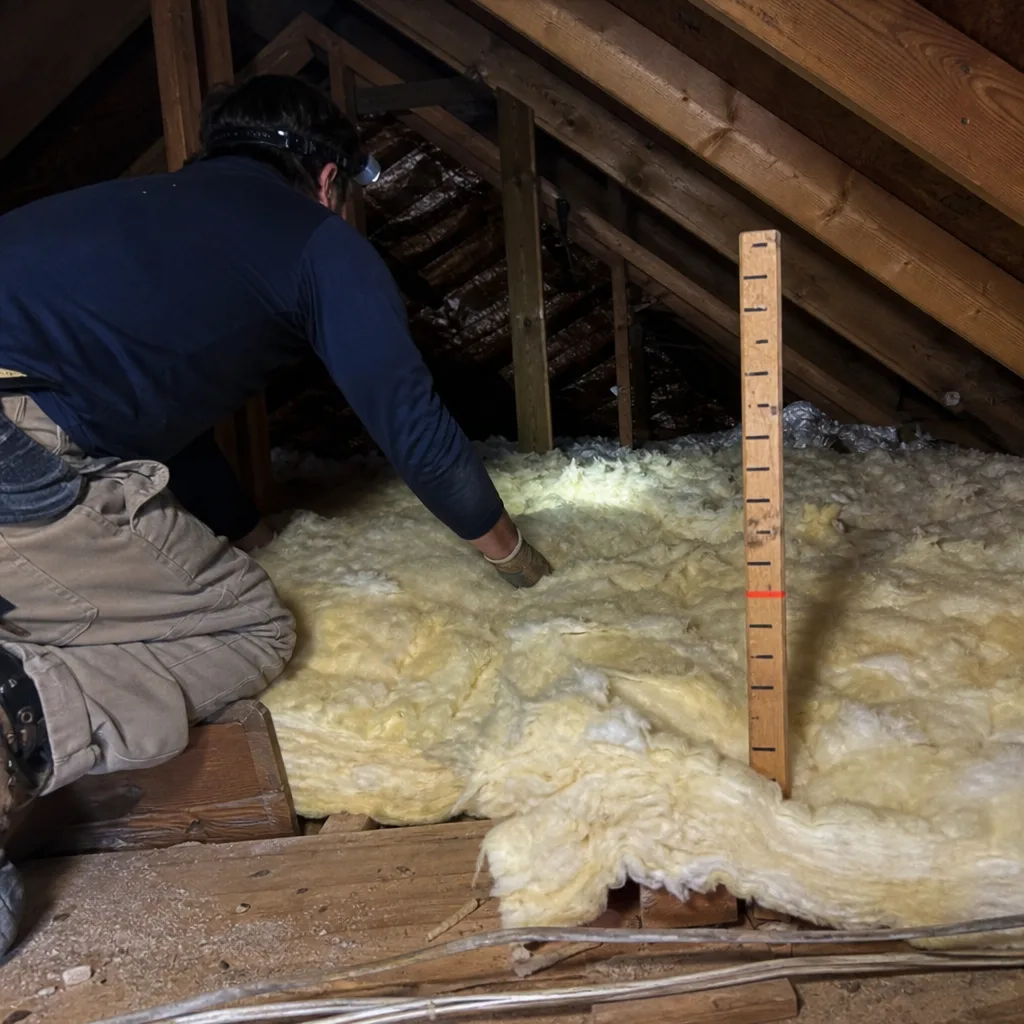
There’s no high-tension danger in crawl space encapsulation like you’d find with garage door springs, but there’s a specific way DIY goes wrong here. Homeowners can safely check: whether the vapor barrier is still anchored at the perimeter, whether you see standing water, and whether your dehumidifier reservoir is actually filling (if it isn’t, the unit may be undersized or the space too open).
Where DIY fails: polyethylene seams require butyl-backed tape applied to clean, dry surfaces - most homeowners use duct tape that peels in Georgetown’s humidity within one season. Perimeter sealing at the sill plate demands foam application in confined spaces with proper respiratory protection. And without a blower-door test, you cannot verify whether the rim joists are actually sealed or just covered.
We carry Owens Corning-compatible 12-mil and 20-mil reinforced polyethylene, butyl seam tape, and Foamular NGX board on every truck. Call (254) 970-2136 for a free inspection and written price - we will read any competing quote with you as part of our Free Second Opinion on Any Written Estimate.
FAQs
Properly installed 12-mil or 20-mil reinforced polyethylene with butyl seam tape lasts 15 to 20 years in Georgetown’s climate. The 6-mil material sometimes found in original installations fails in 3 to 5 years, especially where groundwater wicks through Blackland Prairie clay against foundation walls. Call (254) 970-2136 and we will inspect what you have and give you a written assessment.
Small tears under 6 inches can be patched with compatible material and proper seam tape if the surrounding polyethylene is still supple and the perimeter seal is intact. Widespead embrittlement, delamination, or failed perimeter attachment means replacement is more cost-effective than chasing individual failures. We document the condition with photos and give you both options in writing.
Most complete encapsulations for Georgetown homes under 1,500 square feet take one to two days: day one for debris removal, surface prep, and any rim joist foam work; day two for barrier installation, sealing, and dehumidifier setup if included. We provide a Documented Photo Record on every visit, including before-and-after images of the crawl space conditions.
Yes - we stock 12-mil and 20-mil reinforced polyethylene vapor barrier, butyl-backed seam tape, mechanical fasteners for masonry and wood sill plates, and Owens Corning Foamular NGX rigid foam board in common thicknesses. For specialized dehumidifier sizing or drainage pump requirements, we source and install within 24 hours. Same-day inspection and quote is standard.
Written by Wes Okafor, Owner, Topside Attic Insulation Georgetown at Topside Attic Insulation Georgetown, serving Georgetown and nearby areas.