
Knauf Radiant Barrier Installation: The Georgetown Owner’s Guide
Knauf radiant barrier installation in Georgetown typically runs $1.80 to $2.40 per square foot of attic ceiling, with most single-family homes falling between $1,400 and $2,800 for full coverage. We stock Knauf EcoSeal and Insulation Shield radiant barrier products on our trucks, and we can usually schedule installation within 48 hours. Most Georgetown homeowners discover their existing radiant barrier has failed when their summer electric bills spike above $400 or their upstairs bedrooms won’t cool below 78°F despite the AC running nonstop.
Which Knauf Models This Applies To
Knauf produces two radiant barrier product lines you’ll find in Georgetown attics: the EcoSeal Foil-Faced Insulation (a kraft-faced fiberglass batt with integrated radiant barrier layer) and the standalone Insulation Shield radiant barrier foil (perforated or non-perforated, depending on climate zone application). The EcoSeal line carries model numbers starting with KFB-RB followed by the R-value and width, for example KFB-RB30-15 for 15-inch batts. The standalone foil is sold in 4-foot and 5-foot rolls, 125 to 500 square feet per roll, with perforation pattern determining whether it’s vapor-permeable or a vapor barrier.
To identify what you have, check the printed label on any exposed batt edge or the core label on rolled foil remnants. Non-perforated foil in a Georgetown attic is almost always wrong for our mixed-humidity climate, it traps moisture against roof decking and we see the rot in Sun City Georgetown homes built during the 2019-2021 construction rush. We are an independent service provider, not affiliated with Knauf, and we source materials from multiple manufacturers including Owens Corning, Johns Manville, and Reflectix. For Knauf specifically, we match the existing product series to maintain warranty continuity on newer installs, or we recommend a switch to perforated standalone foil if the original was non-perforated and caused moisture issues.
Signs Your Knauf Radiant Barrier Installation Is Failing
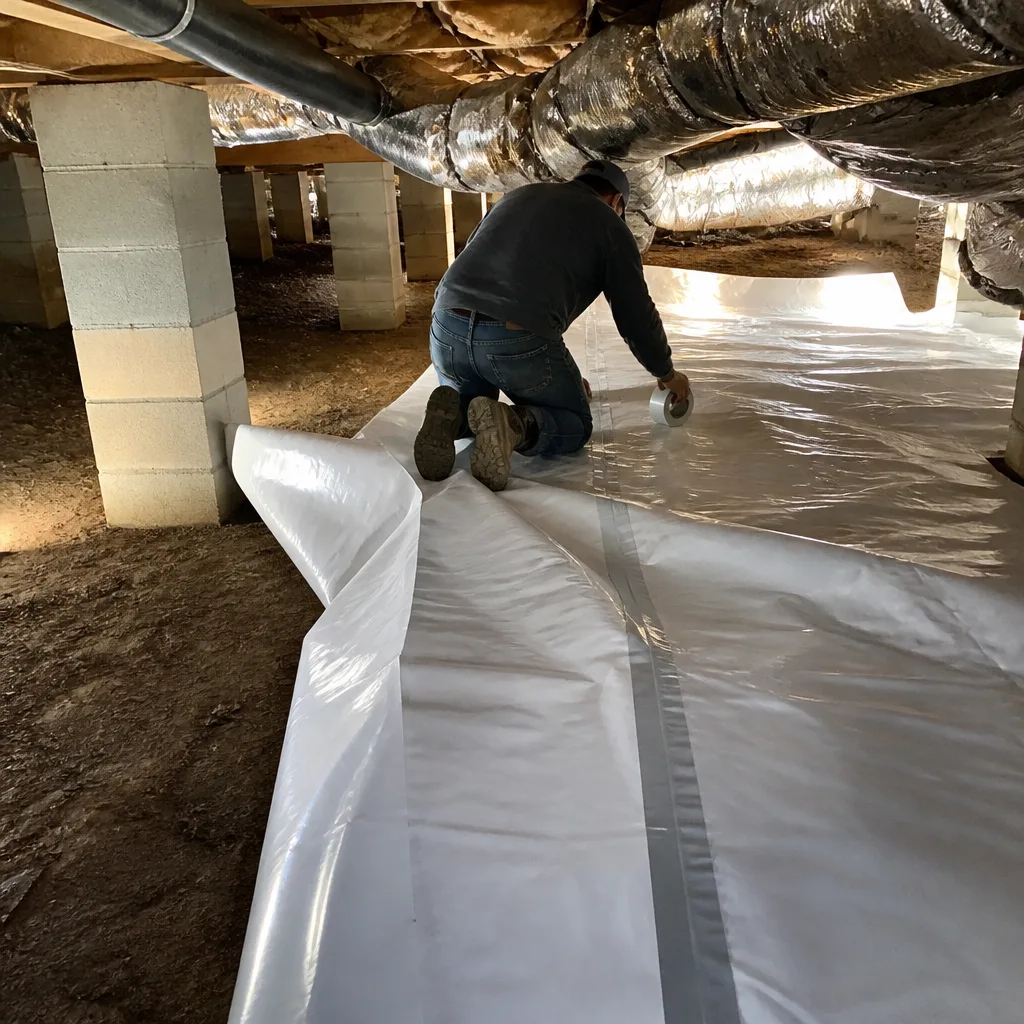
- Surface temperatures above 140°F on your attic floor in July. A functioning radiant barrier should reflect 95% of radiant heat back toward the roof deck. When the foil layer oxidizes, delaminates, or collects a decade of dust, that reflectivity drops below 70% and the attic floor becomes a radiant heater for your living space. We measure this with an infrared camera and show you the image.
- Dust-caked foil that looks dull gray instead of reflective. Knauf’s foil facing is aluminum-coated kraft or pure aluminum sheet, but Central Texas dust is fine limestone and silica that bonds to static-charged foil. Once the reflective surface is buried, it’s done. Vacuuming restores maybe 10% of performance and risks tearing the facing.
- Moisture staining on rafters or roof decking directly above the barrier. This is the non-perforated foil problem we see in Georgetown’s older Pecan Valley and Riverview subdivisions. Summer humidity rises through the ceiling, hits the cool foil, condenses, and rots the roof from the inside. The fix is perforated replacement foil or switching to a breathable system.
- Batts that have slid off vertical knee walls or fallen from rafter bays. Knauf’s friction-fit batts rely on proper width and compression. In attics that hit 160°F, the adhesive on staple tabs degrades in 5-7 years, and gravity wins. We find this especially in homes near the San Gabriel River corridor where afternoon humidity spikes make the foil heavier.
- AC runtime exceeding 14 hours daily in August with no thermostat change. Your equipment is working harder to overcome radiant heat gain that the barrier used to block. We verify this with a blower-door test, a pressurization reading that shows, in one number, how much conditioned air your building envelope is losing, plus thermal imaging to separate radiant gain from air leakage.
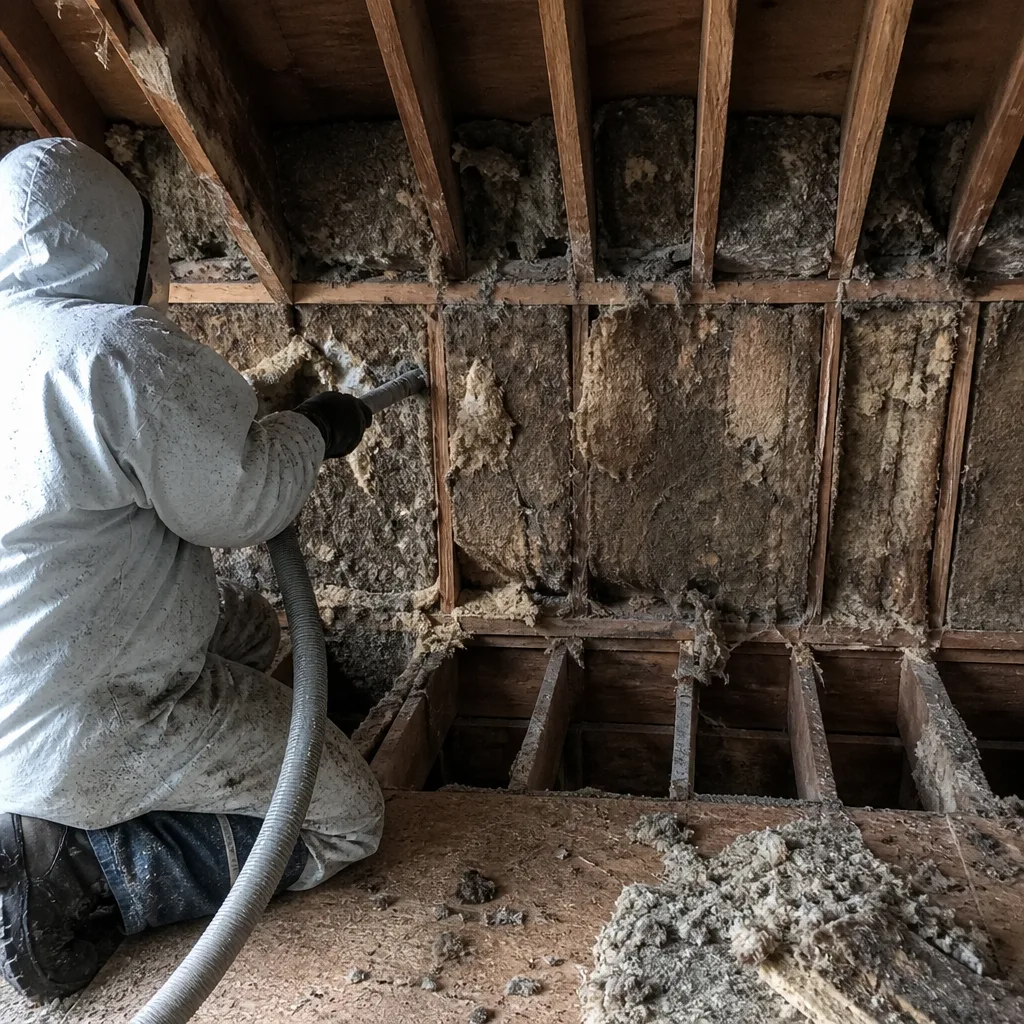 Before
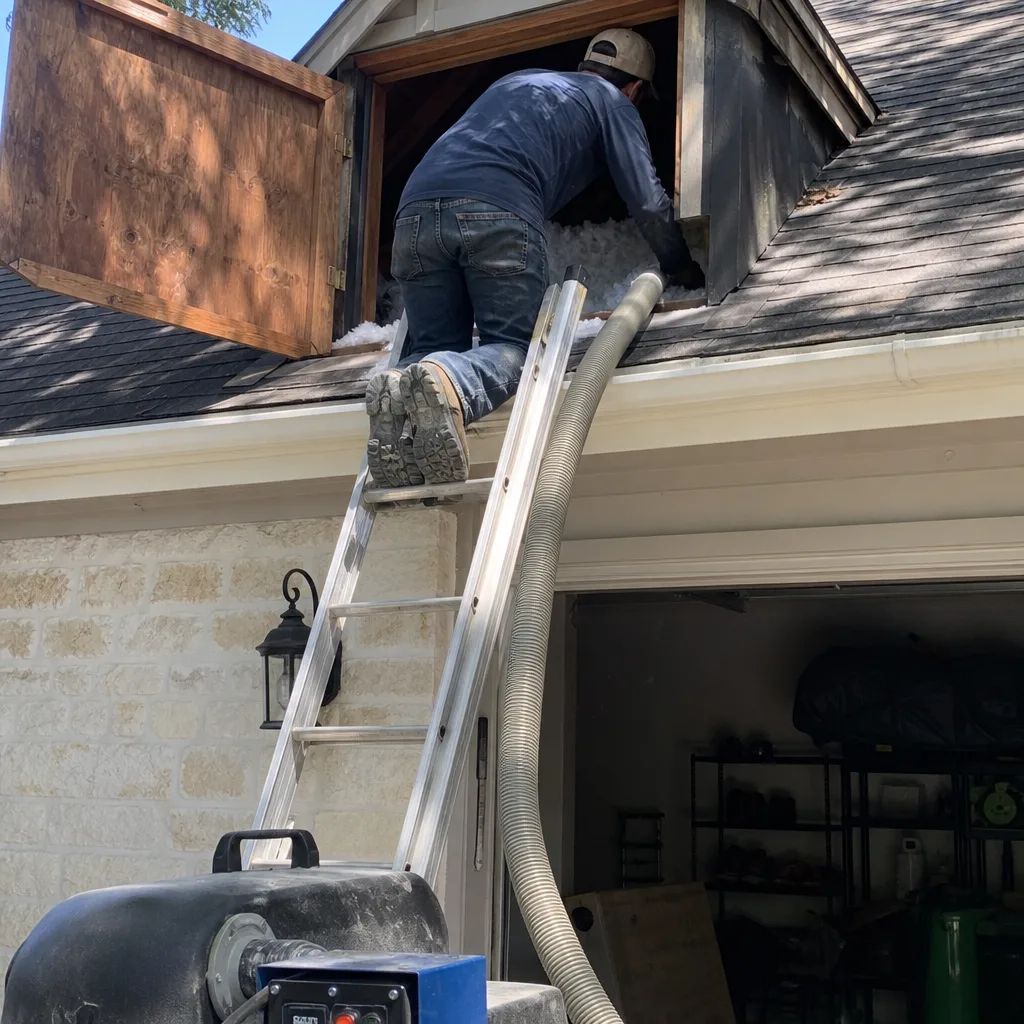 After
AfterReplacement Cost & What’s Included
Most Knauf radiant barrier replacements in Georgetown fall between $1,400 and $2,800 for attics between 1,200 and 2,500 square feet of ceiling area. The range depends on three factors: whether we’re removing failed existing product (adds $0.30-$0.50 per square foot), whether the attic needs air sealing first, and whether we’re installing standalone foil or integrated foil-faced batts.
| Component | Price Range |
|---|---|
| Standalone perforated radiant barrier foil (installed) | $1.80 – $2.20 / sq ft |
| Foil-faced batt replacement (Knauf EcoSeal or equivalent) | $2.00 – $2.60 / sq ft |
| Removal and disposal of failed existing barrier | $350 – $650 flat |
| Attic air sealing (top plates, can lights, penetrations) | $450 – $950 flat |
Every job includes a Written Price Before Any Work Starts, Haven Standard Clause 1, a Documented Photo Record of before and after conditions, and our 365-Day Done Right Promise. On applicable jobs, we provide before-and-after blower-door numbers so you can verify the air-sealing result. We do not add a single bag of insulation until every penetration is foam-sealed and the pre-job thermal images are documented. Seal the holes first. Then we talk about R-value.
DIY or Call Us?
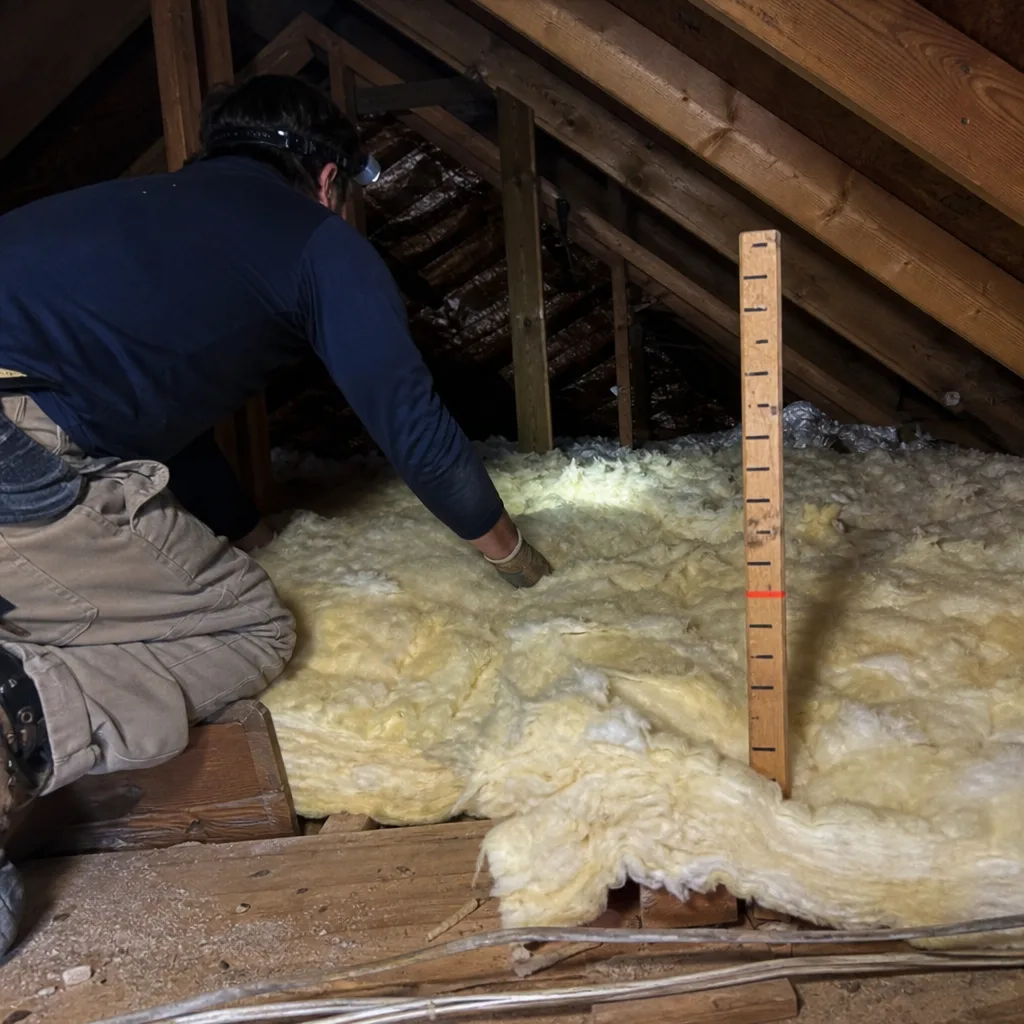
You can safely check three things yourself: verify the product label on any exposed batt, look for perforation holes in standalone foil (hold it to light), and photograph any moisture staining for documentation. What you should not do is crawl across attic joists in summer heat above 130°F, handle degraded foil that releases aluminum dust, or attempt to staple new barrier material while balancing on ceiling drywall. The fall risk is real, and mis-stapled foil creates wind-washing channels that defeat the entire system.
Wes Okafor won’t send his crew into an attic without a written scope, harness points where the pitch exceeds 6/12, and a documented safety briefing. We extend the same standard to homeowners: call (254) 970-2136 and we’ll walk through what you’re seeing, no charge for the phone assessment. If you need eyes on it, we offer a Free Second Opinion on any written estimate you’ve already received.
FAQs
Perforated standalone foil in a clean attic lasts 15-20 years; foil-faced batts degrade faster, typically 10-15 years before the facing oxidizes or delaminates. Dust accumulation and summer humidity above 70% shorten both timelines, which is why we document attic conditions with photos at installation. Call (254) 970-2136 for an exact quote, estimates are free.
Partial repairs are possible if less than 20% of the surface is damaged and the remaining foil is still reflective, but matching 10-year-old Knauf product to new material is difficult and the seams create thermal bridges. In most Georgetown homes we assess, full replacement delivers better performance per dollar. Call (254) 970-2136 for an exact quote, estimates are free.
A typical 2,000-square-foot attic takes one crew one day for removal and replacement, or a half-day if we’re installing over clean existing insulation. Jobs requiring air sealing first add four to six hours. We arrive with a written scope, named technicians, and a text when we’re on the way, Haven Standard: Arrive on schedule.
We stock perforated standalone radiant barrier foil and Knauf-compatible foil-faced batts on every Georgetown-area truck, plus Reflectix equivalents when the job spec calls for it. For exact Knauf EcoSeal color-matching on warranty repairs, we may need 24 hours to pull from our Austin distributor. Call (254) 970-2136 to confirm availability for your model.
Written by Wes Okafor, Owner, Topside Attic Insulation Georgetown at Topside Attic Insulation Georgetown, serving Georgetown and nearby areas.