
Knauf Attic Insulation: The Georgetown Owner’s Guide
We stock and install Knauf attic insulation in Georgetown homes, with most blown-in fiberglass jobs running between $1.80 and $3.20 per square foot installed depending on target R-value and existing conditions. Same-day installation is available when we have your target density in stock, which we typically do for Knauf’s EcoFill and Jet Stream series. Homeowners usually figure out something’s wrong when the upstairs bedrooms won’t cool below 78°F in July, or when they spot thin, patchy coverage in the attic where settling has left the top of the joists exposed.
Which Knauf Models This Applies To
Knauf’s blown-in fiberglass lines most commonly found in Georgetown attics are EcoFill Wx (the standard loose-fill, treated for moisture resistance), Jet Stream Ultra (the higher-density product spec’d for tighter cavities), and EcoFill HD (used when we’re matching existing depth without overloading drywall). The bag label will show a pink Knauf logo with a density spec in pounds per cubic foot - EcoFill Wx runs 0.5 PCF, Jet Stream Ultra runs 0.8 to 1.0 PCF. That’s the number that matters if you’re trying to match what’s there.
We also see Knauf Insulation Atmosphere - the formaldehyde-free batts - in newer builds around Sun City and along the 1431 corridor, usually friction-fit between trusses. Batts and blown-in are not interchangeable without adjusting the air-sealing strategy first. We’ve walked into attics where a homeowner layered blown-fill over compressed batts and created a moisture trap against the drywall. The part numbers on Knauf bags are 12-digit codes starting with manufacturer plant identifiers; if you photograph the bag end, we can cross-reference it against our stock in about thirty seconds.
Topside Attic Insulation Georgetown is an independent service provider, not affiliated with Knauf. We source Knauf, Owens Corning, Johns Manville, and other brands based on what the job spec calls for, not a distribution agreement. For Knauf specifically, we find their fiberglass has slightly finer fiber diameter than OC’s Miraflex, which matters in tight blow applications above vaulted ceilings in Georgetown’s older ranch-style homes near the university.
Signs Your Knauf Attic Insulation Is Failing
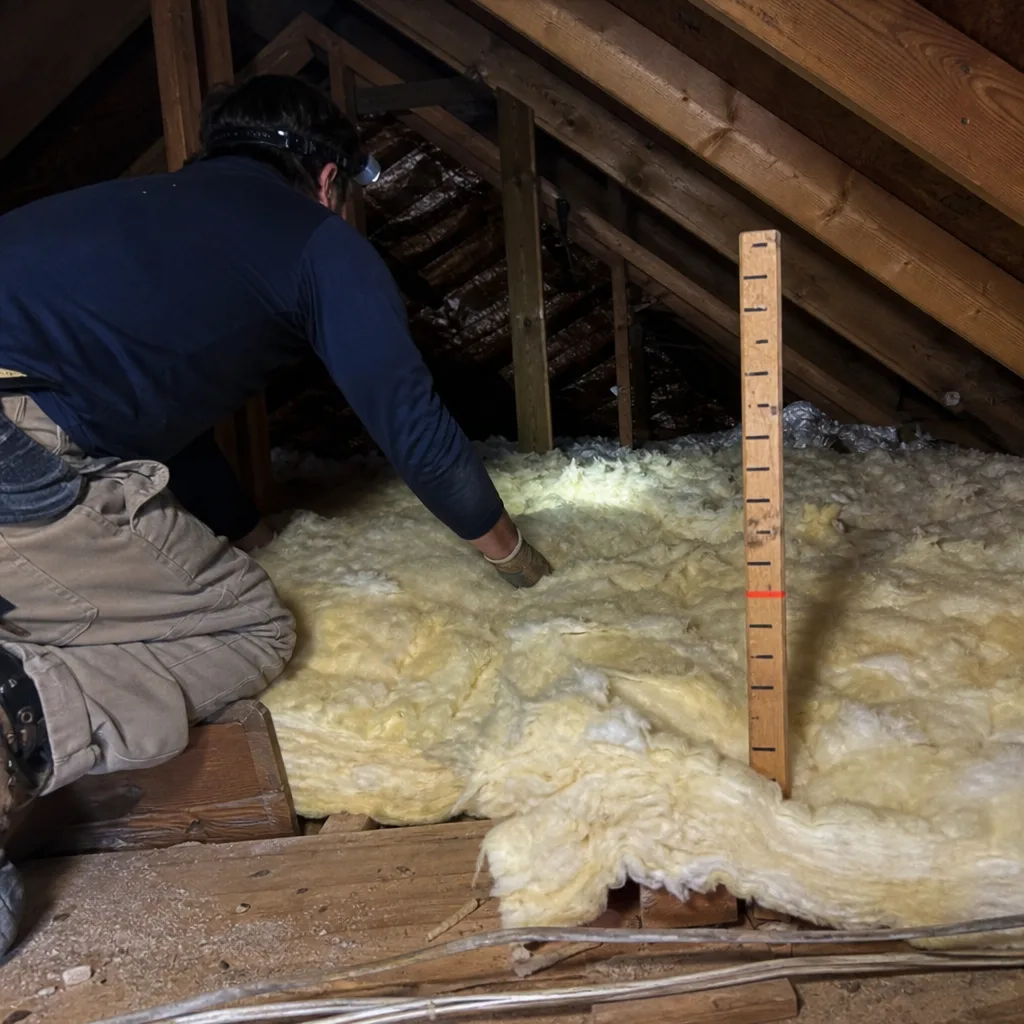
- Uneven temperature zones between rooms. In Georgetown’s 100°F summer afternoons, heat moves through thin spots fast. We regularly find EcoFill Wx settled to 8 inches in the center of the attic while perimeter walls sit at 4 inches, usually because the original installer didn’t account for the wind-washing effect at the eaves. The fix isn’t more insulation - it’s proper baffles and a top-off to even depth.
- Ice damming at the roof edge in winter. Even our mild Georgetown ice events point to attic heat loss melting roof snow from below. Knauf insulation against an unsealed top plate - the horizontal framing member where the wall meets the ceiling - lets warm, humid house air rise and condense on the underside of the sheathing. We’ve seen this in fifty homes backing up to the San Gabriel River corridor, where humidity runs higher.
- Dust or insulation particles in recessed can lights. This means air is moving through the insulation, not just around it. Knauf fiberglass won’t create that dust on its own; the tell is a failed air barrier, often at a can-light penetration that should have been boxed and sealed before any insulation went in. The insulation is doing its job - the air sealing failed it.
- Visible compression or displacement around HVAC ducts. Flex duct laid directly on Knauf loose-fill crushes the fiber to half its designed thickness, creating an R-value dead zone. In Georgetown’s 2015-2020 builds, we see this constantly: the installer ran duct before insulation, and the insulation got stuffed underneath rather than sealing and covering properly.
- Moisture staining on ceiling drywall below bathroom vents. Knauf’s moisture-resistant treatment handles incidental damp, but it’s not a vapor barrier. A vent terminating in the attic rather than through the roof dumps humid air directly into the fiberglass. We’ve pulled saturated EcoFill Wx in three Georgetown homes where the vent hose had disconnected years earlier and the homeowner never went up to check.
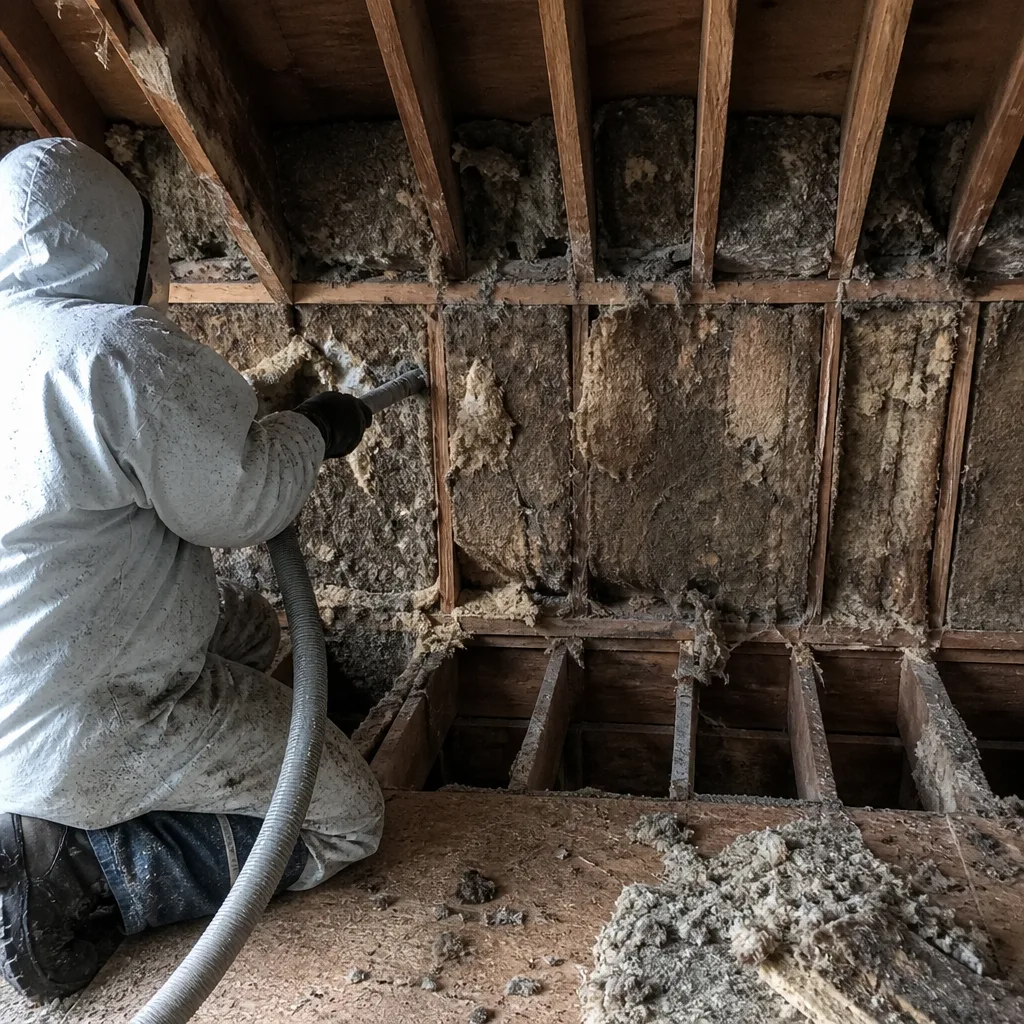 Before
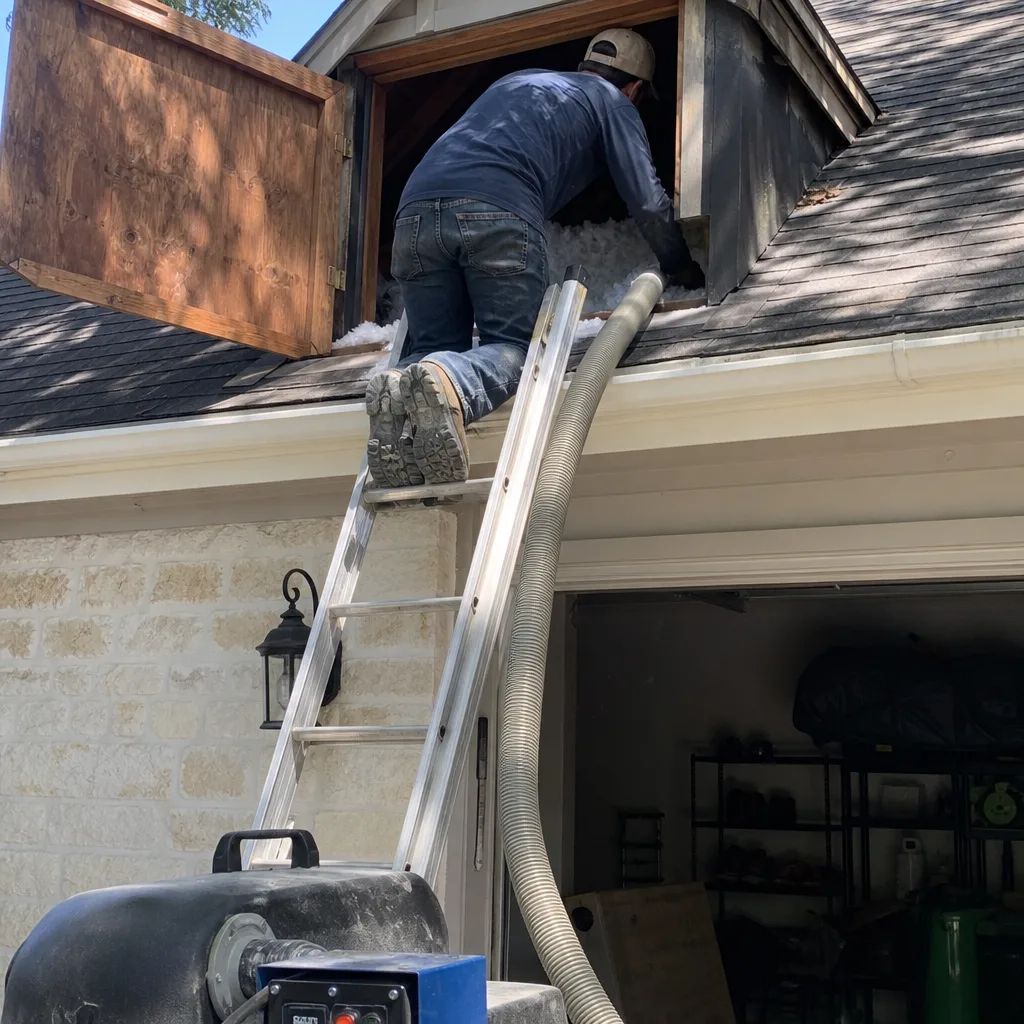 After
AfterReplacement Cost & What’s Included
Most Knauf attic insulation jobs in Georgetown run between $1.80 and $3.20 per square foot for blown-in fiberglass, with the spread driven by three factors: target R-value (R-38 vs. R-49 vs. R-60), whether we’re removing existing degraded material first, and how much air sealing the attic floor needs before the blower truck arrives. A typical 1,800 square foot attic in the Georgetown area, brought from R-19 to R-38 with top-plate sealing and baffle installation, usually falls between $3,200 and $5,400.
That price includes the written scope delivered before anyone starts, the air-sealing work (foam on top plates, electrical penetrations, and can-light boxes), the Knauf material, installation to specified depth with depth markers every 300 square feet, and the Documented Photo Record showing pre-work thermal images, post-work coverage verification, and blower-door numbers if air sealing was part of the scope. The 365-Day Done Right Promise covers all completed work. We do not quote over the phone without attic access - every job begins with a written price, and that requires eyes on the space.
DIY or Call Us?
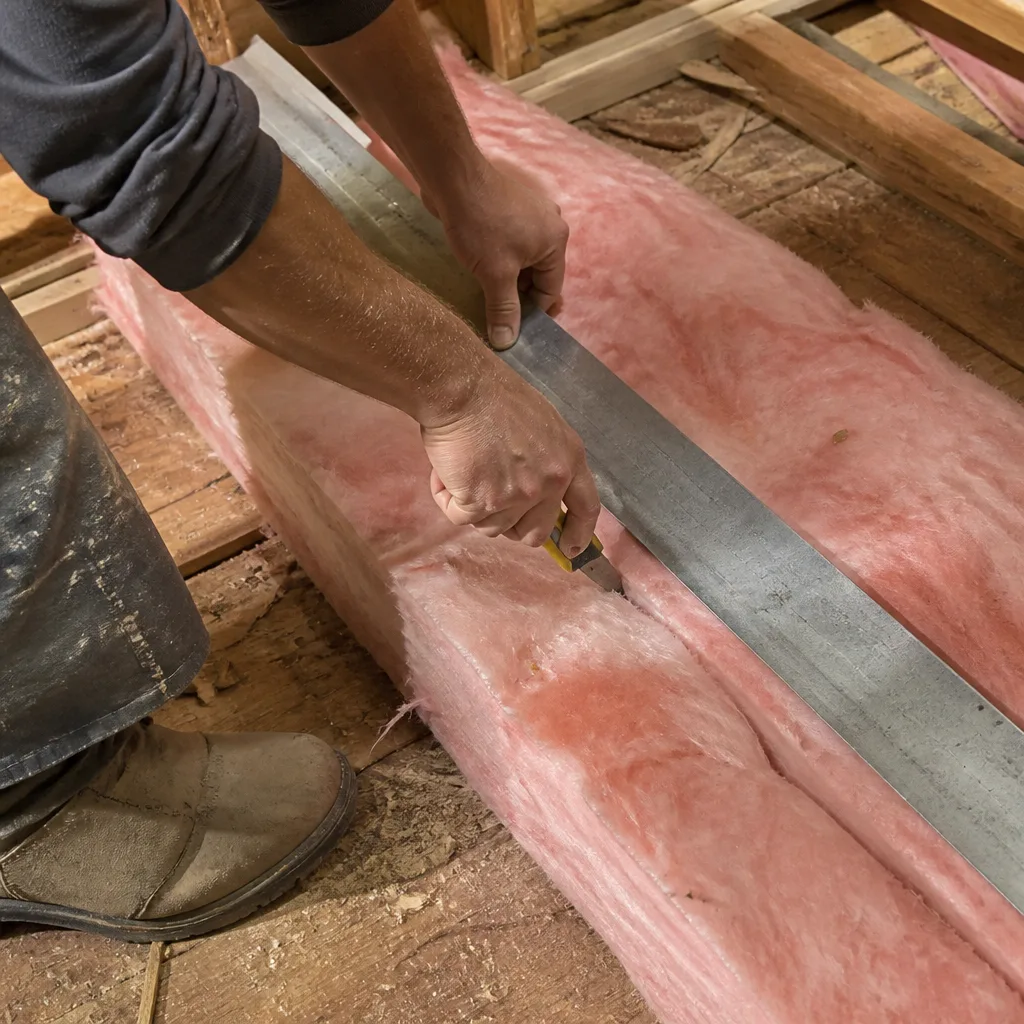
You can safely check a few things from the attic hatch with a flashlight and a tape measure: note the depth at three points (center, north eave, south eave), photograph any bag labels you find, and look for obvious gaps around chimneys or duct boots. Do not disturb vermiculite insulation - if you see granular, pebbly gray material, stop and call us; it may contain asbestos and requires certified removal.
Where DIY goes wrong is in the sequence. Most homeowners rent a blower and add insulation over an unsealed attic floor, which traps house air in the fiber and can accelerate moisture damage to the sheathing. We’ve removed moldy Knauf EcoFill from four Georgetown attics where well-meaning owners did exactly that. The blower-door test - a pressurization reading that shows, in one number, how much air your building envelope is losing - is the only way to know if you’re done sealing. We run that test before and after. Seal the holes first. Then we talk about R-value.
Call (254) 970-2136 for a free estimate. We’ll read your attic, show you the thermal images, and give you a written price before any work starts.
FAQs
Knauf fiberglass insulation itself is stable for decades - the fiber doesn’t degrade chemically - but its installed performance drops as it settles, compresses, or gets displaced by wind-washing and rodent activity. In Georgetown’s combination of high summer attic temperatures (we regularly measure 140°F+) and occasional hard freezes, we see blown-in fiberglass settle 10 to 15 percent in the first five years if the original density was light. The insulation isn’t “failed” at that point, but it’s no longer delivering its labeled R-value. We check depth as part of our energy audits and top off where needed. Call (254) 970-2136 if you’re unsure what you have up there - estimates are free.
Patch repair is common and often the right move: we air-seal the affected area, remove contaminated or compressed fiber, and blow in matching Knauf product to restore even depth. Full removal and replacement only makes sense when the existing insulation is water-damaged, heavily soiled by rodents, or when we’re changing insulation type (say, from fiberglass to spray foam on the roof deck for a conditioned attic). Wes Okafor has done both approaches across Georgetown, and the decision always comes down to what the attic test shows, not guesswork. Bring us a competing quote and we’ll give you a free second opinion.
A standard blown-in top-off in a 2,000-square-foot Georgetown attic, with air sealing included, takes one crew one day: morning for prep and sealing, afternoon for blowing and cleanup. Full removal and replacement adds a day for bagging and hauling. We don’t leave until the Documented Photo Record is complete and, on jobs with air sealing, the post-work blower-door number is recorded. You’ll get that report before we pack the trucks. Same-day availability depends on material stock and crew scheduling - call (254) 970-2136 to check.
We keep Knauf EcoFill Wx and Jet Stream Ultra on our Georgetown warehouse floor as standard stock, with next-day pull from Austin distribution if we hit a volume we didn’t expect. We don’t stock every Knauf SKU - their commercial-density products and some batt sizes ship on order - but the residential lines we install weekly are here. If your job requires a specific Knauf product we don’t have on hand, we’ll tell you in the written scope exactly when it arrives and whether it affects your start date. No surprises after the price is set.
Written by Wes Okafor, Owner, Topside Attic Insulation Georgetown at Topside Attic Insulation Georgetown, serving Georgetown and nearby areas.