
Johns Manville Crawl Space Encapsulation: The Georgetown Owner’s Guide
Most Johns Manville crawl space encapsulation systems we replace in Georgetown run between $2,800 and $5,200 installed, depending on crawl square footage and whether the existing vapor barrier can be salvaged. We stock Johns Manville-compatible poly sheeting, seam tape, and mechanical fasteners on every truck, and most encapsulation jobs in Georgetown neighborhoods like Sun City or the Riverview area are completed in a single day. Homeowners usually discover the failure when they notice a persistent musty smell after spring rains, find fiberglass insulation sagging and dark with moisture, or spot standing water on the crawl floor that wasn’t there last season.
Which Johns Manville Models This Applies To
Johns Manville does not sell crawl space encapsulation as a branded system with model numbers. Instead, the name refers to the poly vapor barrier, closed-cell spray foam, and fiberglass insulation products JM manufactures that contractors in Georgetown have combined into encapsulation assemblies over the past two decades. To identify what you have, check the poly sheeting itself: JM’s crawl-grade polyethylene is typically 6-mil to 12-mil, often printed with the Johns Manville logo and a lot number near one edge. The critical compatibility gotcha in Central Texas is that JM’s 6-mil sheeting, common in builder-grade installs from 2015 to 2020, tears at seam stress points within 7 to 10 years in our clay-heavy soils that shift seasonally. We upgrade those to 12-mil reinforced polyethylene or cross-laminated product rated for puncture resistance. If your crawl has JM fiberglass batts against the band joist, those are almost always the formaldehyde-free TempControl product line; they perform well dry but collapse when relative humidity in the crawl exceeds 70 percent for extended periods. We also stock Reflectix radiant barrier as an alternative or supplement where the crawl has ductwork that needs shielding from summer ground temperatures.
Topside Attic Insulation Georgetown is an independent service provider with no affiliation to Johns Manville. We source JM materials through standard distribution and will tell you when an aftermarket equivalent outperforms the OEM spec for your specific crawl conditions.
Signs Your Johns Manville Crawl Space Encapsulation Is Failing
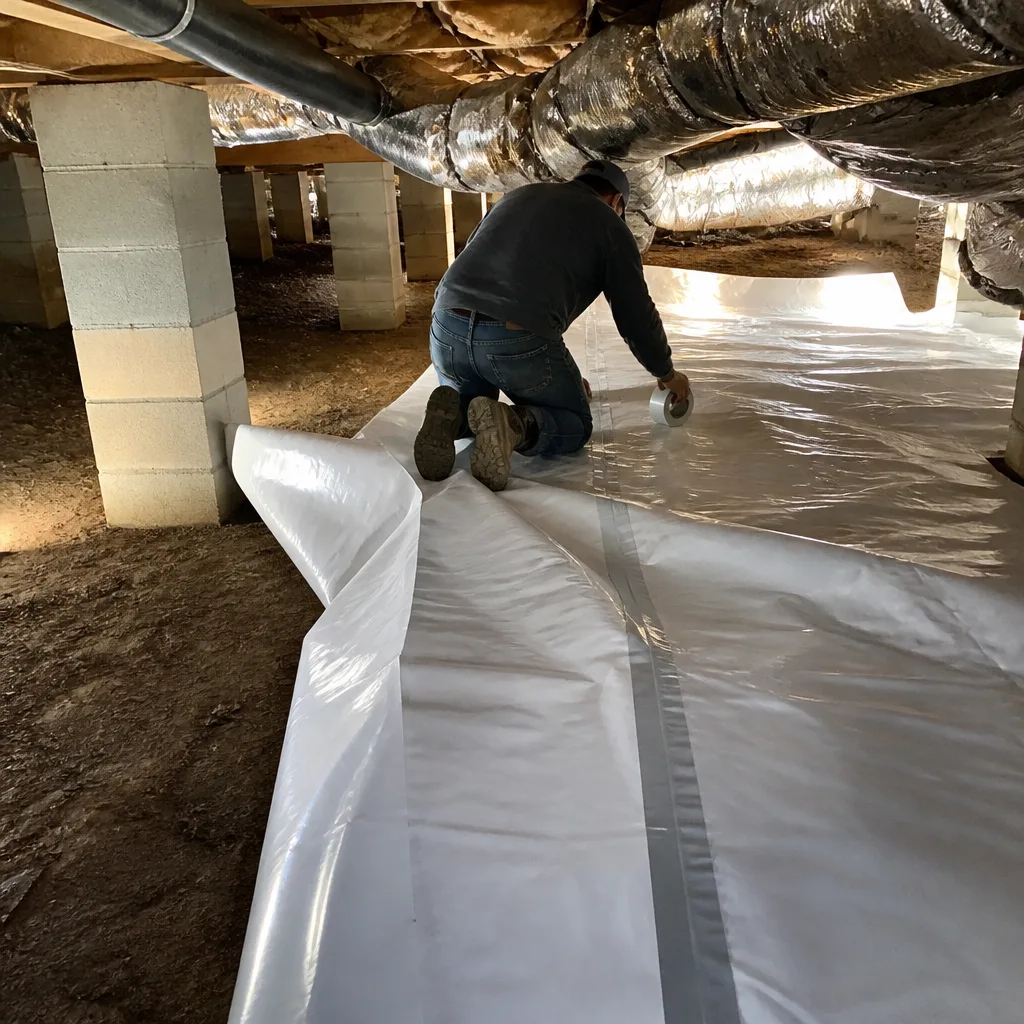
- Musty odors rising through floor registers. When the poly vapor barrier separates at seams or tears on sharp foundation edges, soil moisture evaporates directly into the crawl air. Your HVAC return pulls that air upward. In Georgetown’s limestone-heavy soils, this often starts after the clay layer beneath the vapor barrier swells and shifts during our wet March-to-May season.
- Fiberglass insulation sagging or falling from band joists. JM’s unfaced fiberglass batts lose structural integrity once they absorb moisture. The binding agents dissolve, and the batts drop onto the crawl floor, sometimes carrying mold spores with them. We’ve pulled saturated batts from Georgetown crawls that weighed three times their dry specification.
- Standing water or efflorescence on block walls. White, powdery mineral deposits mean water is moving through the foundation. The encapsulation system was never designed to manage bulk water, and once it appears, the vapor barrier alone cannot solve it. We address drainage before re-encapsulating.
- Increased humidity readings on main-floor hygrometers. A properly encapsulated crawl should hold 50 to 55 percent relative humidity year-round. When homeowners in Georgetown’s older neighborhoods near Southwestern University see indoor humidity climb past 60 percent in summer, the crawl seal is the first place we check.
- HVAC running longer with poorer temperature control. Wet crawl air forces your system to work harder. Ductwork in an unsealed crawl gains latent heat and moisture load. We document this with before-and-after blower-door and duct-leakage numbers so you can see the performance change in measured CFM, not promises.
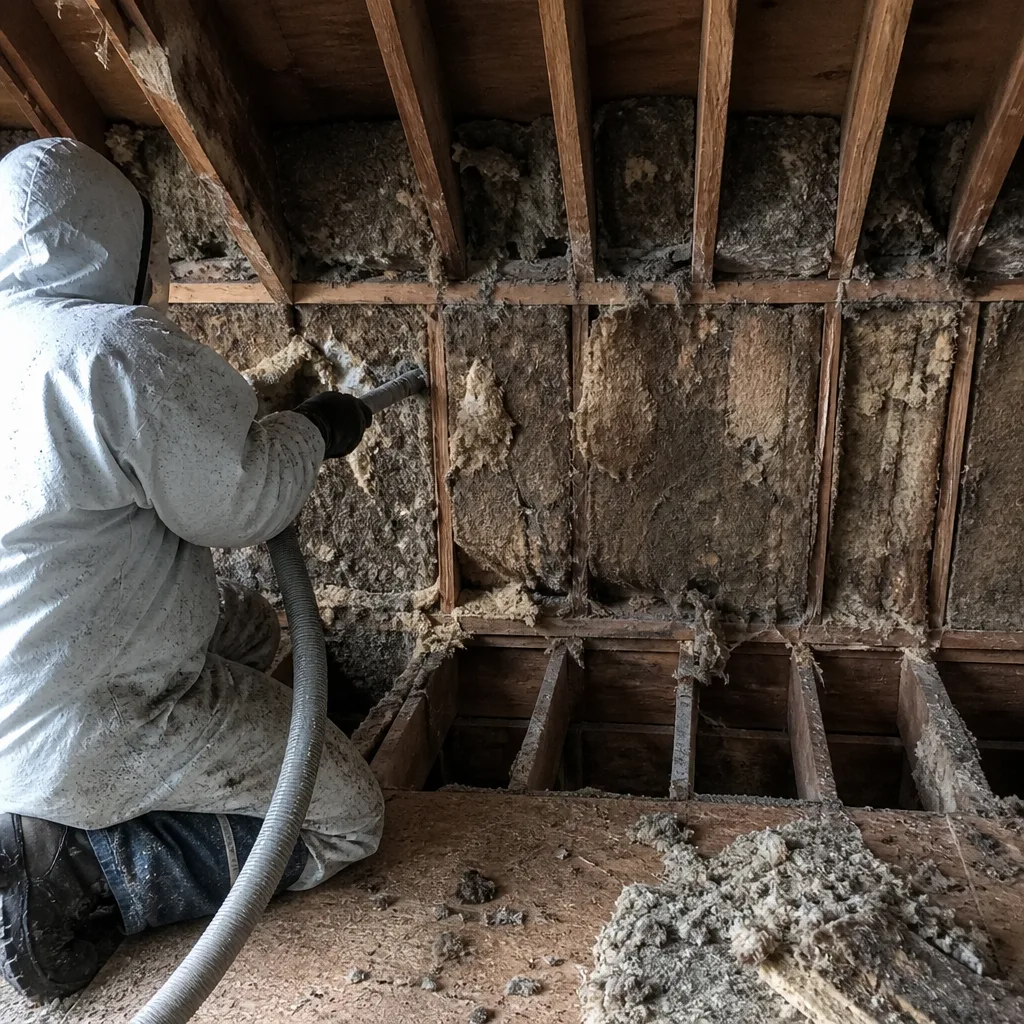 Before
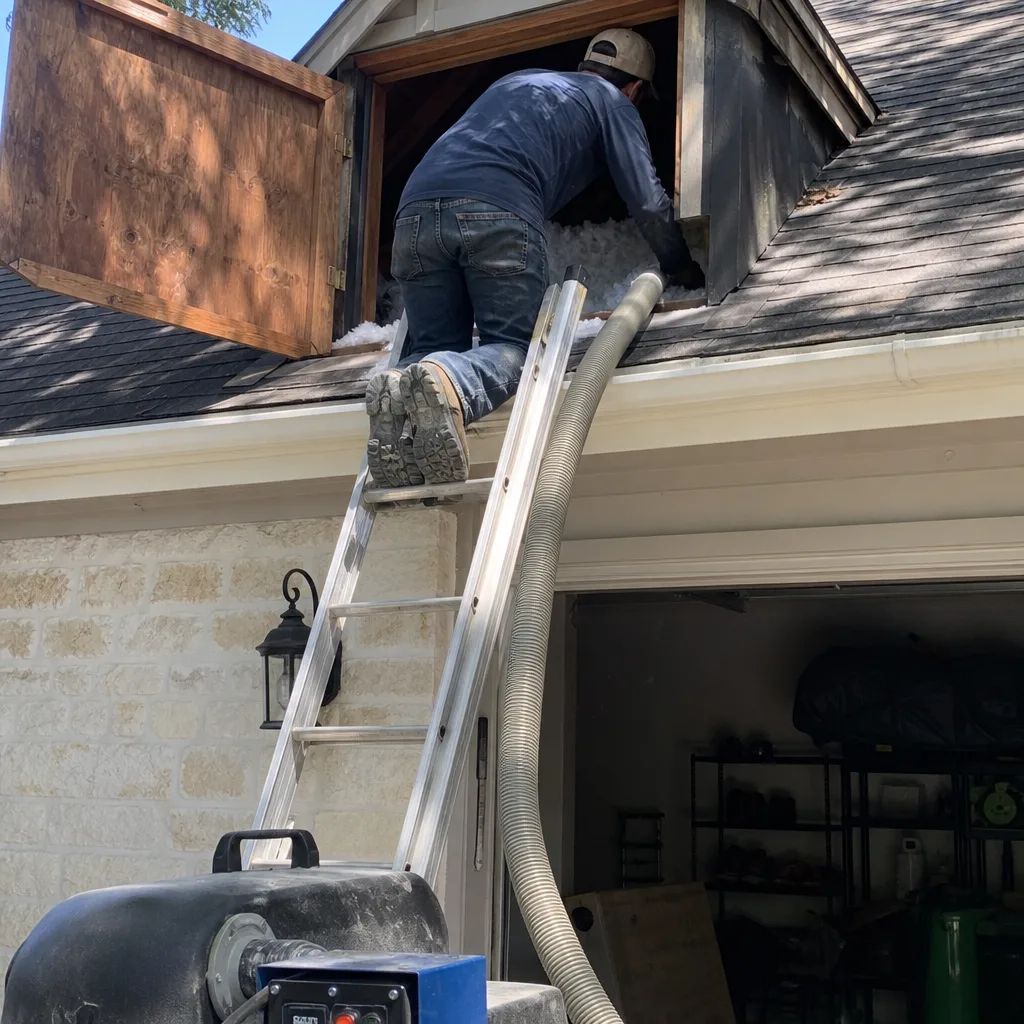 After
AfterReplacement Cost & What’s Included
Here’s how pricing breaks down for Georgetown crawl space encapsulation using Johns Manville or equivalent materials:
| Component | Typical Range |
|---|---|
| 12-mil reinforced vapor barrier (per sq ft of crawl) | $1.80 - $2.40 |
| Seam sealing with JM-compatible tape and mastic | $320 - $480 |
| Foundation wall insulation (JM closed-cell spray foam or rigid board) | $2.20 - $3.60 per board foot |
| Dehumidifier installation (if humidity control needed) | $1,400 - $2,200 |
| Band joist air sealing and insulation | $680 - $1,100 |
| Drainage matting or sump pump (if bulk water present) | $900 - $2,800 |
A typical 1,200-square-foot crawl in Georgetown falls in the $2,800 to $5,200 range total. What drives the spread: crawl height (anything under 18 inches adds labor), whether we can reuse existing dehumidification, and whether the original 6-mil JM barrier left soil contamination that requires cleaning before new poly goes down. Every job gets a Written Price Before Any Work Starts under Haven Standard Clause 1, and the 365-Day Done Right Promise covers seam separation, tape failure, or material defect. We also publish before-and-after blower-door numbers on encapsulation jobs where the home’s envelope connects to the crawl, so you can verify the air-sealing result in CFM50, not guesswork.
DIY or Call Us?
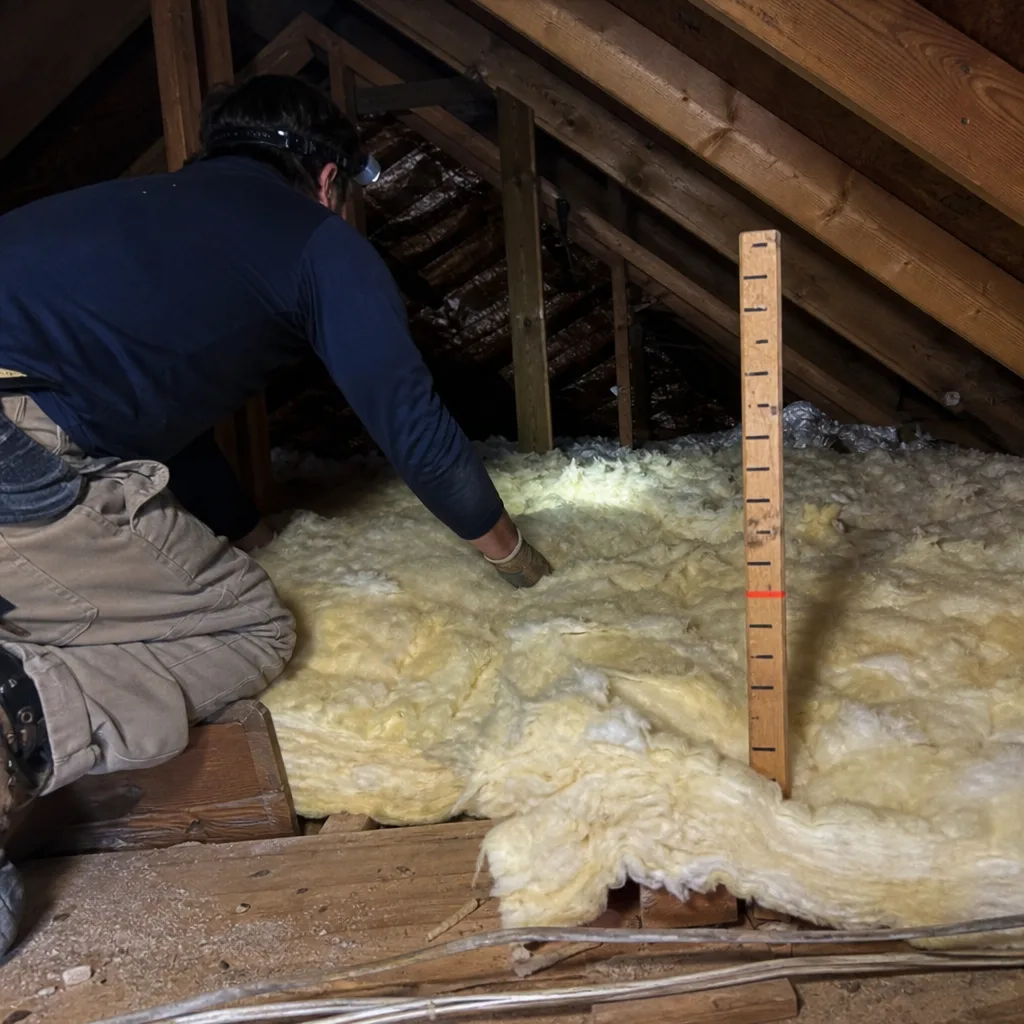
There’s no high-tension danger in crawl encapsulation, but there are ways DIY goes wrong that cost more than the original professional install. Homeowners can safely check: whether the poly is torn at seams, whether dehumidifier condensate lines are flowing, and whether vent wells are clogged with leaves or soil. What we see go wrong: poly cut too short at walls, creating a gap where soil gas and moisture enter; tape applied to damp or dusty surfaces that releases within one season; and fiberglass installed against band joists without first sealing the joist-to-sill plate joint, which channels outdoor air directly into the batt. In Georgetown’s older homes, we’ve found active knob-and-tube wiring in crawls that owners didn’t know existed. We background-check and uniform our technicians for a reason. Call (254) 970-2136 for a free estimate with a written scope, or bring us a competing quote for our Free Second Opinion.
FAQs
In Georgetown’s climate, a properly installed 12-mil reinforced system with sealed seams lasts 15 to 20 years. The original 6-mil JM poly we encounter in homes built 2015 to 2020 typically shows seam failure in 7 to 10 years due to Central Texas soil movement and summer ground temperatures that reach 85°F or higher. Call (254) 970-2136 for an exact quote on replacement - estimates are free.
Small punctures under six inches can be patched with compatible polyethylene tape if the surrounding material is clean and dry. Multiple seam separations, widespread embrittlement, or tears at the foundation perimeter mean replacement. We won’t patch a 6-mil barrier that will fail again next season; the labor to return exceeds the material savings. Call (254) 970-2136 for an exact quote - estimates are free.
Most single-day jobs finish in 6 to 10 hours for a standard Georgetown crawl up to 1,500 square feet. Two days if we add drainage correction, dehumidifier hard-wiring, or band joist spray foam. We arrive with a named technician, text when we’re on the way, and leave a Documented Photo Record plus written scope. Call (254) 970-2136 to schedule.
We stock 12-mil reinforced poly sheeting, JM-compatible seam tape, mechanical fasteners, and closed-cell spray foam components on every truck. Specific JM fiberglass batt sizes for band joist work are pulled from our Georgetown warehouse same-day if needed. We also carry Reflectix radiant barrier for crawl applications with exposed ductwork. Call (254) 970-2136 to confirm availability for your specific crawl dimensions.
Wes Okafor picked up his first blower-door numbers at Olive-Harvey College on Chicago’s South Side before spending nearly two decades diagnosing air-sealing failures across Central Texas. He and our crew have worked crawls from Sun City Georgetown to homes backing the San Gabriel River corridor. His rule: seal the holes first. Then we talk about R-value. Every job gets a written price before work starts and a Documented Photo Record when the crew leaves, with before-and-after blower-door numbers on applicable jobs so you can verify the performance change you paid for.
Ready to fix your Johns Manville crawl space encapsulation? Call (254) 970-2136 for a free estimate with upfront pricing, a written scope, and our 365-Day Done Right Promise.
Written by Wes Okafor, Owner, Topside Attic Insulation Georgetown at Topside Attic Insulation Georgetown, serving Georgetown and nearby areas.