
Icynene Crawl Space Encapsulation: The Georgetown Owner’s Guide
We stock and install Icynene-compatible crawl space encapsulation systems in Georgetown, with most complete jobs running between $3,200 and $6,800 depending on crawl square footage and existing moisture damage. Same-day installation is available when we have your liner specs on the truck, which we usually do for the MD-R-2000 and LD-C-50 series common in Georgetown homes built 2015 to 2023. Most owners discover their encapsulation has failed when they notice a sharp musty smell returning after months of absence, or when their dehumidifier in the crawl space starts running continuously without dropping the relative humidity below 70%.
Which Icynene Models This Applies To
Icynene produces two crawl space product lines that matter for Georgetown homeowners: the MD-R-2000 closed-cell spray foam system and the LD-C-50 open-cell vapor-barrier hybrid. The MD-R-2000 is the thicker, rigid barrier you’ll find in newer construction around Sun City and the Teravista area; the LD-C-50 is more common in the historic districts near Southwestern University where crews work around tighter clearances and stone foundations. Check the white specification tag left by your original installer, usually stapled to a floor joist near the crawl access. You’re looking for a 12-digit Icynene batch code starting with IC-TX for Texas-distributed material.
We carry both OEM Icynene membrane rolls and a compatible aftermarket vapor barrier from Stego Wrap that meets the same 10-mil thickness and 0.06 perms permeance rating. The aftermarket runs about 18% less on material cost, but we only recommend it when the existing Icynene foam substrate is still fully adhered. If your original spray foam has pulled away from the sill plate or developed the alligator-skin cracking we see frequently in Georgetown’s clay-heavy soils, we stick with OEM Icynene membrane to maintain the manufacturer’s intended vapor-drive calculation. Wes Okafor checks every compatibility match against the original spec sheet before loading the truck.
Signs Your Icynene Crawl Space Encapsulation Is Failing
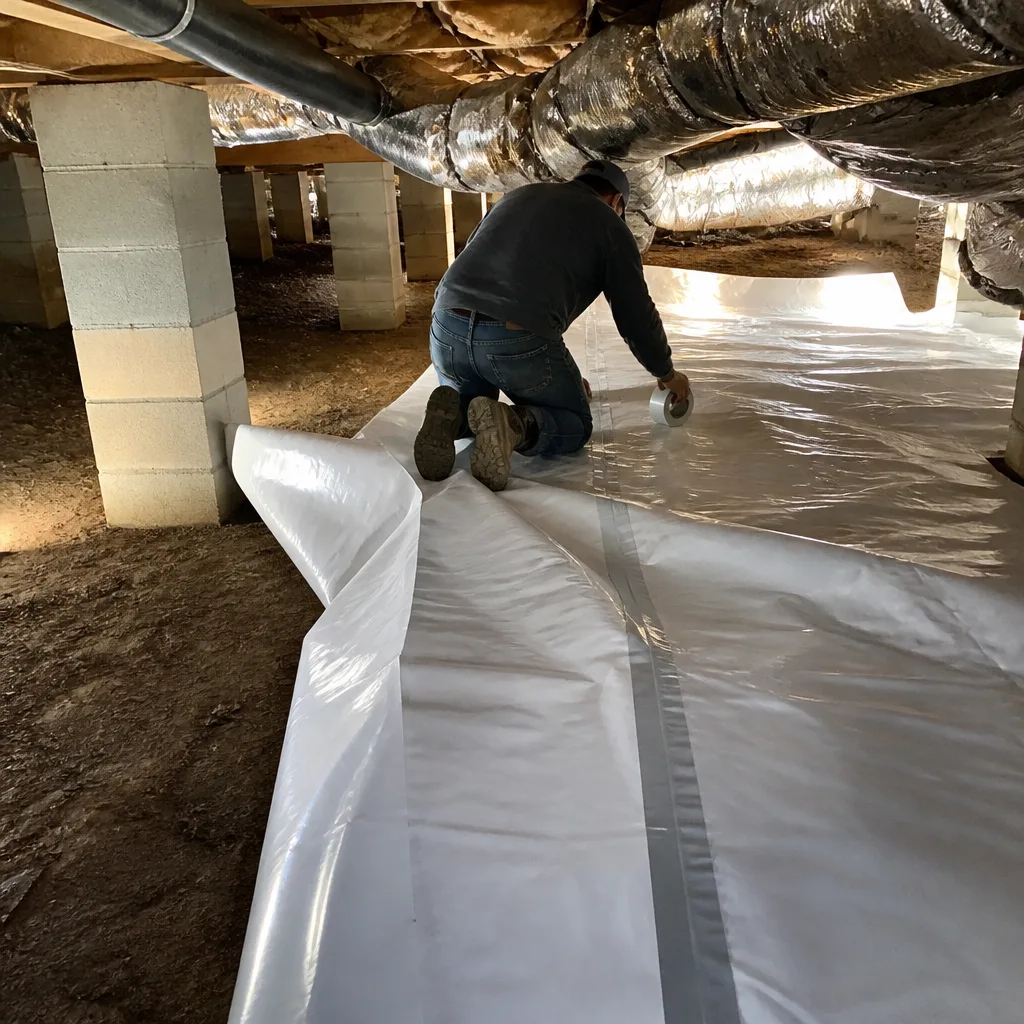
- Humidity readings above 65% despite a running dehumidifier. This usually means the Icynene vapor barrier has torn at the seam tape or the closed-cell foam has delaminated from the block wall, letting ground moisture bypass the sealed envelope. The dehumidifier fights a battle it cannot win against uncontrolled vapor drive.
- Musty odor returning in the living space, especially on humid mornings. When the encapsulation fails, stack effect pulls crawl air through floor penetrations. In Georgetown’s spring and fall, when the temperature differential between crawl and living space is smallest, this odor is often the only warning before mold colonizes the subfloor.
- Insect or rodent activity in a previously sealed crawl. Icynene encapsulation includes pest-blocking at the perimeter. Gaps in the membrane, often where the original installer cut around plumbing, create highways for fire ants and the field mice common along the San Gabriel River corridor.
- Soft or cupping hardwood floors directly above the crawl. Moisture reaching the underside of your subfloor raises the wood’s moisture content above 12%, the threshold where oak and hickory begin to deform. We’ve measured 19% moisture content in floors that looked fine from above until the boards started telegraphing through the finish.
- White powder on the Icynene foam surface. This is efflorescence, mineral salts carried through the concrete block by moisture that should have been stopped at the barrier. It means vapor is getting past your encapsulation at the wall-to-footing junction, the most common failure point in Georgetown’s expansive clay soils.
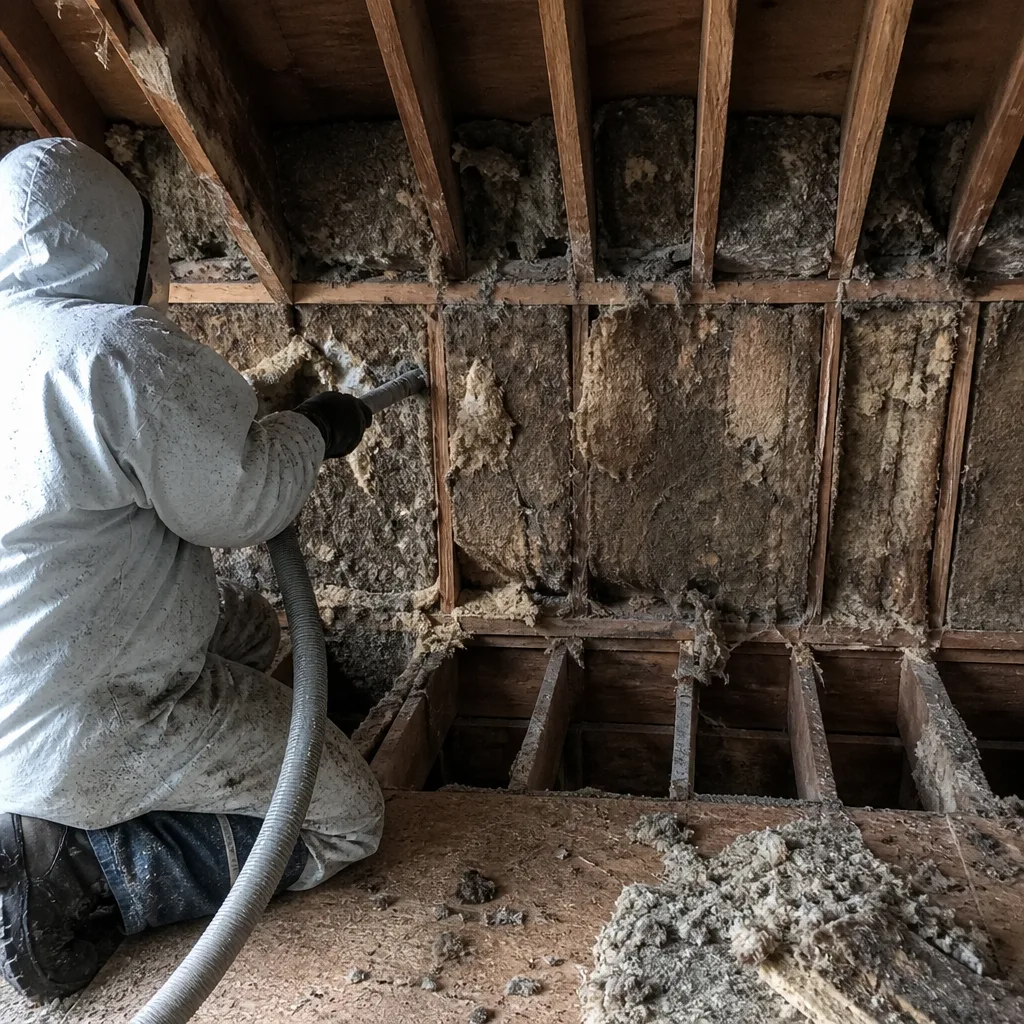 Before
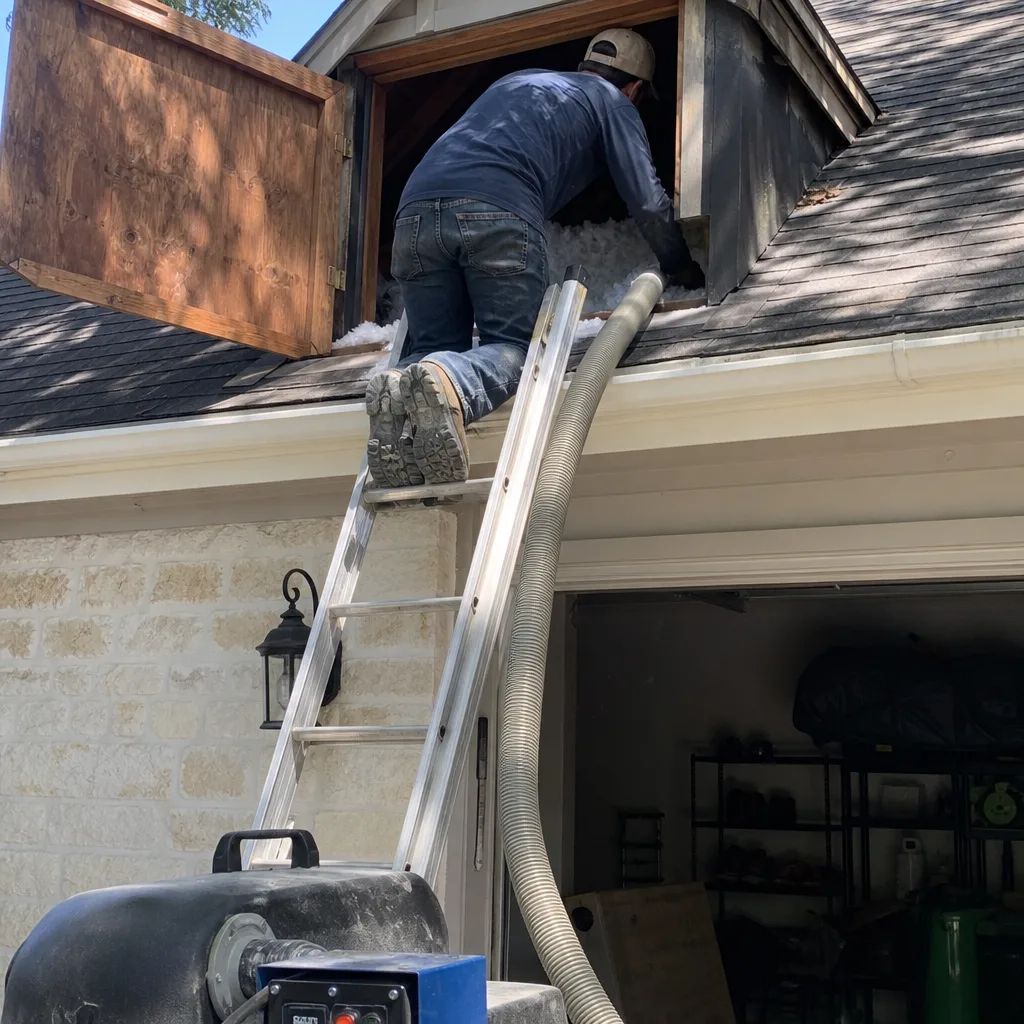 After
AfterReplacement Cost & What’s Included
Complete Icynene crawl space encapsulation replacement in Georgetown typically runs $3,200 to $6,800 installed, with the lower end covering a 600-square-foot crawl with good access and intact foam substrate, and the upper end reaching 1,200 square feet with full foam removal, mold remediation prep, and new dehumidifier sizing. The price breaks into three line items: membrane material at $1.85 to $2.40 per square foot, seam tape and termination bars at $280 to $450, and labor at $1,200 to $2,800 depending on crawl height and how much of the old barrier we have to cut out from around ductwork and plumbing.
We do not quote over the phone without photos or a site visit. What we do promise under Haven Standard Clause 1 is a written price before any work starts, with the scope itemized to the square foot and the warranty language included in that same document. Every encapsulation job receives a Documented Photo Record showing the before condition, the seam detail during installation, and the final termination at the sill plate. Our 365-Day Done Right Promise covers delamination, seam failure, and any vapor-drive miscalculation.
DIY or Call Us?
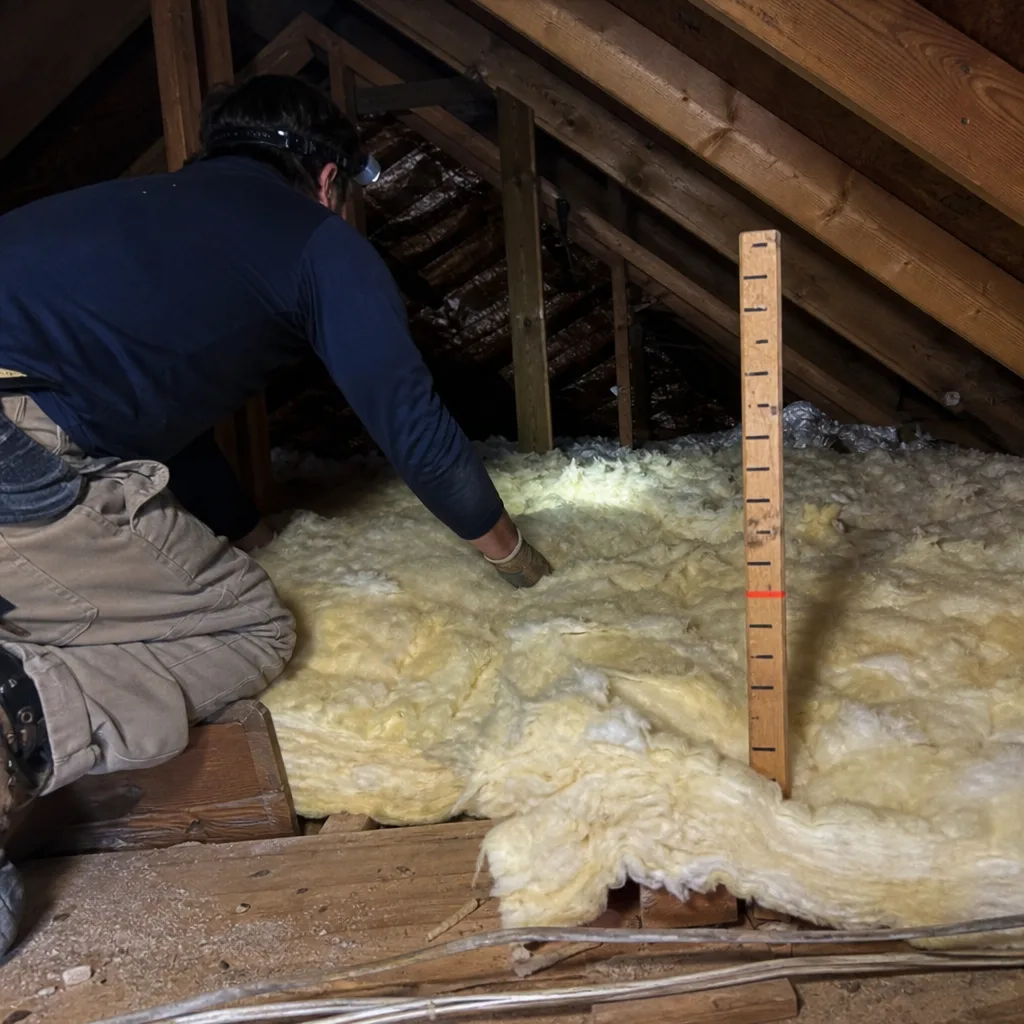
There is exactly one safe DIY check: lay a piece of clear plastic sheeting on the crawl floor, tape the edges, and wait 48 hours. Condensation underneath means active vapor drive and a failed barrier. That’s useful information to hand us when you call.
Everything past that observation belongs to a crew with respirators, proper lighting, and experience working in confined spaces around live electrical. Removing old Icynene membrane without damaging the foam substrate requires a specific pull angle; get it wrong and you’re into full foam removal, which triples the job cost. The seam taping alone demands a 4-inch overlap and roller pressure that looks simple until you’re working overhead in a 36-inch crawl with a dehumidifier cord in your way. We carry the Stego tape roller, the termination bars, and the Icynene-compatible contact adhesive on every truck. Call (254) 970-2136 and we’ll read your crawl situation with you, no charge for the conversation.
FAQs
In Georgetown’s climate, properly installed Icynene encapsulation lasts 15 to 20 years, though we’ve seen premature failure at 8 years when the original installer skipped the foundation drainage assessment. The clay soils here expand and contract dramatically with seasonal moisture, stressing the wall-to-footing termination. Call (254) 970-2136 for a free inspection if you’re past year 10.
Localized repair is possible when the failure is limited to a single seam tear or a small puncture from a plumbing repair, but only if the surrounding membrane is still fully adhered and the foam substrate shows no delamination. We patch with OEM Icynene tape and a field-applied bead of compatible sealant, then verify with a smoke pencil at the repair edge. If you have multiple failure points or any efflorescence on the block, partial repair is throwing good money after bad. Call (254) 970-2136 and we’ll show you the photos so you can decide.
Most Georgetown crawls take one to two days: half a day for removal and substrate prep, half a day for membrane installation and seam taping, plus cure time for any adhesive work. Homes in the older neighborhoods near downtown with stone foundations and limited access sometimes stretch to three days. We schedule so you’re never without a functional vapor barrier overnight.
We stock the MD-R-2000 and LD-C-50 membrane rolls, seam tape, termination bars, and the Stego-compatible aftermarket barrier on our Georgetown-based trucks. We do not stock the closed-cell spray foam itself for field application; that requires a separate rig and specific job conditions. For membrane-only replacements or repairs, same-day service is usually available. Call (254) 970-2136 to confirm truck stock for your Icynene batch code.
Topside Attic Insulation Georgetown is an independent service provider, not affiliated with Icynene. We also stock parts for Reflectix radiant barrier systems.
Written by Wes Okafor, Owner, Topside Attic Insulation Georgetown at Topside Attic Insulation Georgetown, serving Georgetown and nearby areas.