
GreenFiber Crawl Space Encapsulation: The Georgetown Owner’s Guide
We stock and install GreenFiber-compatible crawl space encapsulation systems in Georgetown, with most full encapsulations running $4,200-$7,800 depending on crawl space square footage and whether the foundation walls require rigid foam board. Same-day service is available when we have your liner dimensions on the truck, which we do for the most common GreenFiber vapor-barrier weights used in Williamson County homes built 1995-2020. Most Georgetown homeowners discover their encapsulation has failed when they notice musty odors returning after a rain, find insulation batting sagging with moisture, or spot efflorescence - that white, powdery mineral deposit - blooming on block walls that were previously dry.
Which GreenFiber Models This Applies To
GreenFiber does not use a traditional model-number system for crawl space products. Instead, their vapor barriers and encapsulation liners are specified by mil thickness and woven reinforcement pattern. The two lines we encounter most in Georgetown are the 6-mil standard vapor barrier and the 12-mil reinforced encapsulation liner, with the 20-mil heavy-duty version appearing in homes with active drainage issues or previous rodent intrusion. Check the white printed edge tape on your existing liner: GreenFiber labels show the mil weight, a batch date, and “ASTM E1745 Class A” for the reinforced grades.
The OEM GreenFiber liner is a woven polyethylene with a cord-grid reinforcement, but we also install quality aftermarket equivalents from Stego and Crawlspace Depot that meet the same ASTM standard at a lower per-square-foot cost. The compatibility gotcha in Georgetown’s clay-heavy soils: GreenFiber’s 6-mil standard barrier degrades faster in crawl spaces with seasonal moisture wicking, which is why we rarely recommend reinstalling at that weight unless the drainage plane and grading have been corrected first. For homes near the San Gabriel River corridor or in the Brushy Creek watershed, we typically spec 12-mil minimum regardless of what was originally installed.
Signs Your GreenFiber Crawl Space Encapsulation Is Failing
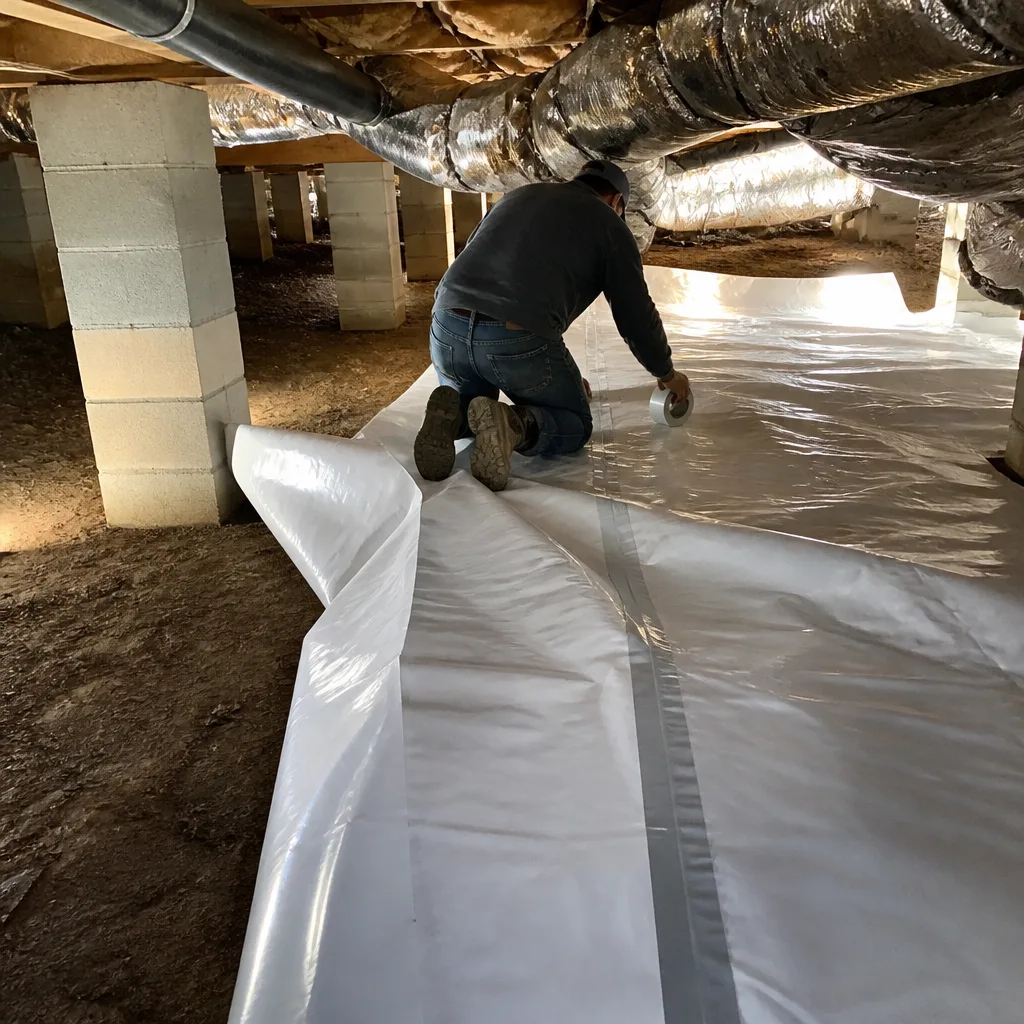
- Musty odors returning after rain. The vapor barrier has torn at seams or pierced on sharp gravel, letting soil moisture evaporate into the crawl space. In Georgetown’s spring storm season, we see this most often where the liner was taped rather than mechanically fastened at wall transitions.
- Sagging or fallen insulation batting. When the encapsulation fails, relative humidity climbs above 70 percent and fiberglass batting absorbs that moisture, becoming heavy enough to pull away from floor joists. We find this regularly in Sun City Georgetown homes where the original 6-mil barrier has reached end of life.
- Efflorescence on block walls. That white, chalky residue is minerals left behind when water vapor moves through concrete and evaporates at the surface. It means moisture is getting past your barrier somewhere, usually at the foundation footer joint where Georgetown’s expansive clay creates hydrostatic pressure.
- Increasing energy bills with no other explanation. A compromised crawl space lets humid air infiltrate ductwork running through the space, forcing your HVAC to work harder. We document this with blower-door and duct-blaster tests - the pressurization readings that show, in one number, how much conditioned air you’re losing.
- Pest activity or rodent droppings. Torn vapor barrier creates access points. GreenFiber’s woven reinforcement can fray at edges, giving rodents purchase to chew through. We inspect for this on every encapsulation call and include rodent-proofing in the written scope when needed.
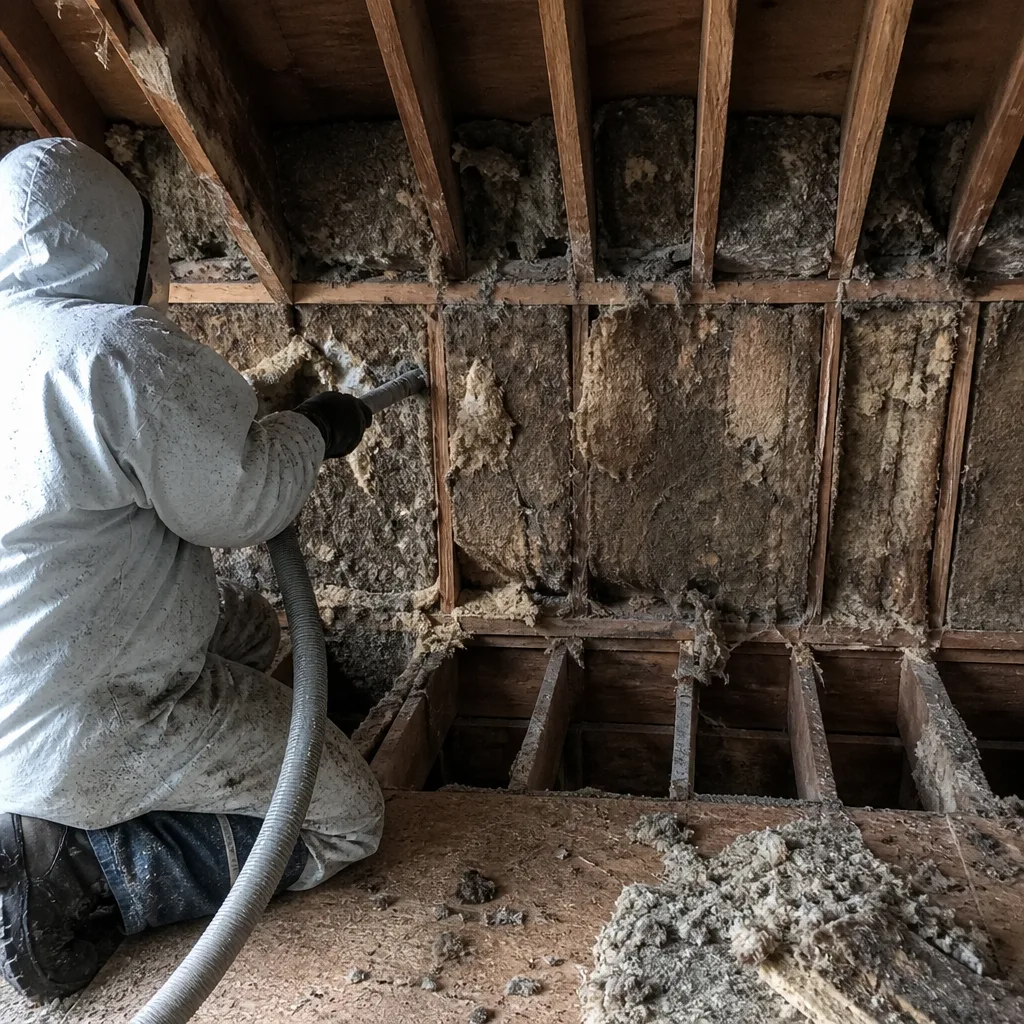 Before
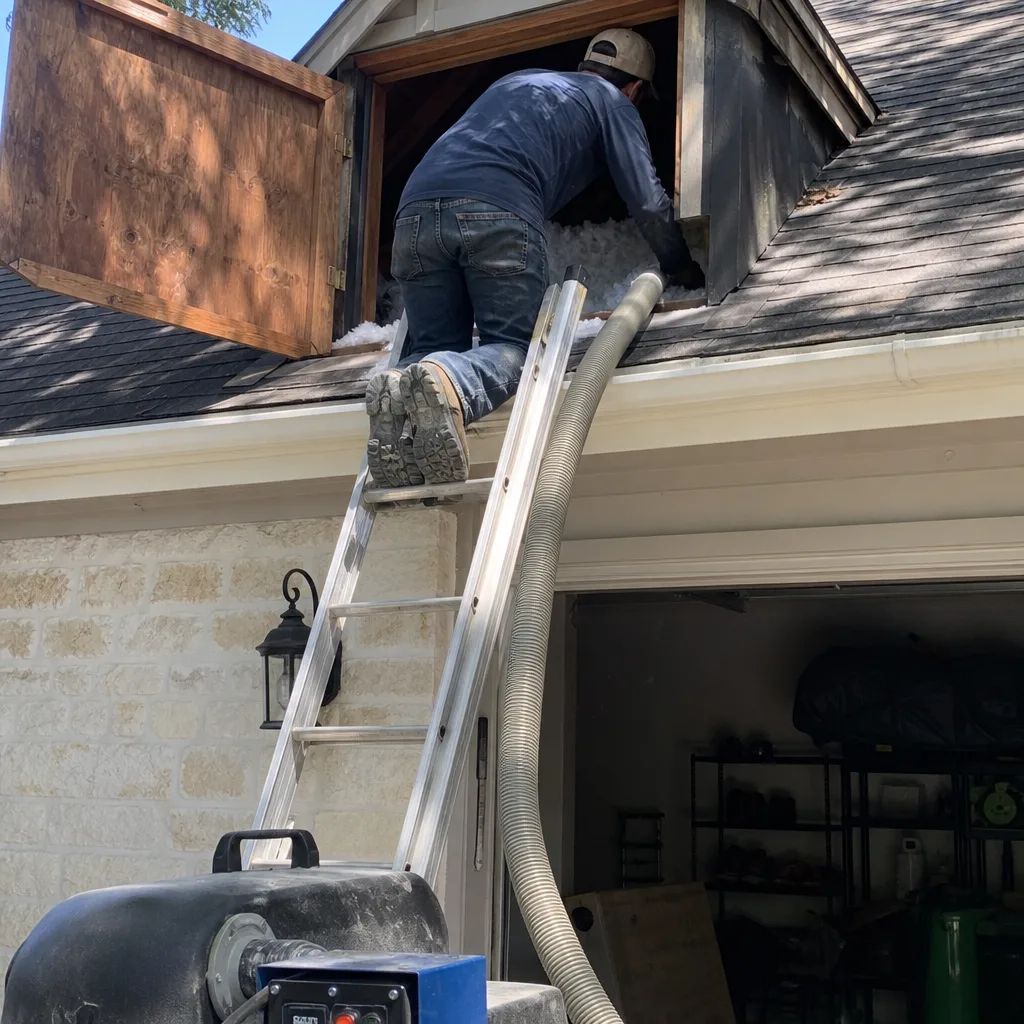 After
AfterReplacement Cost & What’s Included
Full GreenFiber-compatible encapsulation in Georgetown typically runs $4,200-$7,800 installed, with partial repairs or re-seaming starting around $1,800. The range depends on three factors: crawl space square footage (most Georgetown homes run 1,200-2,400 square feet of crawl), whether foundation walls need rigid foam board (adds $2.50-$4.00 per square foot of wall area), and the condition of existing drainage or sump systems.
Every encapsulation quote from us includes the liner material, mechanical fastening at all seams and terminations, closed-cell spray foam or butyl tape at wall transitions, and a post-installation photo record. We publish before-and-after blower-door numbers when the crawl space is part of a whole-envelope job - that pressurization measurement shows, in a single figure, how much conditioned air the home was losing before and after. Under Haven Standard Clause 1, you get a written price, written scope, and written warranty before anyone lifts a tool. The 365-Day Done Right Promise applies to all completed work.
DIY or Call Us?
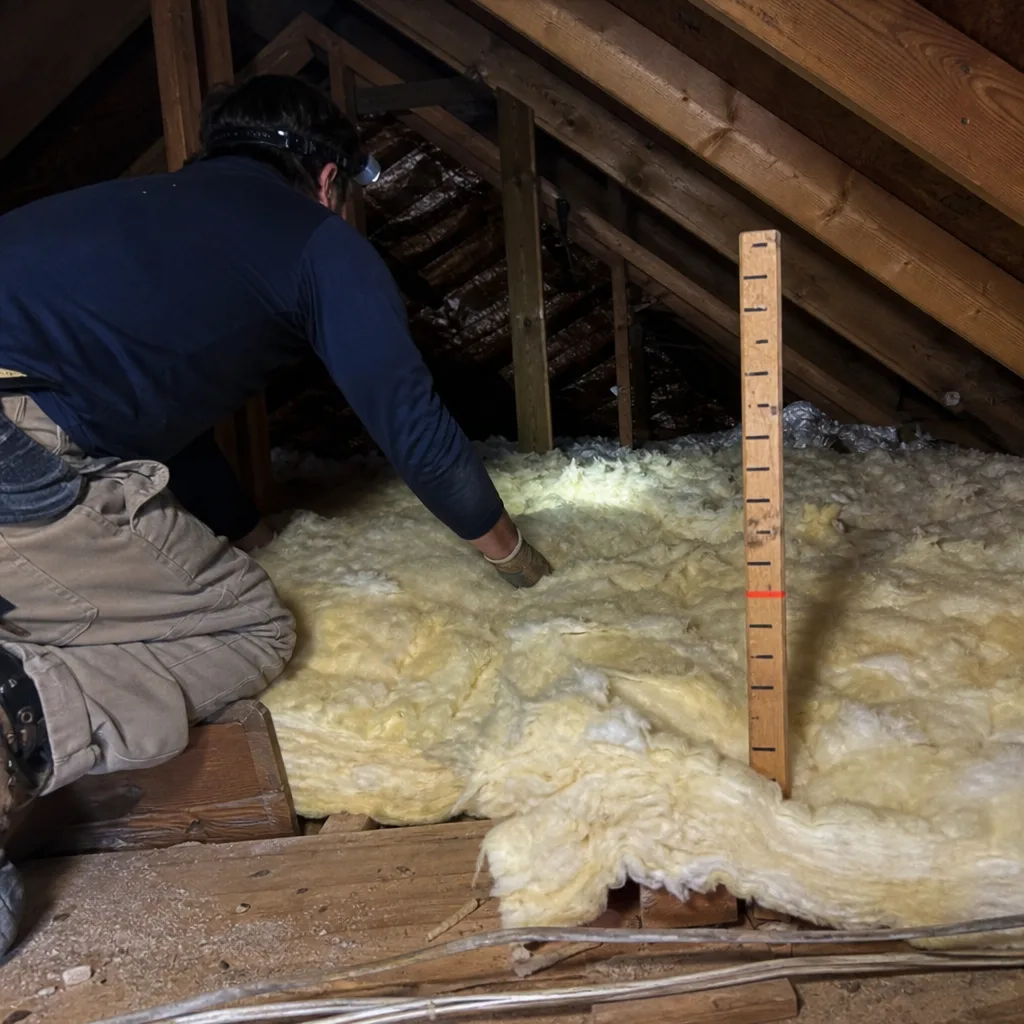
There’s no high-tension danger in crawl space encapsulation, but there are genuine health hazards: mold spores in decades-old crawl spaces, asbestos in pre-1980 homes, and Hantavirus from rodent droppings. A homeowner can safely check the mil weight printed on their existing liner edge and photograph any tears or seam failures from a safe distance. Do not enter the crawl space if you smell sewage, see standing water near electrical, or have respiratory conditions.
Where DIY goes wrong: proper encapsulation requires sealing to foundation walls at a height above the seasonal high water table, mechanical fastening that won’t pull out as clay soil expands and contracts, and - critically - addressing the air leaks between crawl space and living space before treating the crawl as “conditioned.” Seal the holes first. Then we talk about R-value. We’ve repaired too many Georgetown encapsulations where a homeowner laid new liner over an unsealed rim joist, trapping moisture and accelerating floor joist rot. Call (254) 970-2136 for a free estimate and we’ll read your situation with you - no charge for the assessment, and we stock GreenFiber-compatible materials on every truck.
FAQs
In Georgetown’s climate, a properly installed 12-mil reinforced GreenFiber-compatible liner lasts 15-20 years, while the 6-mil standard grade often shows seam failure in 8-12 years due to clay soil movement and UV degradation at foundation vents. The 20-mil heavy-duty grade, when mechanically fastened and not pierced by subsequent trades, can exceed 20 years. Call (254) 970-2136 for an exact assessment of your existing liner’s condition - estimates are free.
Small punctures and seam gaps under six inches can be patched with compatible polyethylene tape if the surrounding material is still supple and the sub-grade drainage is functioning. We do not recommend patching if the liner has become brittle, shows widespread UV degradation, or if the original installation left the liner in contact with soil (it will continue to degrade from below). We provide a free second opinion on any written estimate, including DIY repair assessments.
Most Georgetown crawl spaces are completed in one to two days: day one for removal of failed material, sub-grade preparation, and any drainage corrections; day two for liner installation, wall sealing, and final inspection with photo documentation. Larger homes or those requiring sump pump installation may extend to three days. We do not start work without a written price and written scope agreed to in advance.
We stock GreenFiber-compatible 12-mil and 20-mil reinforced liners, seam tape, mechanical fasteners, and closed-cell spray foam for wall transitions on every Georgetown service vehicle. Exact mil weight and square footage are confirmed after on-site measurement - we do not guess dimensions over the phone. Same-day installation is available when the crawl space dimensions match our stocked rolls. Topside Attic Insulation Georgetown is an independent service provider, not affiliated with GreenFiber; we also stock Reflectix radiant barrier materials for attic applications.
Written by Wes Okafor, Owner, Topside Attic Insulation Georgetown at Topside Attic Insulation Georgetown, serving Georgetown and nearby areas.