
Demilec Attic Air Sealing: The Georgetown Owner’s Guide
Demilec-compatible attic air sealing installed in Georgetown typically runs $1,800-$3,400 for a complete top-plate and penetration seal on a 2,000-2,800 square foot home, and we stock the foam, guns, and replacement tips to complete most jobs same-day. Most Georgetown homeowners discover their Demilec air seal has failed when a recent insulation contractor blows new material over old, cracked foam at the top plates, or when summer attic temperatures above 140°F in neighborhoods like Sun City Georgetown cause the original Demilec open-cell to pull away from framing. Wes Okafor and our crew see this pattern regularly: a 2018-2021 build with Demilec SEALECTION 500 or Heatlok HFO Pro that was never properly detailed at electrical and plumbing chases, now leaking conditioned air into the attic at rates the blower-door test exposes in minutes.
Which Demilec Models This Applies To
The air-sealing failures we address in Georgetown homes most commonly involve Demilec’s spray-foam product lines installed between 2016 and 2023, not a discrete mechanical part with a model number. SEALECTION 500, Heatlok HFO Pro, and Heatlok XT are the formulations we encounter, each with distinct density and expansion characteristics that determine how they age in Central Texas heat. SEALECTION 500 is a 0.5 lb/ft³ open-cell foam; Heatlok variants are 2.0 lb/ft³ closed-cell. The critical identification step is reading the original application tag, usually stapled to a rafter or joist near the attic hatch, which lists the product name, date of install, and installer certification number.
We do not require you to locate this tag. Our crew photographs every visible label during the initial inspection and cross-references Demilec’s published technical data sheets for compatibility with any supplemental sealing. For homeowners comparing OEM Demilec re-application against aftermarket alternatives: we stock Touch ‘n Seal and Handi-Foam two-component kits for spot repairs where the original Demilec substrate is sound, and we source fresh Demilec drums for full re-seals where the original foam has degraded across a broad area. The decision hinges on whether the failure is adhesive (foam pulled away from wood) or cohesive (foam cracked internally). Adhesive failures often trace to dusty framing at original install, common in Georgetown’s fast-built 2019-2021 subdivisions; cohesive failures suggest UV or heat degradation, and fresh Demilec closed-cell is the durable repair.
Signs Your Demilec Attic Air Sealing Is Failing
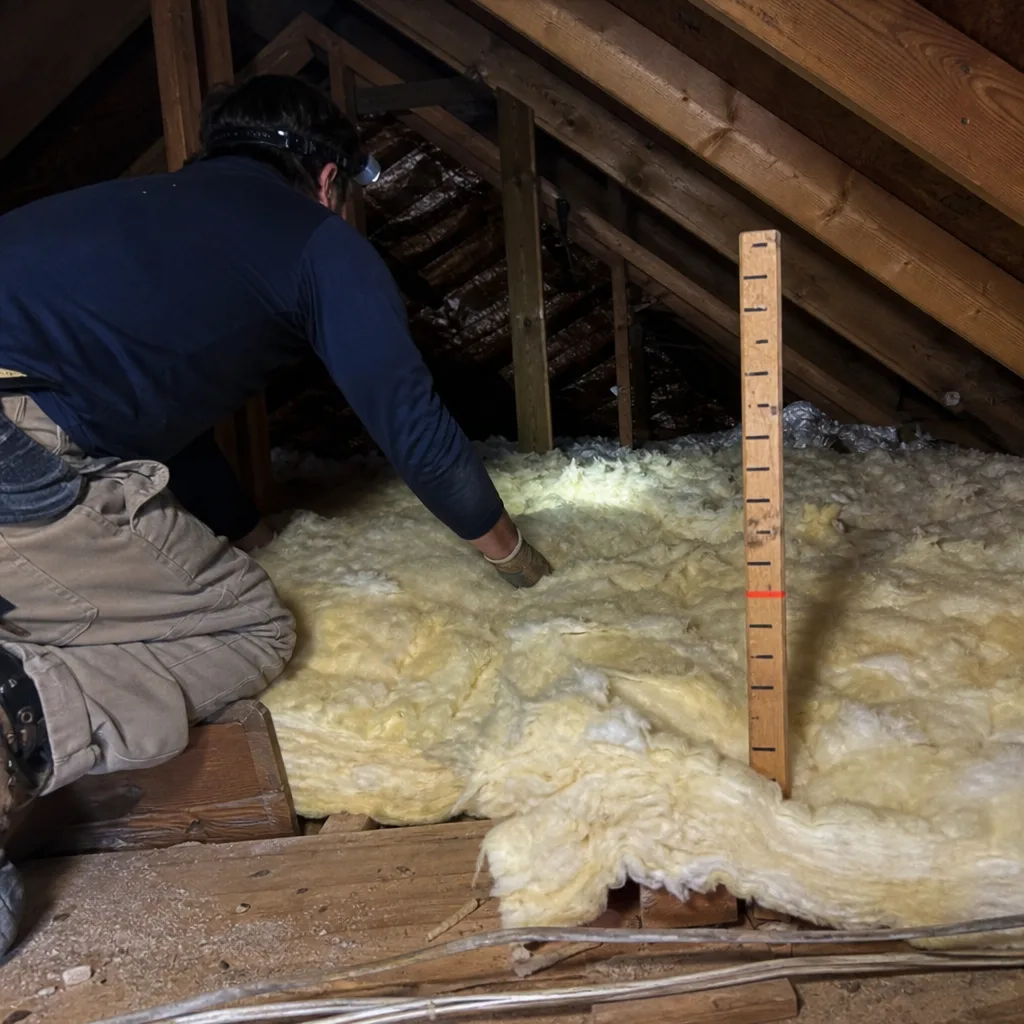
- Dust streaks on insulation directly above top plates. Conditioned air escaping through gaps in the Demilec seal carries house dust that deposits on fiberglass or cellulose below. In Georgetown homes we inspect near the San Gabriel River corridor, these streaks often run in straight lines following the wall framing below, a pattern that screams air leakage, not roof venting.
- Hot rooms in summer despite adequate insulation depth. The R-value of your blown-in material is irrelevant if attic air is circulating through the ceiling plane via unsealed can-light housings and electrical chases. We measure this with a blower-door test - a pressurization reading that shows, in one number, how much air your building envelope is losing - and typically find 800-1,400 CFM50 of excess leakage traceable to failed Demilec detailing.
- Ice damming or condensation staining at drywall corners. Warm, moist interior air hits cold attic surfaces where the Demilec seal is compromised, condensing and staining drywall. Georgetown’s humidity swings between March and June make this visible quickly; we documented a Sun City home last spring with corner staining that traced to a single unsealed plumbing vent chase.
- HVAC runtime extending 20+ minutes beyond prior years. Your unit is conditioning attic air that replaces what leaked out. The load calculation assumes a sealed envelope; when Demilec fails, the math breaks. We verify this with duct-blaster and blower-door combined testing, not guesswork.
- Visible crumbling or yellowing of original foam at penetrations. Demilec open-cell yellows with UV exposure; closed-cell darkens but holds shape. If you can dig a fingernail into foam at a can light and it crumbles, the material has reached end of functional life for air sealing, though it may still provide some R-value.
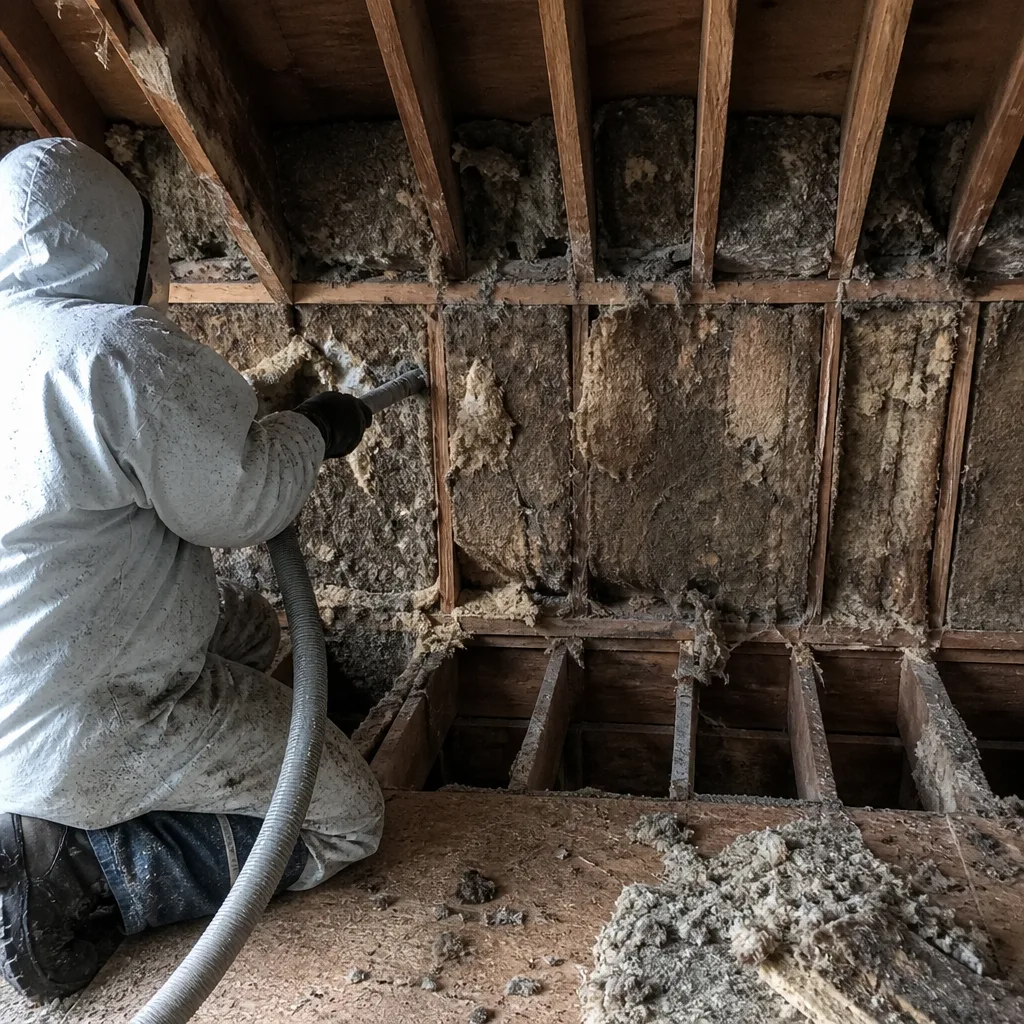 Before
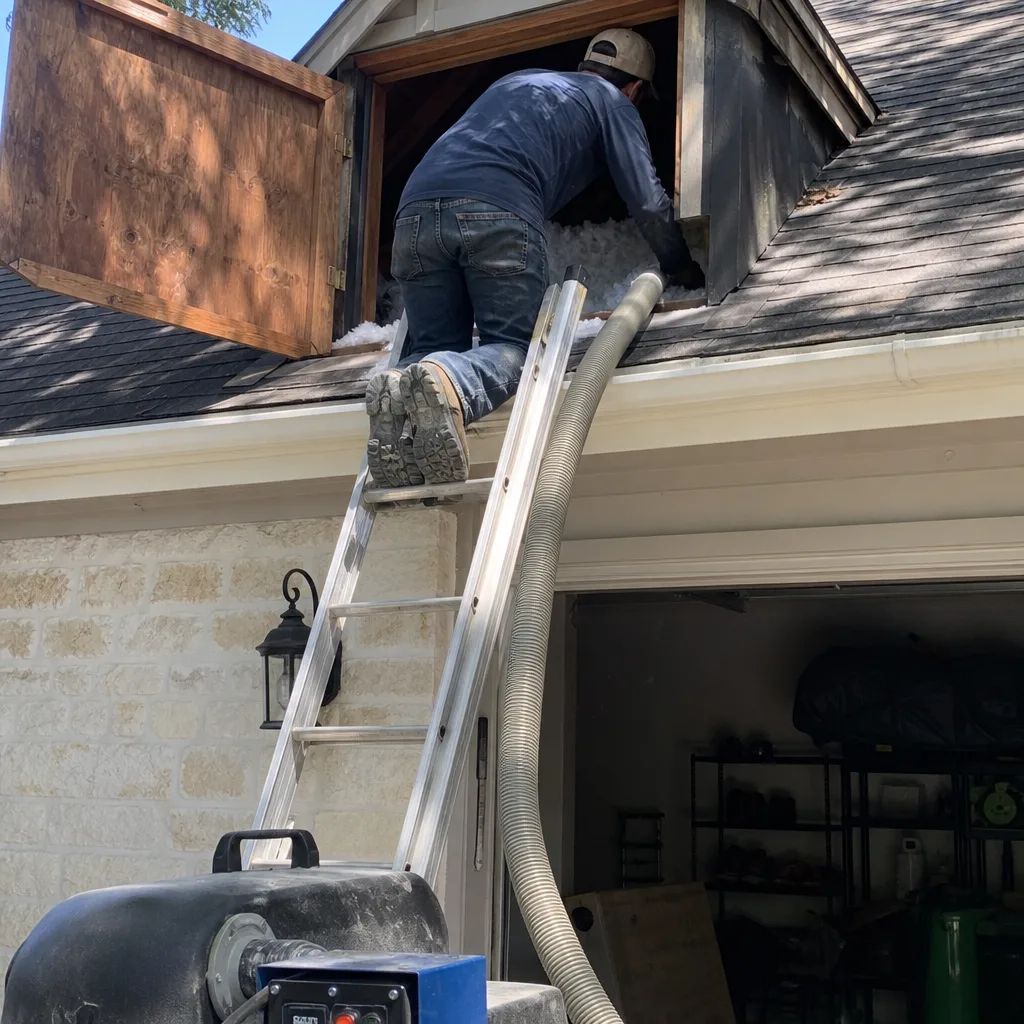 After
AfterReplacement Cost & What’s Included
| Scope | Price Range (Georgetown) | What’s Included |
|---|---|---|
| Spot repair: 3-5 failed penetrations | $1,800-$2,400 | Demilec-compatible foam, prep and masking, blower-door verification, photo record |
| Full attic re-seal: top plates, chases, can lights | $2,600-$3,400 | Complete Demilec or equivalent foam application, before-and-after blower-door test, documented report with CFM50 readings |
| Re-seal plus insulation replacement | $4,200-$6,800 | Removal of compromised insulation, full air seal, new blown-in to specified depth, complete photo and test documentation |
What drives the range: attic square footage, accessibility (truss height and hatch location), quantity of can lights and HVAC penetrations, and whether the original Demilec must be removed or can be patched over. We do not quote by phone without photos or a site visit; Haven Standard Clause 1 requires a written price before any work starts, and that price is flat, not time-and-materials. Every air-sealing job carries our 365-Day Done Right Promise - if the blower-door number doesn’t hold, we return and correct at no charge.
DIY or Call Us?
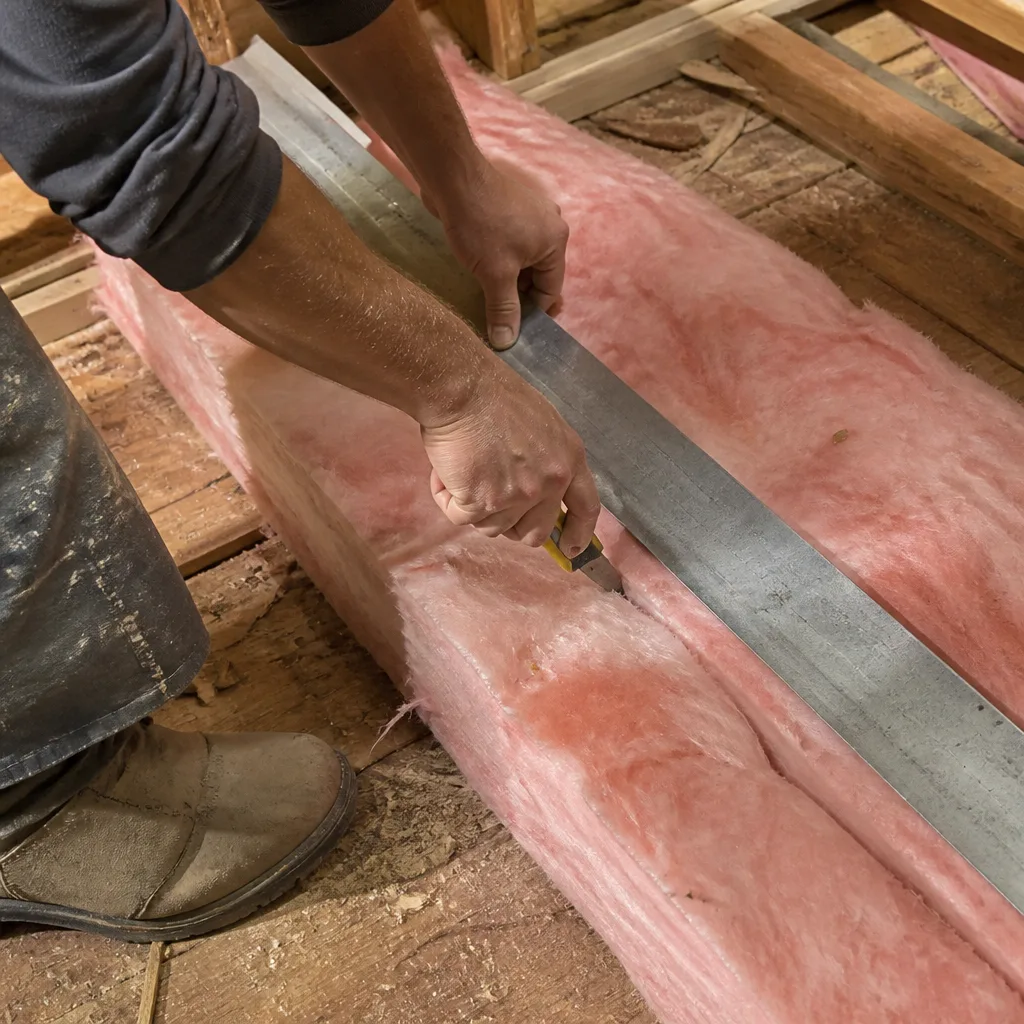
What you can safely check: locate your attic hatch, verify it closes and seals, and photograph any visible Demilec tags or crumbling foam for our review. Do not enter the attic in summer without hydration and a spotter; Georgetown attics run 130-150°F from June through September, and heat exhaustion arrives faster than you’d expect.
Where DIY goes wrong: two-component spray foam requires respiratory protection beyond a dust mask, precise substrate temperature control (Demilec specifies 60°F minimum for proper adhesion), and gun technique that takes training to avoid over-expansion and wasted material. More critically, most homeowners seal the obvious gaps and miss the top-plate junction where drywall meets framing, the single largest leakage path in most Texas homes. Our crew uses thermal imaging during the pre-seal inspection to identify every temperature differential; without that tool, you’re guessing. Call (254) 970-2136 and we’ll read your photos with you, no charge, and give you a written price if the job warrants professional work.
FAQs
Properly applied Demilec closed-cell foam lasts 25-30 years; open-cell formulations show degradation in 10-15 years under Georgetown’s thermal cycling and UV exposure through gable vents. The critical variable is original application quality - foam applied to dusty or moist framing in 2019-2021, when builders were rushing to meet demand, often fails at the adhesive bond within 5-7 years. Call (254) 970-2136 for a free inspection if your home was built in that window.
Localized adhesive failures can be spot-repaired with compatible foam if the surrounding material is sound and the substrate is cleaned and primed. Widespread cohesive cracking, or failure across multiple top-plate sections, requires full removal and re-application to meet the blower-door numbers we guarantee. We stock both repair kits and full drums so we’re not upselling replacement when repair is durable.
A spot repair runs 3-4 hours; a full attic re-seal on a 2,500 square foot Georgetown home takes one full day, plus a return visit for the post-seal blower-door test once the foam has cured (typically 24 hours for closed-cell). We schedule the test before we leave the first day so you’re not chasing us for documentation.
We stock Demilec-compatible two-component foam, replacement gun tips, and cleaning solvents on every truck, along with aftermarket equivalents from Owens Corning, Johns Manville, Knauf, Rockwool, CertainTeed, Icynene, and GreenFiber for jobs where the original specification is not the optimal repair. Topside Attic Insulation Georgetown is an independent service provider, not affiliated with Demilec; we select materials based on what the specific failure demands, not brand loyalty.
Seal the holes first. Then we talk about R-value.
Ready to stop conditioning your attic? Call (254) 970-2136 for a free estimate. We’ll bring the blower door, the thermal camera, and a written price before anyone lifts a tool. Haven Standard: Have it in writing.
Written by Wes Okafor, Owner, Topside Attic Insulation Georgetown at Topside Attic Insulation Georgetown, serving Georgetown and nearby areas.