
GreenFiber Spray Foam Insulation in Georgetown: What to Know First
We provide independent GreenFiber spray foam insulation service in Georgetown, with most diagnostic and repair calls completed same-day or next-day and pricing delivered in writing before any work starts. A typical open-cell spray foam repair in a Georgetown attic runs $800-$1,800, while full closed-cell garage ceiling or rim joist jobs range $2,200-$4,500 depending on cavity depth and access. This page is for homeowners who already have GreenFiber insulation in place and need it repaired, supplemented, or replaced with spray foam - or who are comparing GreenFiber cellulose against spray foam options for a Georgetown home built between 1990 and 2020. Call (254) 970-2136 for a free estimate with written pricing.
How GreenFiber Products Fail - and How We Fix Them
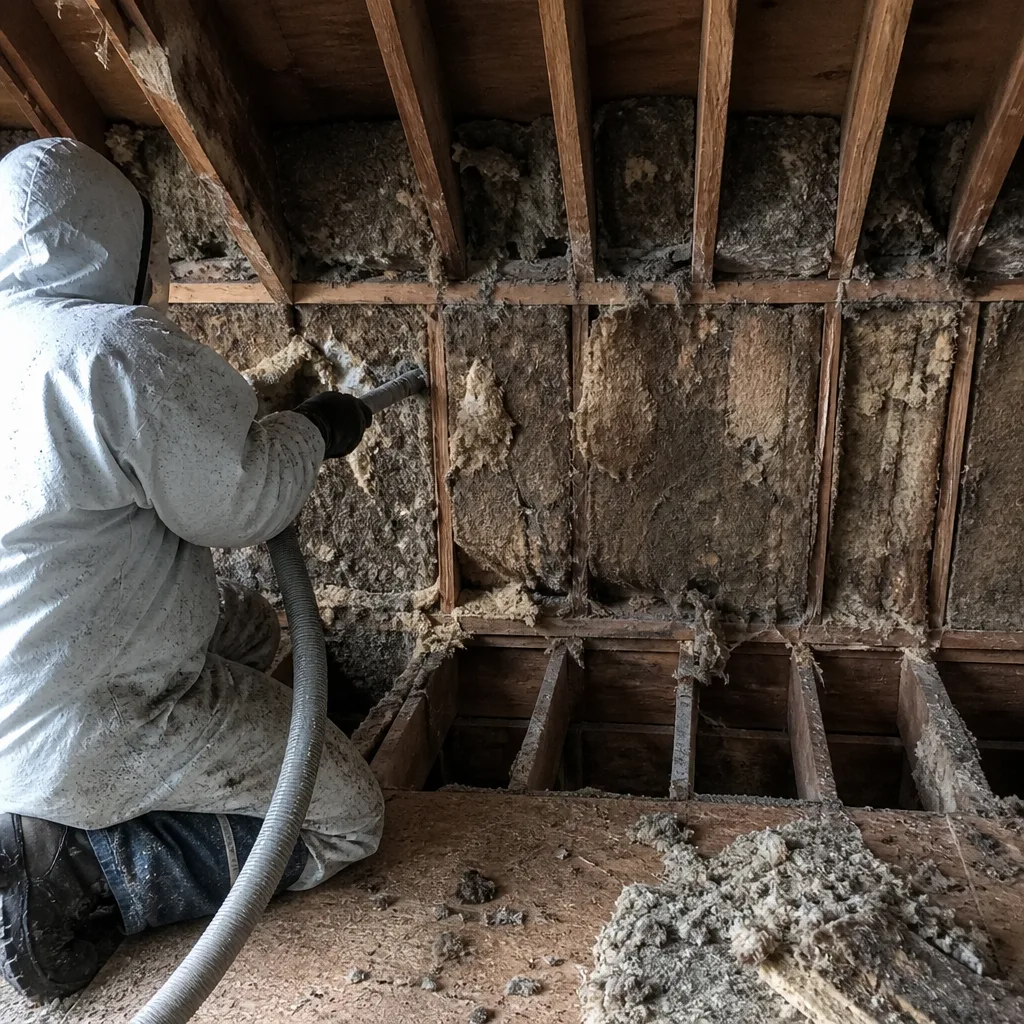
- GreenFiber All Borate Cellulose settling in 2×10 rafter bays above 140°F. Georgetown attics hit 145°F regularly from June through September, and All Borate settles 15-20 percent in its first three years when daily thermal cycling drives moisture through the fibers. We find the settled zone with thermal imaging, remove the compacted material, and install open-cell spray foam directly to the roof deck - which doesn’t settle and maintains its R-value - after sealing all top plates and can-light penetrations with one-part foam.
- GreenFiber Sanctuary by GreenFiber moisture retention in rim joists. The stabilized cellulose in this line contains added binders that slow - but don’t stop - moisture absorption in Georgetown’s clay-heavy soils where rim joists sit close to grade. We pull the damp Sanctuary, dry the cavity with targeted airflow, and apply closed-cell spray foam at 2-3 inches, which creates both the air barrier and vapor retarder that cellulose cannot.
- GreenFiber Low Dust formula dusting through electrical penetrations. The low-dust oil treatment degrades faster in Central Texas heat, and fine particles migrate through unsealed wire holes into living spaces. We seal every penetration with acoustic sealant, then spray foam the surrounding cavity so the insulation itself becomes the air barrier - no more particle migration, no more respiratory complaints.
- GreenFiber stabilized cellulose compression from storage traffic in Sun City Georgetown attics. We see this weekly: homeowners lay plywood over the cellulose for storage, compressing it below effective depth and creating thermal bridges. We remove the compressed material, air-seal the attic floor properly, and install spray foam on the roof deck to move the thermal boundary upward - storage goes back on the deck without penalty.
- GreenFiber product installed over unsealed top plates in pre-2005 Georgetown builds. The cellulose performs adequately in the field but leaks like a sieve at the perimeter where drywall meets the top plate. We never add spray foam until every top plate, electrical chase, and duct boot is foam-sealed and blower-door verified. Seal the holes first. Then we talk about R-value.
Our GreenFiber Spray Foam Insulation Process
- 1
Call and scope. A live person answers, schedules a diagnostic within 24-48 hours, and sends a text with the technician’s name and ETA.
- 2
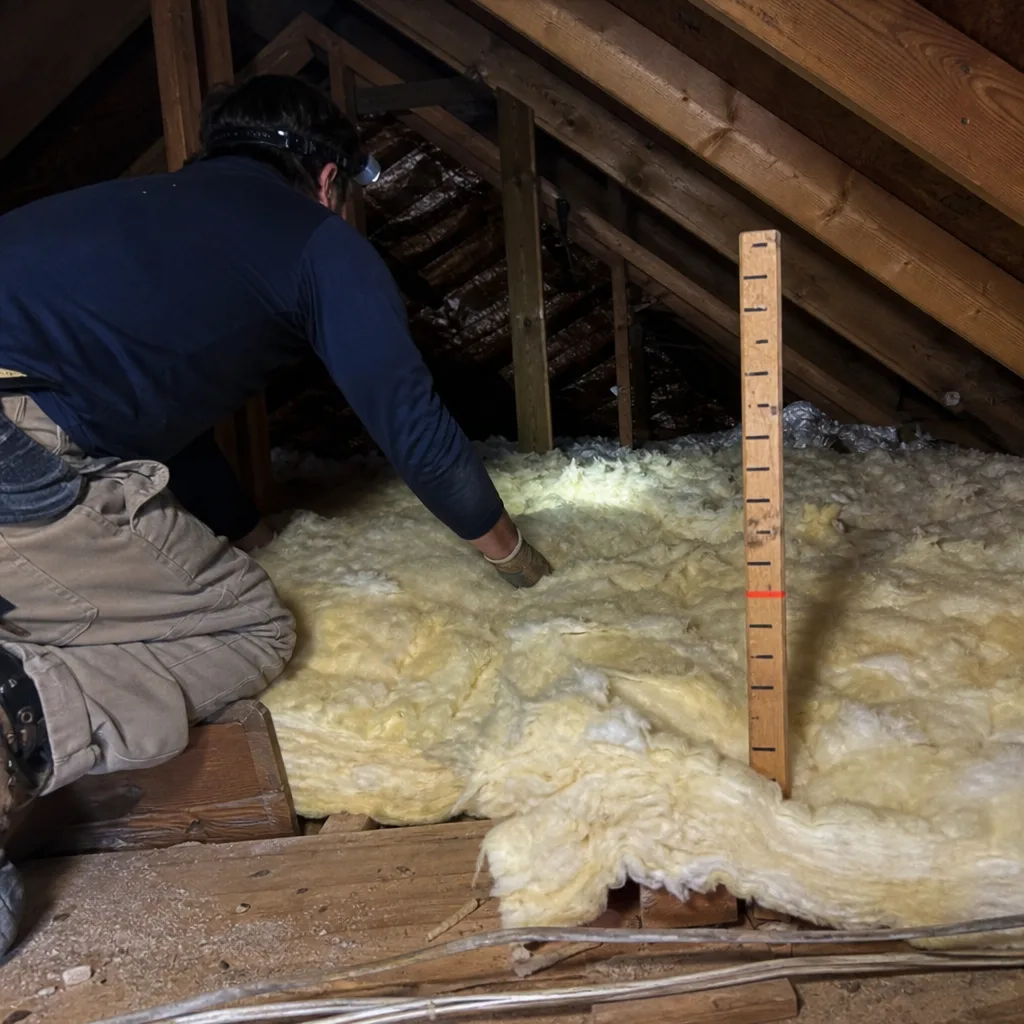
On-site inspection with documentation. We thermal-image the GreenFiber installation, run a blower-door test - a pressurization reading that shows, in one number, how much air the building envelope is losing - and photograph every cavity condition. You get the photos before we leave.
- 3
Written price and material selection. We specify open-cell versus closed-cell based on cavity depth, moisture exposure, and whether the thermal boundary needs to move. OEM-equivalent foam from Demilec or Icynene, never proprietary lock-in. You sign the scope before work starts.
- 4
Air sealing first, then foam. Every penetration gets sealed with one-part foam or acoustic sealant. We re-run the blower-door to confirm the air barrier before the spray foam rig fires up.
- 5
Spray foam application and real-time thickness verification. The crew checks pass thickness every 50 square feet with a depth gauge. Closed-cell jobs get documented at 2-inch minimum; open-cell at 3.5-inch minimum for R-13 equivalent.
- 6
Final test and documentation. Post-job blower-door numbers, thermal images, thickness photos, and the completed scope are compiled into a single report. The 365-Day Done Right Promise is activated in writing.
 Before
 After
AfterWhat GreenFiber Spray Foam Insulation Costs in Georgetown
| Job Type | Typical Range | What Moves the Price |
|---|---|---|
| Open-cell spray foam repair (partial attic, settled GreenFiber removal) | $800-$1,800 | Cavity square footage, access difficulty, hazardous material handling |
| Closed-cell rim joist replacement (GreenFiber Sanctuary removal) | $1,400-$2,800 | Linear feet of rim, soil clearance, moisture remediation needed |
| Full garage ceiling (GreenFiber to open-cell conversion) | $2,200-$3,600 | Ceiling area, ductwork relocation, fire-rated separation requirements |
| Closed-cell roof deck (attic conversion, thermal boundary move) | $3,200-$4,500 | Roof pitch, sheathing condition, ventilation strategy change |
These ranges reflect what we have written on actual scopes in Georgetown over the past three years - from the ranch homes near Southwestern University to the newer builds along the San Gabriel River corridor. Every job gets a flat written price before anyone lifts a tool. Call (254) 970-2136 for your exact number; estimates are free.
Why Georgetown Homeowners Call Topside Attic Insulation Georgetown for GreenFiber Work
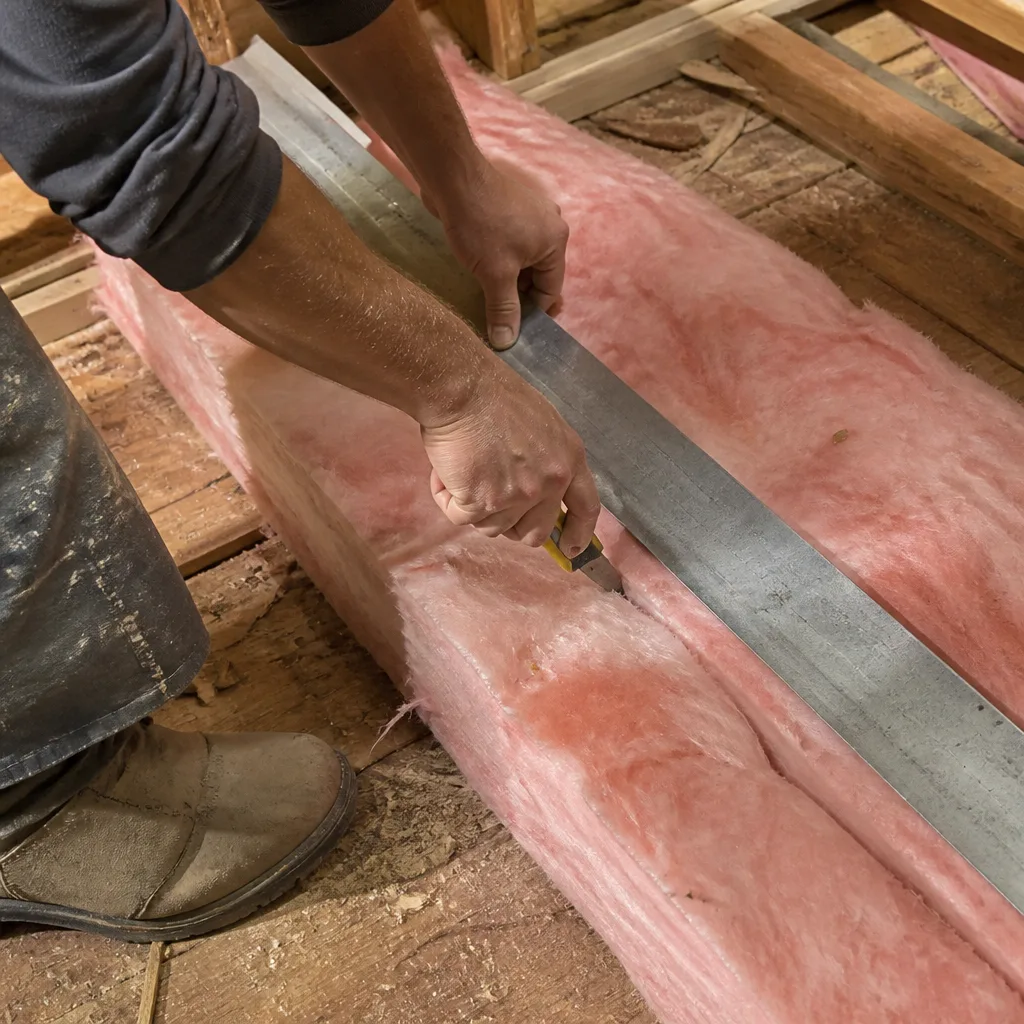
We’ve sealed and insulated 9,000+ homes since 2016, and a growing share of them started with GreenFiber that wasn’t performing - not because the product failed on its own, but because it was installed in a building envelope that leaked. Wes Okafor and our crew have worked attics from Sun City Georgetown to homes backing up to the San Gabriel River corridor, and we will not add a single bag of cellulose or board foot of foam until every penetration is sealed and the pre-job thermal images are documented. We also service Reflectix and other major brands, so our recommendation is never locked to one manufacturer’s product line. Under Haven Standard, you get a written price, a written warranty, and a documented photo record - every time, no exceptions.
FAQs
GreenFiber’s product warranty covers the cellulose itself, not the assembly it’s installed in; removing it to install spray foam does not void any remaining product warranty, though no contractor can extend the original manufacturer’s coverage. As an independent GreenFiber service provider, we document the existing condition with photos before removal so any future claim is supported. Call (254) 970-2136 for a free estimate.
Open-cell spray foam at 3.5 inches delivers R-13, while closed-cell at 2 inches delivers R-14 - both comparable to GreenFiber All Borate at settled depth. The critical difference is that spray foam maintains its R-value because it doesn’t settle or absorb moisture, and it simultaneously air-seals the cavity. For Georgetown’s climate, the air-sealing performance typically matters more than the nominal R-value difference.
Most partial conversions - one attic zone or a set of rim joists - are completed in a single day. Full roof-deck jobs in larger Georgetown homes require two days: one for removal, air sealing, and blower-door verification; one for foam application and cure. We schedule within 24-48 hours of your call, and a live person answers the phone 24/7.
Spot-repairing settled GreenFiber with additional blown-in runs $400-$700 but leaves the underlying air leaks unaddressed, so the problem recurs. Converting to spray foam costs more upfront - typically 2-3x for the same area - but eliminates settling and air leakage in one step. For homes with multiple failure signs or planned long-term ownership, replacement is usually the better value. We provide a free second opinion on any written estimate to help you compare.
We carry open-cell and closed-cell foam systems from Icynene, Demilec, and other major suppliers on every truck - no ordering delays for standard jobs. Specialty applications requiring higher-density closed-cell or intumescent coatings for fire separation may add 24-48 hours. We tell you before you sign the scope if your job requires non-standard material.
Written by Wes Okafor, Owner, Topside Attic Insulation Georgetown at Topside Attic Insulation Georgetown, serving Georgetown and nearby areas.