
Demilec Crawl Space Encapsulation: The Georgetown Owner’s Guide
Demilec crawl space encapsulation systems in Georgetown typically run $3,800-$7,200 installed for a standard 1,200-2,000 sq ft footprint, and we stock the full Demilec vapor-barrier membrane line plus seam tape and mechanical fastening hardware for same-day starts on most jobs. Most homeowners figure out something’s wrong when the musty smell returns in summer or the humidity gauge in their crawl space reads above 60% despite the dehumidifier running flat out. That’s usually a failed seam, a torn membrane, or a perimeter that’s pulled away from the wall, and in Georgetown’s clay-heavy soils, the seasonal expansion and contraction makes that worse than it looks from the hatch.
Which Demilec Models This Applies To
Demilec’s crawl space line breaks into two membrane families: the Sealection 500 closed-cell spray foam used for rim-joist and wall sealing, and the DemiLiner reinforced polyethylene vapor-barrier sheets used for ground and wall coverage. The Sealection 500 is a two-component polyurethane applied at 2-3 inches for a Class II vapor retarder; DemiLiner comes in 10-mil, 12-mil, and 20-mil reinforced grades with a woven polyethylene core that resists puncture from gravel or rodent traffic.
To identify what you’ve got, check the membrane edge for an embossed Demilec lot number, or look at the seam tape: Demilec’s OEM tape is white with a red stripe, 4 inches wide, and uses a butyl-acrylic hybrid adhesive that stays flexible below 40°F. Aftermarket equivalents exist from Reflectix and others, but the Demilec tape’s elongation spec (35% per ASTM D412) matters in Georgetown because our summer ground temperatures hit 85°F and cheap tape shears off the wall. We carry both OEM Demilec and the Reflectix Pro-Grade equivalent on the truck, and we’ll show you the spec sheet before we open either roll.
One compatibility gotcha: Demilec’s 20-mil DemiLiner and the 12-mil version use different mechanical fasteners. The 20-mil needs a 2-inch masonry-cap staple every 6 inches on the perimeter; the 12-mil can span 8 inches. Mix those up and the heavier membrane will sag within two seasons.
Signs Your Demilec Crawl Space Encapsulation Is Failing
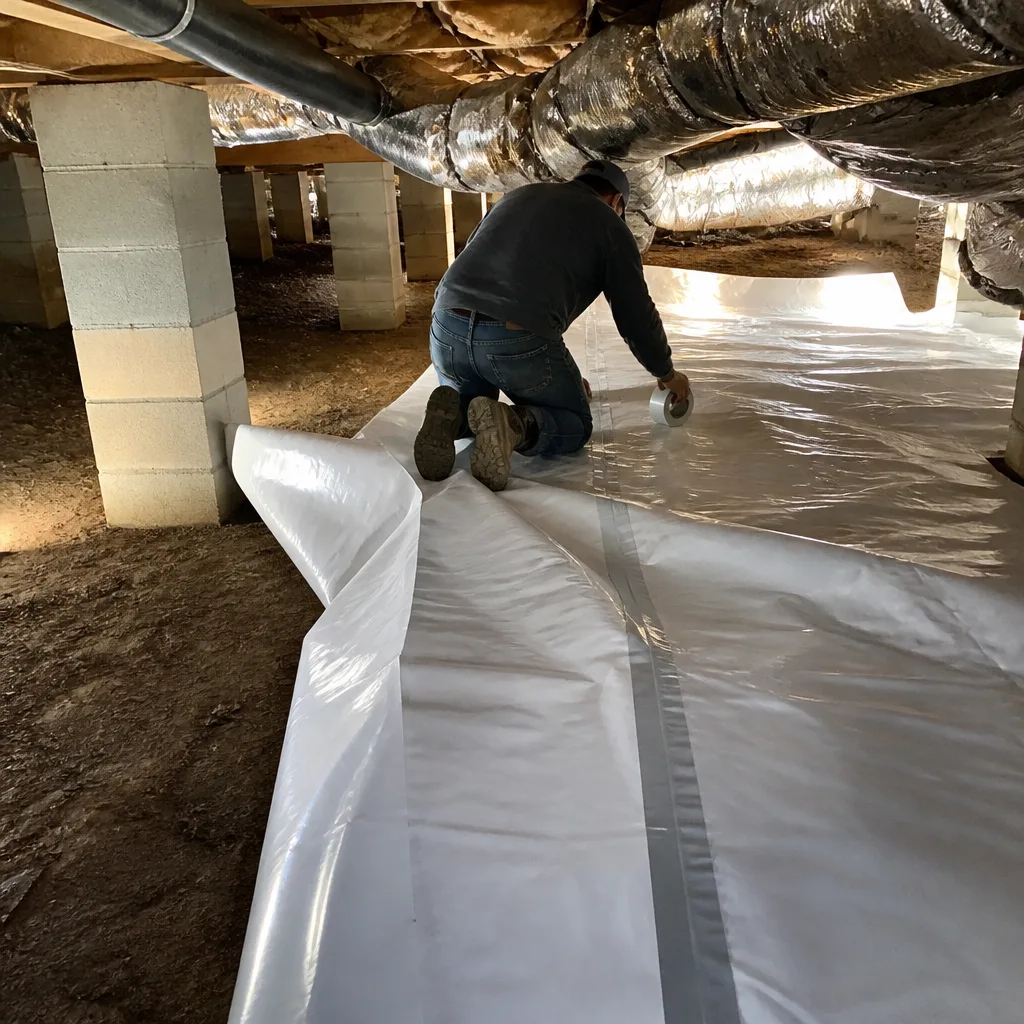
- Humidity readings climb past 60% RH even with the dehumidifier running. This means the vapor barrier has lost its seal somewhere, usually at a seam or perimeter termination, and Georgetown’s high water table in neighborhoods near the San Gabriel River corridor pushes ground moisture through faster than the dehumidifier can pull it.
- Musty odor returns in July and August, or after heavy rain. The smell is microbial growth on organic material, which means water vapor is getting past the barrier and condensing on floor joists or insulation. In Georgetown’s clay soils, hydrostatic pressure after a storm can force water through a gap the size of a pencil eraser.
- Membrane has pulled away from walls, or you see pooling on top of the liner. Ground movement from our expansive clay shifts the perimeter, and mechanical fasteners pop out if they weren’t set into a sealed sill plate first. Pooling on top of the liner means water is entering from the perimeter, not through the membrane.
- Seams are visible, lifted, or collecting dirt. Proper Demilec seams should be nearly invisible; lifted edges mean the tape adhesive has failed, often from installation on a cold substrate or from petroleum-based contamination (old oil stains, diesel residue from equipment).
- Insulation above the crawl space is damp or compressed. This is late-stage failure. Vapor migration has reached the floor system, and in Georgetown’s cooling-dominated climate, that moisture hits the cold floor joists and condenses. By the time fiberglass batts are wet, you’re looking at more than membrane replacement.
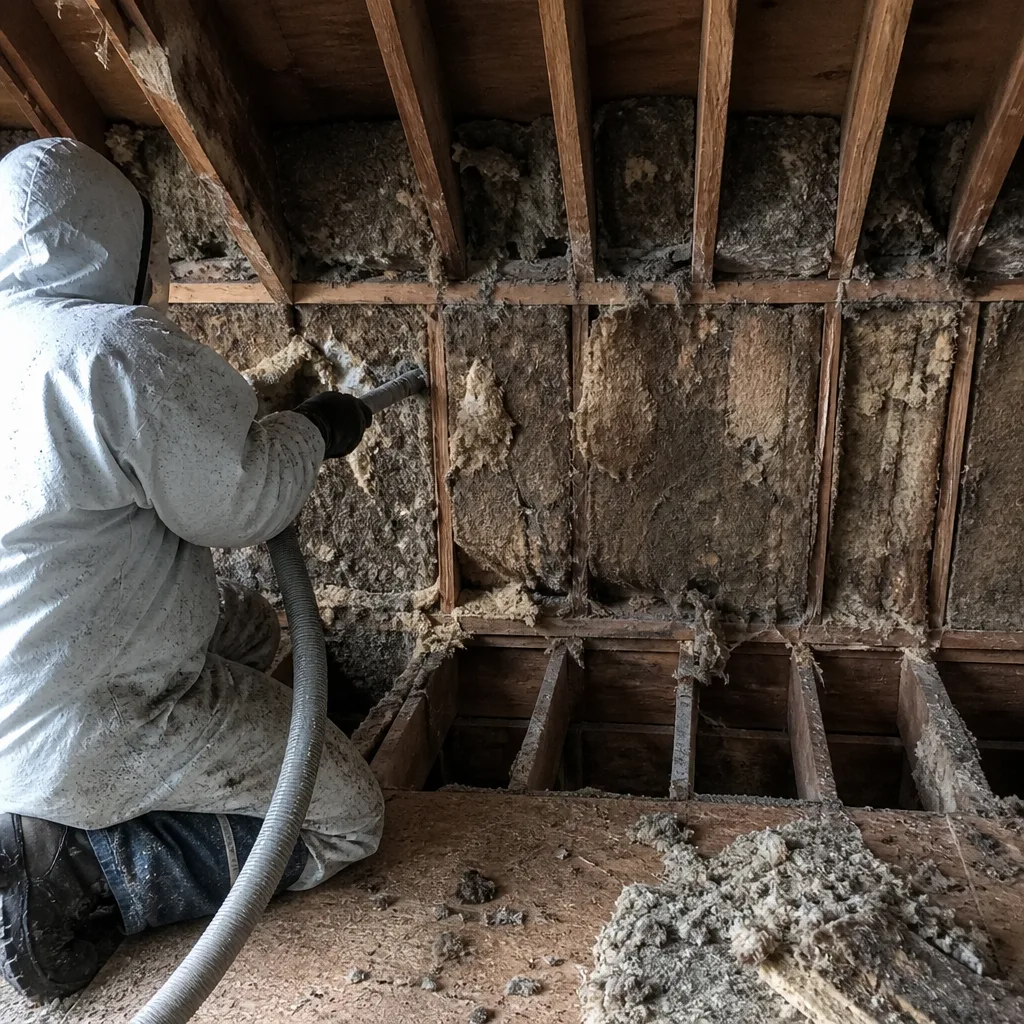 Before
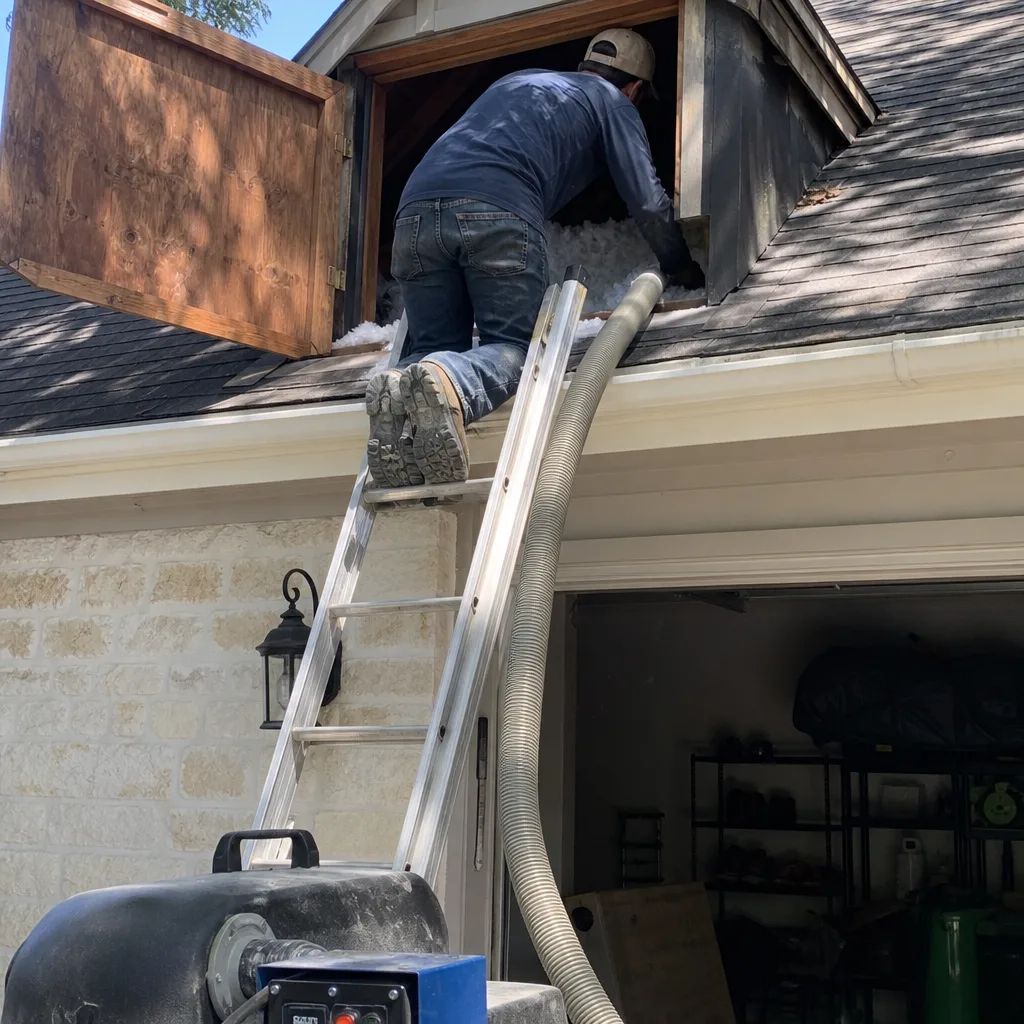 After
AfterReplacement Cost & What’s Included
Most full Demilec crawl space encapsulation replacements in Georgetown fall between $3,800 and $7,200 installed, with the spread driven by three things: square footage, whether the rim joists need re-foaming with Sealection 500, and how much of the old membrane and tape we have to remove. A membrane-only refresh on a clean 1,200 sq ft crawl space runs toward the lower end; a full tear-out with new perimeter fastening, re-foamed rim joists, and a 20-mil DemiLiner with sealed seams pushes the upper end.
| Component | Typical Range |
|---|---|
| DemiLiner membrane (12-mil, installed) | $1.80-$2.40 / sq ft |
| DemiLiner membrane (20-mil, installed) | $2.60-$3.20 / sq ft |
| Sealection 500 rim-joist spray foam | $4.50-$6.00 / board foot |
| Perimeter mechanical fastening system | $380-$550 (full perimeter) |
| Demilec seam tape (OEM, linear foot) | $0.85-$1.10 / ft |
| Dehumidifier sizing/replacement (if needed) | $1,200-$2,800 |
Every job gets a written price before work starts, under Haven Standard Clause 1. That price includes removal of failed material, surface prep, installation, and a Documented Photo Record. We also run a before-and-after humidity log with a calibrated thermo-hygrometer, not a hardware-store special, so you have a number that means something. The 365-Day Done Right Promise covers all encapsulation work, and we publish the humidity readings with your photo record.
DIY or Call Us?
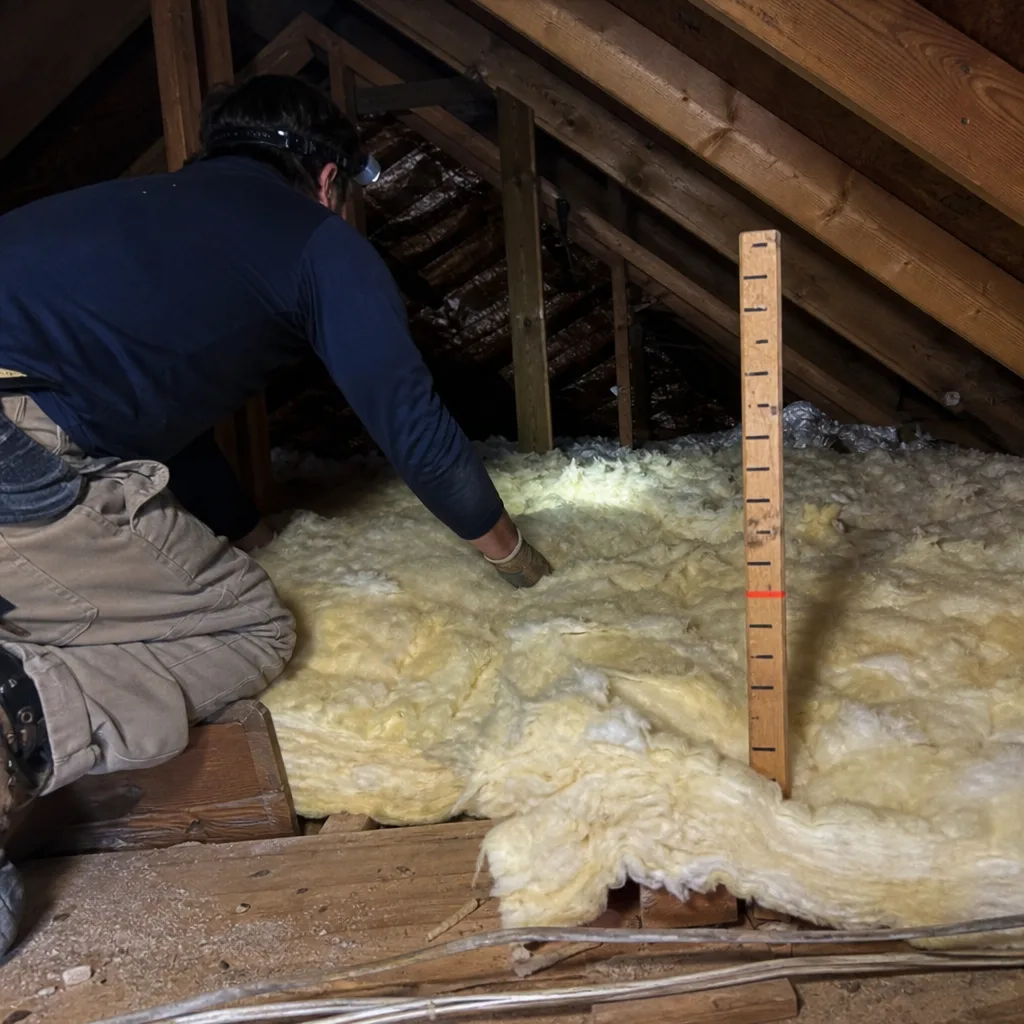
You can safely check three things yourself: the humidity reading on your dehumidifier display, whether the membrane is visibly torn or pulled away, and whether your sump pump (if you have one) is cycling normally. Do not crawl under there if you smell gas, see standing water near electrical, or if the access is less than 18 inches clear height.
Where DIY goes wrong with Demilec encapsulation is surface prep and seam work. The butyl-acrylic tape needs a clean, dry, room-temperature substrate, and Georgetown’s clay soils mean the ground is rarely dry enough without active dehumidification first. We’ve pulled out homeowner jobs where the tape looked fine at installation and failed in 90 days because the concrete wall was still releasing moisture. The mechanical fastening pattern also matters: too sparse and the membrane balloons; too tight and you tear the reinforcement grid. We carry the torque-limited fastening tools on the truck, and we won’t start until the substrate reads below 19% moisture content on a pinless meter.
Call (254) 970-2136 if you want us to read the numbers with you. Estimates are free, and we bring the meter.
FAQs
A properly installed Demilec system lasts 15-20 years in Georgetown, but the seam tape often needs inspection at year 8-10 because our summer ground temperatures and clay soil movement stress the adhesive bond. Call (254) 970-2136 and we’ll check your seams with a pull test, no charge.
Small punctures under 2 inches can be patched with Demilec-compatible tape and a reinforcing patch, but tears along seams or anywhere the reinforcement grid is visible need full section replacement because the membrane’s structural integrity is compromised. We’ll show you the difference on inspection and write the price for either path before we cut anything.
Most residential crawl spaces in Georgetown take 1-2 days for a full membrane replacement, or 2-3 days if we’re also re-foaming rim joists with Sealection 500. We work one job at a time, start to finish, and we don’t leave your crawl space open overnight.
We stock 12-mil and 20-mil DemiLiner rolls, OEM seam tape, perimeter fasteners, and Sealection 500 components on our Georgetown warehouse shelf. If your job needs a custom width or a color-matched repair, we can have it within 48 hours from the regional distributor in Austin. Call (254) 970-2136 to confirm what’s on hand for your specific job.
Topside Attic Insulation Georgetown is an independent service provider and is not affiliated with Demilec. We source Demilec materials through authorized distribution and also stock compatible products from Reflectix and other manufacturers.
Written by Wes Okafor, Owner, Topside Attic Insulation Georgetown at Topside Attic Insulation Georgetown, serving Georgetown and nearby areas.