
Icynene Attic Air Sealing: The Georgetown Owner’s Guide
Icynene attic air sealing in Georgetown typically runs $1,800-$3,400 installed for a standard single-story attic up to 1,500 square feet, and we can usually start the job within 48 hours of your call. We stock Icynene-compatible open-cell spray foam, sealant accessories, and replacement application equipment on our trucks, so most Georgetown homes don’t wait on material delivery. Most owners realize their Icynene air sealing has failed when utility bills spike during a Georgetown summer, rooms stay unevenly warm despite the AC running, or they spot daylight through attic floor penetrations during a visual check. Wes Okafor and our crew have resealed attics from Sun City Georgetown to the San Gabriel River corridor, and the pattern is consistent: foam shrinks, pulls from top plates, or was never applied to the full penetration perimeter in the first place.
Which Icynene Models This Applies To
Icynene produces several product lines used in Georgetown attics, and the compatibility question matters because the foam’s density and expansion rate determine how it bonds to Texas pine framing and OSB sheathing in our 140°F summer attic conditions.
The most common Icynene products we encounter in local homes are:
- Icynene Classic Max - open-cell, 0.5 lb/ft³ density, typically labeled with a yellow-and-black drum tag; expands to roughly 100× its liquid volume. We check for the ICC-ESR report number on the original invoice or drum label to confirm batch compatibility.
- Icynene Classic Plus - slightly higher density at 0.6 lb/ft³, often specified in newer Georgetown builds from 2018 onward; the “Plus” designation matters because it uses a different B-side resin ratio that doesn’t bond well to original Classic Max if you’re doing a patch repair.
- Icynene LD-C-50 - a lower-density open-cell used primarily for wall cavities; we rarely see it in attics but verify when the original spec sheet is available.
Here’s the compatibility gotcha: Icynene changed its Classic Max formulation around 2019, and the newer catalyst reacts with older cured foam in a way that can create a cold joint - a visible seam where air passes through. If your Georgetown home was sealed before 2019 and needs patching now, we typically remove a 4-inch perimeter of the old foam rather than feathering new into old. OEM Icynene foam is available through certified distributors, but we also source equivalent open-cell products from Demilec and CertainTeed that meet the same ASTM E84 and ICC-ESR standards at a lower per-board-foot cost. The decision comes down to whether your original warranty is still active and whether you need a seamless match for a future home sale inspection.
To identify what you have, look for the application tag left by the original installer (required by Texas Administrative Code Title 16, Part 4, Chapter 75), check the foam color (Classic Max cures to a pale yellow, Classic Plus to a cream white), or measure the cured density with a simple kitchen scale and ruler - 0.5 lb/ft³ feels noticeably lighter than 0.6.
Signs Your Icynene Attic Air Sealing Is Failing
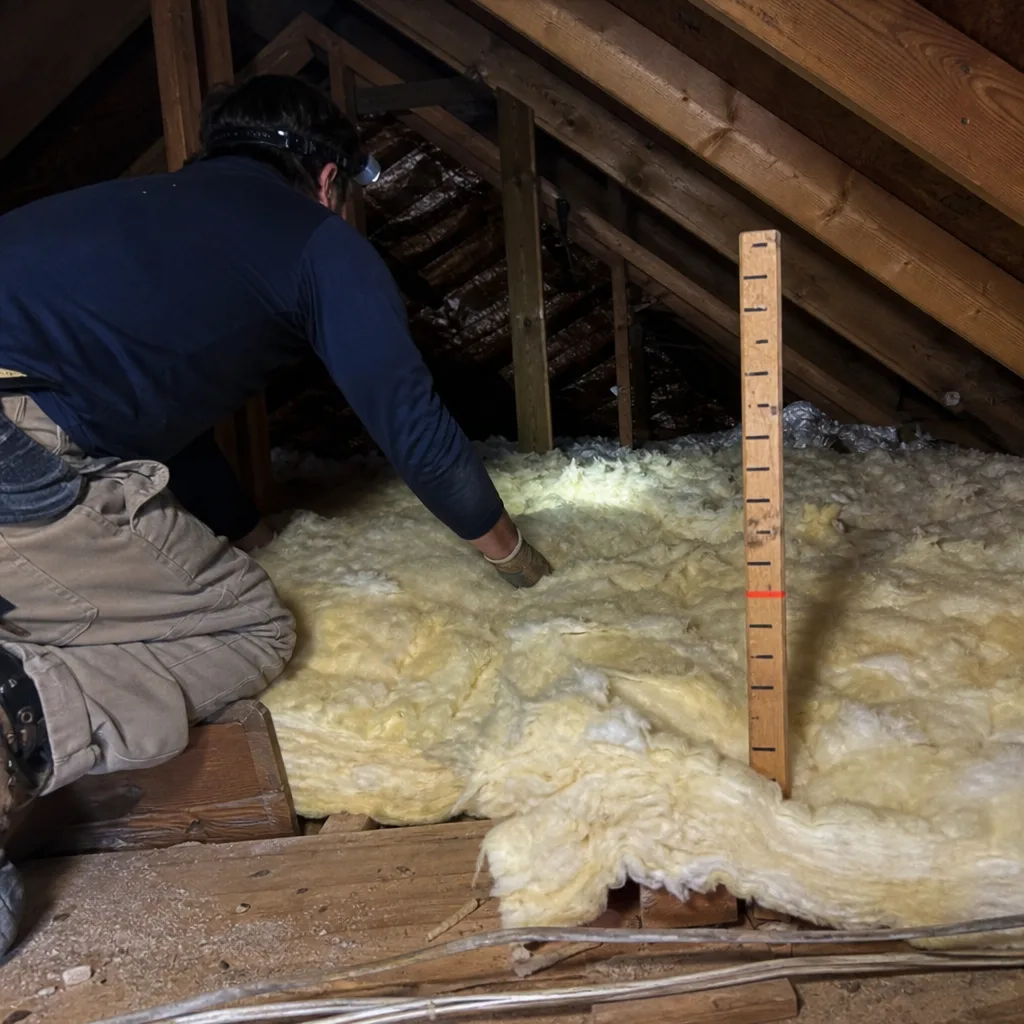
- Spiking summer electric bills with no rate change. Georgetown’s municipal electric rates held steady in 2023-2024, so a 20% jump in kWh usage between June and September usually means conditioned air is escaping through gaps the Icynene was supposed to seal. The foam may look intact from below but have pulled away from top plates where framing expands and contracts.
- Hot second-floor rooms or bonus spaces that never cooled well. This points to failed sealing at the attic knee walls or around duct boots. Icynene shrinks approximately 2-3% during cure; in a poorly mixed application, that shrinkage concentrates at edges and leaves a gap you can’t see from the living space.
- Dust accumulation on ceiling registers or around can-light trim. If your HVAC filter is clean but you’re wiping dust weekly, attic air is being pulled into the return path through unsealed penetrations. The Icynene should form a gasket around every duct boot and electrical box; when it fails, the attic becomes part of your air circulation loop.
- Daylight visible around chimney chases or plumbing vent stacks. These are high-movement areas where Icynene’s flexibility is supposed to be an advantage, but UV exposure through a missing chimney cricket or deteriorated flashing can degrade the foam surface over 5-7 years in Georgetown’s intense sun.
- Moisture staining on ceiling drywall near exterior walls. This is the serious one. Warm, humid attic air hits the cooler drywall surface at the top plate, condenses, and creates a mold risk. The Icynene air seal has failed completely at that location, and the insulation above is likely compromised too.
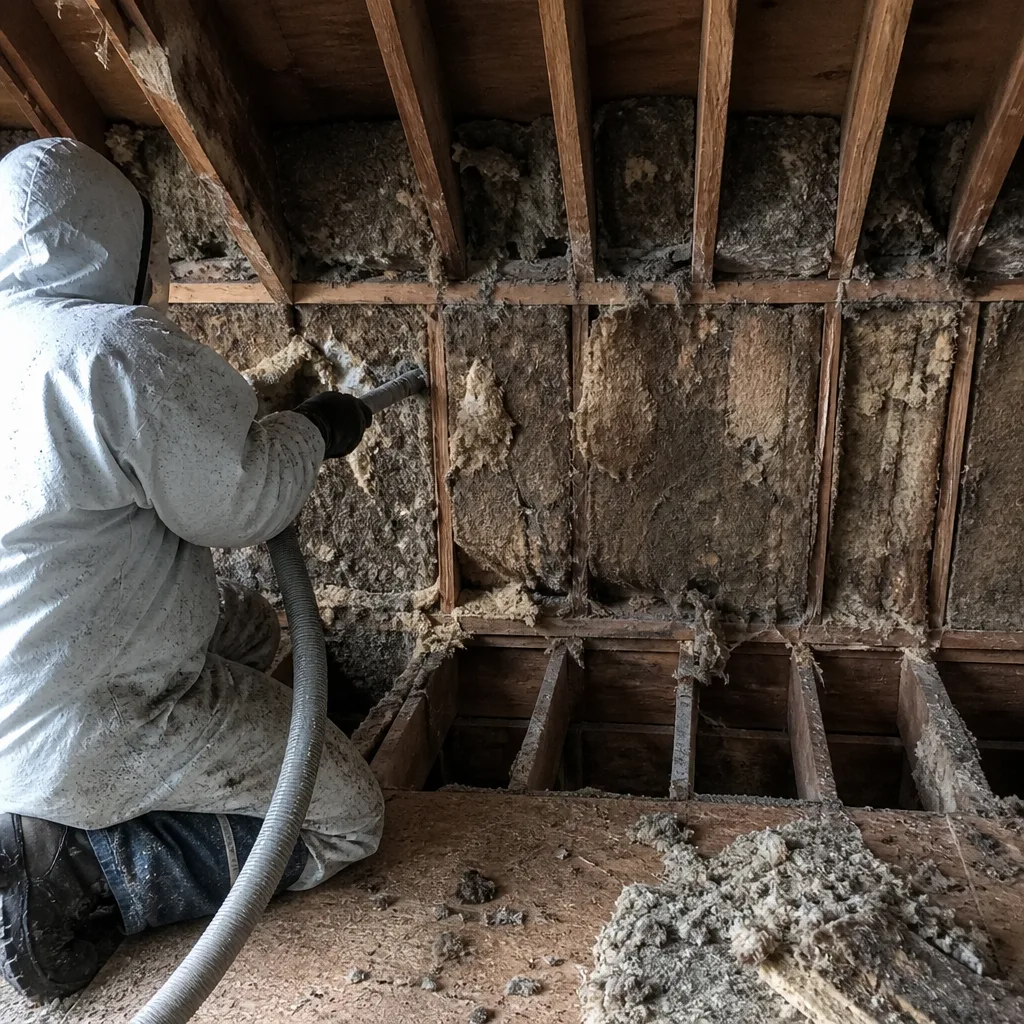 Before
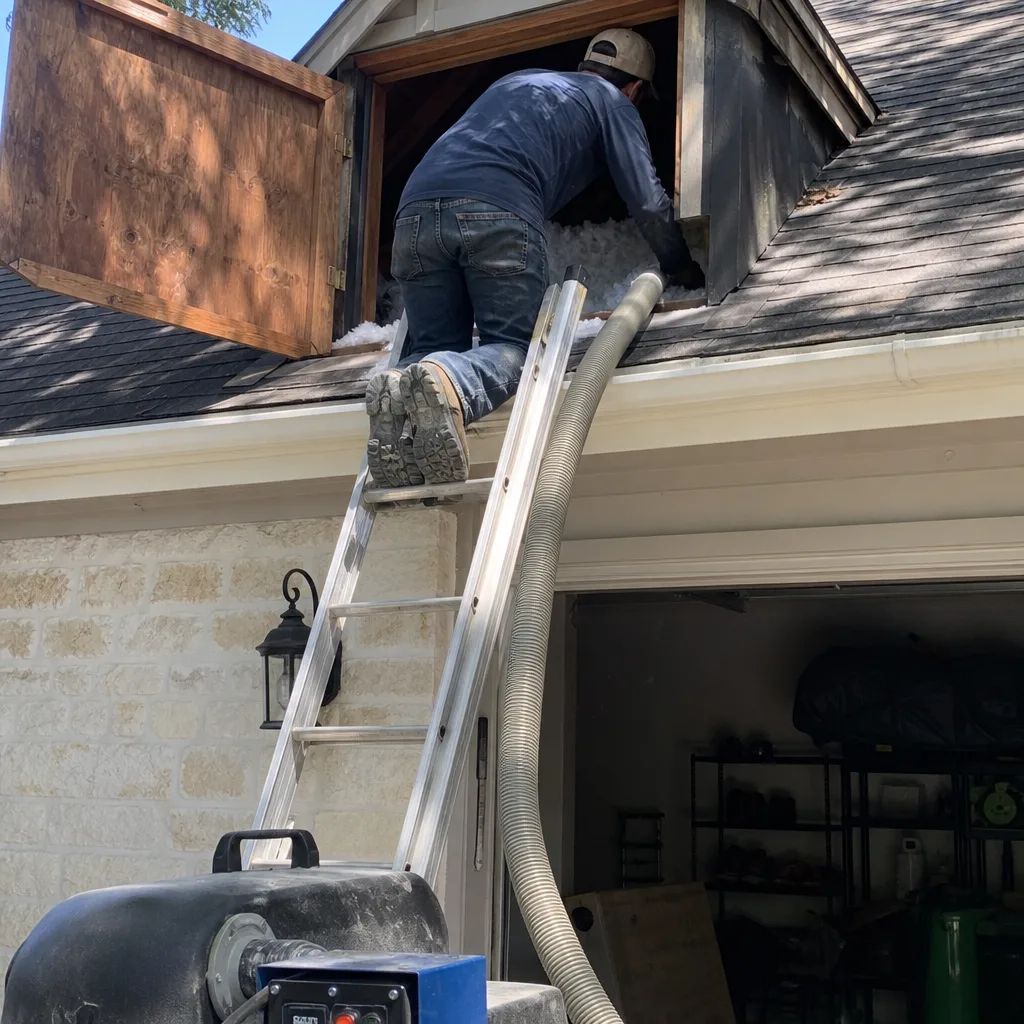 After
AfterReplacement Cost & What’s Included
For a typical Georgetown home between 1,200 and 2,400 square feet, complete Icynene attic air sealing replacement runs $1,800-$3,400. The range breaks down like this:
| Scope | Price Range |
|---|---|
| Spot repair (localized failure, up to 200 sq ft of foam removal/reapplication) | $450-$850 |
| Partial reseal (single attic zone, top plates + penetrations) | $1,200-$1,900 |
| Full attic air seal (complete removal and reapplication) | $2,400-$3,400 |
| Blower-door test with documented before/after report | $275 (included with full reseal) |
What drives the range: attic accessibility (truss height and decking coverage), quantity of penetrations to seal, whether existing insulation must be removed first, and whether we find degraded foam that requires full removal rather than patching. Every job gets a Written Price Before Any Work Starts under Haven Standard Clause 1 - flat price, written scope, written warranty before anyone lifts a tool. The 365-Day Done Right Promise covers adhesion failure, shrinkage beyond spec, and any missed penetration. We publish before-and-after blower-door numbers on every applicable job so you can verify the result in CFM50 - the pressurization reading that shows, in one number, how much air your building envelope was losing.
DIY or Call Us?
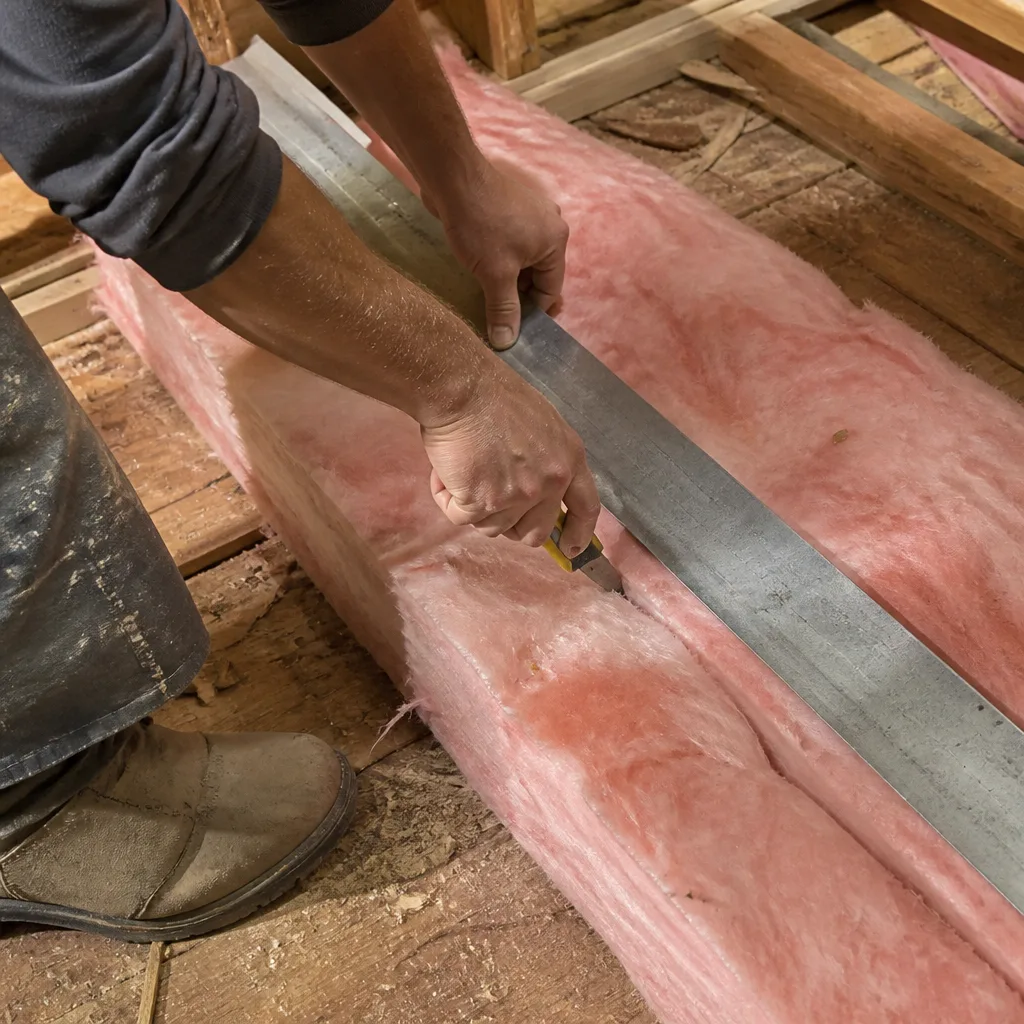
There’s a safe middle ground here, and then there’s where DIY goes wrong.
What you can check yourself: on a cool morning, turn off your HVAC and feel around ceiling registers, can lights, and attic access hatches for incoming air movement. Take photos of any Icynene foam that has pulled away from framing or crumbled to the touch. Note the drum labels if you can access them safely. This diagnostic work costs nothing and helps us quote accurately when you call.
Where DIY becomes a problem: two-part spray foam requires precise temperature control (the A and B components must be between 60°F and 80°F), exact ratio mixing, and respiratory protection beyond a standard dust mask. In a Georgetown attic in July, the ambient temperature hits 140°F, which accelerates cure time and traps unreacted isocyanate in the foam - that’s the source of the persistent chemical smell some homeowners report after amateur application. More critically, walking attic joists while managing a heated hose and full-face respirator is genuinely dangerous; we’ve seen falls through ceiling drywall from homeowners who underestimated how narrow standard joist spacing feels from above.
We carry Icynene-compatible foam, Demilec equivalents, and all necessary PPE on every truck. Call (254) 970-2136 for a free estimate - we’ll inspect, photograph, and give you a written price before any work starts.
FAQs
Properly applied Icynene open-cell foam lasts 20-30 years, but we see functional failures in Georgetown attics as early as 5-7 years when the original application missed critical penetrations or was applied to damp sheathing. The thermal cycling here - 30°F winter lows to 140°F attic highs - accelerates shrinkage at bond lines. Call (254) 970-2136 and we’ll assess whether you’re looking at a localized repair or full replacement - estimates are free.
Localized repairs are absolutely possible when the failure is limited to a specific penetration or top plate section. We remove a 4-inch perimeter of existing foam to eliminate the cold-joint risk, then apply new compatible foam. Full replacement becomes necessary when the original foam is extensively degraded by UV exposure, moisture, or rodent damage, or when the original application was so incomplete that patching would cost more than starting clean. We’ll show you thermal images and give you both options with prices - no obligation.
Most Georgetown attic air sealing replacements take one full day for a crew of two. Spot repairs run 3-4 hours. We need the attic empty of stored items, HVAC off during the foam cure window (typically 2 hours), and 24 hours before you re-enter the space. We schedule to minimize disruption and text you when the crew is en route - Haven Standard: Arrive on schedule, named technician, no surprises.
We stock Icynene-compatible open-cell foam, application equipment, and sealant accessories on every truck, along with equivalent products from Demilec and CertainTeed. For full reseals requiring large material volume, we order overnight from the Austin-area distributor and start the next morning. We do not stock every historical Icynene formulation, so a photo of your drum label or application tag speeds matching. Topside Attic Insulation Georgetown is an independent service provider, not affiliated with Icynene.
Topside Attic Insulation Georgetown also stocks parts and materials for Reflectix radiant barrier systems, among other building envelope products.
Written by Wes Okafor, Owner, Topside Attic Insulation Georgetown at Topside Attic Insulation Georgetown, serving Georgetown and nearby areas.