
Icynene Attic Insulation: The Georgetown Owner’s Guide
Most Icynene open-cell spray foam attic insulation jobs in Georgetown run between $3.80 and $5.40 per board foot installed, with a typical 1,800-square-foot attic running $4,200 to $6,800 depending on thickness and prep work. We stock Icynene LD-C-50 and MD-R-200 series material and can usually inspect and quote same-day. Homeowners usually discover a problem when their summer electric bill jumps $80 to $150, they feel hot spots walking the second floor, or they spot yellowing, crumbling, or moisture-darkened foam during a duct service call or roof leak repair.
Which Icynene Models This Applies To
Icynene’s residential attic line breaks into two series that matter for Georgetown homes. The LD-C-50 open-cell formula, rated at 3.6 per inch R-value, is what we see in most attics from the 2015 to 2022 build wave in neighborhoods like Riverview and Serenada. The MD-R-200 medium-density closed-cell, at 6.0 per inch, shows up in older retrofits where the homeowner needed maximum R-value in limited rafter depth, common in the smaller bungalows near Southwestern University.
To identify what you have, check the exposed foam surface. Open-cell LD-C-50 has a spongy, bread-like texture you can indent with a fingernail; closed-cell MD-R-200 feels rigid and smooth, like dense styrofoam. The original installer should have left a specification label on the attic access hatch or a documentation packet with the job, but half the homes we enter in Georgetown have lost that paperwork to a realtor turnover or a water heater swap. We carry both formulations on the truck, so misidentification does not delay the job. Topside Attic Insulation Georgetown is an independent service provider, not affiliated with Icynene; we source material through our distributor and will match spec to spec, whether that means OEM Icynene or an equivalent Demilec or CertainTeed formulation with identical density and R-value per inch.
Signs Your Icynene Attic Insulation Is Failing
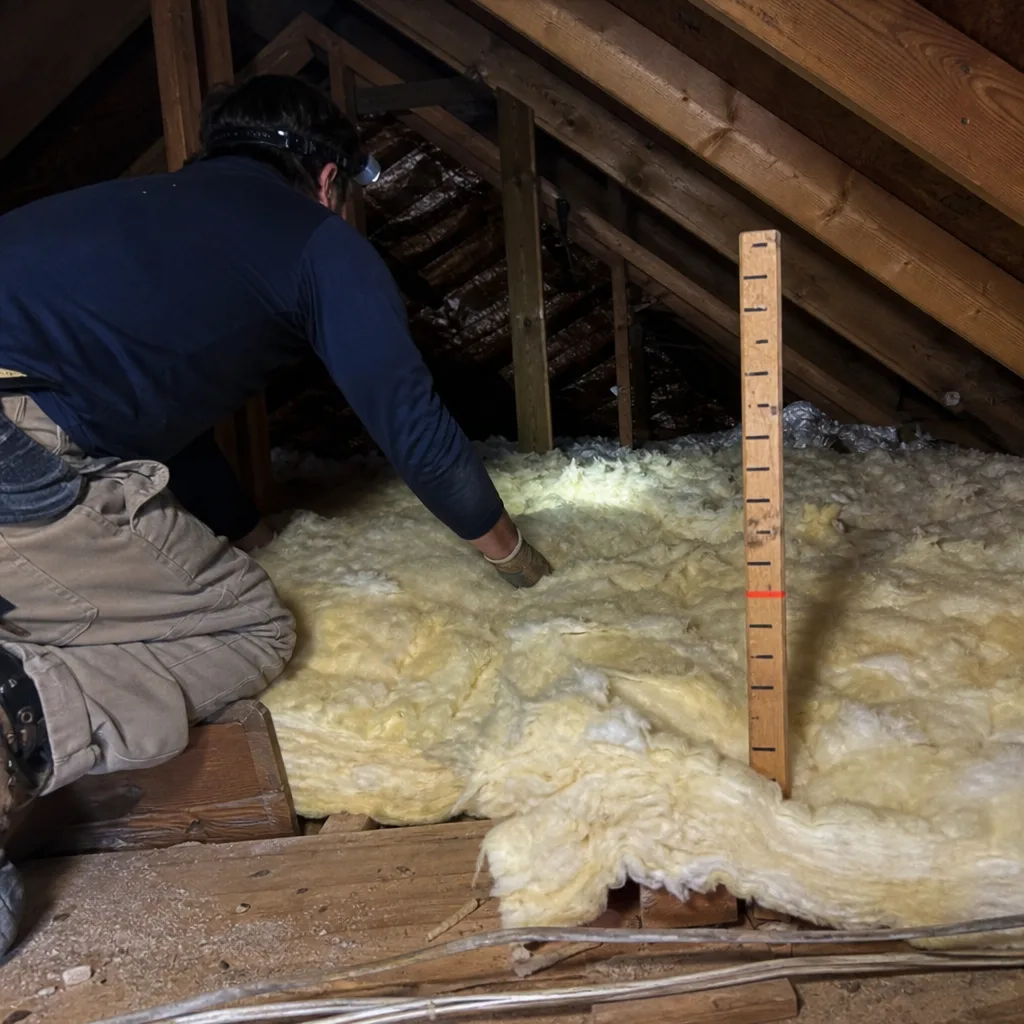
- Hot spots on the ceiling below. This means the foam has pulled away from the roof deck or settled at the eaves, creating a thermal bypass. In Georgetown’s 140°F August attics, that gap lets radiant heat pour through. We find this most often where the original installer skipped sealing top plates before spraying.
- Yellowing or browning of the foam surface. UV degradation from a gable vent left uncovered, or chemical breakdown from a roof leak that sat undetected. Once the surface oxidizes, the foam loses its air-sealing performance even if it still looks thick.
- Crumbly, powdery texture when touched. This is hydrolytic degradation, almost always from a bathroom vent dumping moist air into the attic because the duct disconnected. The moisture condenses on the foam and breaks the polymer bonds. We see this in Georgetown homes with flex duct that was never properly supported.
- Sudden spike in cooling costs with no equipment change. Your AC runs longer because the envelope is leaking, not because the unit failed. The blower-door test, a pressurization reading that shows in one number how much air your building envelope is losing, typically reads 500 to 800 CFM50 higher than when the foam was fresh.
- Visible mold or mildew on the foam surface. This means bulk water is getting in, usually from a flashing failure or a ridge vent installed after the foam went in. The foam itself does not feed mold, but the dust and organic debris that collect on a wet surface do.
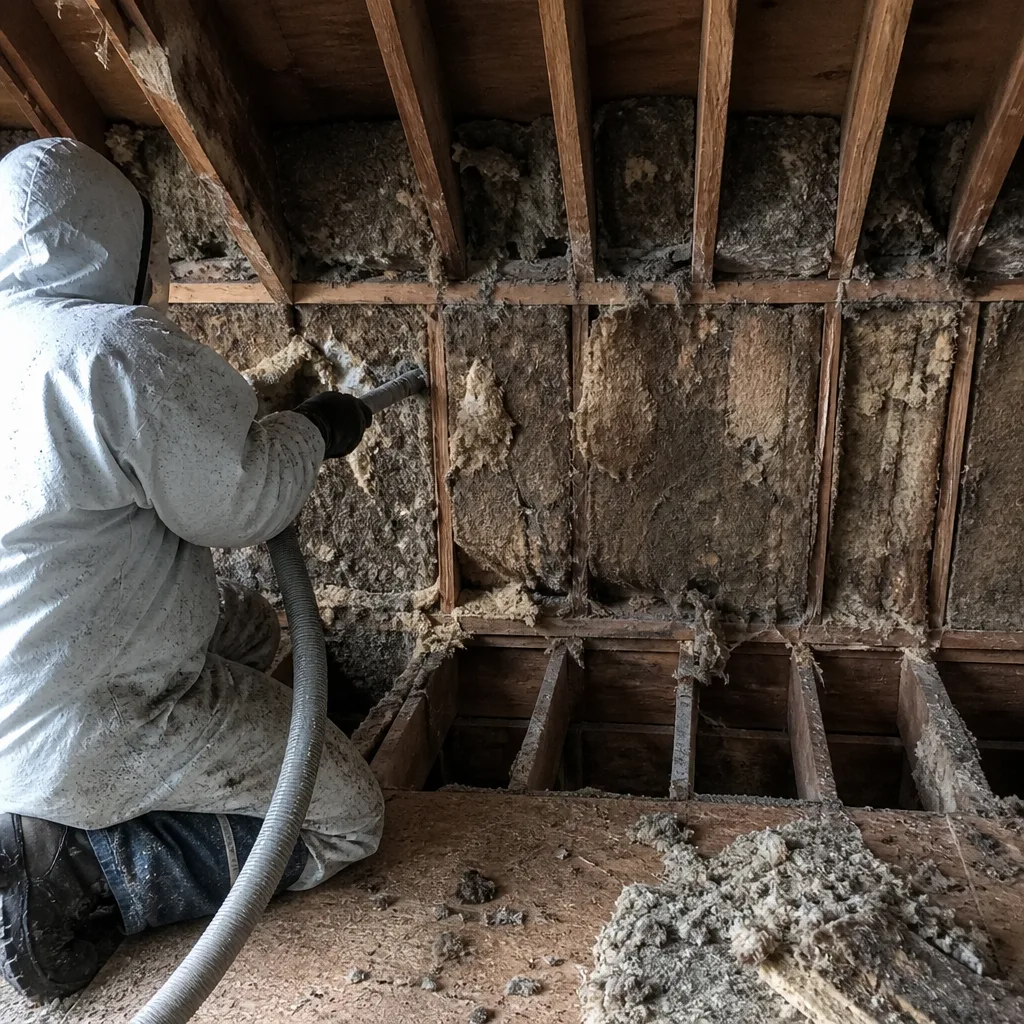 Before
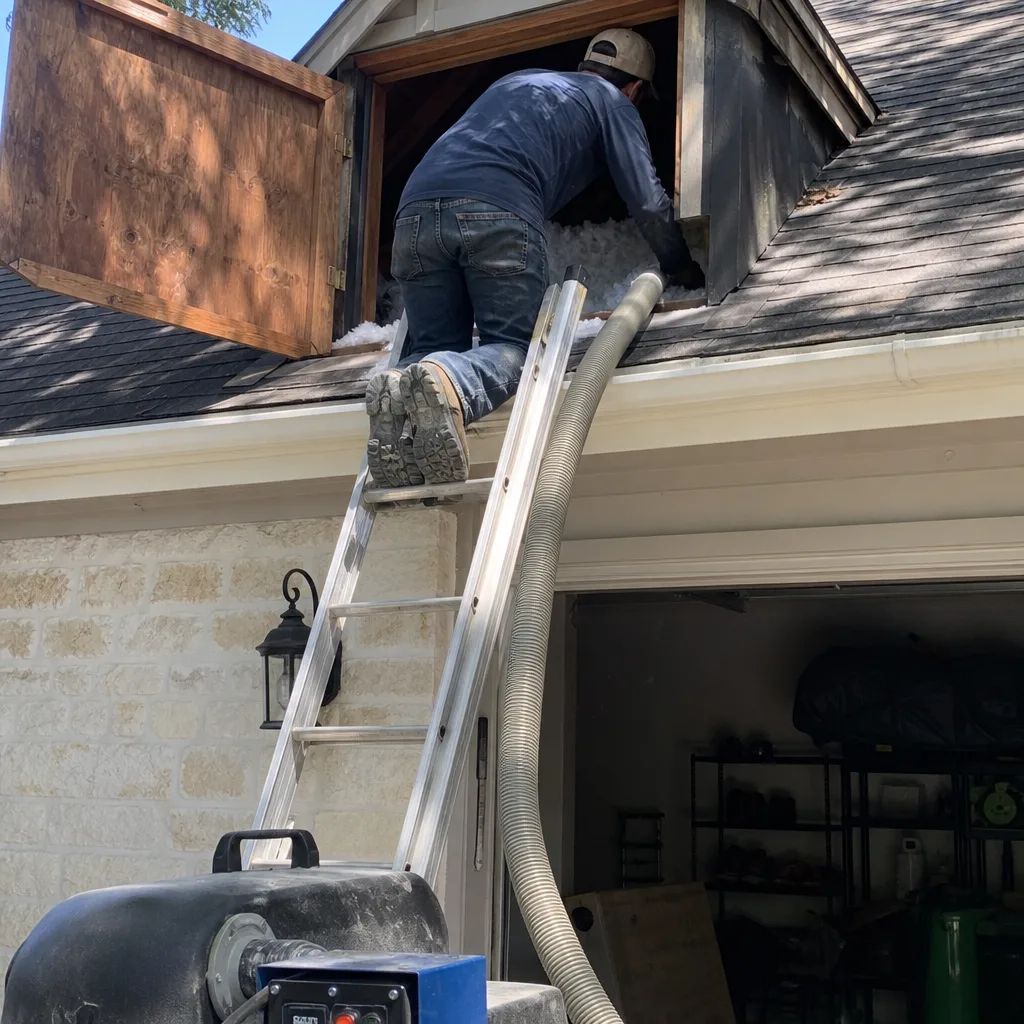 After
AfterReplacement Cost & What’s Included
For a typical Georgetown attic, partial replacement of failed Icynene sections runs $1,800 to $3,400; full re-spray after removal runs $4,200 to $7,200 depending on square footage and whether we are working around stored items or a finished floor. The price includes removal of degraded material to the substrate, repair of the air-sealing layer at top plates and penetrations, re-spray to the specified thickness, and a post-job blower-door test with published before-and-after numbers.
What drives the range: attic accessibility (steep 12/12 pitches common in the Paloma Lake area add labor), whether we are matching existing thickness or upgrading, and how much contaminated material needs full removal versus localized cut-and-replace. Every job gets a Written Price Before Any Work Starts, flat and fixed, plus a Documented Photo Record showing pre-condition, mid-process, and finished work. Our 365-Day Done Right Promise applies; if the blower-door number does not improve, we figure out why and fix it.
DIY or Call Us?
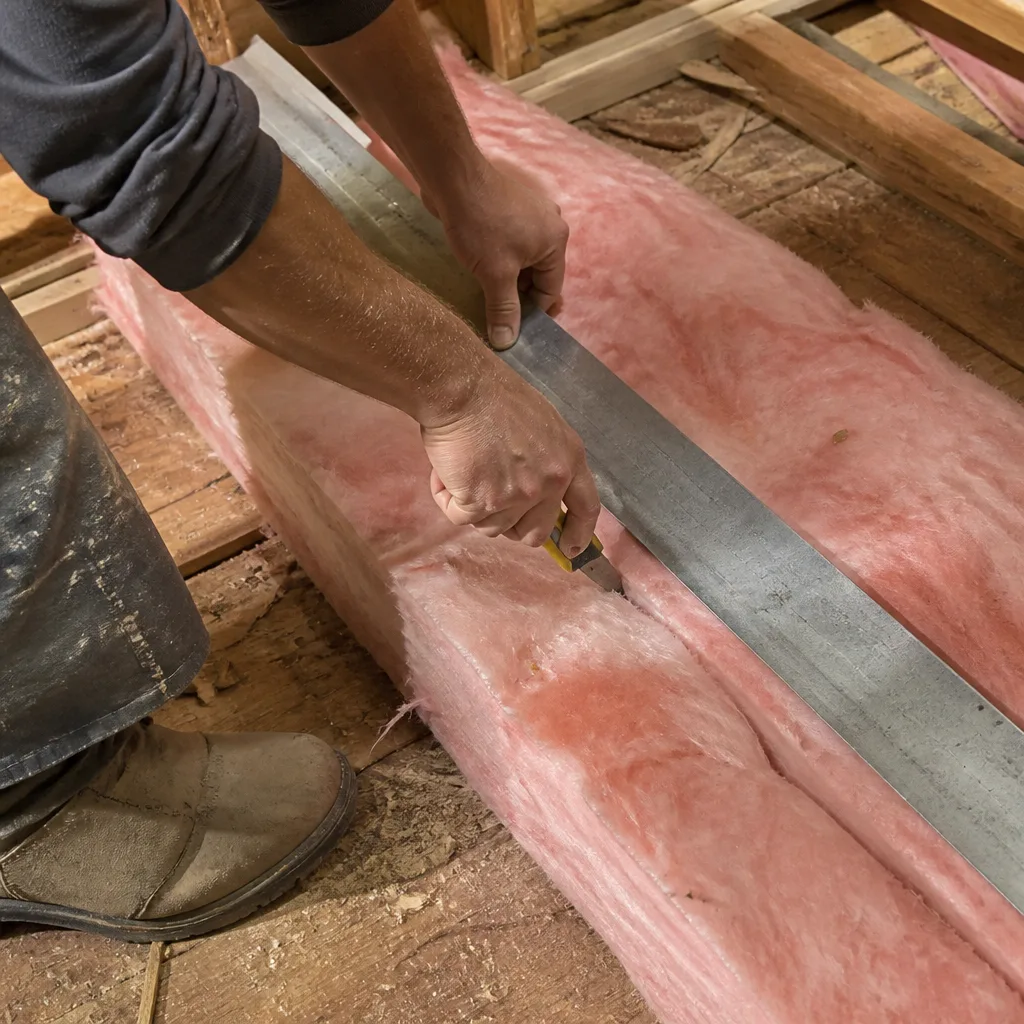
There is no safe DIY path for spray foam removal or re-application. The two-component chemistry requires controlled temperature, precise ratio, and full respiratory protection; off-ratio foam fails structurally and can off-gas indefinitely. What you can check safely: confirm your attic vents are not blocked, verify bathroom and kitchen exhaust ducts terminate outside (not into the attic), and look for obvious roof leaks from the hatch with a flashlight. If you find crumbling, discolored, or wet foam, stop there. The material may contain trapped moisture or degraded isocyanates that are not safe to disturb without ventilation and PPE. Call (254) 970-2136; we will inspect, photograph what we find, and give you a written price before any work starts.
FAQs
Properly installed and protected from UV and bulk moisture, Icynene spray foam lasts 25 to 30 years. In Georgetown’s climate, the bigger risk is not the foam itself but what happens around it: roof leaks, disconnected ducts, and unsealed penetrations that let humidity attack from the edges. We have seen 6-year-old installations fail because the attic was never properly air-sealed first, and 20-year-old foam still performing because the envelope was tight. Call (254) 970-2136 for an inspection and exact assessment.
Localized damage can be cut out and patched if the surrounding foam is dry, firmly adhered, and passes a probe test. If the failure is widespread, involves moisture intrusion, or shows hydrolytic degradation, partial replacement usually turns into chasing symptoms; full removal and re-spray is the honest recommendation. We will show you thermal images and moisture-meter readings so you can see the boundary between sound and failed material. Call (254) 970-2136 for a free second opinion on any written estimate.
Most residential attic jobs in Georgetown take one to two days: half a day for removal and surface prep, half a day for spray application and curing, plus the blower-door test. Larger attics or those with extensive storage require a second day. We do not rush the cure; re-occupancy timing depends on ventilation and weather, and we will give you a written schedule with your price.
We stock Icynene LD-C-50 and MD-R-200 on our truck, along with equivalent formulations from Demilec and CertainTeed. Same-day inspection and quote is standard; material availability for the actual spray depends on job size and whether your specification requires a custom order. Most Georgetown residential jobs can be scheduled within three to five business days of written approval.
Written by Wes Okafor, Owner, Topside Attic Insulation Georgetown at Topside Attic Insulation Georgetown, serving Georgetown and nearby areas.