
Rockwool Radiant Barrier Installation: The Georgetown Owner’s Guide
Rockwool radiant barrier installation in Georgetown typically runs $2,800-$4,600 for a 2,000-square-foot attic when paired with proper air sealing, and most jobs we stock are completed in a single day. We carry Rockwool Comfortboard 80 and Comfortboard 110 rigid boards alongside reflective foil assemblies, and we won’t install either until the attic floor is foam-sealed and the blower-door baseline is recorded. Most homeowners in Georgetown realize something’s wrong when their upstairs bedrooms won’t cool below 78°F even after the AC runs continuously, or when they pull down the attic ladder and feel a wall of heat that hasn’t been that bad in previous summers.
Which Rockwool Models This Applies To
Rockwool’s radiant barrier applications center on two rigid board lines we install in Georgetown attics: Comfortboard 80, a 6.0 pcf density board rated for exposed interior applications, and Comfortboard 110, the denser 8.0 pcf variant used where mechanical protection matters. Both are foil-faced on one side; the facing is the radiant barrier, not the board itself, which confuses some owners who ordered “Rockwool radiant barrier” and expected a standalone reflective product.
Identification is straightforward if you know where to look. The foil facing carries a printed lot code and density marking near one corner. Comfortboard 80 runs 2 inches thick in the standard attic application; Comfortboard 110 is often spec’d at 1.5 inches for headspace-constrained attics in older Georgetown neighborhoods like the University Avenue corridor. The critical compatibility gotcha: Comfortboard 80’s foil facing is not designed for exterior exposure, and we’ve found three Georgetown installations where a handyman installed it roof-side, facing outward. The facing delaminated within 18 months. Comfortboard 110 with its heavier foil laminate is the correct choice for that orientation.
OEM Rockwool foil-faced board versus aftermarket equivalents: we stock both. Johns Manville AP Foil-Faced and CertainTeed CertaPro board are compatible in R-value and density, but the foil emissivity rating differs. Rockwool’s factory facing tests at 0.03 emissivity; quality aftermarket runs 0.05. That two-hundredths difference matters less than installation quality, in our experience, but we quote both and let the owner decide. We do not stock Reflectix as a primary radiant barrier material, though we keep it for duct-wrap repairs where flexibility matters.
Signs Your Rockwool Radiant Barrier Installation Is Failing
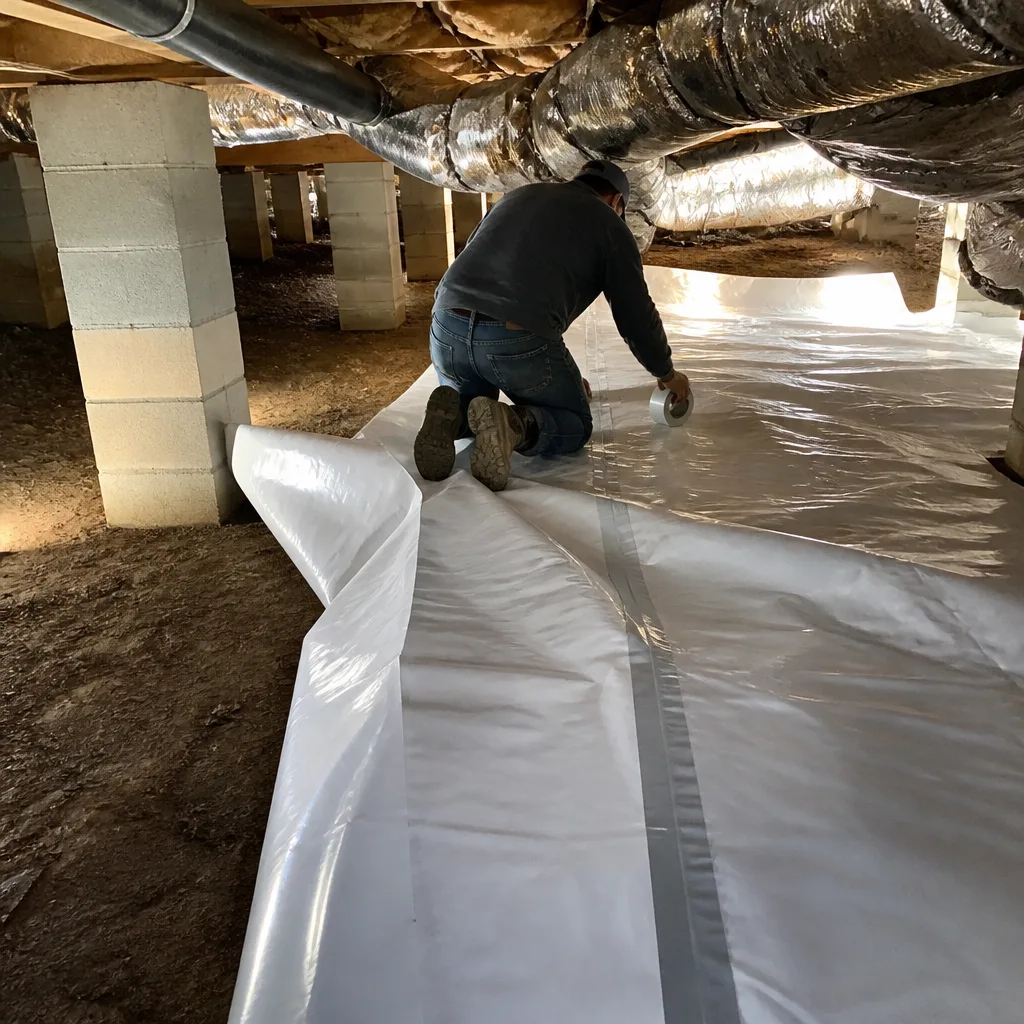
- Upstairs rooms stay hot past 10 p.m. The radiant barrier foil has likely pulled away from the rafters or developed gaps at the ridge, letting roof-deck heat radiate directly into the attic air. In Georgetown’s August heat, a compromised barrier lets attic temperatures climb past 150°F.
- Your summer electric bill jumped 20% or more year-over-year with no rate change. This usually means the barrier is intact but was installed over an unsealed attic floor. Conditioned air leaks upward, the barrier traps it against the roof deck, and your AC works overtime. We see this constantly in 2015-2019 builds where the builder prioritized visible insulation over air sealing.
- Foil facing is visible from the attic hatch, but it’s dusty or oxidized. A clean radiant barrier reflects; a dusty one absorbs. Georgetown’s caliche dust gets into attics through soffit vents and settles on horizontal foil surfaces. The facing hasn’t failed, but it’s no longer doing its job. Cleaning is impractical; replacement or addition of a vertical (rafter-mounted) barrier is the fix.
- You find sections of foil lying on top of your blown-in insulation. Staples pulled out, or the installer used the wrong fastener for the substrate. This is common where Rockwool Comfortboard was fastened to roof trusses with roofing nails instead of the specified cap nails or washer-head screws.
- Moisture staining on the ceiling below the attic, but no roof leak. The barrier was installed without proper ventilation gaps, or it was run continuously across the ridge without a vent channel. Warm, humid Georgetown air hits the cool foil, condenses, and drips. We’ve traced this pattern to four installations in the Teravista area where the barrier was treated as a vapor barrier rather than a radiant reflector.
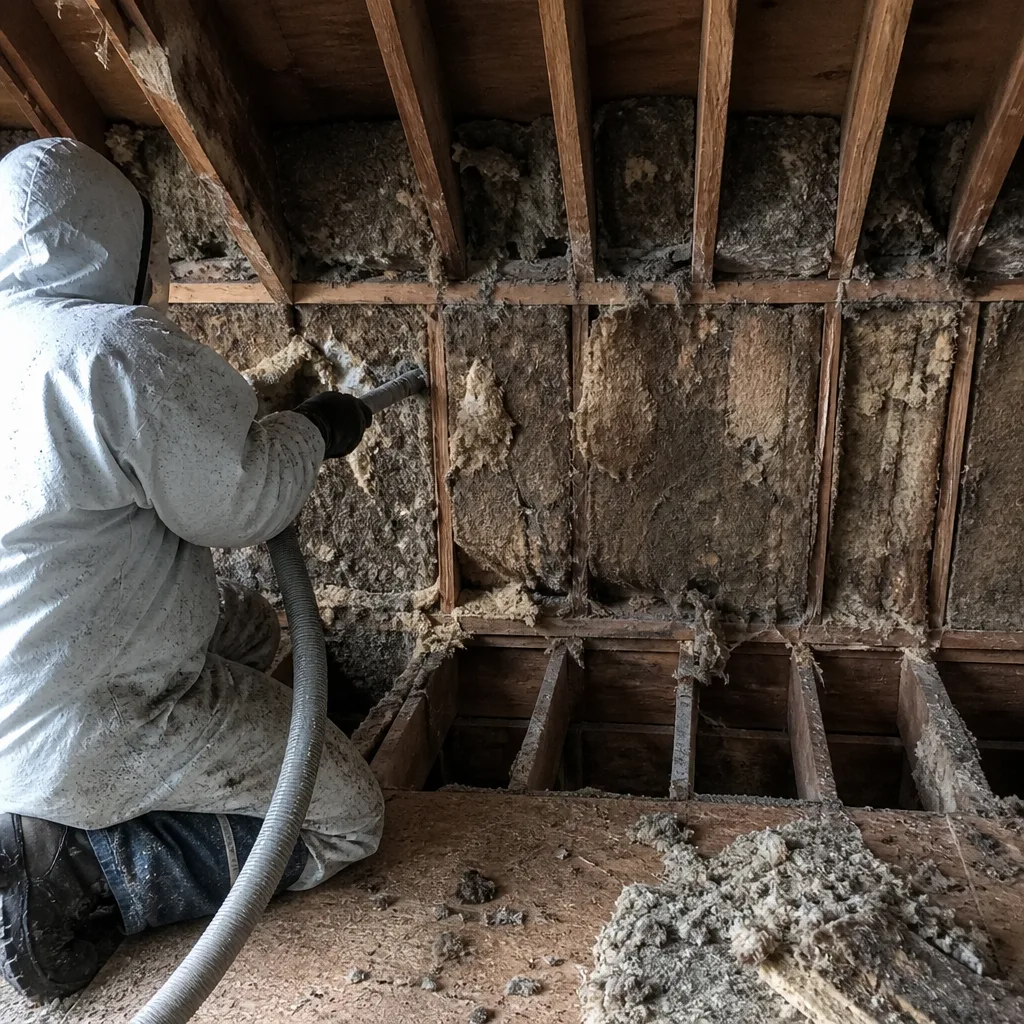 Before
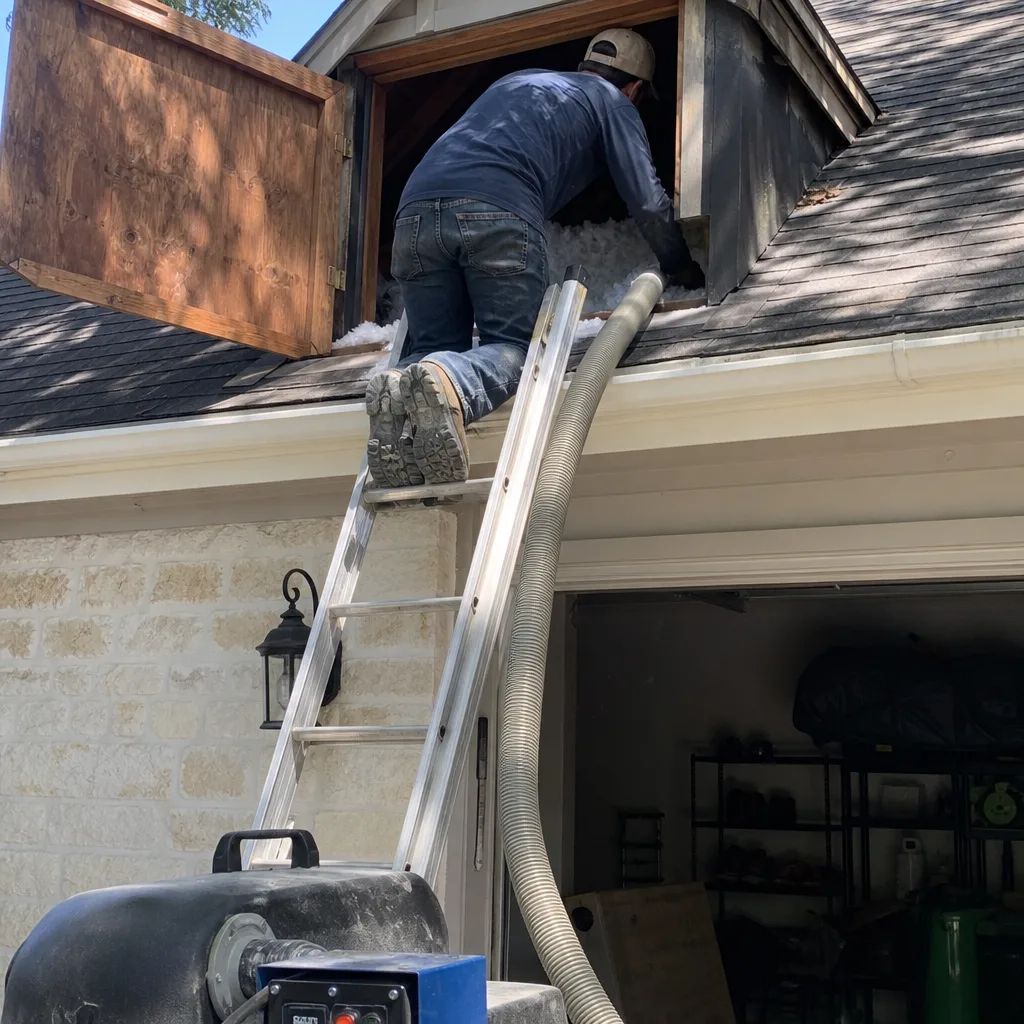 After
AfterReplacement Cost & What’s Included
Most Rockwool radiant barrier replacements in Georgetown fall between $2,800 and $4,600 for a complete attic, with smaller partial repairs starting around $1,200. The range depends on three factors: whether we’re removing failed material (adds labor and disposal), whether the attic floor needs air sealing first (it usually does), and whether we’re working around stored belongings or a finished floor.
Our price includes the Rockwool foil-faced board or equivalent, all fasteners rated for the application, foam sealant for top plates and penetrations, and the blower-door test to document the before-and-after. Under Haven Standard Clause 1, you get the written price before anyone lifts a tool, a written scope, and a written warranty. The 365-Day Done Right Promise applies. We also provide a Documented Photo Record of the completed work and, on every job, the before-and-after blower-door numbers so you can verify the air-sealing result in a single figure.
Materials are sourced from our regular suppliers, including Rockwool, with no proprietary lock-in. If your original installation used a different brand’s foil-faced board, we match or improve the performance spec and tell you exactly what changed.
DIY or Call Us?
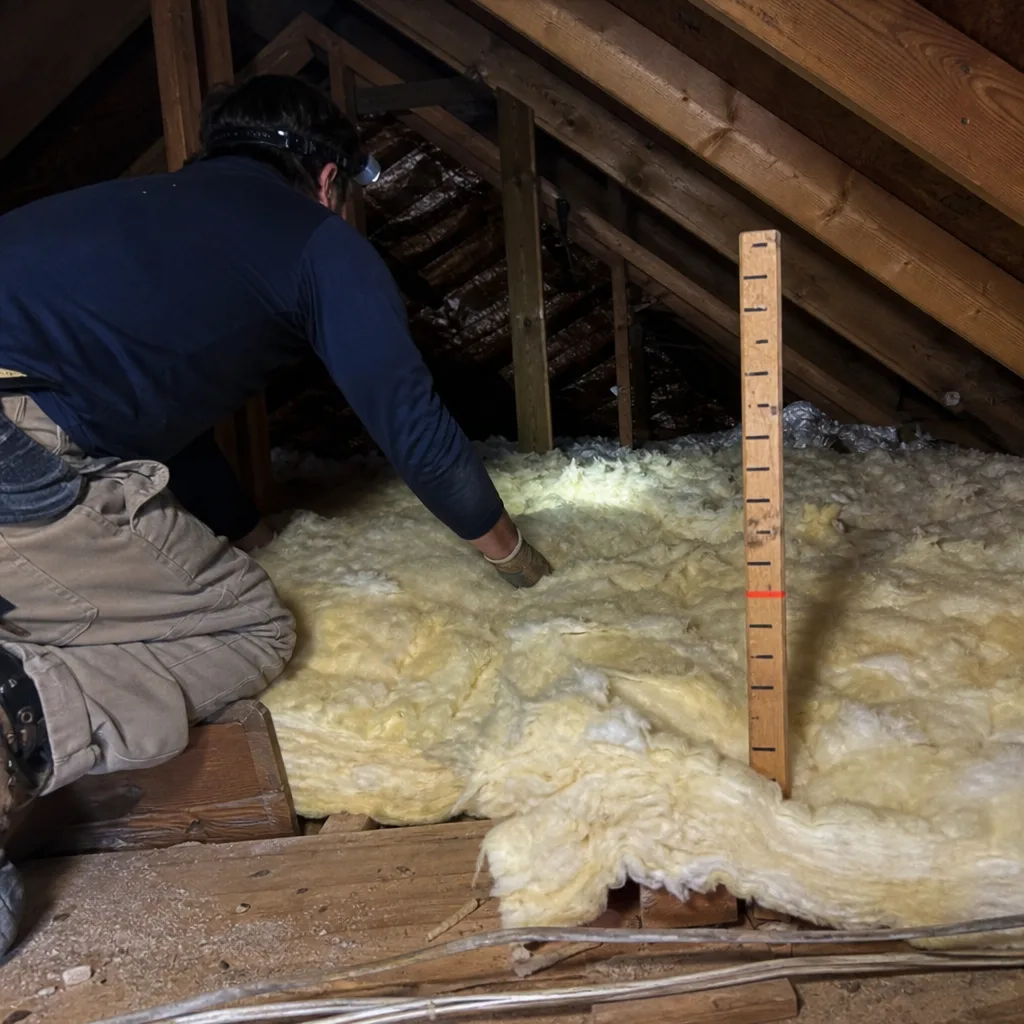
There’s a safe middle ground here, and then there’s where DIY goes wrong. An owner can safely check whether the foil facing is still attached, look for obvious gaps at the ridge, and verify that attic vents aren’t blocked. Do this in early morning; Georgetown attics above 110°F make clear thinking impossible.
Where DIY fails: working on rafters near the ridge involves height and angle hazards that compound with heat stress. Removing failed facing without damaging adjacent roofing or electrical runs takes experience. Most critically, installing new barrier without first sealing the attic floor is worse than doing nothing, because you’ve just built a heat trap over a leaky ceiling. The Rockwool boards are dense and unwieldy; a 4×8 sheet of Comfortboard 110 weighs 58 pounds and will crack if mishandled at the edges.
Seal the holes first. Then we talk about R-value. Call (254) 970-2136 for a free estimate and a written price before any work starts.
FAQs
In Georgetown’s climate, a properly installed Rockwool foil-faced barrier lasts 20-25 years, though the facing’s reflectivity degrades measurably after 15 years due to dust accumulation and oxidation. Attics near the San Gabriel River corridor with higher humidity may see faster facing degradation. Call (254) 970-2136 for an exact quote on replacement timing - estimates are free.
Small sections of detached facing can be re-fastened if the substrate is sound and the foil isn’t oxidized, but partial repairs rarely match the original performance because the seams can’t be sealed to factory standards. We assess this on every job and quote both options honestly. Call (254) 970-2136 for an exact quote - estimates are free.
A full replacement on a 2,000-square-foot attic takes one day if the attic is clear and the air sealing is straightforward; two days if we’re removing failed material and working around stored items or a finished floor. We stock Rockwool Comfortboard on our trucks for Georgetown jobs, so material delays don’t happen. Call (254) 970-2136 to schedule - estimates are free.
Yes. We keep Comfortboard 80 and 110 in common thicknesses on our Georgetown-area trucks, along with compatible fasteners and foil tape. For specialty thicknesses or large commercial quantities, we pull from our Austin supplier with next-day availability. We are an independent service provider, not affiliated with Rockwool. Call (254) 970-2136 for an exact quote - estimates are free.
Written by Wes Okafor, Owner, Topside Attic Insulation Georgetown at Topside Attic Insulation Georgetown, serving Georgetown and nearby areas.