
Rockwool Spray Foam Insulation in Georgetown: What to Know First
We provide independent Rockwool spray foam insulation in Georgetown, with most residential jobs completed in one day and pricing delivered in writing before any work starts. Typical open-cell spray foam jobs in Georgetown attics run $2,800-$5,200 for a 2,000-square-foot home, closed-cell runs higher at $4,500-$8,000, and we will not quote either without first sealing every top plate and penetration - a blower-door test documents the difference. This page is for Georgetown homeowners who already have Rockwool batt or board insulation and need spray foam added for air sealing, thermal bridging fixes, or rim joist work in Sun City, Serenada, or along the San Gabriel River corridor where humidity swings are sharp. Call (254) 970-2136 for a free estimate with a written price.
How Rockwool Products Fail - and How We Fix Them
- Rockwool Comfortbatt in kneewalls compresses and gaps. The 3.5-inch and 5.5-inch batts are rated at R-15 and R-23, but in Georgetown’s 140°F summer attics they sag in kneewall cavities after 4-6 years, leaving a 2-inch air gap at the bottom. We remove the compressed batts, air-seal the kneewall framing with open-cell spray foam at R-13 per inch, then reinstall Comfortbatt only where it will stay supported - or we skip it entirely and use full spray foam if the cavity depth allows.
- Rockwool Comfortboard 80 on rim joists traps moisture at the wood interface. The rigid boards are vapor-permeable, which works in dry climates, but Georgetown’s spring humidity spikes and clay-heavy soils wick moisture into rim joist bays. We see black staining at the board-wood contact point in homes built 2015-2020, especially in the Berry Creek and Rancho Sienna areas. Our fix: remove the board, treat any wood with antimicrobial if needed, then apply closed-cell spray foam at 2 inches minimum - R-14 and a vapor retarder in one pass.
- Rockwool AFB (Acoustical Fire Batts) in garage ceilings lose adhesion from duct vibration. AFB is lighter than Comfortbatt, and in Georgetown garage ceilings with HVAC ducts running through, the 24-inch on-center framing lets the batts drop within 3 years. We see this in homes near the airport corridor where slab movement is more pronounced. We secure the remaining batts with metal strapping, then spray open-cell foam across the entire garage ceiling at 5.5 inches for R-22 and mechanical lock - no more gravity failures.
- Rockwool Safe ‘n’ Sound in interior walls gets removed during re-piping, never properly replaced. Georgetown’s hard water drives repipe jobs in 1990s builds, and plumbers pull Safe ‘n’ Sound to access pipes, then stuff fiberglass back in. The acoustic rating drops from STC 52 to STC 38, and the fire rating is compromised. We document the original placement with photos, then reinstall Safe ‘n’ Sound or switch to open-cell spray foam at full cavity depth if the homeowner wants both air sealing and sound control.
- Rockwool Toprock DD on flat roofs pond water at fasteners. The dual-density boards are specified for commercial flat roofs, but we’ve found them on Georgetown residential additions where the contractor used leftover commercial stock. The facing tape fails at 180°F roof deck temps, water enters at fastener penetrations, and the board delaminates. We strip to deck, seal with closed-cell spray foam at 3 inches minimum, and add a proper slope with additional foam before the roof membrane goes back - no more ponding, no more Toprock DD.
Our Rockwool Spray Foam Insulation Process
- 1
Call and scheduling. A live person answers, 24/7. We book a diagnostic visit with a named technician; you get a text when they are en route - Haven Standard: Arrive on schedule.
- 2
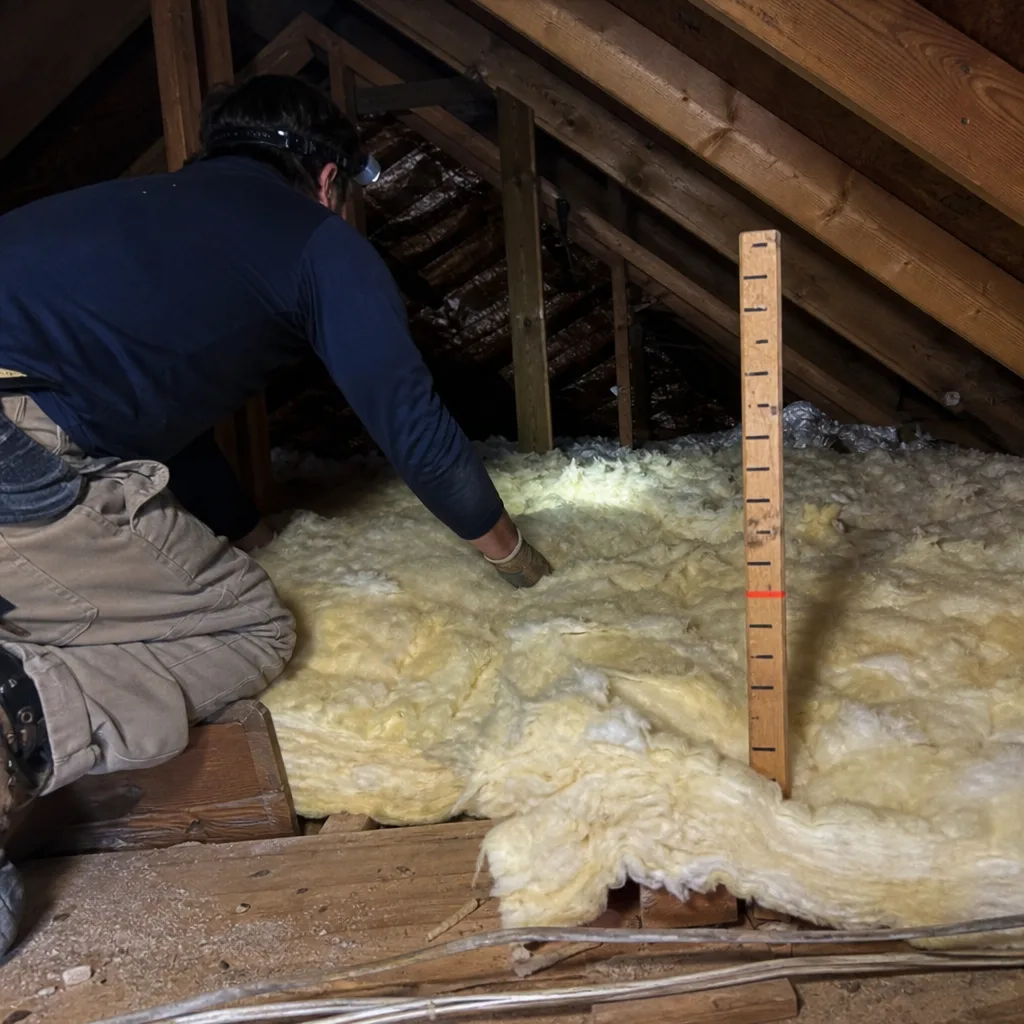
Blower-door test and thermal imaging. We pressurize the house and record CFM50 - the number that shows, in one figure, how much air your building envelope is losing. Thermal imaging finds the Rockwool gaps the blower door confirms. No exceptions, even on apparent “simple” jobs.
- 3
Written price and scope. We specify OEM Rockwool replacement batts or boards if needed, or quality aftermarket foam from Demilec or Icynene if spray foam is the better fix. The price is flat, the scope is written, the warranty is written - Haven Standard Clause 1 - before anyone lifts a tool.
- 4
Air sealing first, then insulation. Top plates, can lights, wire penetrations, duct boots - all foam-sealed and documented with photos. Seal the holes first. Then we talk about R-value.
- 5
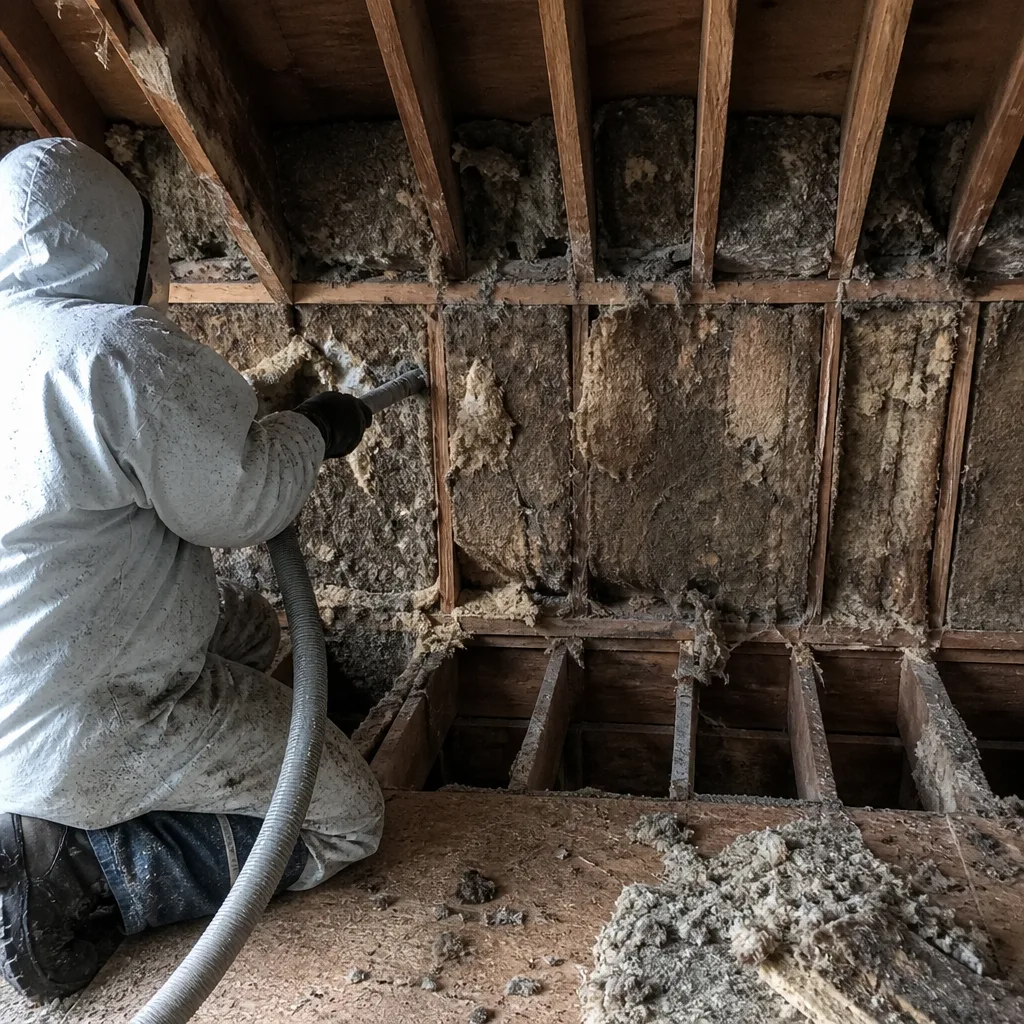
Spray foam application and post-test. We apply open-cell or closed-cell per the written scope, then run a second blower-door test. You get the before-and-after CFM50, the post-spray foam depth measurements, and the Documented Photo Record before the crew leaves.
- 6
Cleanup and 365-Day Done Right Promise. We haul away old Rockwool. If the CFM50 reduction doesn’t match what we promised in writing, we return and make it right - backed by the written warranty you already have in hand.
 Before
 After
AfterWhat Rockwool Spray Foam Insulation Costs in Georgetown
Most Rockwool-to-spray-foam conversions in Georgetown fall in these ranges for a typical 2,000-square-foot home:
| Job Type | Price Range | What Moves It |
|---|---|---|
| Open-cell spray foam, attic (5.5 in.) | $2,800-$5,200 | Attic square footage, existing Rockwool removal, decking condition |
| Closed-cell spray foam, rim joists | $1,800-$3,400 | Linear feet of rim joist, moisture remediation needs, basement vs. crawl space access |
| Closed-cell spray foam, roof deck (3 in.) | $4,500-$8,000 | Roof pitch, decking repairs, whether Rockwool Toprock DD must be removed |
| Garage ceiling, open-cell (5.5 in.) | $1,200-$2,400 | Garage size, duct relocation, AFB removal and disposal |
| Rockwool removal only (per sq. ft.) | $1.50-$3.00 | Accessibility, contamination (rodent/soiled), disposal fees |
Georgetown’s clay soil and summer attic temps above 140°F mean we see more moisture-compromised Rockwool than contractors in drier markets - that remediation adds $400-$900 if wood treatment is needed. We also service Reflectix radiant barrier systems where they were paired with Rockwool and need reintegration after spray foam. Every estimate is free, every price is written, and we offer a Free Second Opinion on any written estimate you bring us. Call (254) 970-2136.
Why Georgetown Homeowners Call Topside Attic Insulation Georgetown for Rockwool Work
We’ve sealed and insulated 9,000+ homes since 2016, and the ones that stick with us are the homeowners who read their three-star reviews as carefully as their five-star ones. They want the blower-door number, not a handshake. Wes Okafor and our crew have worked Rockwool systems from Sun City Georgetown’s patio homes to the custom builds backing the San Gabriel River, and we publish before-and-after pressurization readings on every applicable job - the measured proof of what you paid for. Our materials come from Owens Corning, Johns Manville, Knauf, Rockwool, CertainTeed, Icynene, Demilec, and GreenFiber; no proprietary lock-in means we specify what performs, not what we’re obligated to sell. Background-checked, uniformed technicians. Calls answered by a live person, 24/7. The 365-Day Done Right Promise applies to all completed work, and the written scope and warranty are in your hand before the foam gun charges.
FAQs
No - Rockwool’s limited warranty covers manufacturing defects in the original product, not how it’s combined with other materials. As an independent Rockwool service provider, we document existing Rockwool condition with photos before spray foam is added, so any future warranty claim on the original batts or boards has a clear baseline. Call (254) 970-2136 and we will walk through your specific installation - estimates are free.
Closed-cell spray foam with an intumescent coating meets the same 1-hour assembly rating as Rockwool Comfortboard in most Georgetown residential applications; open-cell requires a thermal barrier in occupied spaces. We specify the code-compliant assembly in the written scope before work starts, and we pull permits when the city requires them - Georgetown’s building department has specific trigger thresholds for spray foam in habitable attics. Call (254) 970-2136 for the exact requirement on your job.
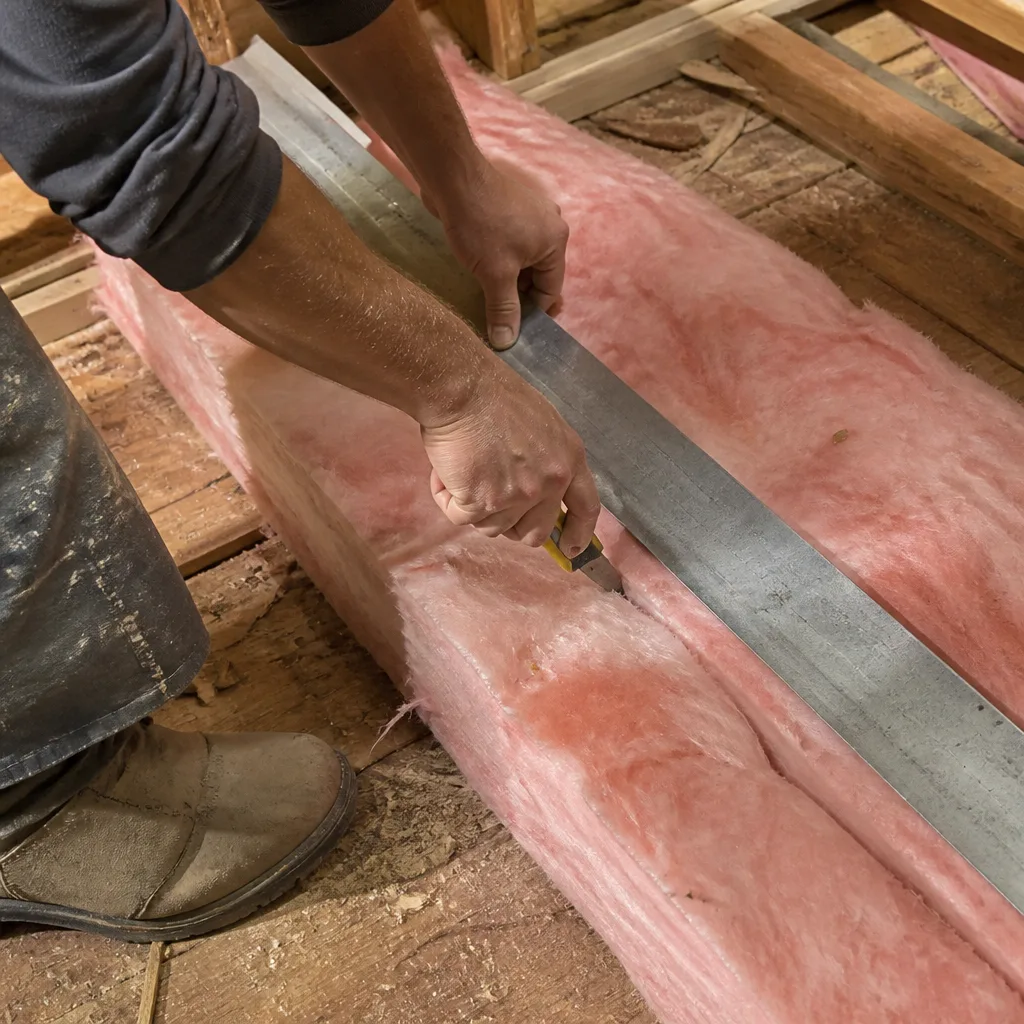
Spray foam over existing Rockwool is almost never the right move - the foam needs direct substrate contact to adhere and achieve rated R-value, and compressed or moisture-compromised Rockwool creates voids. Removal adds $1.50-$3.00 per square foot, but skipping it means redoing the foam in 3-5 years. We will show you the thermal images and quote both paths in writing. Call (254) 970-2136 for a free estimate.
Most Rockwool-to-spray-foam conversions are scheduled within 3-5 business days; emergency air-sealing for active moisture intrusion can be same-day. We answer calls 24/7 with a live person, and you get a text when your named technician is en route. Call (254) 970-2136 to book - estimates are free and the price is written before any work starts.
We stock common Rockwool batts and boards for replacement during spray foam conversions, but we do not claim exclusive or preferred distributor status - we source from the same supply houses as other Georgetown contractors. For discontinued lines like Toprock DD in residential sizes, we specify quality aftermarket spray foam alternatives from Demilec or Icynene with equivalent or better performance, documented in the written scope. Call (254) 970-2136 to confirm availability for your specific Rockwool product.
Written by Wes Okafor, Owner, Topside Attic Insulation Georgetown at Topside Attic Insulation Georgetown, serving Georgetown and nearby areas.