
Rockwool Crawl Space Encapsulation & Vapor Barrier in Georgetown: What to Know First
As an independent Rockwool service provider, we handle crawl space encapsulation and vapor barrier work for Georgetown homeowners with Rockwool Comfortbatt, Comfortboard, or AFB installed in their floor assemblies. Most jobs run same-day to two days depending on moisture damage extent, and we publish a written price before any work starts - no exceptions. If you’re seeing sagging batts, musty odors, or standing water beneath your Rockwool-insulated floors in Georgetown’s clay-heavy soils, call (254) 970-2136. We answer live, 24/7.
How Rockwool Products Fail - and How We Fix Them
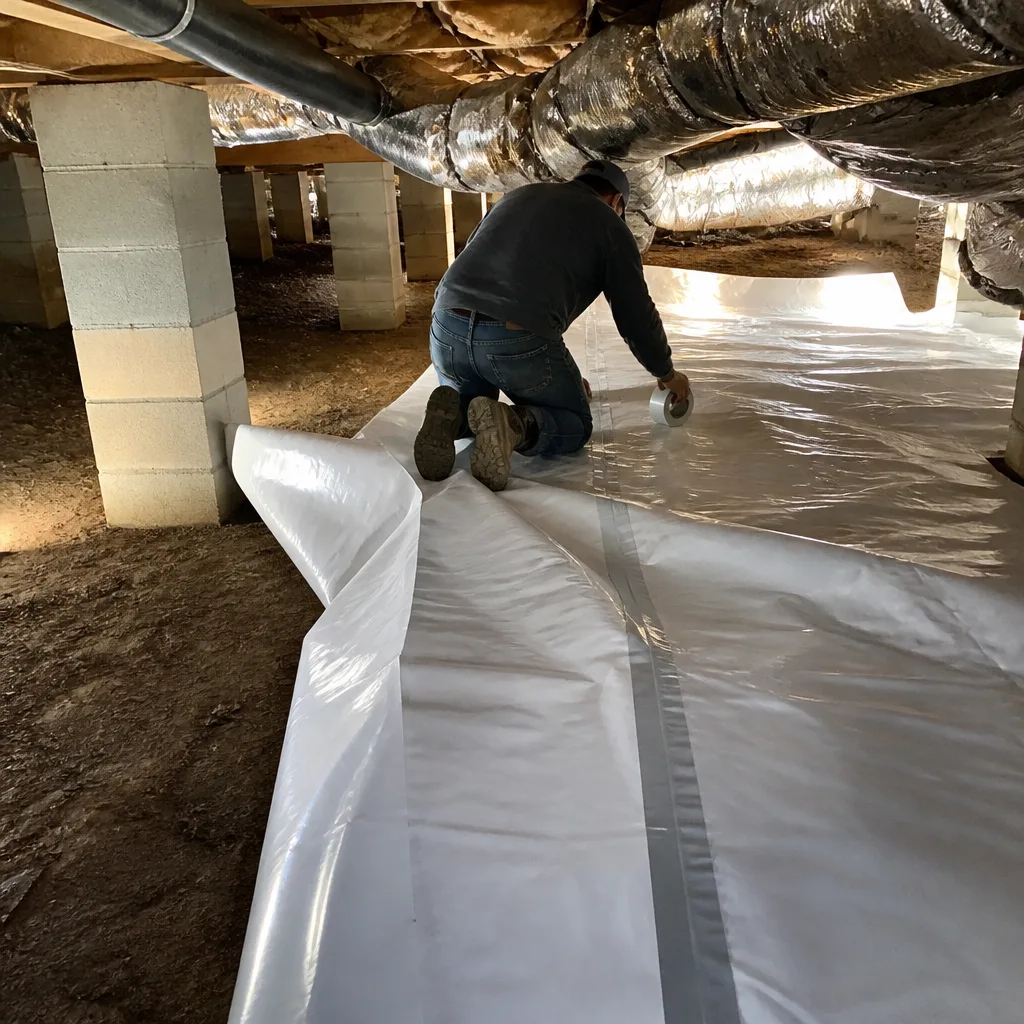
- Comfortbatt R-30 floor joist batts lose loft in Georgetown’s seasonal humidity swings. Rockwool’s stone wool resists mold, but the kraft facing on Comfortbatt R-30 delaminates when relative humidity in the crawl space stays above 70% for weeks - common in Georgetown from March through October. We remove the degraded facing, air-seal the subfloor with closed-cell spray foam at rim joists and penetrations, then reinstall the batts with mechanical fasteners and a proper vapor barrier at the ground plane so the facing never sees that moisture load again.
- Comfortboard 80 and 110 rigid boards wick water when the vapor barrier fails at seams. These dense boards don’t absorb liquid like fiberglass, but capillary action at cut edges draws water upward if the 6-mil polyethylene ground cover has separated at seams or pierced by rodent activity. We see this frequently in older Georgetown homes near the San Gabriel River corridor where water tables shift seasonally. Our fix: pull the affected boards, replace the ground barrier with 12-mil reinforced polyethylene with overlapped and taped seams, then reinstall or replace boards with edges sealed to the subfloor.
- AFB (Acoustical Fire Batts) installed in floor assemblies collapse when saturated. AFB is designed for interior partition walls, not crawl spaces, yet we find it in Georgetown homes from the 2018-2021 building boom where spec builders used whatever was available. The lower density - 4 lb/ft³ versus Comfortbatt’s 6.5 lb/ft³ - means AFB mats down permanently after even brief water contact. We replace AFB with Comfortbatt R-23 or R-30 depending on joist depth, always after sealing air leaks and installing proper drainage.
- Rockwool batts installed without a ground vapor barrier become a moisture bridge. Stone wool itself doesn’t support mold, but it holds water against wood framing. In Georgetown’s expansive clay soils, hydrostatic pressure pushes moisture through foundation vents during heavy rains. We encapsulate the crawl space completely: 12-mil reinforced liner on walls and ground, sealed seams, dehumidifier sizing for the cubic footage, and only then reinstall Rockwool with proper stand-off from the subfloor where needed.
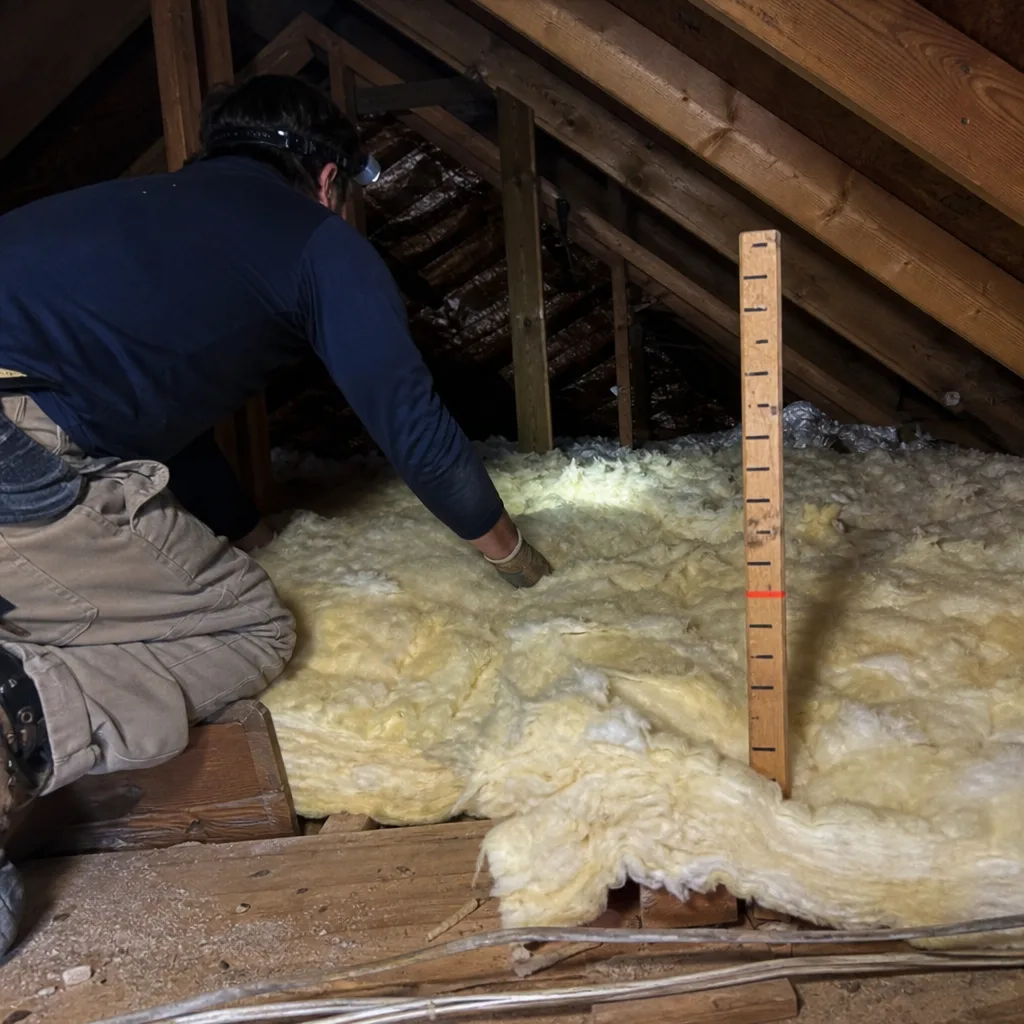
- Retrofit jobs reveal Comfortbatt compressed by previous fiberglass overlays. Homeowners sometimes layer fiberglass over existing Rockwool thinking more is better. The weight compresses the stone wool, reducing its effective R-value by 30-40% and creating a double vapor retarder that traps condensation. We pull everything, inspect for rot, air-seal the subfloor properly, then reinstall a single, correct Rockwool layer with documented R-value verification.
Our Rockwool Crawl Space Encapsulation & Vapor Barrier Process
- 1
Call and schedule. A live person answers. We book a 2-hour arrival window in Georgetown - Sun City to the river corridor - and send a text when the technician is en route.
- 2
On-site inspection with documentation. We photograph the crawl space condition, identify the Rockwool product line and installation method, and run a moisture-meter reading at multiple points. You get a written scope and flat price before anyone lifts a tool - Haven Standard Clause 1.
- 3
Air sealing first, always. Seal the holes first. Then we talk about R-value. We foam-seal rim joists, plumbing penetrations, and electrical chases before touching insulation. On applicable jobs, we run a blower-door test - a pressurization reading that shows, in one number, how much air your building envelope is losing - so you have a baseline.
- 4
Moisture control and insulation. Install or repair the ground vapor barrier, add perimeter drainage if needed, then reinstall or replace Rockwool with correct product for the application. We source from Rockwool, Owens Corning, Johns Manville, Knauf, and others - no proprietary lock-in.
- 5
Verification and closeout. Post-work photos, moisture readings, and on air-sealing jobs, a second blower-door number showing the measured improvement. Written warranty, 365-Day Done Right Promise, and Documented Photo Record delivered before we leave.
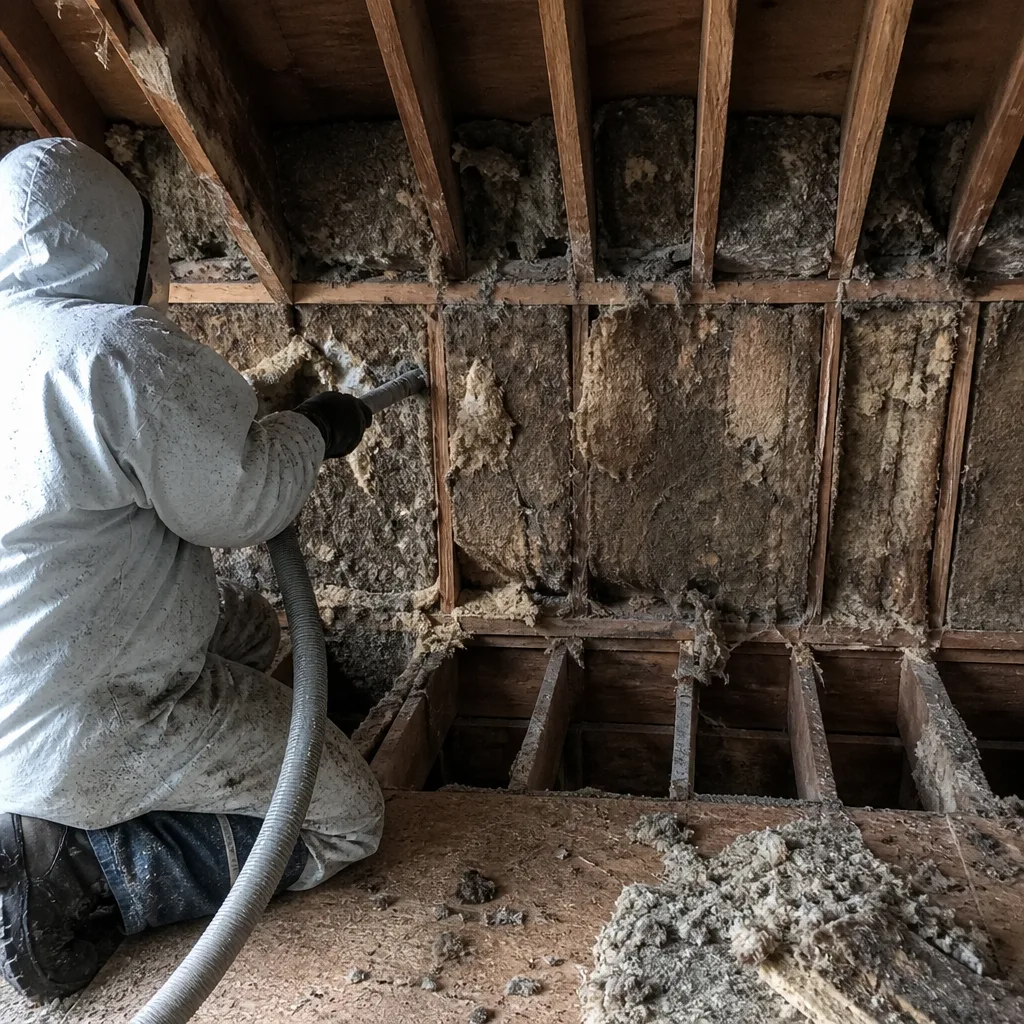 Before
 After
AfterWhat Rockwool Crawl Space Encapsulation & Vapor Barrier Costs in Georgetown
Most Rockwool crawl space jobs in Georgetown fall between these ranges:
- Vapor barrier repair with Rockwool reinstallation: $1,800-$3,200
- Full encapsulation (12-mil ground and wall liner, sealed seams, dehumidifier prep) with Rockwool replacement: $4,500-$7,800
- Air sealing + encapsulation + Rockwool upgrade with blower-door verification: $6,200-$9,500
What moves the price: crawl space height (anything under 18 inches adds labor), extent of wood rot repair needed, whether the existing Rockwool is salvageable, and if we need to install a sump pump for active water management. Homes near the San Gabriel River or in low-lying Georgetown neighborhoods like those off Williams Drive typically need more extensive drainage work. We don’t guess - the written price you get before work starts is the price you pay. Call (254) 970-2136 for a free estimate; bring us any competing written quote and we’ll read it with you.
Why Georgetown Homeowners Call Topside Attic Insulation Georgetown for Rockwool Work
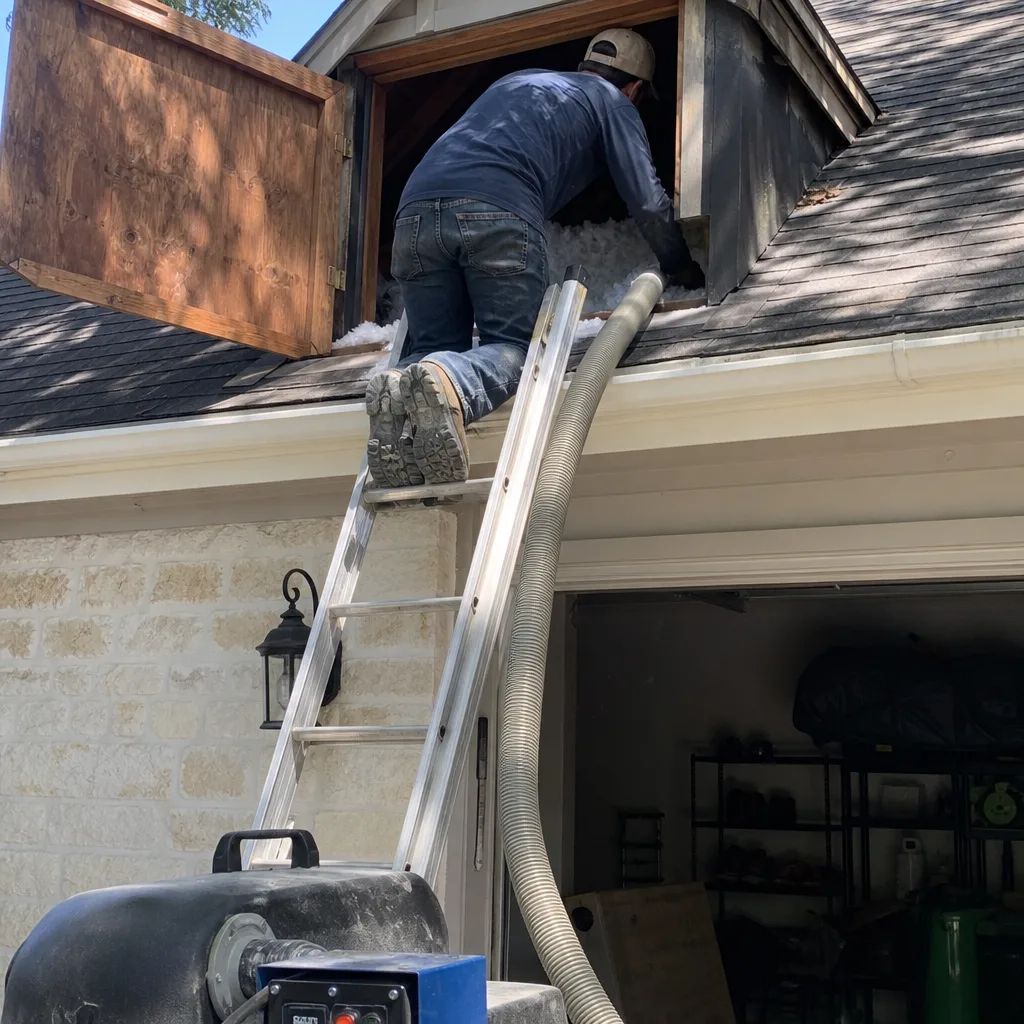
We’ve worked attics and crawl spaces from Sun City Georgetown to homes backing up to the San Gabriel River corridor, and we know how Georgetown’s clay soils and seasonal humidity affect Rockwool performance. Every job gets a written scope, flat price, and Documented Photo Record - no exceptions since 2016. Our technicians are background-checked and uniformed; the person who answers your call at 10 PM is the same live person who dispatched your job. We also service Reflectix and other brands, so if your crawl space has mixed insulation types, we don’t subcontract or guess. The 365-Day Done Right Promise covers all completed work, and we publish before-and-after blower-door numbers on every air-sealing job so you can verify the result yourself.
FAQs
No - Rockwool’s limited warranty covers product defects, not installation by independent contractors. As an independent Rockwool service provider with no manufacturer affiliation, our work doesn’t trigger warranty exclusion. We document the product line and batch where visible for your records. Call (254) 970-2136 if you need help locating your original install documentation.
We stock common R-values for Georgetown jobs and source directly from regional distributors with 2-3 day turnaround on less common densities. We don’t start work until materials are on-site and verified - no partial jobs left open. If your job has timing pressure, mention it when you call and we’ll confirm availability before scheduling.
Repair is cheaper when the batts are dry, uncompressed, and the facing is intact - typically 40-60% less than full replacement. Replacement is necessary when AFB was used (wrong product for crawl spaces), when batts have been wet more than once, or when compression has reduced measured thickness by more than 25%. We tell you which category you’re in during the inspection, with photos, before you decide.
We schedule within 24-48 hours for active water intrusion or structural concerns, and typically within 3-5 days for performance issues without immediate damage. Emergency calls are answered live 24/7 - no voicemail loops. Call (254) 970-2136 and we’ll give you the next available slot with a named technician and text confirmation.
We work on Rockwool, Reflectix, fiberglass, spray foam, and hybrid systems - whatever’s in your crawl space. Mixed systems are common in Georgetown homes with additions or previous partial upgrades. We assess each material’s condition separately and specify replacement or retention in the written scope, with no pressure to standardize on one brand.
Written by Wes Okafor, Owner, Topside Attic Insulation Georgetown at Topside Attic Insulation Georgetown, serving Georgetown and nearby areas.