
Knauf Vapor Barrier Installation: The Georgetown Owner’s Guide
We stock and install Knauf-compatible vapor barrier systems for attics and crawl spaces in Georgetown, with most residential jobs running between $1,200 and $2,800 installed depending on square footage and whether we’re sealing over a dirt crawl space or retrofitting an existing attic floor. Same-day installation is available when you call before noon, and we carry 6-mil and 10-mil reinforced polyethylene rolls on the truck along with Knauf’s Faced Batts with kraft vapor retarder for wall applications. Most Georgetown homeowners discover their vapor barrier has failed when they pull back insulation and find black mold on the underside of the OSB, or when their spring energy bill jumps 30% after humidity starts migrating through a torn or improperly lapped barrier.
Which Knauf Models This Applies To
Knauf manufactures vapor retarder and vapor barrier products across three distinct lines, and matching the right material to your assembly matters more than most contractors admit. The Knauf Insulation Faced Batts with kraft paper vapor retarder are rated at 0.4 perms and belong on the warm-in-winter side of above-grade walls, not in crawl spaces where ground moisture will overwhelm them. For crawl space and attic floor applications, we use Knauf’s unfaced fiberglass paired with a separate 6-mil or 10-mil reinforced polyethylene vapor barrier, or Knauf’s Ecoseal Plus system when we’re treating the rim joist and sill plate as part of the same job.
Identification is straightforward if you know where to look. Faced batts print the perm rating and ASTM C665 compliance on the kraft paper every 24 inches. Unfaced batts carry a yellow Ecose logo and density stamp. The polyethylene sheeting is embossed with “6-mil” or “10-mil” and the ASTM E1745 Class A, B, or C rating. Class A is what we specify for Georgetown’s clay-heavy soils, where capillary wicking is aggressive and the barrier needs to survive minor ground movement without tearing at the seams.
OEM Knauf polyethylene is manufactured to 10-foot widths with reinforced scrim, which reduces seam count in a typical Georgetown ranch by roughly 40% compared to standard 4-foot rolls. We stock both. Aftermarket reinforced poly from Poly-America and Raven meets the same ASTM spec at a lower per-square-foot cost, but the seam tape compatibility varies. We’ve seen failures where a homeowner used generic duct tape on Knauf’s scrim-reinforced edge and the adhesive turned to goo within two summers of Georgetown attic heat. We use Knauf-approved butyl tape or 3M 8067 flashing tape, depending on the substrate.
Signs Your Knauf Vapor Barrier Installation Is Failing
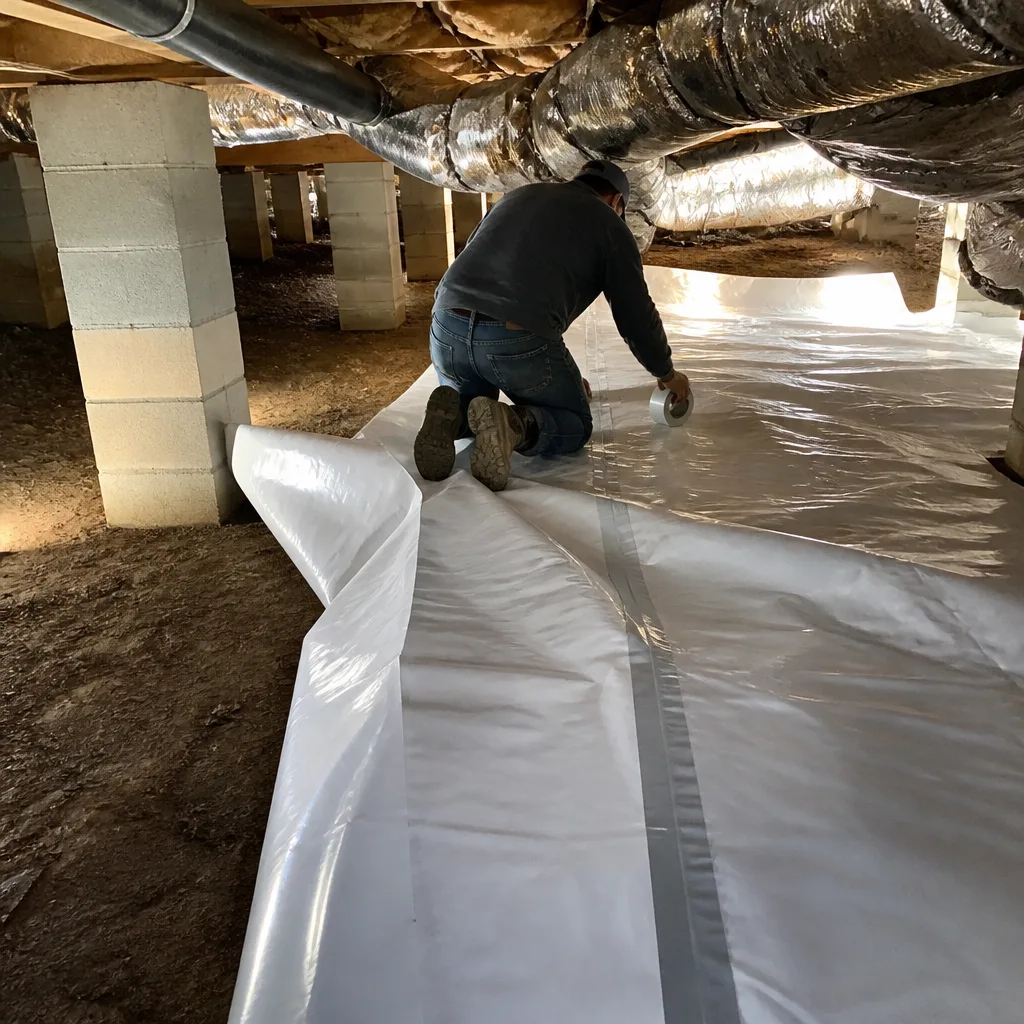
- Condensation pooling on top of the barrier. In Georgetown’s spring and fall, when ground temperatures lag behind air temperatures by 30 degrees or more, a missing or torn vapor barrier lets soil moisture evaporate directly into the crawl space. That moisture hits the cooler floor joists above and condenses. We find this most often in homes north of I-35 built between 2005 and 2015, where builders sometimes skipped the barrier entirely or used 3-mil painter’s plastic that shredded during the first summer.
- Musty odor that worsens after rain. The smell is microbial growth on the wooden subfloor, and it means water vapor is passing through the barrier at a rate higher than the assembly can dry. A properly installed Knauf 10-mil barrier with sealed seams should hold interior relative humidity below 65% even during Georgetown’s March and April wet spells.
- Insulation sagging or falling from floor joists. When fiberglass batts absorb moisture through a failed barrier, the weight increases by 40% or more and the friction fit fails. We’ve pulled saturated batts out of Sun City Georgetown crawl spaces that weighed eight pounds each, double their dry weight, with the vapor barrier torn to shreds by rodents who could smell the mold from outside.
- Wood rot at rim joists. This is the expensive one. The rim joist is the transition point where the vapor barrier meets the wall assembly, and it’s where DIY installations most often fail. In Georgetown’s older homes near the San Gabriel River corridor, we’ve replaced rim joists that rotted through because the barrier was lapped up the wall but never sealed, creating a funnel that concentrated moisture against the sill plate.
- Efflorescence on interior foundation walls. The white powdery deposits are minerals left behind when water vapor moves through concrete, evaporates, and leaves its load behind. If you’re seeing this in a crawl space that supposedly has a vapor barrier, the barrier is either breached, improperly lapped at the seams, or terminated short of the walls.
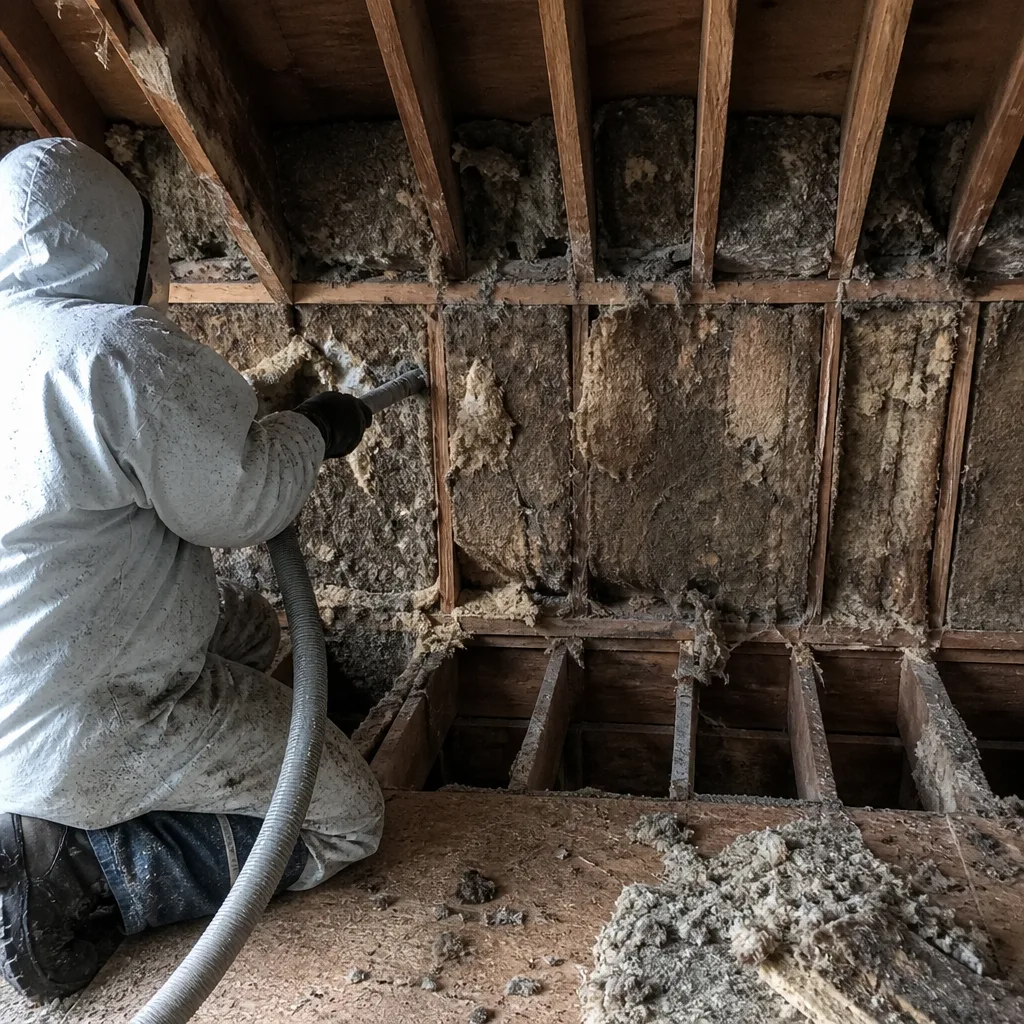 Before
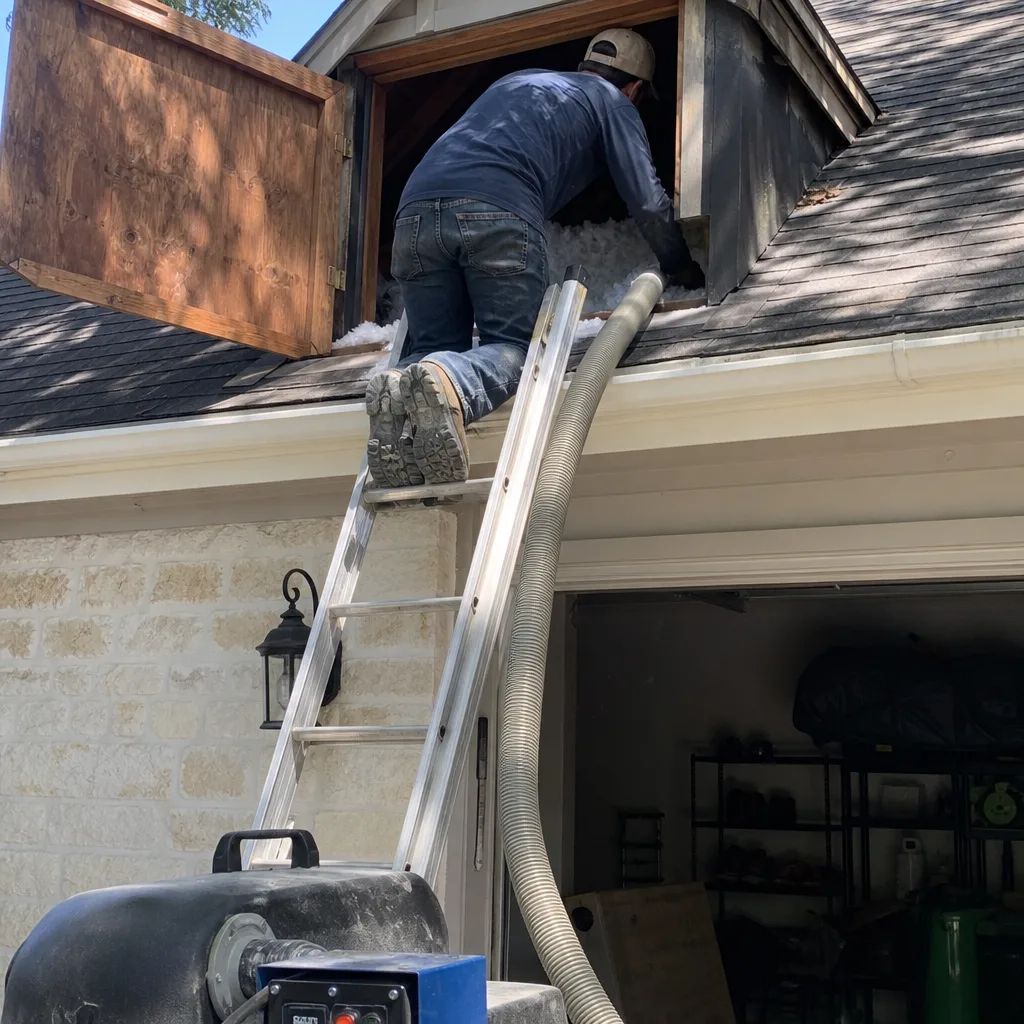 After
AfterReplacement Cost & What’s Included
Most Knauf vapor barrier installations in Georgetown run between $1,200 and $2,800, with the spread driven by three factors: square footage of the crawl space or attic floor, whether we’re removing and disposing of failed existing material, and whether the job includes air sealing of penetrations before the new barrier goes down. A 1,200-square-foot crawl space with clean gravel and no existing barrier is at the low end. A 2,400-square-foot space with mold-affected old batts, rodent damage, and a rim joist that needs sealing before barrier installation is at the high end.
Our price includes the Knauf-specified or equivalent reinforced polyethylene, butyl seam tape, mechanical fastening at walls and piers, and disposal of old material. We do not quote by the square foot over the phone. We measure, photograph the existing condition, and deliver a written price before any work starts. Haven Standard Clause 1: flat price, written scope, written warranty before anyone lifts a tool. The 365-Day Done Right Promise covers installation defects including seam separation and fastening failure. Material defects fall to Knauf’s own product warranty, which we document on your invoice.
On applicable jobs, you’ll receive before-and-after blower-door numbers showing the air-sealing improvement, plus thermal images and a Documented Photo Record of the completed barrier installation. We’ve done this on 9,000-plus homes since 2016.
DIY or Call Us?
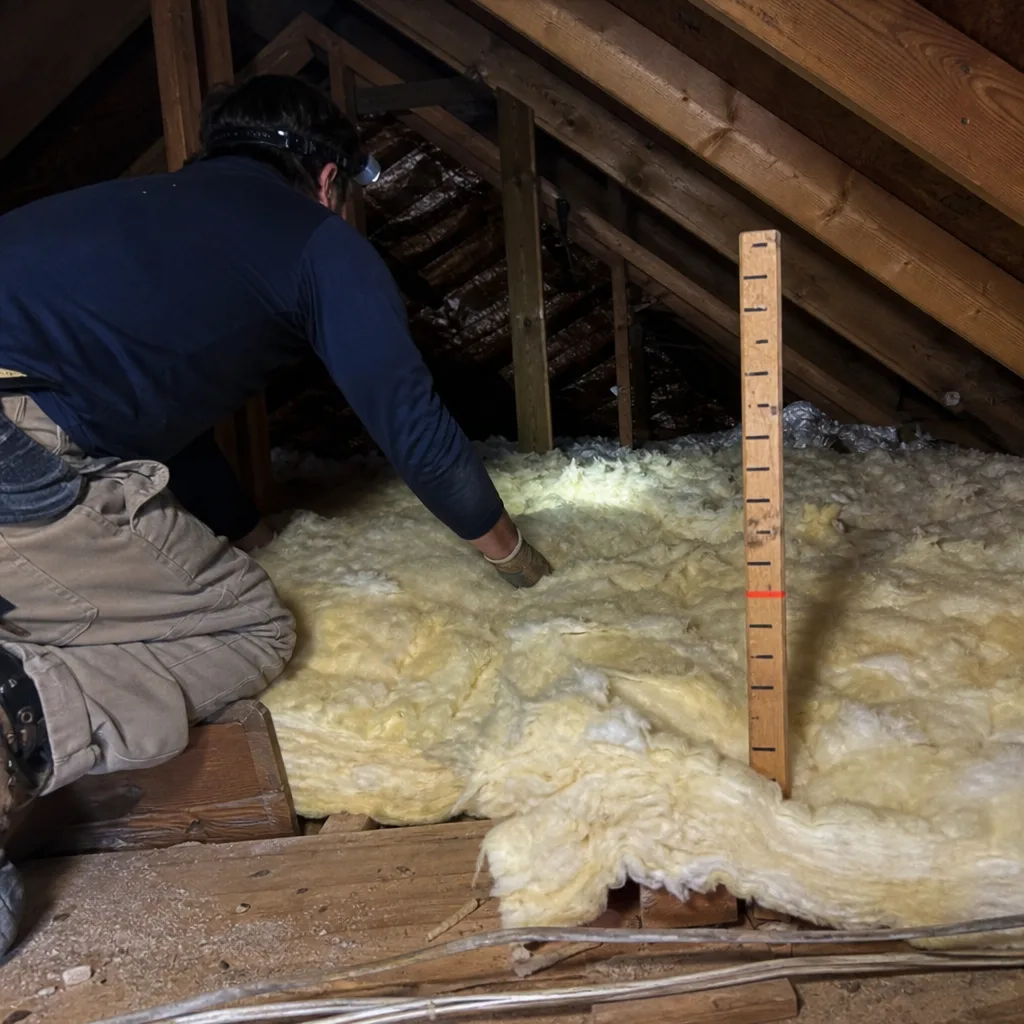
There’s a honest split here, and we’ll give it to you straight. A homeowner can safely inspect their own crawl space for the symptoms above, measure square footage with a tape, and photograph the existing barrier condition to send us for review. What we don’t recommend is cutting and placing the material yourself. The 10-mil reinforced polyethylene is stiff and heavy, 120 pounds or more for a full roll, and the seam sealing requires a clean, dry surface that rarely exists in an active crawl space. More critically, improper lapping at walls and piers creates the exact moisture funneling that causes rim joist rot.
We also won’t install a vapor barrier over an unsealed attic floor or crawl space. Seal the holes first. Then we talk about R-value. That’s the sequence Wes Okafor established when he started this company, and it’s non-negotiable. If you’ve got a written estimate from another contractor that skips the air sealing, bring it in. Our Free Second Opinion includes a line-by-line read with you, no obligation. Call (254) 970-2136 when you’re ready.
FAQs
A properly installed Knauf 10-mil reinforced polyethylene vapor barrier should last 15 to 20 years in Georgetown, though we’ve seen premature failure at year 7 or 8 when the original installer used 6-mil in a high-wicking clay soil area or skipped seam sealing. The barrier itself doesn’t degrade from UV (it’s not exposed), but ground movement, rodent activity, and hydrostatic pressure during wet years are the real lifespan drivers. Call (254) 970-2136 for an exact quote on replacement - estimates are free.
Patching is practical for isolated punctures smaller than a square foot using Knauf-compatible butyl tape and an overlapping poly patch, but widespread tearing, seam failure, or material thinner than 6-mil means full replacement is the only defensible fix. We’ve patched barriers in Georgetown’s Meadow Lake area that held for another four years, and we’ve seen “patched” barriers where the homeowner used packing tape and created ten new moisture entry points. We document the condition with photos and give you a written recommendation either way.
Most residential vapor barrier installations in Georgetown are completed in one day, with larger or more complex crawl spaces (multiple piers, HVAC ducts routed below joists, active mold remediation) occasionally stretching to a second day. We arrive with material on the truck, so there’s no supplier delay. Same-day start is available when you call before noon and the crawl space is accessible. You’ll get a text when the crew is en route, and a Documented Photo Record by end of day.
We carry 6-mil and 10-mil reinforced polyethylene, Knauf Faced Batts with kraft vapor retarder, and Knauf Ecoseal Plus on every truck serving Georgetown. We are an independent service provider, not affiliated with Knauf, but we source directly through their regional distributor in Austin and maintain stock for same-day installation. Reflectix radiant barrier is also available when the job calls for a combined vapor-and-radiant solution in attic applications. If your job requires a Knauf product we don’t typically stock, we can have it next business day - but that’s rare.
Written by Wes Okafor, Owner, Topside Attic Insulation Georgetown at Topside Attic Insulation Georgetown, serving Georgetown and nearby areas.