
Knauf Attic Air Sealing: The Georgetown Owner’s Guide
We stock and install Knauf-compatible attic air sealing systems in Georgetown, with most residential jobs running $1,200-$2,800 installed depending on attic square footage and penetration count. Same-day service is available when you call before noon. Most homeowners discover their Knauf air sealing has failed when they notice rooms that won’t hold temperature despite new insulation, or when their HVAC runs continuously in July while the attic hovers above 140°F.
Seal the holes first. Then we talk about R-value.
Which Knauf Models This Applies To
Knauf’s attic air sealing products fall into two main lines you’re likely to encounter in Georgetown homes built between 1995 and 2020: the Knauf EcoSeal water-based elastomeric system and the Knauf Insulation Seal caulk-and-foam hybrid line. The EcoSeal line carries a white or light-gray label with a batch code starting in “ES-TX” for Texas-distributed stock. The Seal line uses blue labeling and is more common in homes that had builder-grade air sealing installed during original construction.
To identify what you have, check the attic floor penetrations where the top plate meets drywall. EcoSeal dries to a flexible gray film; Seal line products cure to a firmer, off-white bead. Both degrade differently in Central Texas heat cycles, so matching the original matters for warranty continuity. We carry compatible aftermarket elastomeric sealants that meet Knauf’s published permeability specs, though we always verify against the original batch code when possible. One compatibility gotcha: EcoSeal applied over oil-based primers or certain OSB resins common in 2006-2012 Georgetown builds can delaminate in sheets after three to four summers. We check for this during our pre-work inspection and document it in the photo record.
Signs Your Knauf Attic Air Sealing Is Failing
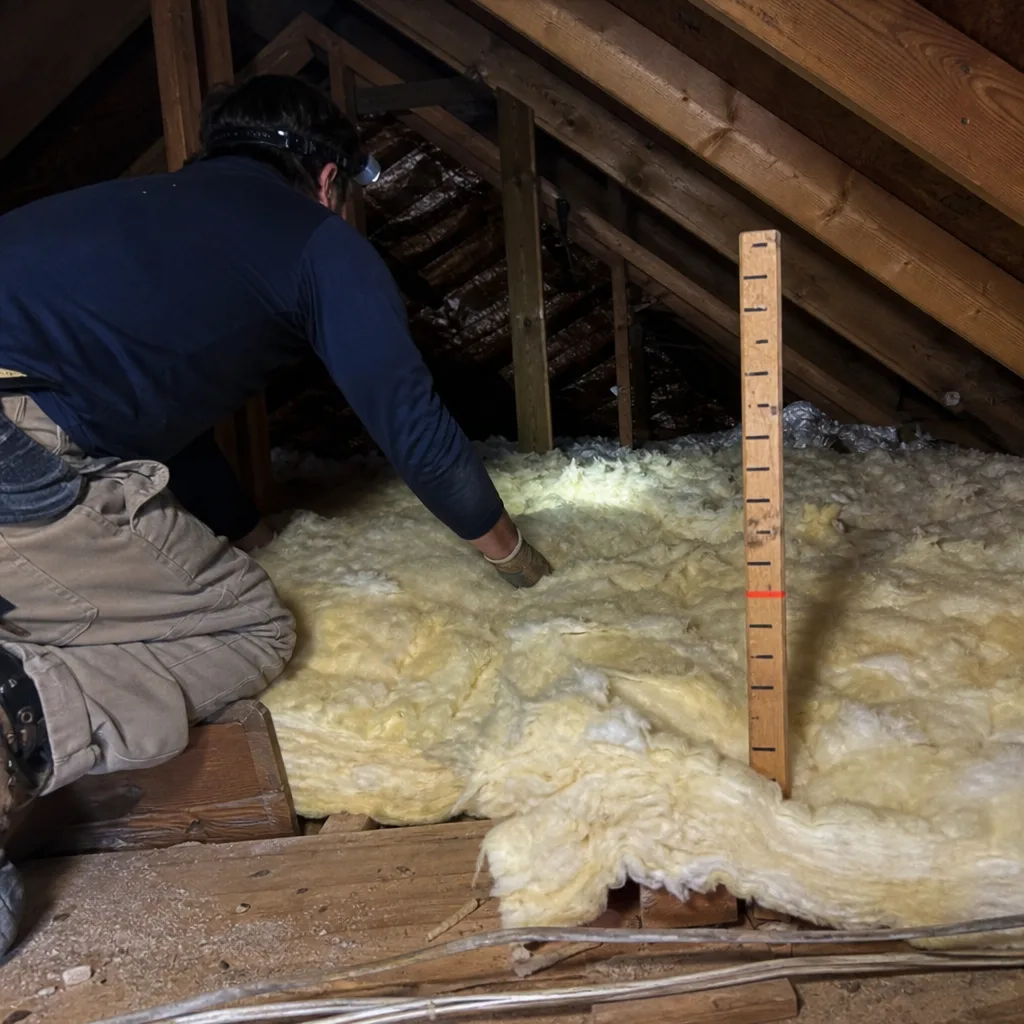
- Uneven room temperatures despite adequate insulation depth. When Knauf EcoSeal cracks at top-plate joints, conditioned air escapes into the attic faster than your HVAC can replace it. The master bedroom above the garage is usually the first room to complain.
- Dust streaking around ceiling registers and can lights. This means your attic is breathing your conditioned air, pulling attic dust through gaps the sealant was supposed to close. In Georgetown’s limestone-dust environment, the streaking shows up as a pale gray film.
- Ice damming or heavy frost on roof decking in winter. Warm, moist air leaking past failed Knauf seal lines condenses on cold sheathing. We’ve measured attic humidity at 70% in January because of this, even with proper ridge venting.
- Blown-in insulation settling in trails or drifts. Air moving through gaps carries lightweight cellulose or fiberglass with it, creating visible paths across the attic floor. The insulation isn’t defective; the air sealing underneath it failed first.
- Blower-door numbers that haven’t improved after insulation upgrades. We see this constantly: a homeowner adds R-38 over existing R-19, but the CFM50 reading barely drops because the Knauf sealant at wire penetrations and chimney chases has hardened and pulled away.
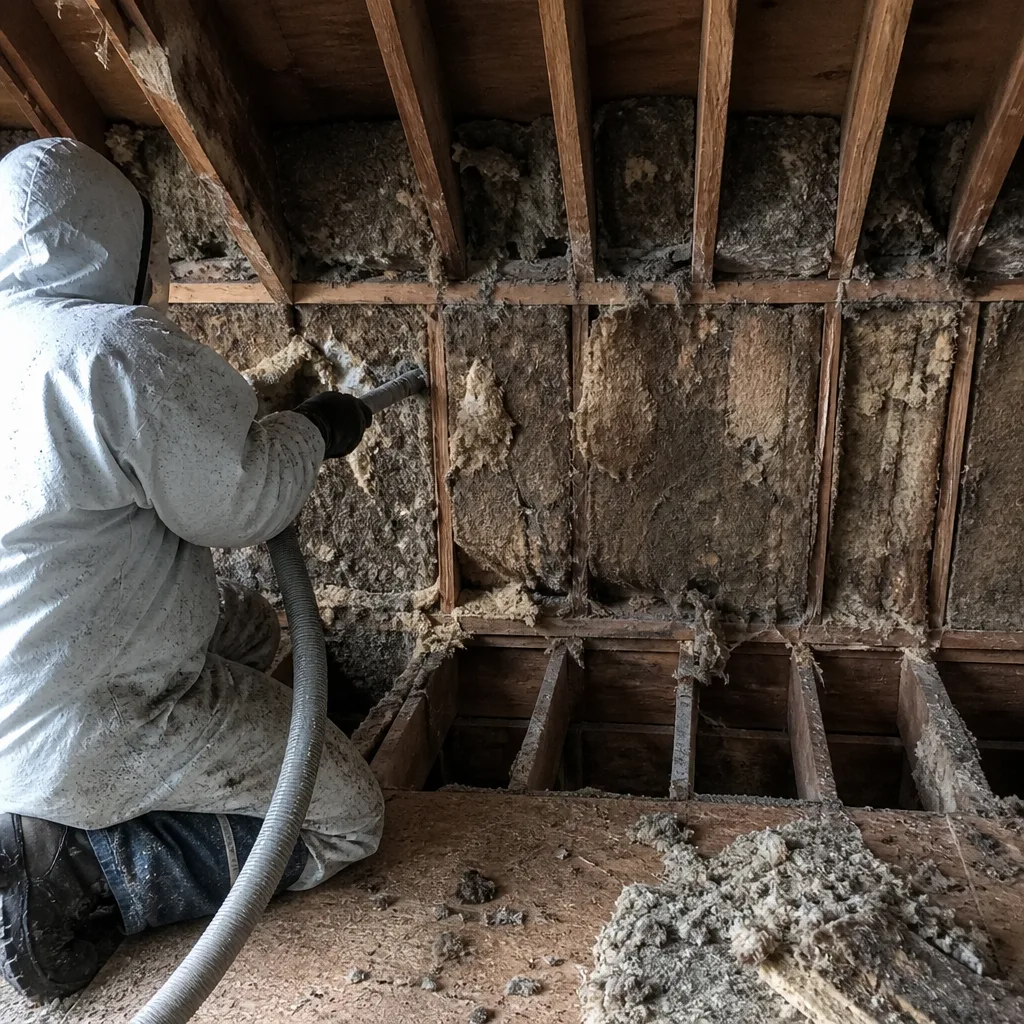 Before
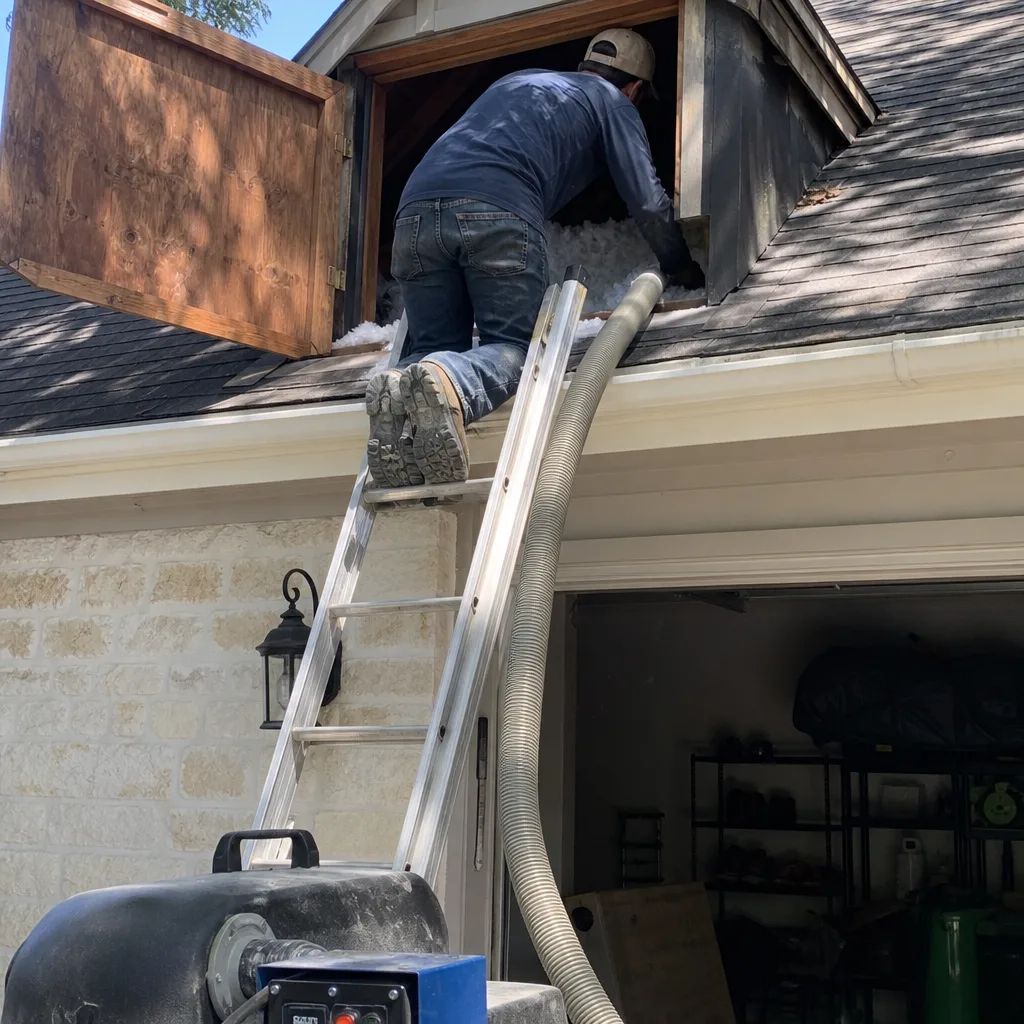 After
AfterReplacement Cost & What’s Included
Most Knauf attic air sealing replacements in Georgetown run $1,200-$2,800 for attics between 1,200 and 3,500 square feet. Here’s how the range breaks:
- Smaller attics (under 1,500 sq ft), limited penetrations: $1,200-$1,700
- Mid-size attics with can lights, multiple top plates, and HVAC chases: $1,800-$2,400
- Large or complex attics with vaulted ceilings, multiple dormers, or extensive rodent damage to existing seal: $2,500-$2,800+
Every job includes removal of degraded Knauf material where accessible, surface prep, new elastomeric or foam sealant application at all top plates, electrical and plumbing penetrations, can light boxes, and chimney or flue chases. We also seal the attic access hatch perimeter, which most original installs skip. The price covers labor, materials, and our 365-Day Done Right Promise. On applicable jobs, you’ll receive before-and-after blower-door numbers showing the actual CFM50 reduction, plus a Documented Photo Record of every sealed penetration. We don’t start until you have a written price in hand, per Haven Standard Clause 1.
DIY or Call Us?
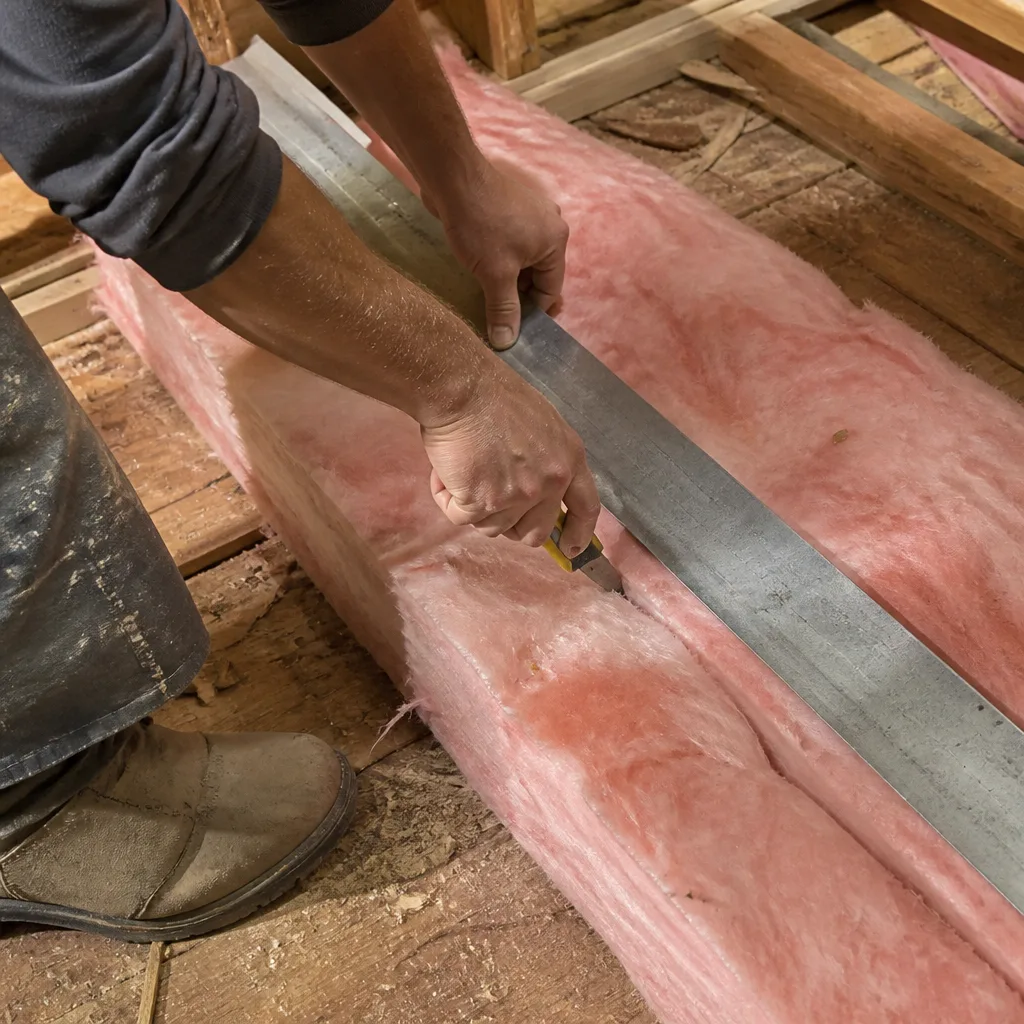
There’s a clear line here. A homeowner can safely inspect their own attic for the symptom signs above, check the Knauf label batch code, and photograph any obvious cracking or delamination. What you can’t safely do is work at attic height for extended periods in summer heat, handle elastomeric sealants in poorly ventilated spaces, or properly seal electrical penetrations without verifying box ratings. The real risk isn’t the sealant itself; it’s falling through a ceiling, contacting live wiring, or applying incompatible products that void your insulation warranty. We carry Knauf-compatible sealants on every truck, along with the blower-door equipment to prove the result. If you’ve already got a written estimate from another contractor, we’ll give you a Free Second Opinion and read it with you line by line. Call (254) 970-2136.
FAQs
Properly applied Knauf EcoSeal typically lasts 10-15 years in Central Texas, but we’ve seen failures at 6-8 years when attics exceed 140°F regularly or when the original application missed primer steps on OSB top plates. The thermal cycling between Georgetown’s 100°F summer days and 30°F winter nights accelerates elastomeric fatigue. Call (254) 970-2136 and we’ll inspect what you have, no charge.
Spot repairs work if less than 20% of the sealant has failed and the remaining material passes a simple adhesion test, which we perform during inspection. Once cracking exceeds that threshold or the original product has become brittle, partial repairs create hard seams that leak at the boundaries. We quote both options when possible so you can see the difference in projected blower-door results. Call (254) 970-2136 for an exact assessment.
Most residential jobs in Georgetown finish in one day, typically 4-6 hours of crew time for attics up to 2,500 square feet. We need the attic empty of stored items and the HVAC off for the first two hours so sealant cures without air pressure across fresh joints. You’ll get a text when the crew is en route, and Wes Okafor reviews every photo record before the invoice leaves.
We stock compatible elastomeric sealants and two-part foam systems on every truck, sourced from our regular suppliers including Knauf, Owens Corning, and Johns Manville. Same-day installation is available for calls received before noon; afternoon calls typically schedule next day. We don’t lock you into proprietary products, and we’ll show you the spec sheet that matches your original Knauf application.
Written by Wes Okafor, Owner, Topside Attic Insulation Georgetown at Topside Attic Insulation Georgetown, serving Georgetown and nearby areas.