
Johns Manville Attic Insulation: The Georgetown Owner’s Guide
We stock and install Johns Manville-compatible blown-in fiberglass attic insulation in Georgetown, with most retrofits running $1.80 to $3.20 per square foot installed depending on existing depth and access. Same-day service is available when we have your target R-value and square footage by phone. Most Georgetown homeowners discover their Johns Manville insulation has failed when summer attic temperatures climb past 140°F, the second floor won’t cool below 78°F, or they find compressed, discolored batts that have settled below the stated R-value printed on the original bag.
Which Johns Manville Models This Applies To
Johns Manville produces several attic insulation lines that appear in Georgetown homes built from the late 1990s through new construction today. The most common is Climate Pro loose-fill fiberglass, recognizable by the white-and-green bagging and a blown density spec of 0.5 to 0.6 pounds per cubic foot. You’ll also find Spider custom-fit blown-in system in homes from the 2010s, and Formaldehyde-free™ Kraft-faced batts in original builds around Sun City and along the San Gabriel River corridor where builders specified low-VOC materials.
To identify what you have, check the attic hatch framing for a stapled installation card or bag remnant with the JM logo and product code. Climate Pro bags show a density number; Spider jobs have a distinct mesh fabric layer holding blown material in place. If you see yellowed, brittle batts with the JM diamond logo, those are likely pre-2010 Kraft-faced products that have exceeded their effective lifespan in Central Texas heat.
We do not use proprietary lock-in products. Our materials come from Johns Manville, Owens Corning, Knauf, Rockwool, and other manufacturers, matched to your existing system or upgraded based on blower-door and thermal imaging results.
Signs Your Johns Manville Attic Insulation Is Failing
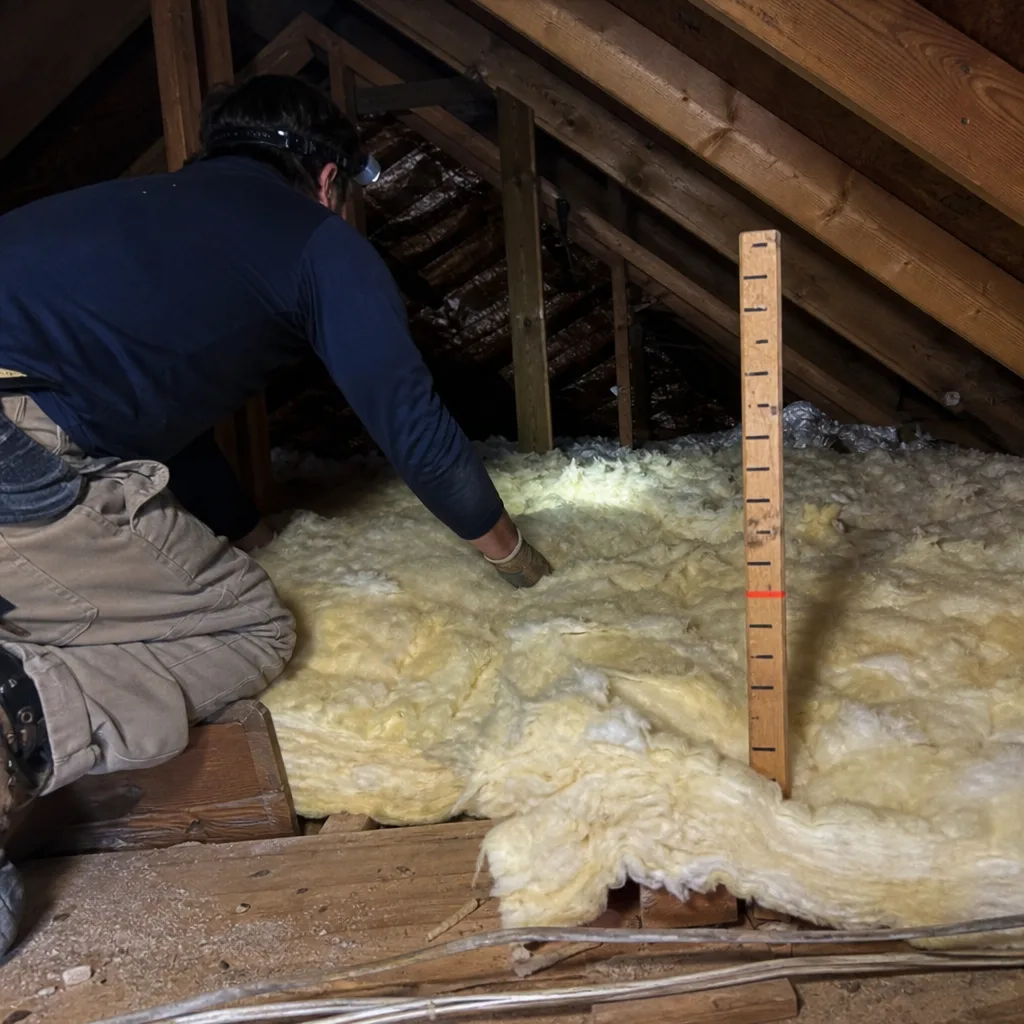
- Uneven temperatures room-to-room. Johns Manville blown-in settles over time, especially where installers missed corners or truncated at vaulted ceilings. In Georgetown’s clay-soil neighborhoods, foundation settling can shift framing and create new gaps the original insulation never reached.
- Ice damming or excessive summer heat in the attic. Kraft-faced batts installed with the vapor retarder on the wrong side trap moisture against drywall in winter, then lose R-value as fiberglass compresses. We’ve pulled saturated batts in River Chase homes that tested at less than half their labeled R-value.
- Dust and allergen spikes indoors. When Johns Manville loose-fill migrates through recessed can light penetrations or top plate gaps, your HVAC filter loads faster and indoor particle counts rise. This is an air-sealing failure first, an insulation failure second.
- Visible compression or discoloration. Fiberglass that has been walked on, stored against, or saturated with roof leaks compacts permanently. R-value depends on loft, the trapped air between fibers, and once crushed it does not recover.
- Energy bills climbing year-over-year with no rate change. A blower-door test we ran last month in Georgetown’s Parkside at Mayfield Ranch showed 3,800 CFM50 with original 2009 Johns Manville batts still in place. After sealing and replacement with new loose-fill at R-49, the reading dropped to 2,100. The homeowner’s July bill dropped 34 percent.
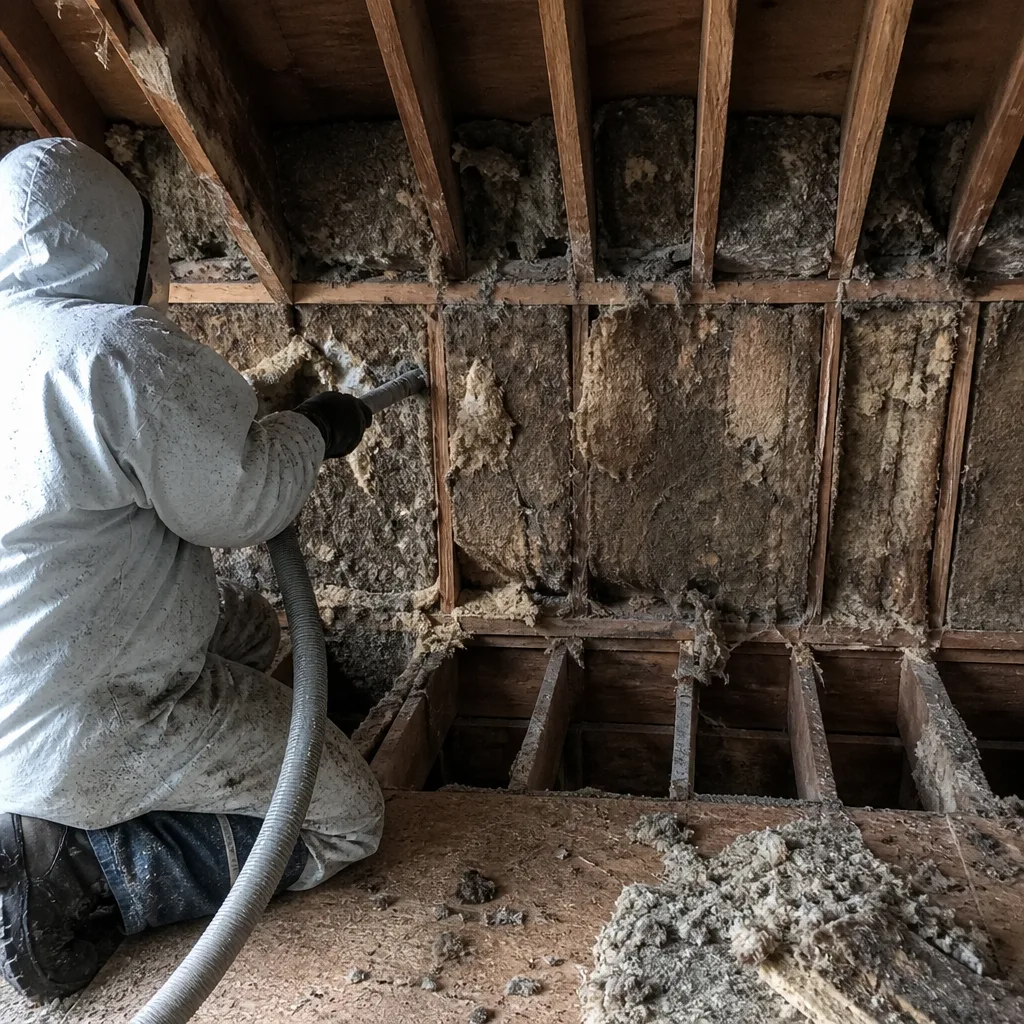 Before
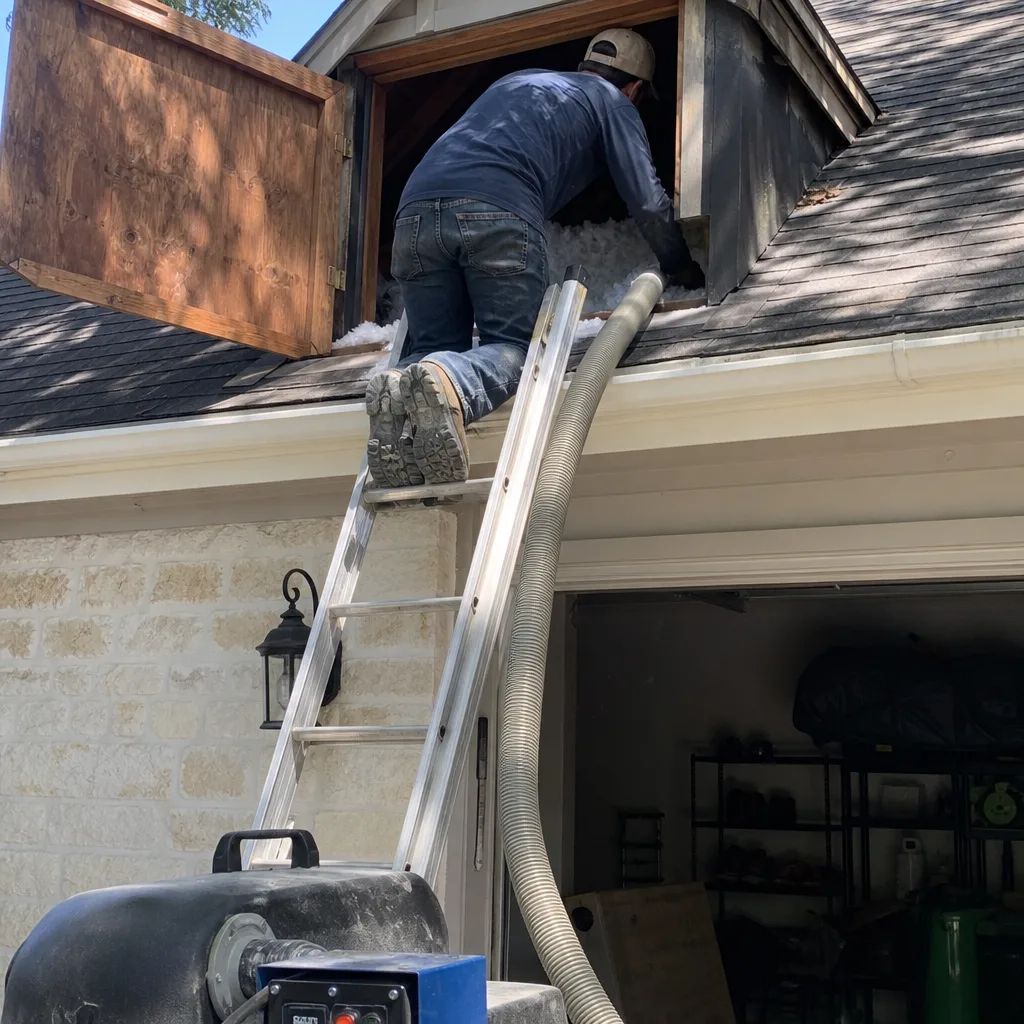 After
AfterReplacement Cost & What’s Included
Most Johns Manville attic insulation replacements in Georgetown run between $1.80 and $3.20 per square foot for loose-fill fiberglass installed to current IECC code, which calls for R-38 to R-49 in our climate zone. A typical 1,800 square foot attic with removal of degraded material, air sealing of top plates and penetrations, and new blown-in installation totals $3,200 to $5,800.
What drives the range: attic accessibility (scuttle vs. pull-down stairs vs. cut new access), existing material removal (batts are faster than compacted loose-fill), and whether we find unsealed can lights or open chase ways that need fire-rated enclosure before insulation goes in. We do not quote by phone and add surprises later. Under Haven Standard Clause 1, you get a written price, written scope, and written warranty before anyone lifts a tool.
Every job closes with a Documented Photo Record and, on applicable work, before-and-after blower-door numbers. The 365-Day Done Right Promise covers all completed work.
DIY or Call Us?
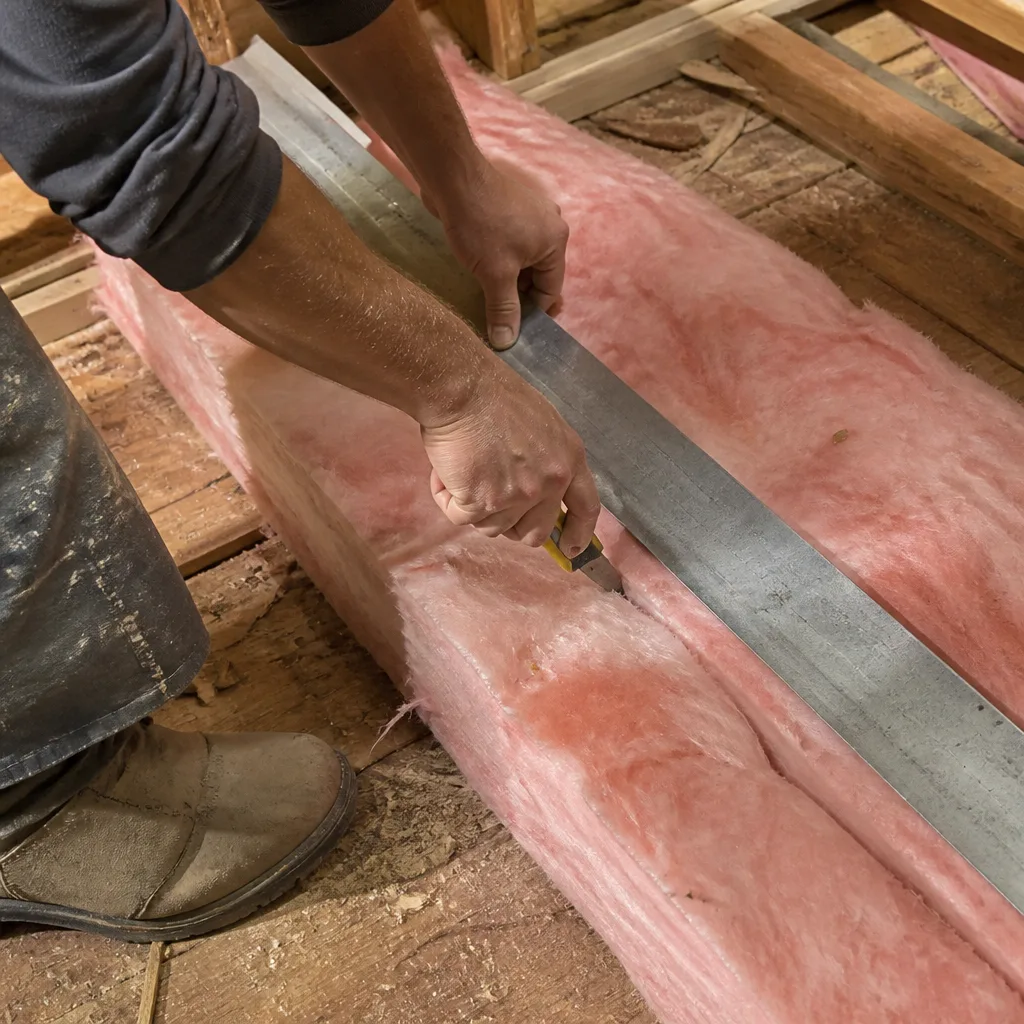
Homeowners can safely check attic depth with a ruler against joists, photograph bag remnants for identification, and verify that bathroom exhaust fans terminate outside, not into the attic. These checks cost nothing and tell us plenty when you call.
What goes wrong with DIY: fiberglass loose-fill requires a calibrated blowing machine and proper density to achieve labeled R-value. Too sparse and you get convection loops, air moving through the insulation and carrying heat. Too dense and you compress the fibers, reducing trapped air and effective R-value. More critically, Georgetown attics in August run 130°F to 150°F, and platform work near active electrical or in confined truss bays carries real fall and contact risk. We wear respirators and harness rigs for a reason.
Call (254) 970-2136 for a free estimate with written pricing before any work starts.
FAQs
Fiberglass itself does not decompose, but its installed performance degrades over 15 to 25 years in Central Texas due to compression, moisture events, and the cumulative effect of roof traffic by HVAC technicians and pest activity. We’ve replaced 2005 Johns Manville batts in Georgetown homes that had compressed to R-19 equivalent or lower despite original R-30 labeling. Call (254) 970-2136 for a free estimate and thermal imaging assessment of your current depth.
Spot repair is possible when a small area was disturbed for electrical or plumbing work and the surrounding insulation remains at full depth and loft. Widespread settling, moisture damage, or compression requires removal and replacement, adding new material over damaged old stock traps moisture and masks air leaks that should be sealed first. We offer free second opinions on any written estimate, including partial-repair quotes from other contractors.
Most residential jobs in Georgetown complete in one day: removal of degraded material in the morning, air sealing of top plates and penetrations, then blown-in installation to specified depth with a density check every 200 square feet. Two-story homes with complex rooflines or attics requiring new access hatches may extend to a second day. We text your named technician’s arrival window the morning of, under Haven Standard: Arrive on schedule.
We stock Johns Manville Climate Pro loose-fill and compatible alternatives from Owens Corning and Knauf on our trucks, with same-day installation available for standard R-value targets when we have your attic square footage and access type confirmed by phone. Specialty products like Spider system mesh or formaldehyde-free batts for sensitive-occupant homes typically arrive next business day from our Austin-area supplier. Call (254) 970-2136 to confirm stock for your specific application.
Written by Wes Okafor, Owner, Topside Attic Insulation Georgetown at Topside Attic Insulation Georgetown, serving Georgetown and nearby areas.