
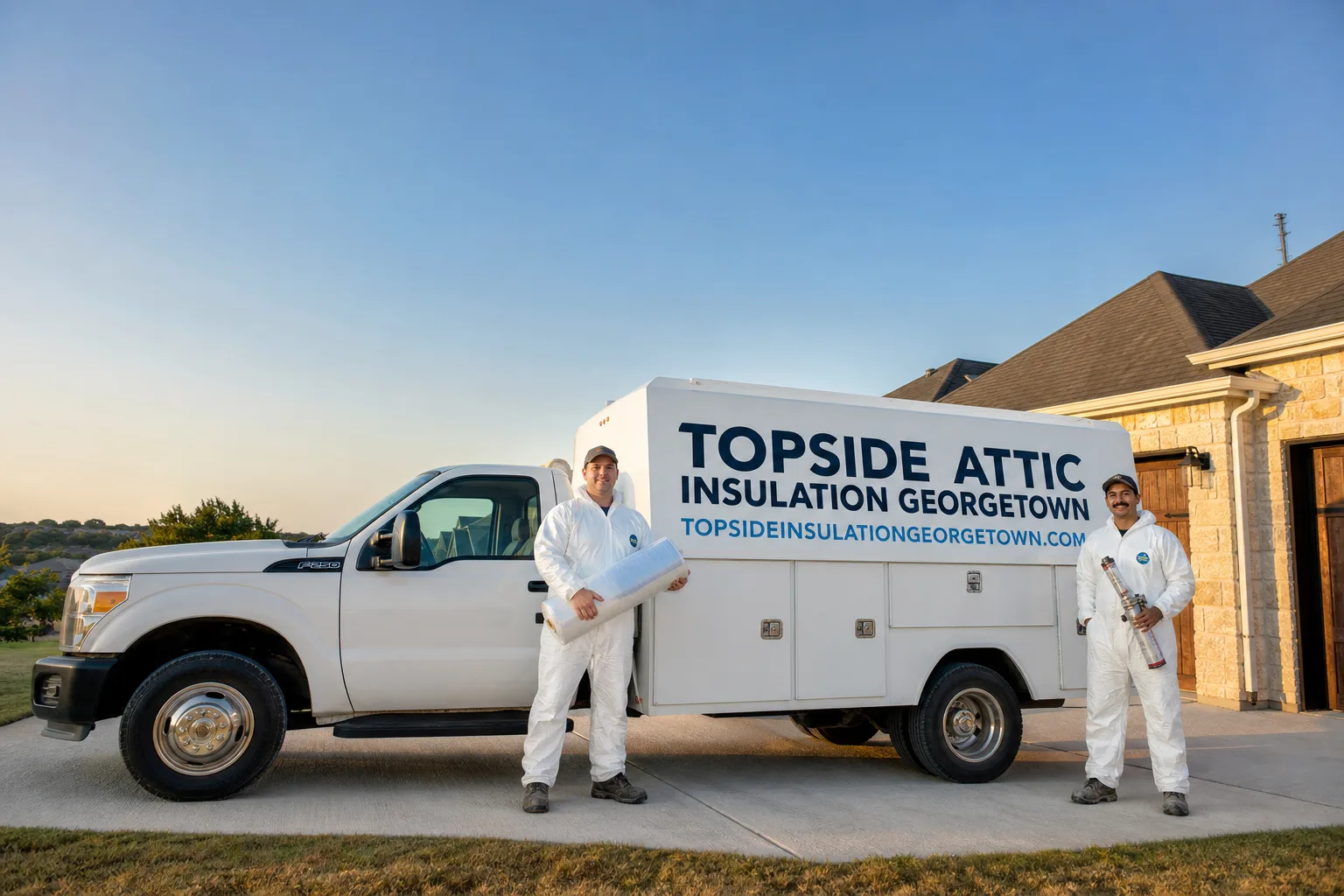
How Much Does Radiant Barrier Installation Cost in Georgetown?
Our Radiant Barrier Installation services in Georgetown, TX typically cost between $1,400 and $3,200 for a standard single-story home, with most jobs falling in the $1,600 to $2,400 range depending on attic square footage and access conditions. The price includes material and labor; a 1,800-square-foot attic with straightforward access usually lands around $1,900 to $2,100. At Topside Attic Insulation Georgetown, every job starts with a written price before any work begins – that’s not a policy we make exceptions to.
Radiant Barrier Installation Cost Breakdown (2026)
Georgetown sits in Williamson County’s specific climate band – hot, long summers with attic temperatures that regularly exceed 140°F from May through September, and enough humidity swings between the Brushy Creek corridor and the Sun City side of town to make radiant barrier selection matter. The pricing below reflects what we actually see on jobs in Georgetown, not a national average pulled from a cost-estimator database.
| Cost Component | Typical Range (Georgetown, 2026) | Notes |
|---|---|---|
| Material – single-sided foil (standard) | $0.15 – $0.25 per sq ft | Most common in Georgetown new construction retrofits |
| Material – double-sided foil (premium) | $0.28 – $0.40 per sq ft | Used when attic is accessible from both directions |
| Material – perforated foil (humidity management) | $0.22 – $0.35 per sq ft | Recommended for homes in lower-lying areas near Lake Georgetown |
| Labor – standard attic access, open framing | $0.55 – $0.85 per sq ft | Most Georgetown homes built 2005-2020 fall here |
| Labor – difficult access or low clearance | $0.90 – $1.30 per sq ft | Common in older Wolf Ranch and Georgetown Village homes |
| Attic air sealing (if added before barrier) | $350 – $850 additional | We complete air sealing before any barrier goes in – always |
| Removal of existing failing barrier | $200 – $600 | Occasionally found in homes built mid-2000s |
| Total – 1,200 sq ft attic | $1,350 – $1,900 | Smaller ranch homes, Sun City area |
| Total – 1,800 sq ft attic | $1,800 – $2,500 | Most common Georgetown home size |
| Total – 2,400 sq ft attic | $2,400 – $3,200 | Larger homes in Cimarron Hills, Georgetown sections north of 29 |
| Total – 3,000+ sq ft attic | $3,000 – $4,200+ | Custom homes, complex rooflines, multiple HVAC zones |
A few things that move the number up or down. Attic square footage is the primary driver – more floor area means more material and more labor hours. But access matters almost as much. A Georgetown home with a single pull-down stair and 36 inches of clearance takes longer to work in than a two-story with a full attic door and 48-inch headroom. Roof pitch affects how much of the rafter deck a technician can safely cover, which affects the final square footage of barrier actually installed. And if we find that air sealing needs to happen first – which it almost always does, because running a radiant barrier over an unsealed attic floor traps conditioned air losses you’ll never recover – that adds time and cost that we’ll show you in writing before anyone starts.
One thing we do not do: blow insulation over an unsealed attic floor and call it done. Under the Haven Standard, air sealing of top plates, can lights, and penetrations is completed before any barrier or insulation is added. We’ll show you what that means for your specific attic in the written scope you get before the job starts.
What Affects Radiant Barrier Installation Pricing in Georgetown
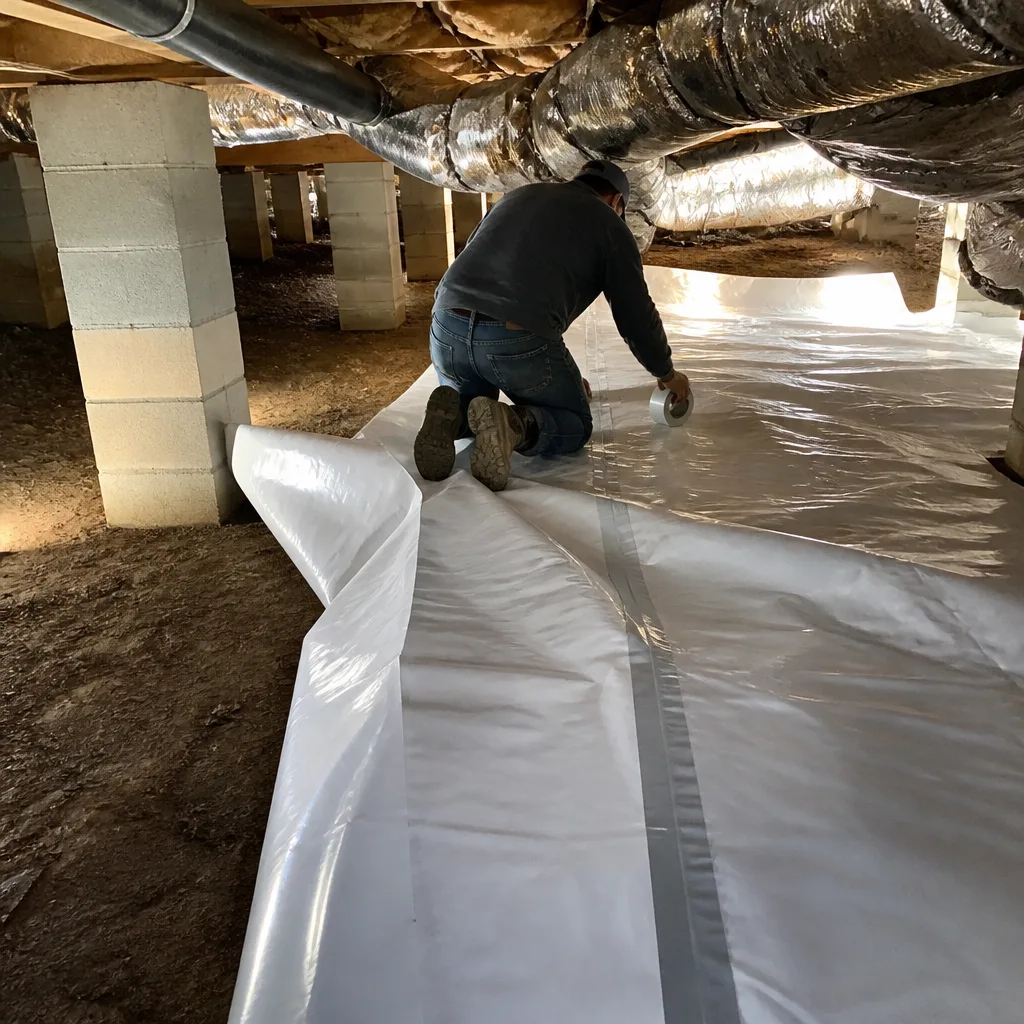
- Attic square footage and roof geometry: Georgetown’s newer planned communities – Morningstar, Parkside on the River, Wolf Ranch – tend toward open floor plans with large attic footprints and relatively straightforward hip or gable roofs. That keeps labor efficient. Older homes near the Georgetown square and in Berry Creek sometimes have broken rooflines, dormers, or multiple ridge heights that require more cuts, more stapling passes, and more time. Expect the higher end of the labor range for those properties.
- Attic access and clearance: A standard pull-down stair with 24-inch clearance in the flat section and 36-inch peak is workable but slow. We see a meaningful number of Georgetown homes – particularly those built in the late 1990s and early 2000s near Williams Drive – where the only access is a small hatch in a bedroom closet. That adds labor time and, in some cases, limits the barrier coverage we can realistically achieve safely. We document what we found and what we covered, every time, with photos.
- Existing insulation depth and condition: If your attic already has 12 or more inches of blown insulation, we’re working over that material. That changes how we run the barrier and whether we staple to the rafter deck (rafter-side application) or work from the attic floor up. Some homes in Georgetown’s older sections have settled insulation with gaps at the top plates that need addressing before anything else happens.
- Georgetown’s climate and humidity profile: Unlike drier parts of Central Texas, Georgetown’s proximity to the San Gabriel River and Lake Georgetown creates localized humidity pockets, particularly in the Cimarron Hills and Serenada areas. In those neighborhoods, we typically recommend a perforated radiant barrier rather than a solid foil – perforated material allows moisture vapor to pass through rather than trapping it at the rafter deck. Perforated material costs a few cents more per square foot but prevents the deck deterioration we’ve seen when solid foil goes in without proper assessment.
- Whether air sealing is needed first: In Georgetown homes built between 2000 and 2015, we regularly find unsealed can lights, open top plates at interior walls, and HVAC penetrations that pass conditioned air directly into the attic. Sealing those before the barrier adds $350 to $850 to the job, but a radiant barrier installed over an unsealed attic envelope is solving the wrong problem. We’ll call out what we find; you decide whether to address it now or later. We’ll put both options in writing.
- Roof age and deck condition: If the roof deck has soft spots, signs of previous leak damage, or delaminating sheathing, we flag those in the documented photo record before installation begins. A radiant barrier stapled to a deteriorating deck isn’t doing the work it should. We don’t hide what we find to keep the job moving.
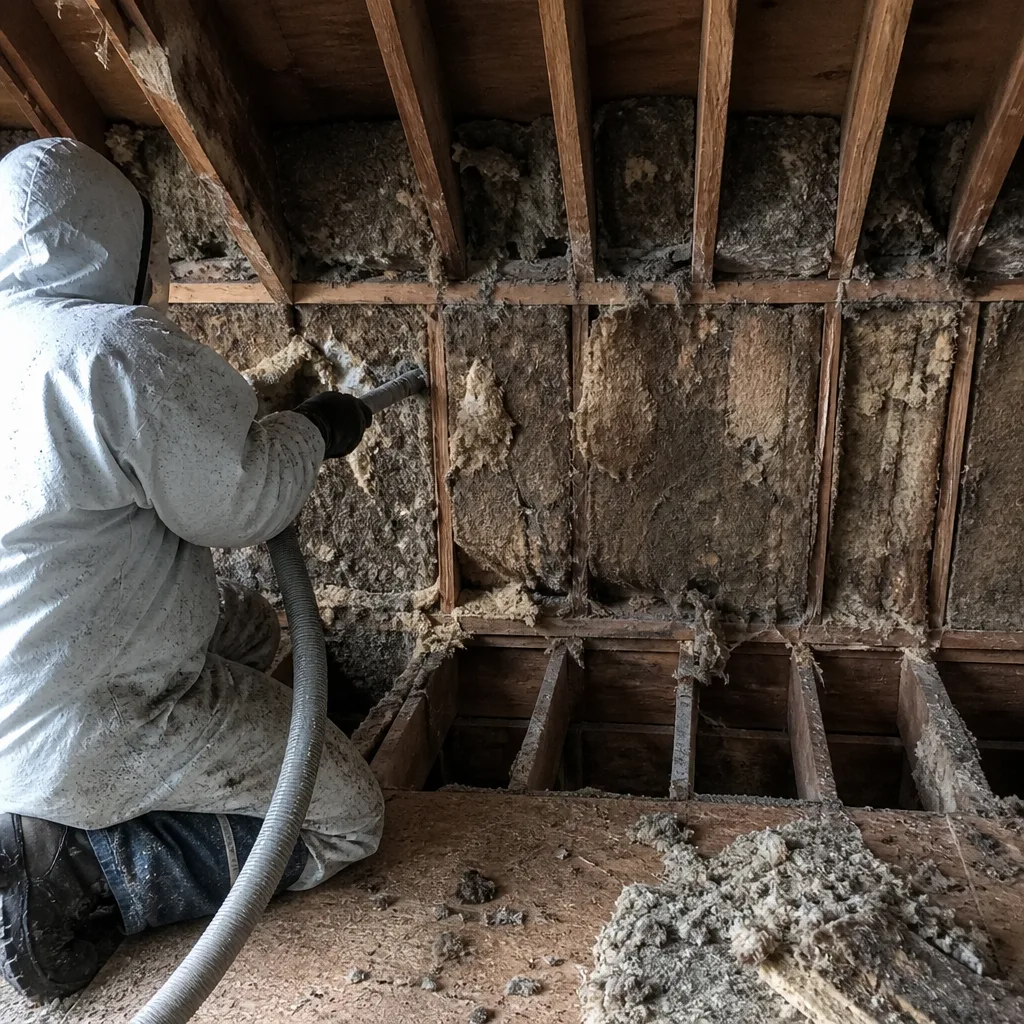 Before
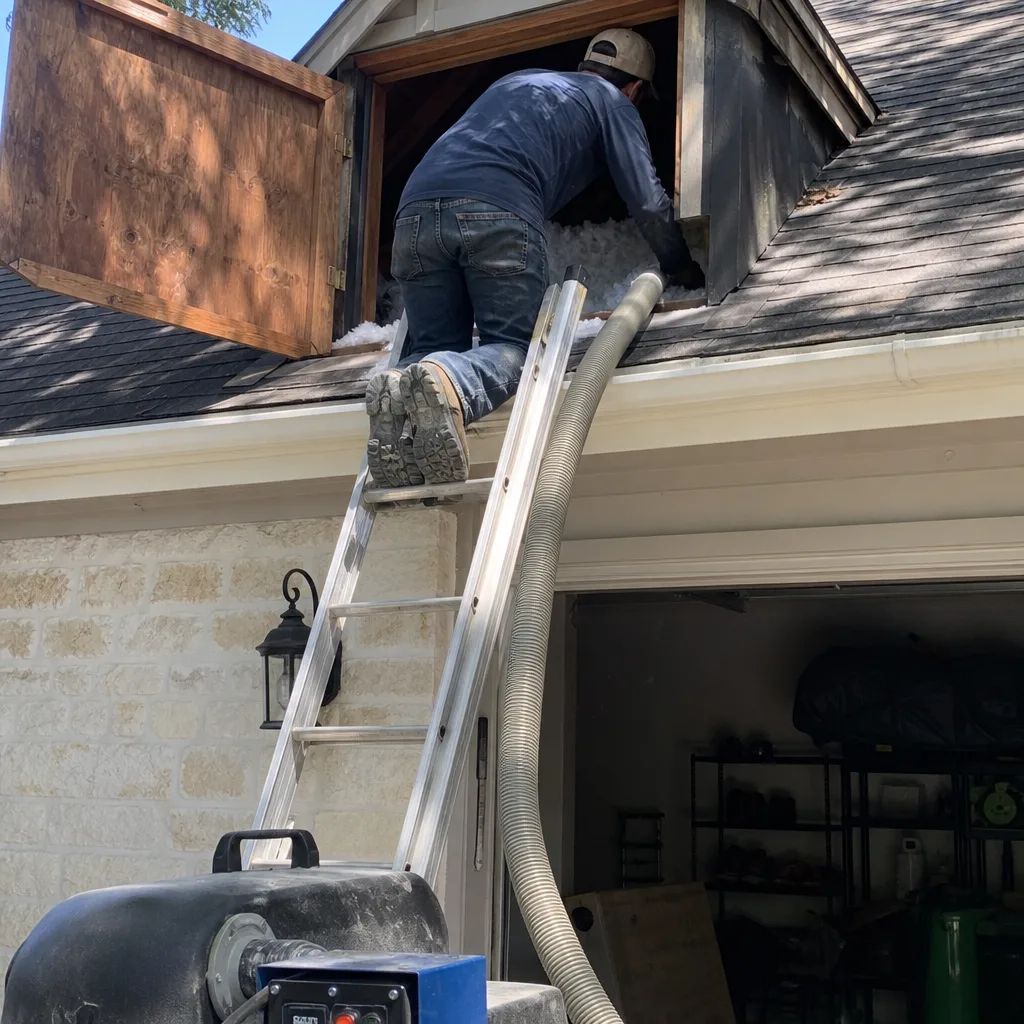 After
AfterRadiant Barrier vs. Attic Insulation: Which One Does Georgetown Homes Need?
This comes up on nearly every estimate we run in Georgetown. The short answer: most homes benefit from both, but they solve different problems, and the order matters.
A radiant barrier blocks heat transfer through radiation – specifically, the heat that your roof deck absorbs from the Texas sun and radiates downward into your attic space. On a Georgetown summer afternoon, an unprotected rafter deck can reach 160°F. A properly installed radiant barrier reflects 95% or more of that radiant heat back toward the roof before it enters your attic air. That keeps your HVAC equipment – and the ductwork sitting in that 140°F air – running more efficiently.
Attic insulation, by contrast, slows conductive and convective heat transfer – the movement of heat through solid material and through air. You need both mechanisms addressed. A radiant barrier with inadequate insulation underneath still allows significant heat gain through conduction. Insulation without a radiant barrier still allows the roof deck to radiate heat directly onto the insulation surface, which reduces effective R-value.
In Georgetown, where summer cooling loads dominate the energy budget by a wide margin, the typical upgrade path we recommend is: air seal first, then add radiant barrier at the rafter deck, then verify insulation depth is at R-38 or better at the attic floor. That sequence addresses all three transfer mechanisms in the right order. You can learn more about how the two work together on our Radiant Barrier Installation in Georgetown service page.
Georgetown Permit and Code Requirements for Radiant Barrier Installation
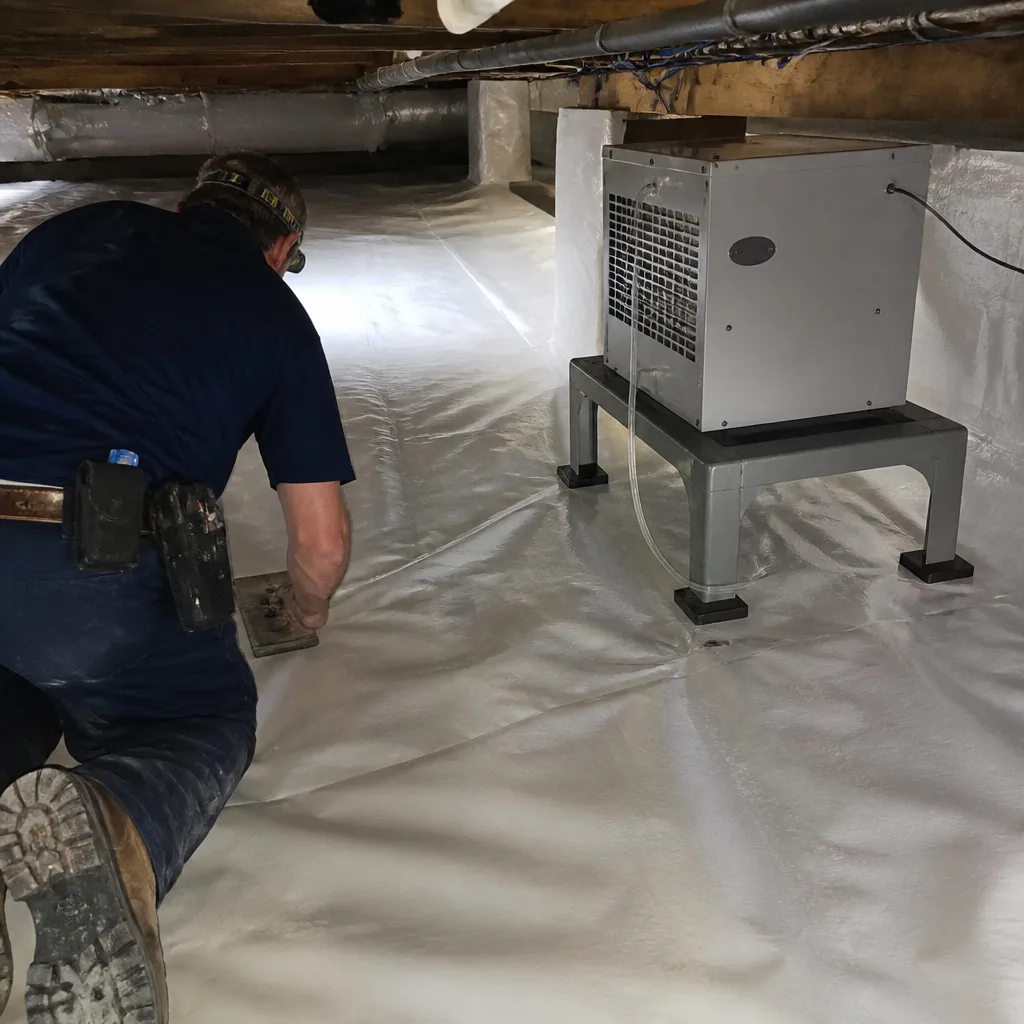
As of 2026, Williamson County and the City of Georgetown do not require a standalone building permit for radiant barrier installation when the work involves only the barrier material itself – no structural modifications, no electrical work, no HVAC changes. If the job includes attic air sealing that involves modifying or resealing around HVAC penetrations in a meaningful way, the scope may trigger a mechanical inspection depending on the specific work. We’ll tell you upfront whether your job falls into a gray area before we write the price.
Georgetown follows the 2021 International Energy Conservation Code as adopted by the state of Texas, which specifies minimum attic insulation requirements but does not mandate radiant barrier installation as a standalone requirement. However, new construction in Georgetown built to the current energy code will often include a radiant barrier as part of the thermal envelope package – which means retrofit jobs in older Georgetown homes are frequently catching up to what builders have been doing for a decade.
How to Save on Radiant Barrier Installation in Georgetown
A few things actually reduce the cost. A few things that get marketed as savings don’t hold up.
Combine attic air sealing and radiant barrier in the same visit. When our crew is already in the attic for air sealing, adding the radiant barrier to the same job eliminates a second mobilization cost – typically $150 to $250 in savings compared to scheduling them separately. We run that combination frequently in Georgetown, particularly in homes where the homeowner is getting a full envelope upgrade before summer.
Bundle with insulation work if your R-value is low. If your insulation is at R-19 or below (common in Georgetown homes built before 2005), pairing a radiant barrier installation with an insulation top-up in the same visit is more cost-efficient than two separate jobs. Ask us to price both in the same written scope so you can compare.
Get a second opinion on any written estimate you already have. Under the Haven Standard, we offer a free second opinion on any written estimate from a competing contractor. We’ll read it with you – line by line – and tell you whether the scope, material, and pricing looks reasonable for Georgetown conditions. Bring the estimate. We’ll give you an honest read, not a sales pitch.
Check for utility rebates through Oncor or your local provider. Some Georgetown homeowners are served by Oncor Electric Delivery, which has periodically offered rebates on attic insulation and air sealing upgrades. Radiant barrier doesn’t always qualify as a standalone measure, but when combined with insulation improvements it sometimes falls within an eligible scope. Check Oncor’s current rebate page before your job closes – eligibility changes, and we can’t guarantee what’s available at the time you read this.
Don’t buy based on square footage alone. We’ve seen jobs in Georgetown where a low per-square-foot price masked a thinner foil product, no perforations in a moisture-sensitive area, or labor that cut corners on staple spacing. A radiant barrier that sags away from the rafter deck within two summers isn’t doing what you paid for. The documented photo record we leave after every job shows you exactly what was installed and how.
To get a written price specific to your Georgetown home’s attic, call (254) 970-2136. We’ll schedule an estimate, show up in a named technician’s name, and give you a flat written number before any work starts – no ranges, no “it depends on what we find.”
What Georgetown Homeowners Get With Every Radiant Barrier Job
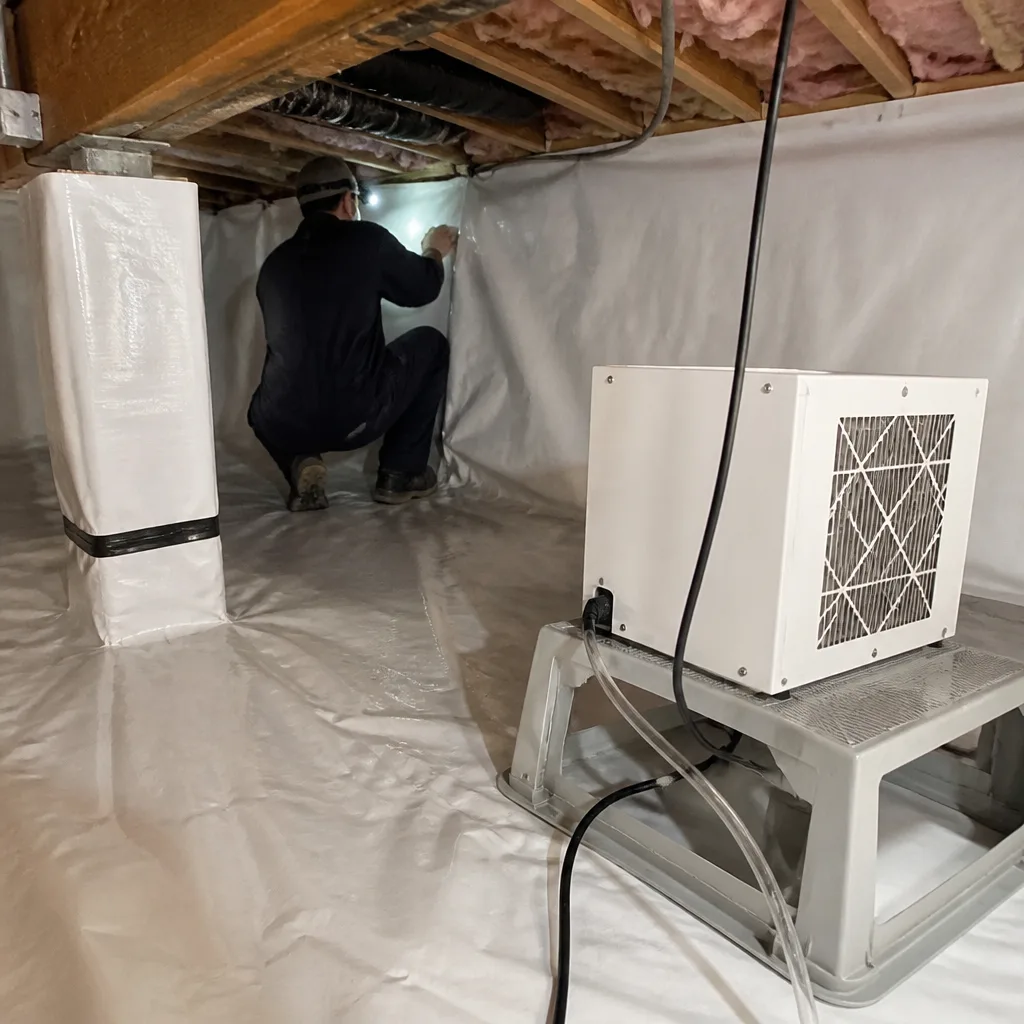
This is worth spelling out because it’s where Envelope Insulation Co. operates differently from most insulation contractors in the Georgetown market.
Written price before any work starts. Haven Standard Clause 1. A flat price, a written scope of what’s included, and a written warranty – all delivered before anyone lifts a tool. You’re not approving a range; you’re approving a specific number.
Documented photo record. Every visit closes with a photo documentation package showing the condition of the attic before we started, the air sealing work completed at top plates and penetrations, and the finished radiant barrier installation. You get that record when the crew leaves, not available on request.
Before-and-after blower-door numbers on applicable jobs. When the scope includes attic air sealing alongside the radiant barrier, we run a blower-door test – a pressurization reading that shows, in a single CFM50 figure, how much conditioned air your home was losing before and after the work. In Serenada and Georgetown Village, we regularly see pre-sealing readings above 3,800 CFM50 drop to below 2,200 after top-plate and penetration sealing. That’s a documented result, not an estimated one.
365-Day Done Right Promise. If something isn’t right – a section of barrier that detaches, coverage that was promised but not delivered, anything that doesn’t match the written scope – we make it right. In writing, within 365 days of the completed job. That’s not a feeling; it’s a documented commitment.
Live phone answered 24/7. No voicemail loop, no callback window measured in business days. Someone answers when you call (254) 970-2136 – including after a Georgetown summer storm when you’re wondering whether your attic just took on moisture.
How Radiant Barrier Installation Works in a Georgetown Attic
The installation process is straightforward when the access is good and the attic is in reasonable condition. Here’s what a standard Georgetown job looks like from start to finish.
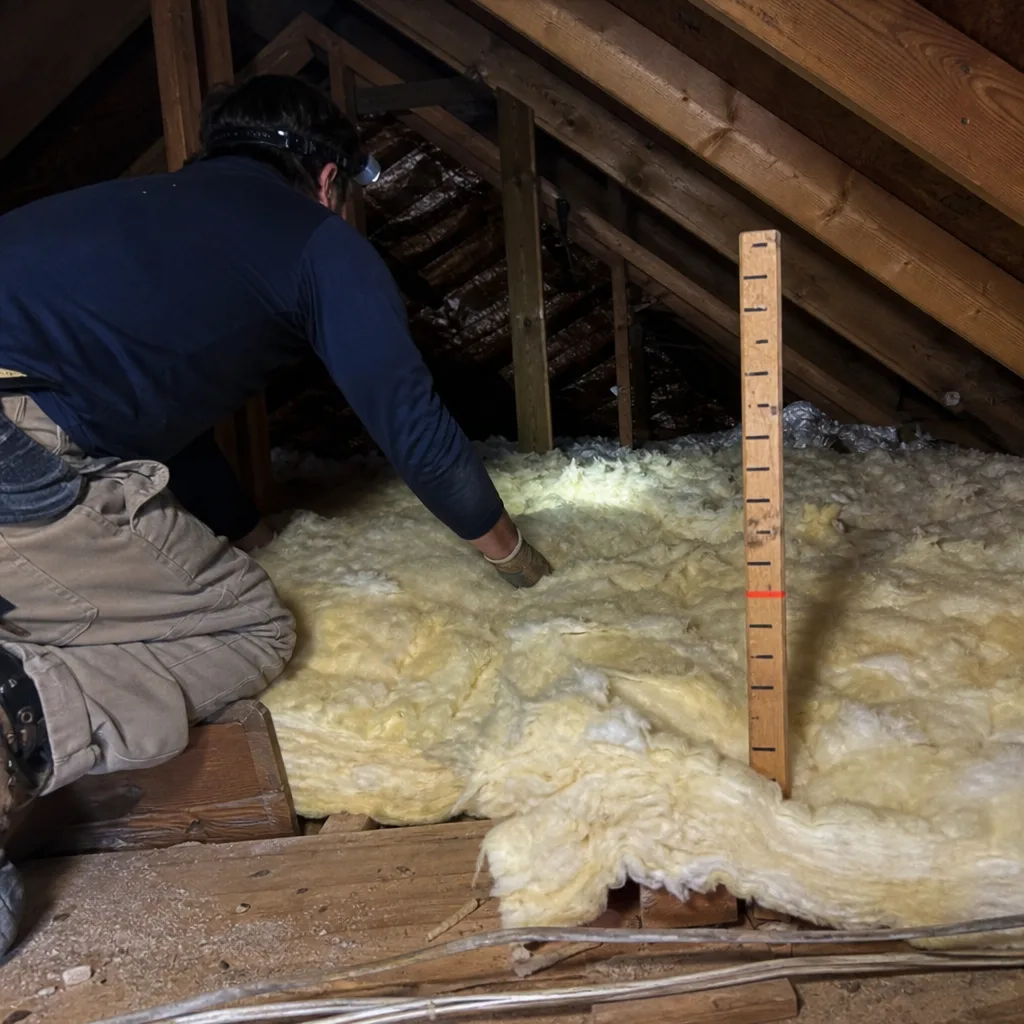
We start with an attic inspection – the technician documents existing insulation depth, identifies unsealed penetrations (can lights, top plates, HVAC boots, plumbing vents), checks for evidence of moisture at the deck, and photographs the existing conditions. That documentation becomes part of your job record regardless of whether you proceed.
If air sealing is in the scope, it happens next. Top plates – the framing members at the top of interior walls where conditioned air can escape directly into the attic – are sealed with fire-rated foam or caulk. Can lights that aren’t IC-rated and air-sealed are addressed. Plumbing and electrical penetrations are sealed. This step is non-negotiable at Topside: we will not install a radiant barrier over an unsealed attic floor. The reason is simple – a radiant barrier slows radiant heat gain but does nothing for the conditioned air moving through open penetrations. Addressing one without the other leaves money on the table.
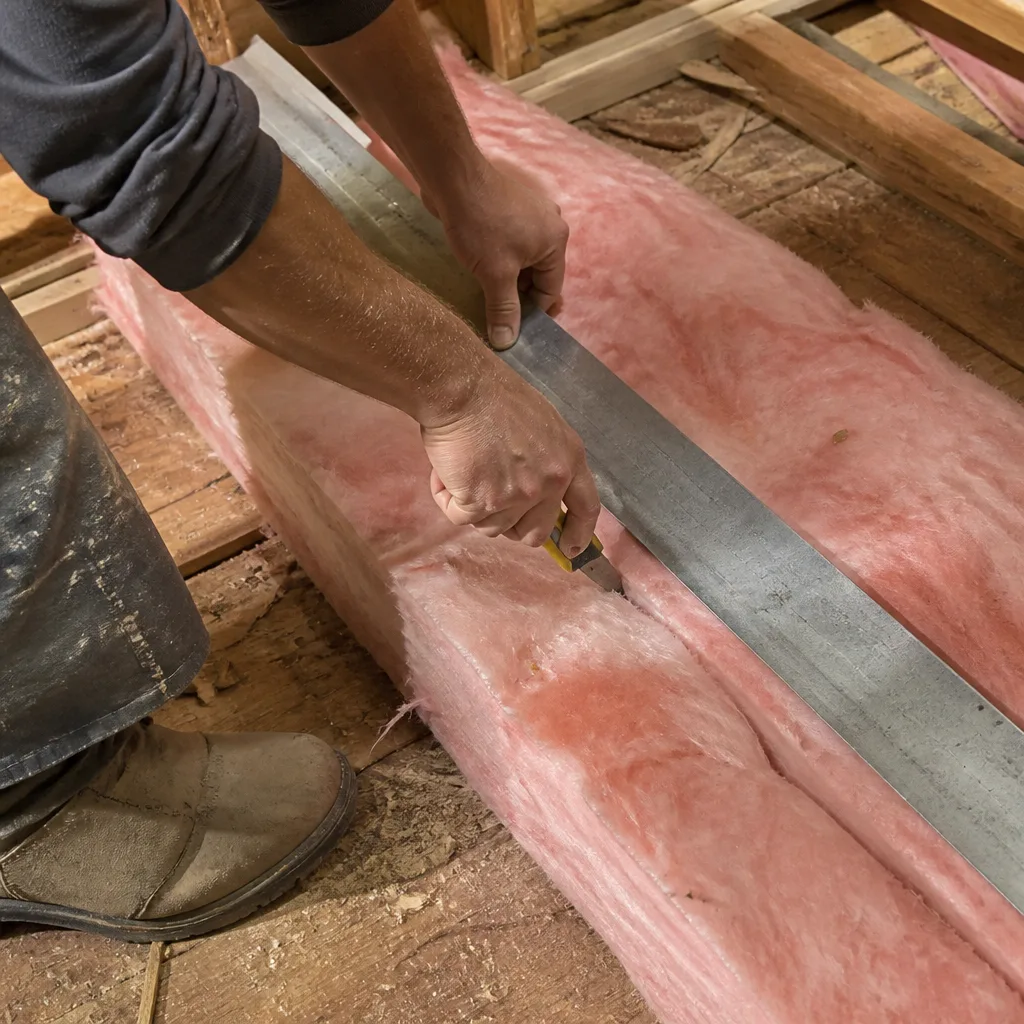
Then the radiant barrier goes in. For rafter-deck application – the most common method in Georgetown, and the one that provides the maximum air gap between the foil and the insulation below – the foil is unrolled and stapled directly to the underside of the roof rafters, working from the ridge down toward the eaves. Perforations (in the foil itself, if we’re using perforated material) allow any moisture vapor that reaches the deck to pass through rather than condensing between the foil and the wood. Staple spacing follows manufacturer specification for the material installed.
When the installation is complete, we photograph the finished work, note the square footage covered and any areas that couldn’t be reached due to access limitations, and present you with the completed job record before we leave.
FAQs: Radiant Barrier Installation Cost in Georgetown, TX
How much does radiant barrier installation cost in Georgetown, TX?
Most Georgetown homeowners pay between $1,400 and $3,200 for a complete radiant barrier installation, with the majority of jobs landing in the $1,800 to $2,400 range for a home with 1,500 to 2,000 square feet of attic space. The primary variables are attic square footage, access difficulty, and whether air sealing is included in the same visit. Call (254) 970-2136 for a written estimate specific to your home’s attic dimensions – estimates are free and we put the number in writing before any work starts.
Is a radiant barrier worth it in Georgetown’s climate?
For most Georgetown homes, yes – particularly those with ductwork in the attic. Georgetown’s summer cooling season runs roughly May through October, with attic temperatures that regularly exceed 140°F during peak afternoon heat. A properly installed radiant barrier can reduce attic air temperature by 20 to 30 degrees on a peak summer day, which reduces the heat load on your HVAC system and the ductwork sitting in that heat. Homes on the south- and west-facing exposures in neighborhoods like Wolf Ranch or Morningstar – where the afternoon sun hits the roof at a low angle – typically see the most measurable benefit. The payback period in the Georgetown market, based on typical cooling bills, runs 3 to 7 years depending on your home’s baseline performance.
How long does radiant barrier installation take?
A standard Georgetown attic job runs 2 to 5 hours for a 1,500 to 2,000 square foot attic with straightforward access. Larger attics or homes with difficult access, multiple ridgelines, or air sealing added to the scope can run 6 to 8 hours. We give you a specific time estimate when we write the price – not a window measured in half-days.
Can I install a radiant barrier myself in Georgetown?
The material itself isn’t dangerous, and some homeowners do attempt DIY installation. The honest assessment: the most common failure modes we see on self-installed barriers in Georgetown are inadequate staple spacing (causing the foil to sag away from the rafter deck within a year), solid foil installed in areas that needed perforated (leading to moisture accumulation at the deck), and coverage gaps at the eaves and ridge where heat gain is highest. If you’re comfortable working in a 140-degree attic in July and you understand which areas need perforated vs. solid foil, the job is physically possible. If you want documented coverage and a warranty that applies if something’s wrong, that’s what a professional installation provides. We’ll give you a written price either way so you can make an informed comparison.
Does radiant barrier installation require a permit in Georgetown?
As of 2026, a standalone radiant barrier installation in Georgetown, TX does not require a building permit when no structural, electrical, or mechanical modifications are involved. If your job includes significant HVAC penetration sealing or other work that touches mechanical systems, that scope may require a mechanical inspection – we’ll tell you upfront whether your specific job triggers that threshold. Our written scope will note any permit requirements before work begins, under Haven Standard Clause 1.
What’s the difference between foil radiant barrier and reflective insulation?
A radiant barrier is a single layer of reflective foil – typically aluminum – that blocks radiant heat transfer at the rafter deck. It has no meaningful R-value on its own; its job is to reflect radiant energy, not resist conductive heat flow. Reflective insulation combines a foil facing with a substrate (foam, bubble film, or fiberglass) and provides both reflective and some conductive resistance. In Georgetown attics, we typically install radiant barrier at the rafter deck and address conductive resistance at the attic floor with blown insulation – that combination addresses all three heat transfer mechanisms. Reflective insulation products can sometimes be used at the rafter deck in lieu of bare foil, but they cost more and the performance difference in a well-designed installation is marginal for most Georgetown homes.
Key Takeaways
- Radiant barrier installation in Georgetown costs $1,400 to $3,200 for most homes, with a midpoint around $1,900 to $2,100 for a 1,800 square foot attic.
- Attic square footage, access conditions, roof geometry, and whether air sealing is included are the main price drivers.
- Georgetown’s climate – long, hot summers with localized humidity near Lake Georgetown and the San Gabriel River – makes material selection matter: perforated foil is the right call for moisture-sensitive areas.
- Air sealing before the barrier is installed is not optional at Topside Attic Insulation Georgetown. We’ll document what we seal and show you before-and-after blower-door numbers on applicable jobs.
- Every job includes a written price before work starts, a documented photo record when the crew leaves, and the 365-Day Done Right Promise in writing.
- Georgetown homeowners can get a free second opinion on any written estimate – call (254) 970-2136 and bring the competing quote.
Get a Written Estimate for Radiant Barrier Installation in Georgetown
If you’re comparing quotes or just trying to figure out whether radiant barrier makes sense for your specific home, the most useful thing we can do is give you a number in writing – specific to your attic’s square footage, access conditions, and current insulation status. That’s what Wes Okafor built Topside Attic Insulation Georgetown around when we started operating under The Haven Standard in 2016, and it’s how every job here still starts.
Call (254) 970-2136 to schedule a free estimate. We’ll send you a named technician, text you when they’re on the way, and leave you with a written price and a documented record of what we found – before any decision gets made. If you want a second opinion on a quote you already have, bring it. We’ll read it with you.
You can also start by visiting our home page to see the full range of building-envelope services we provide in the Georgetown area.
Pricing reflects the Georgetown, TX market as of 2026. Topside Attic Insulation Georgetown offers free estimates – call (254) 970-2136 to get a written price before any work starts.
Written by Wes Okafor, Owner at Topside Attic Insulation Georgetown, serving Georgetown, TX since 2016.
What Our Customers Say
"They air-sealed the attic floor before insulating and showed me the blower-door number before and after. The upstairs is finally the same temperature as downstairs."
- Marisol D."They photographed rodent damage in the old insulation that we had no idea about, and priced the exclusion work separately so we could decide."
- Harriet N."Crawl space encapsulation done properly. Photographs of the vapour barrier at every seam, and the damp smell in the hallway is gone."
- Ainsley P.