
Last updated September 24, 2026
Attic Insulation Maintenance Checklist for Georgetown Homeowners
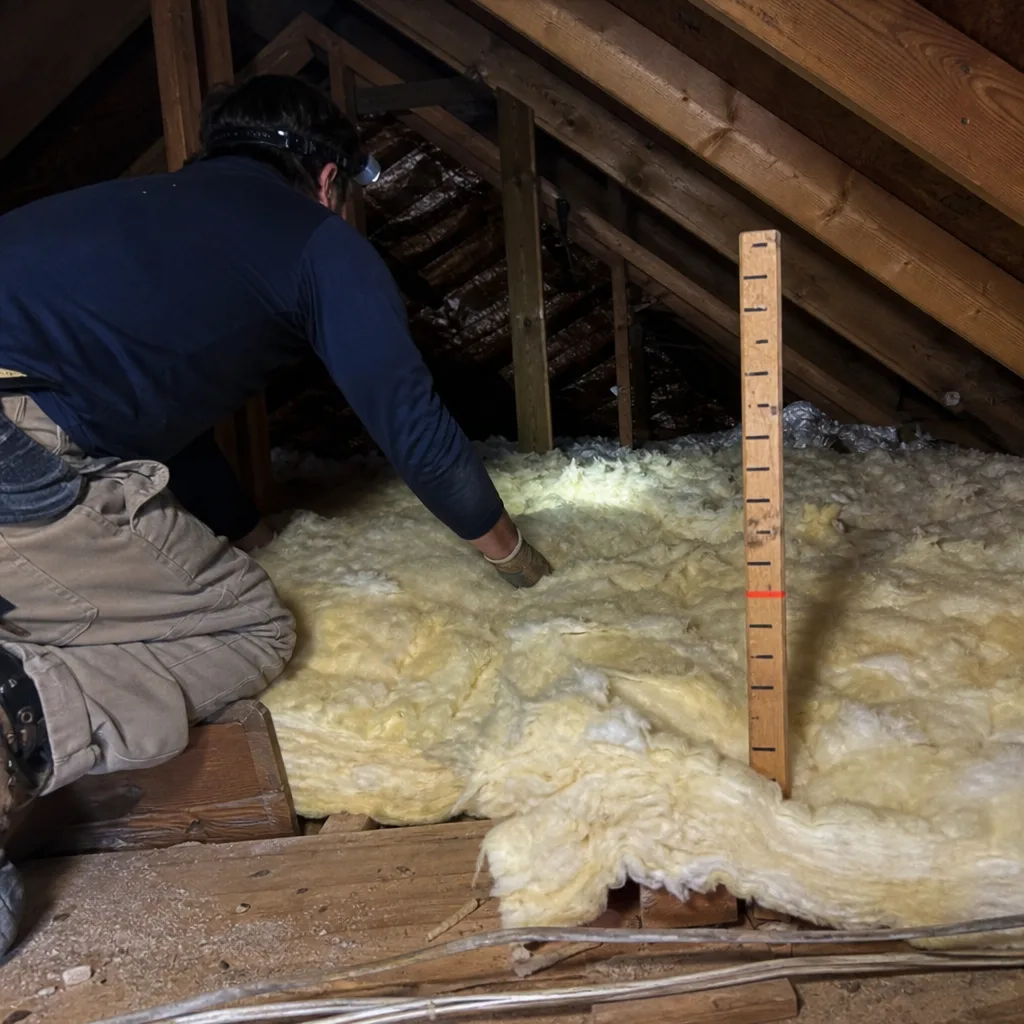
HVAC technicians enter attics in Georgetown an average of once per cooling season. Each visit can displace or compress enough blown-in insulation to reduce the effective R-value by 15-20 percent in the traffic path - and no one marks it on a service report. We’ve measured this ourselves: after a routine capacitor replacement in a Sun City home, the walk path showed 4 inches of settled cellulose where 10 inches had been installed. The homeowner’s summer cooling load jumped 340 kWh before anyone thought to look up. This guide - along with our The Complete Guide to Insulation in Georgetown - gives you the exact inspection sequence, pass/fail criteria, and documentation standards to catch these degradations before they show up on your electric bill. Everything here is written for Georgetown’s climate, building stock, and the specific failure patterns we’ve documented in Williamson County since 2016.
Quick Answer
Attic Insulation in Georgetown doesn’t wear out on a schedule - it degrades after specific events: HVAC service visits that compress traffic paths, pest intrusion that contamininates material, and storage loads that exceed design compression limits. A complete maintenance inspection takes 45 minutes, requires only a tape measure and camera, and should be performed after any attic access by outside contractors and at the start of each cooling season. Record insulation depth at five points, check decking for moisture staining, and document findings with dated photos so your next contractor has a baseline.
Table of Contents
- Why Calendar Maintenance Fails in Georgetown
- Pre-Inspection Safety and Preparation
- Post-HVAC-Service Inspection Checklist
- Pest Damage Identification and Replacement Criteria
- Compression Measurement by Insulation Type
- Moisture-Stain Inspection Protocol for Georgetown Decks
- Documentation Standards: What to Keep and Why
- Annual Maintenance Schedule for Georgetown Homes
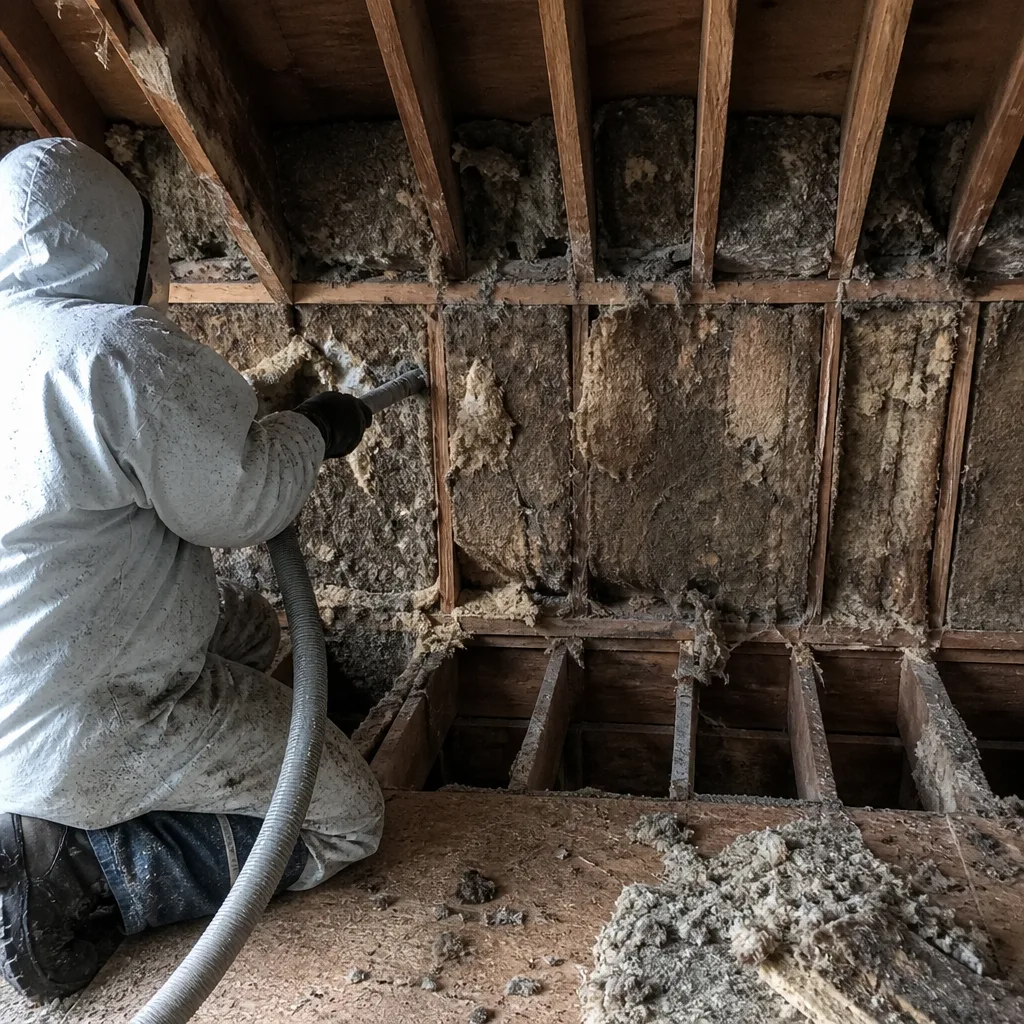 Before
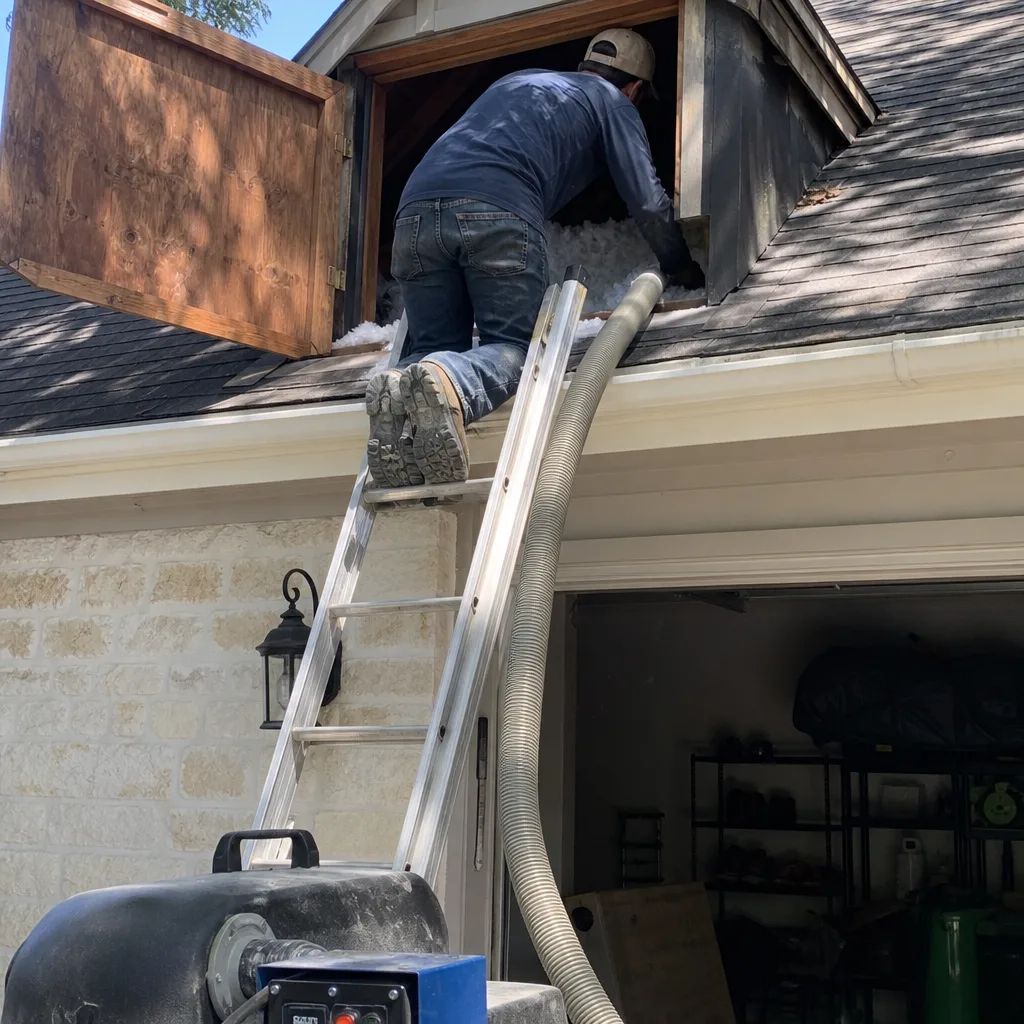 After
AfterWhy Calendar Maintenance Fails in Georgetown
The standard advice - “check your attic insulation every few years” - misses how Georgetown homes actually perform. Our climate delivers two distinct stressors: Gulf moisture events that spike attic humidity from March through May, and 100-plus-degree attic temperatures that bake asphalt-shingle roofs from June through September. Insulation doesn’t age uniformly under these conditions. It fails at specific points, after specific events, and the damage is often invisible from the attic hatch.
We’ve completed home energy audits in Georgetown neighborhoods from Berry Creek to Serenada, and the pattern is consistent. Homes with calendar-based “every five year” inspections show worse average R-values than homes with event-triggered inspection protocols. The difference isn’t the insulation material - it’s the lag between the damaging event and the discovery.
Consider the typical Georgetown HVAC service cycle. A technician replaces a condensate pump, walks across blown-in cellulose to reach the air handler, and leaves. The compressed path now conducts heat at roughly the rate of the surrounding R-30 material, but in a narrow strip. Over a 1,200 square foot attic, a 2-foot-wide traffic path represents maybe 3 percent of the area. But that path sits directly above the hallway or bedroom where the air handler lives - the exact zone the HVAC system works hardest to condition. The homeowner notices the bedroom runs warm. They lower the thermostat. The system runs longer. The electric bill climbs 8-12 percent before anyone connects it to insulation.
Event-triggered maintenance catches this in days, not years. The checklist below is built around the four events that actually degrade Georgetown attic insulation: contractor traffic, pest intrusion, storage loading, and moisture events. Each has distinct inspection points, distinct failure signatures, and distinct documentation requirements.
Pre-Inspection Safety and Preparation
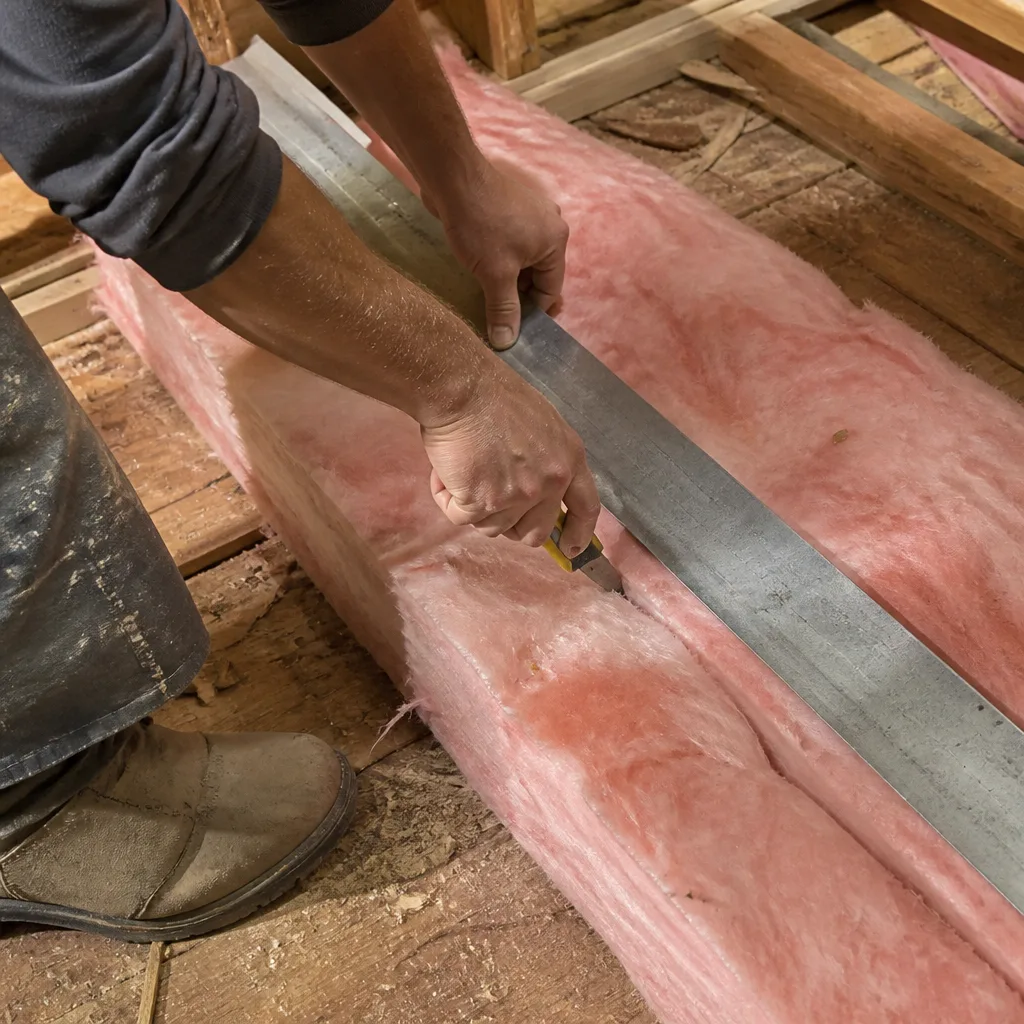
Before you enter any attic, confirm three conditions. First, the attic floor must support your weight - in pre-1980 Georgetown homes, this often means walking only on joists, not the ceiling drywall between them. Second, the space must be ventilated; if you feel stagnant heat above 120°F, abort and return in early morning. Third, identify your access path and lighting before you need it. We’ve responded to calls from Georgetown homeowners who fell through ceiling drywall because they stepped between joists while holding a flashlight.
Gather these items:
- Tape measure with rigid extension (for depth measurement without compressing material)
- Smartphone or camera with date-stamp enabled
- Notebook or digital log with columns for: location, depth reading, material condition, photo number
- Work gloves (fiberglass itch is real, and rodent-contaminated material requires hand protection)
- Respirator rated N95 or higher if disturbing any material
Never disturb vermiculite insulation - the granular, pebbly material common in homes built before 1990 in Georgetown’s older neighborhoods near downtown. It may contain asbestos. If you encounter it, stop, photograph from a distance, and contact a certified removal contractor. We do not handle vermiculite abatement; we will refer you to a specialist who does.
Mark your five measurement points before you begin. These should include: the hatch area (most trafficked), a point 10 feet from hatch in the direction of the air handler, a point near any duct penetration, a point under a south-facing roof slope (hottest zone), and a point under a north-facing slope (your control measurement). Record these locations in your log so next year’s readings compare the same positions.
Post-HVAC-Service Inspection Checklist
This is the inspection most Georgetown homeowners never perform - and the one that catches the most preventable degradation. Complete it within 48 hours of any contractor accessing your attic: HVAC, electrician, plumber, or pest control.
- Photograph the traffic path from the hatch. Stand at the attic access and shoot toward the work area. Look for displaced insulation, compressed channels, or material pushed against joists. Date the photo.
- Measure depth at the five marked points. Extend the tape vertically until it touches the attic floor (or top of the drywall), then read the depth at the insulation surface without pressing down. Record to the nearest half-inch. Compare to your baseline - typically the as-installed depth or your previous inspection.
- Inspect the direct work zone. Around the air handler, electrical panel, or other equipment, look for insulation packed against hot surfaces (fire hazard), pulled away from penetrations (air leak), or fallen into the drain pan (moisture issue). We found a Georgetown home in Cimarron Hills where blown-in GreenFiber cellulose had been pushed against a flue pipe; the char line was visible three inches up.
- Check for dropped tools or debris. Screws, wire nuts, and tape scraps compress insulation locally and create thermal bridges. We’ve extracted enough forgotten service items from Georgetown attics to fill a toolbox.
- Restore displaced material if safe to do so. Use a rake or gloved hands to fluff compressed cellulose back toward original depth. Do not attempt this with fiberglass batts - once compressed, they don’t recover. For spray foam, compression damage is permanent; document and plan replacement.
- Re-measure the traffic path. After any restoration, record new depths. If the path still reads 3+ inches below spec, mark it for professional assessment.
The critical threshold: if any measurement point shows more than 20 percent depth loss from baseline, you’ve lost proportional R-value at that point. A 10-inch cellulose installation compressed to 7 inches performs at roughly R-21 instead of R-30. In Georgetown’s cooling-dominated climate, that difference shows up in July and August.
We publish before-and-after blower-door numbers on every air-sealing job so homeowners can verify performance change. Your self-inspection log serves the same function: a dated, measured record that proves whether your insulation is performing as designed.
Pest Damage Identification and Replacement Criteria
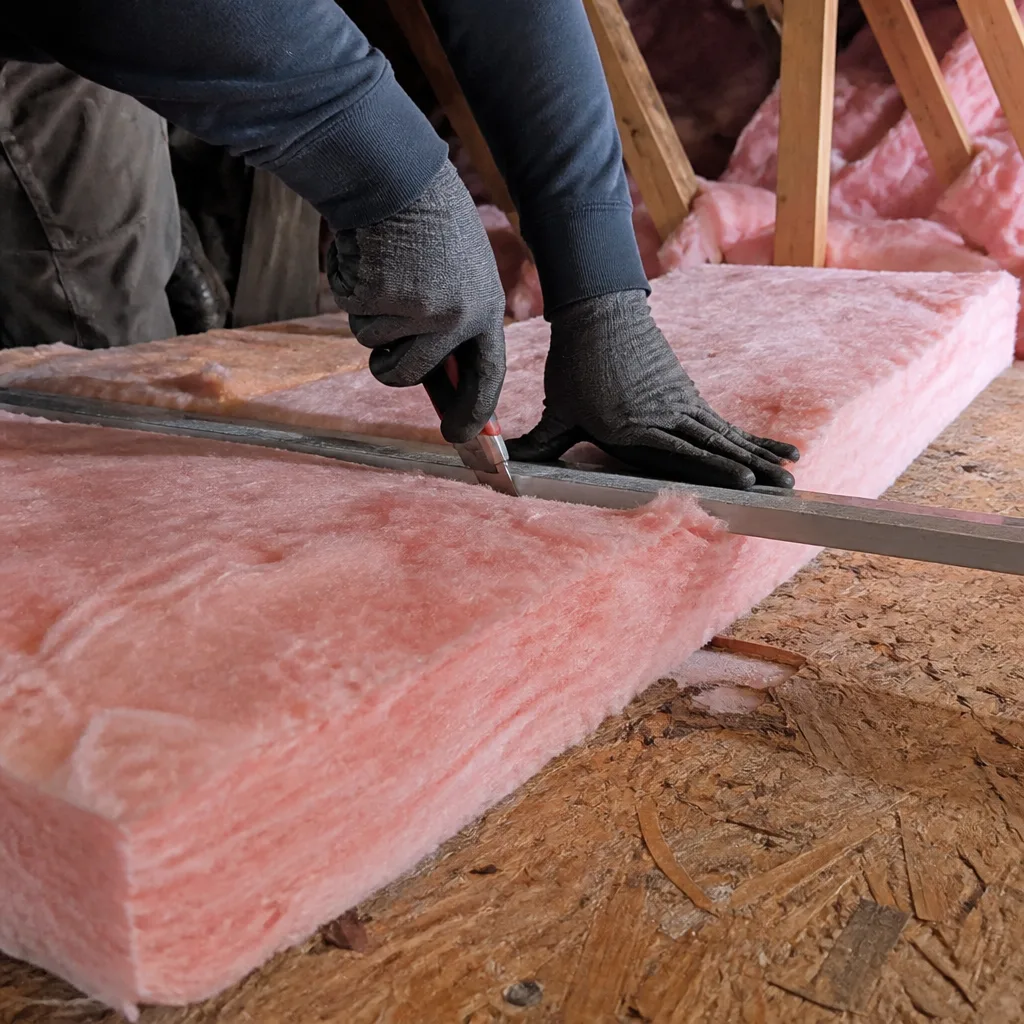
Georgetown sits at the intersection of Hill Country and Blackland Prairie ecosystems. Four pest species routinely enter attics here, and each leaves distinct evidence in insulation. The question isn’t whether they’ve visited - it’s whether the contamination level requires removal or can be spot-treated.
Roof Rats (Rattus rattus)
The most destructive attic pest in Georgetown. Look for: 1/2-inch droppings scattered in trails, urine stains that fluoresce under UV light, gnawed insulation facing (they tear fiberglass batts for nesting material), and compacted tunnels through blown-in material. If you find active droppings (moist, not desiccated) or smell ammonia, the infestation is current. Contaminated fiberglass batts must be removed - rodent urine degrades the binder and creates persistent odor. Blown-in cellulose can sometimes be spot-removed if contamination is limited to a 2-foot radius, but we typically recommend full removal and replacement when roof rats have established runs. We’ve treated attics in Georgetown’s River Ranch and Rancho Sienna developments where rat highways ran the full length of the ridge.
Eastern Gray Squirrels
Larger, louder, and more destructive to structural elements than rats. Look for: walnut or acorn caches, chewed entry holes at fascia boards, and nests built from shredded insulation and leaves. Squirrels compress insulation severely in nest zones - we’ve measured 14-inch batts crushed to 3 inches under active nests. They also gnaw wiring, which is a separate hazard. If you find a squirrel nest, remove it only after confirming no young are present (March-May and August-October in Georgetown). Insulation in a 4-foot radius around any nest requires replacement; the compression and contamination are too severe to recover.
Paper Wasps and Yellowjackets
These build paper nests against rafters or decking, not in insulation itself. The hazard is secondary: when nests are treated, insecticide drips onto insulation below, and removal attempts often knock nests into the insulation layer. Look for: paper comb structures, dead wasps in the insulation surface, and stained areas where treatment chemicals pooled. Fiberglass batts with chemical staining should be replaced - the binders can degrade, and some homeowners report respiratory irritation. Cellulose can sometimes be spot-removed if the treated area is small and dry.
Mud Daubers
Less common but present in Georgetown’s older homes with unsealed gable vents. They build mud tubes on rafters and deposit paralyzed spiders in insulation crevices. The mud itself is inert, but the spider carcasses attract dermestid beetles, which then spread into the insulation. If you find more than ten mud tubes or widespread beetle activity, plan for removal and reinstallation with sealed vent screening.
Replacement threshold: Contamination affecting more than 10 percent of attic area, any active rodent infestation, or chemical contamination from pest treatment. Spot repair works for isolated events; anything broader degrades air quality and thermal performance beyond recovery. We document photo records on every removal job so homeowners have evidence for insurance claims if the damage is sudden and accidental.
Compression Measurement by Insulation Type
Not all compression looks the same, and not all compression matters equally. Here’s how to assess each material type common in Georgetown homes.
Blown-In Cellulose (GreenFiber and similar)
Cellulose settles 10-15 percent in the first year after installation - this is designed, not failure. Measure from the expected settled depth, not the as-blow depth. In Georgetown, we typically specify 12 inches of GreenFiber cellulose for R-38 performance, expecting 10.5-11 inches after settlement. Compression from foot traffic or storage looks different: a distinct hard-packed path with sharp edges where loose material resumes. Press gently with a finger - properly settled cellulose resists slightly; compressed cellulose feels like packed sawdust. Measure depth at the center of the compressed zone and at the edge. If the center reads more than 25 percent below the edge measurement, the path has lost meaningful R-value. Fluffing helps partially but rarely restores full depth; the material has been permanently densified.
Fiberglass Batts (Owens Corning, Johns Manville, CertainTeed)
Batts are the most vulnerable to compression damage. The loft - the spring-back of the fibers - is the insulation. Once crushed, it does not recover. A compressed batt shows: reduced thickness, hard hand-feel, and often visible separation from the facing or framing. Measure thickness against the printed R-value on the facing (R-30 batts are typically 9.5 inches; R-38 are 12 inches). If a batt measures 20 percent or more below its labeled thickness, replace it. Do not “fluff” fiberglass - you’ll break fibers and reduce performance further. In Georgetown, we see this most often in attics used for storage, where homeowners have laid plywood over joists and stored holiday decorations for years. The batt below is permanently compromised.
Spray Foam (Icynene, Demilec open-cell; closed-cell varieties)
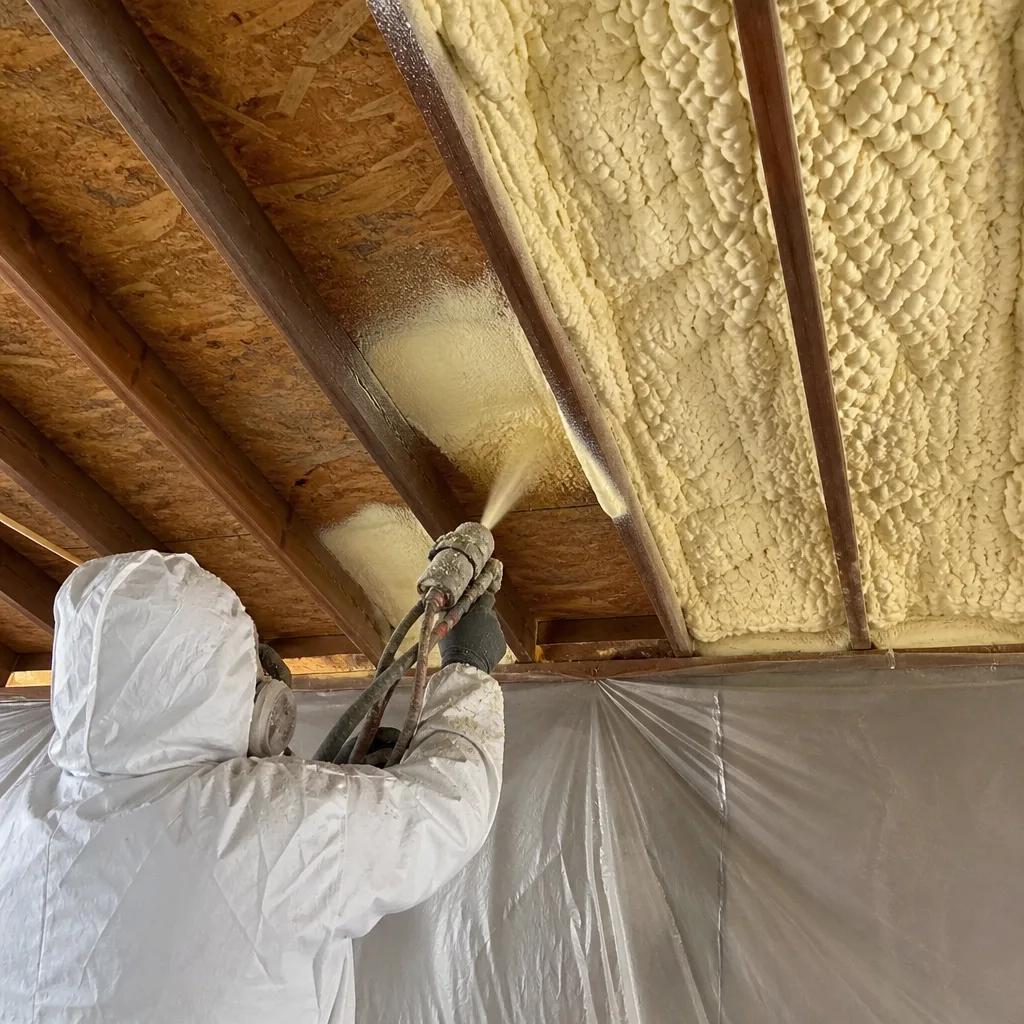
Spray foam doesn’t compress in the conventional sense - it’s rigid or semi-rigid. Damage looks different: discoloration from UV exposure if the foam is visible (not covered by insulation), cracking from structural movement, or delamination from the substrate. In Georgetown’s expansive clay soils, foundation movement can stress attic foam at rim joists and wall top plates. Look for: gaps between foam and framing, crumbling or powdery surface texture, or water staining on the foam face. Open-cell foam can absorb moisture if the roof leaks; it will darken and may support mold. Any moisture-affected spray foam requires professional assessment - we do not recommend homeowner removal, as the bonded area may be larger than visible damage suggests.
Radiant Barrier Foil
Common in Georgetown homes built 2005-2015. Check for: dust accumulation on the reflective surface (reduces performance), tears or gaps from wind or rodent activity, and contact with insulation below (creates conduction paths). Foil should face an air gap to function; if it’s laying flat on insulation, it’s doing nothing. Re-staple or replace as needed.
We publish before-and-after blower-door readings on air-sealing jobs to verify envelope performance. Your depth measurements serve the same verification function for insulation - a single number that tells you whether the material is doing its job.
Moisture-Stain Inspection Protocol for Georgetown Decks
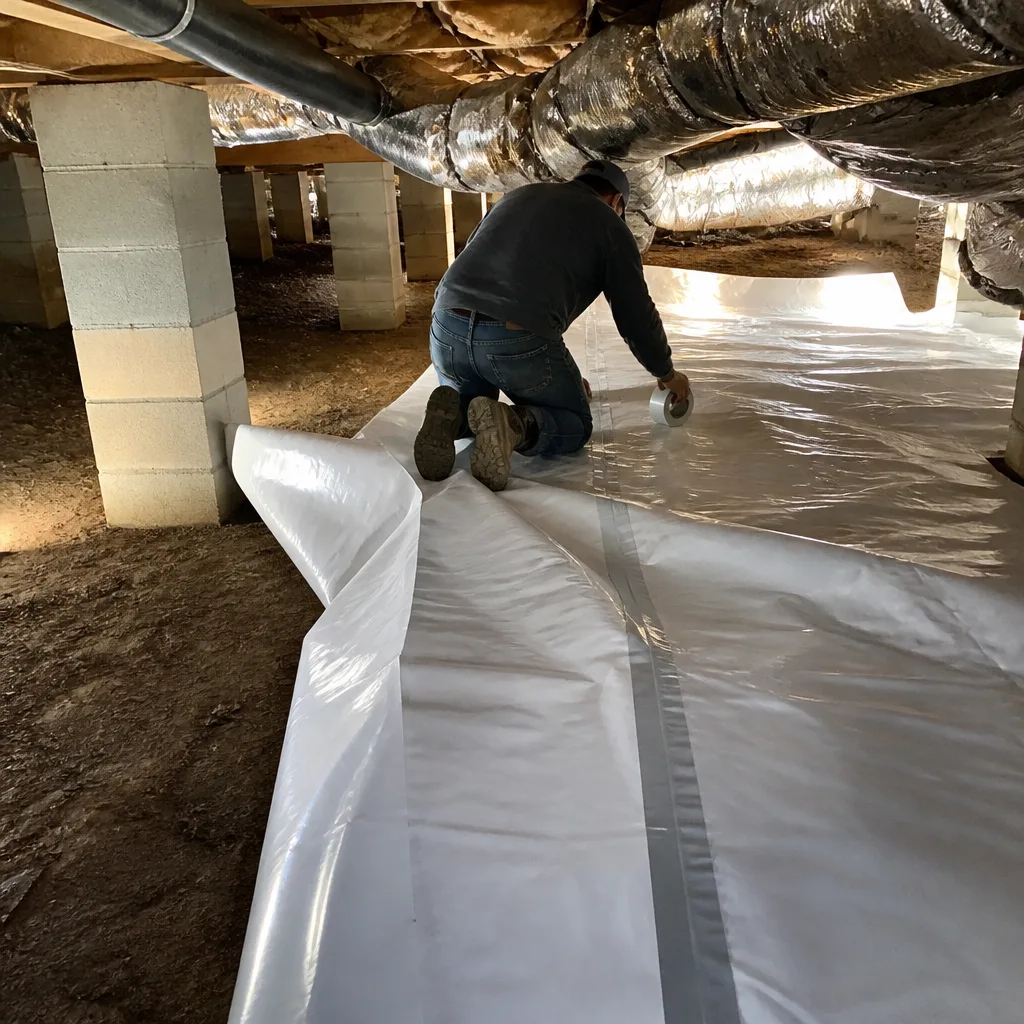
Georgetown’s position on the Balcones Escarpment creates a specific moisture pattern: Gulf air masses lift as they meet the Hill Country rise, producing sudden, heavy precipitation events from March through May. These “training” storms can overwhelm attic ventilation and produce localized wetting of roof decking - often without visible ceiling stains below.
The inspection protocol:
- Systematic scan pattern. Start at the ridge and work toward the eaves, examining every rafter bay. Use your phone flashlight at a shallow angle to the deck surface - this rakes light across the plywood and makes water stains visible as darkened grain patterns or raised fibers.
- Document each finding with location and date. Note: which rafter bay, distance from ridge, approximate size, and whether the stain feels firm or spongy. Soft decking indicates active or recent wetting and requires roofing contractor assessment before any insulation work.
- Check for mold or mildew on insulation surfaces below stains. Cellulose will show dark spotting; fiberglass shows gray or black discoloration on the facing. Any mold on insulation means the material has been wet enough to support growth - replacement is required, not optional.
- Inspect bathroom and kitchen vent terminations. In Georgetown homes, we find disconnected flex duct dumping moist air directly into insulation in roughly 15 percent of pre-2010 homes. The insulation below the termination will be uniformly discolored and compressed. This is a code violation and a health hazard - the moist air carries cooking grease and bathroom contaminants.
- Photograph with scale reference. Include a tape measure or known object in moisture-stain photos so future comparisons are valid. A 6-inch stain in March 2024 that grows to 14 inches by March 2025 indicates active leakage, not historical event.
Critical Georgetown-specific note: homes in the evacuation zone for the 2015 Memorial Day floods and the 2018 Llano River flooding have elevated risk of hidden deck damage. Even if the home didn’t take ceiling water, wind-driven rain entered soffit vents in many cases. We’ve found stained decking in apparently dry attics in Georgetown’s Woodlake and Northlake subdivisions from these events.
If you find any soft decking, active dripping, or mold growth exceeding 10 square feet, stop the inspection and contact a roofing contractor. Insulation work over wet decking traps moisture and accelerates rot. Under Haven Standard: we will not install insulation over decking we have not verified as dry, and we document that verification with photos.
Documentation Standards: What to Keep and Why
The homeowner who keeps records controls the conversation with every future contractor, and our more guides & resources can help you build that documentation habit. Without documentation, you’re dependent on memory and verbal claims. With it, you have evidence.
After each inspection, maintain this file:
- Depth measurement log. Date, five point locations with descriptions, measured depths, and variance from baseline. A simple spreadsheet works; we provide printed log sheets on request.
- Photo folder with naming convention. Use YYYY-MM-DD_Location_Description.jpg - e.g., 2024-03-15_Hatch_North_Compression.jpg. This makes retrieval instant and comparison valid.
- Contractor access record. Note every tradesman who enters the attic, the date, the work performed, and the company name. When the bedroom runs warm in August, you’ll know whether an April HVAC visit preceded it.
- Material specification sheet. If you know what was installed - brand, type, depth, R-value - record it. Many Georgetown homeowners inherit insulation from previous owners with no documentation. We can identify material type on inspection, but knowing the original spec lets us calculate whether current performance matches design intent.
- Warranty and scope documents. Under Haven Standard, every job we complete includes a written scope, written warranty, and Documented Photo Record delivered before crew departure. Keep these with your home records; they transfer to subsequent owners and establish baseline for any future claim under our 365-Day Done Right Promise.
The practical value: when you call us for a free second opinion on a competing estimate, your inspection log lets us focus on actual conditions rather than sales assumptions. We’ve had Georgetown homeowners bring us three years of depth measurements that revealed a gradual compression pattern invisible in any single visit - the data made the repair scope obvious and the pricing transparent.
Annual Maintenance Schedule for Georgetown Homes
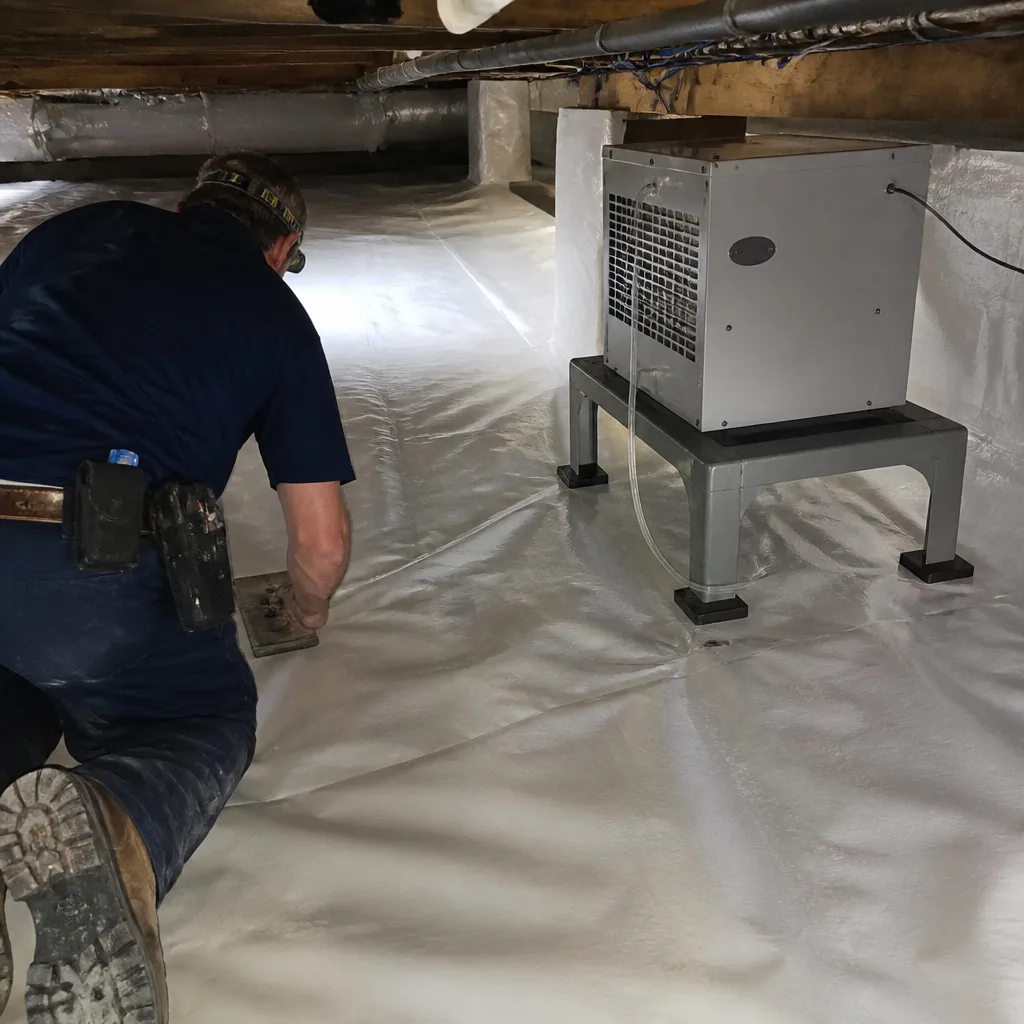
Align your inspection calendar with Georgetown’s climate and service cycles, not arbitrary dates.
March: Pre-season moisture inspection. After the last Gulf moisture event, check decking for new stains before summer heat makes attic entry miserable. This is also when roof rats begin breeding activity - early detection prevents colony establishment.
May: Post-HVAC startup inspection. After your first heavy cooling cycle, verify that condensate lines aren’t backing up into insulation and that the technician’s spring maintenance visit didn’t compress material.
September: End-of-season assessment. Before heating season, confirm insulation depth hasn’t degraded over summer. Check for wasp nest remnants from summer activity.
December: Storage load review. Before holiday decoration retrieval, assess whether stored items have compressed insulation below. Consider relocating storage to garage or conditioned space if attic compression is recurrent.
Event-triggered: Within 48 hours of any contractor access, pest treatment, or severe weather event. This is where most preventable degradation is caught - or missed.
Homes in Georgetown’s newer developments - Wolf Ranch, Rancho Sienna, Santa Rita Ranch - often have blown-in fiberglass or cellulose installed to minimum code (R-30 in attics). These homes benefit most from vigilant inspection; the margin between adequate and inadequate is thin when the base specification is minimal. Older homes in the Georgetown Square vicinity may have mixed material types from decades of incremental repair, making documentation even more critical for coherent maintenance.
We source materials from Owens Corning, Johns Manville, Knauf, Rockwool, CertainTeed, Icynene, Demilec, and GreenFiber - no proprietary lock-in means we specify what your home actually needs, not what our supplier requires us to move.
Common Mistakes to Avoid
- Walking only on the center of joists in pre-1980 homes without verifying spacing. Georgetown homes near the university and downtown often have irregular 24-inch or greater joist spacing; the step you expect to land on isn’t there.
- Measuring insulation depth at the hatch only. This is the most compressed point in most attics. Your five-point protocol must include remote locations to catch traffic-path degradation.
- Adding new insulation over compressed old material without addressing the compression. We’ve removed installations in Georgetown where three layers of progressively compressed cellulose created a density sandwich with R-value lower than the top layer alone suggested.
- Ignoring bathroom vent terminations. Disconnected flex duct is invisible from below but obvious from above - and it’s dumping moisture directly into your insulation every shower.
- Storing items directly on blown-in insulation without plywood or platforms. Even lightweight storage compresses cellulose 30-40 percent in the contact zone. Use raised platforms that span joists.
- Assuming spray foam is maintenance-free. Open-cell foam in Georgetown attics can degrade from UV exposure at gable vents or from roof leak moisture. Annual visual inspection is still required.
- Waiting for ceiling stains to investigate. By the time drywall shows moisture, decking has been wet through multiple cycles and insulation has been compromised for months or years.
When to Call a Professional
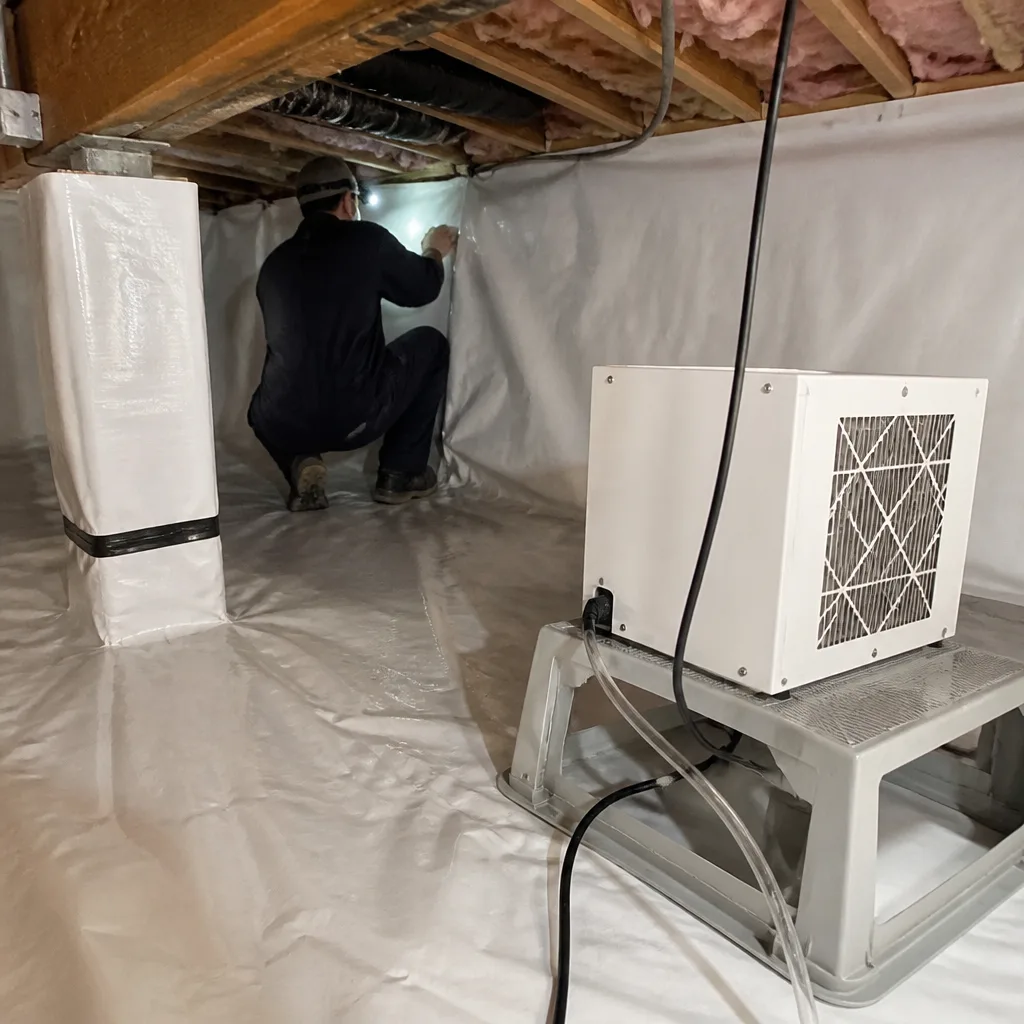
Call when your inspection reveals: compression exceeding 25 percent at any point, active pest contamination, moisture-affected decking or insulation, or any material you cannot confidently identify. We also recommend professional assessment if your home was built before 1990 and you’ve never had a complete attic inspection - vermiculite, asbestos-containing duct wrap, and obsolete wiring are all more common than homeowners assume.
Topside Attic Insulation Georgetown offers free estimates in Georgetown - call (254) 970-2136. Every estimate includes a written price before any work starts, a documented photo record of conditions found, and on air-sealing jobs, before-and-after blower-door numbers so you can verify the performance change you paid for. Our 365-Day Done Right Promise applies to all completed work, and a live person answers calls 24/7.
If you’re comparing estimates, bring us any written quote for a free second opinion - we’ll review the scope and pricing with you, line by line, under Haven Standard Clause 1: flat price, written scope, written warranty before anyone lifts a tool.
Frequently Asked Questions
Most complete attic insulation removals and replacements in Georgetown homes run between $2.80 and $4.50 per square foot, with typical whole-attic projects falling between $3,200 and $6,800 depending on material type, accessibility, and whether air sealing is included. Blown-in cellulose or fiberglass tends toward the lower end; spray foam or removal of contaminated material pushes toward the higher end. Call (254) 970-2136 for a written price specific to your attic - estimates are free, and we deliver the scope and warranty before any work starts.
Cellulose can be partially restored by raking, but foot-traffic compression permanently densifies the material - you’ll recover maybe 60-70 percent of lost depth, not 100 percent. Fiberglass batts do not recover at all; once compressed, replacement is required. Spray foam doesn’t compress in the conventional sense, but structural movement or moisture damage requires professional repair, not DIY restoration.
Current Texas energy code specifies R-38 minimum for attic insulation in Georgetown’s climate zone, which equals roughly 12 inches of blown cellulose, 10-11 inches of blown fiberglass, or 9.5 inches of fiberglass batts. Measure at multiple points; if your average depth falls below these thresholds or shows significant variation, you’re likely underperforming. Homes built before 2010 often have R-19 or less - half the current standard.
Look for 1/2-inch dark droppings in trails, urine stains that may fluoresce under UV light, gnawed or shredded fiberglass batts used for nesting, and compacted tunnels through blown-in material with smooth, hard-packed walls. Fresh droppings are moist and dark; old droppings are gray and crumbly. Any active infestation requires removal of contaminated material - rodent urine degrades insulation binders and creates persistent odor and health hazards.
Perform a full inspection at the start of each cooling season (March or April), and conduct a targeted post-event inspection within 48 hours of any contractor access, pest activity, or severe weather. Calendar-based inspection every five years misses the event-driven degradation that actually matters in Georgetown’s climate.
Adding over old material costs less upfront - typically $1.50-$2.50 per square foot for blown-in overlay versus $2.80-$4.50 for removal and replacement. But overlay on compressed or contaminated material yields poor performance and can trap moisture or pest debris. We won’t install over unsealed, compressed, or contaminated insulation - sealed first, then insulated, in that order. The long-term energy savings and air quality benefits of proper removal and replacement usually recover the additional cost within 3-5 years in Georgetown’s cooling climate. Call (254) 970-2136 for a written comparison specific to your attic conditions.
The Bottom Line
Attic insulation in Georgetown degrades after identifiable events, not on a calendar. The homeowner who inspects after every contractor visit, measures depth at five consistent points, documents with dated photos, and knows the specific failure signatures of local pests maintains performance that calendar-based maintenance misses entirely. Keep your log, know your baseline, and inspect after events - not years. When degradation exceeds your ability to restore, or when you’re comparing contractor estimates and want documented evidence rather than sales promises, we’re available. Written price first, documented record last, every time.
Written by Wes Okafor, Owner at Topside Attic Insulation Georgetown, serving Georgetown since 2016.