
Last updated September 24, 2026
The Complete Guide to Insulation in Georgetown
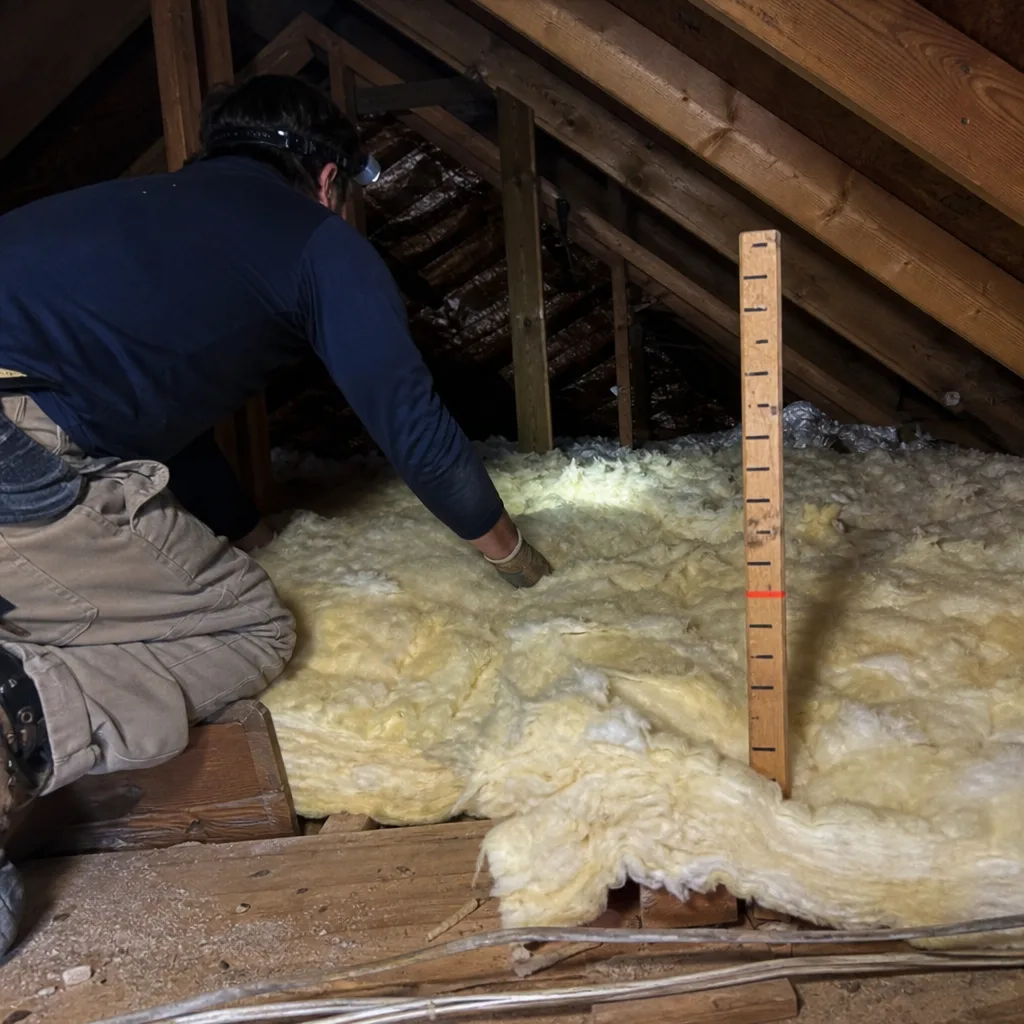
A Georgetown home we tested last July registered 8.2 ACH50 - roughly eight complete air changes per hour under standard test pressure. The attic had brand-new R-38 blown-in insulation, installed six months earlier by another contractor. The homeowner’s summer electric bill had barely dropped. The insulation wasn’t failing. The unsealed can lights, HVAC boots, and top plate gaps underneath it were. In Georgetown’s climate zone 2A, with its 100-degree humid summers and sudden subfreezing winter snaps, insulation without measured air sealing is often just expensive padding. This guide explains what actually works in Georgetown homes, why blower-door numbers matter more than R-value alone, and how to read a contractor’s scope before anyone lifts a tool. For how to hire a insulation contractor in Georgetown, see our step-by-step guide.
Quick Answer
Effective insulation in Georgetown requires sealing air leaks first, then insulating to climate-appropriate R-values. Most Georgetown homes built between 1990 and 2010 test between 6 and 10 ACH50 before air sealing - meaning they lose their entire conditioned air volume multiple times per hour. A sealed attic at R-30 typically outperforms a leaky attic at R-38 on both comfort and utility bills. The complete approach is: blower-door test, air seal all penetrations, then insulate with materials matched to the application.
Table of Contents
- Why Air Leakage Beats R-Value in Georgetown Homes
- Georgetown’s Climate Zone 2A: What IECC Requires vs. What Actually Works
- The Georgetown Attic Stack-Up: Where Your Conditioned Air Actually Escapes
- Real Blower-Door Results: Sealed vs. Unsealed Performance
- Insulation Types for Georgetown: When to Use What
- Radiant Barrier in Georgetown: When It Helps and When It Doesn’t
- Choosing an Insulation Contractor in Georgetown: What to Verify
- Costs, Timeline, and What Documentation You Should Receive
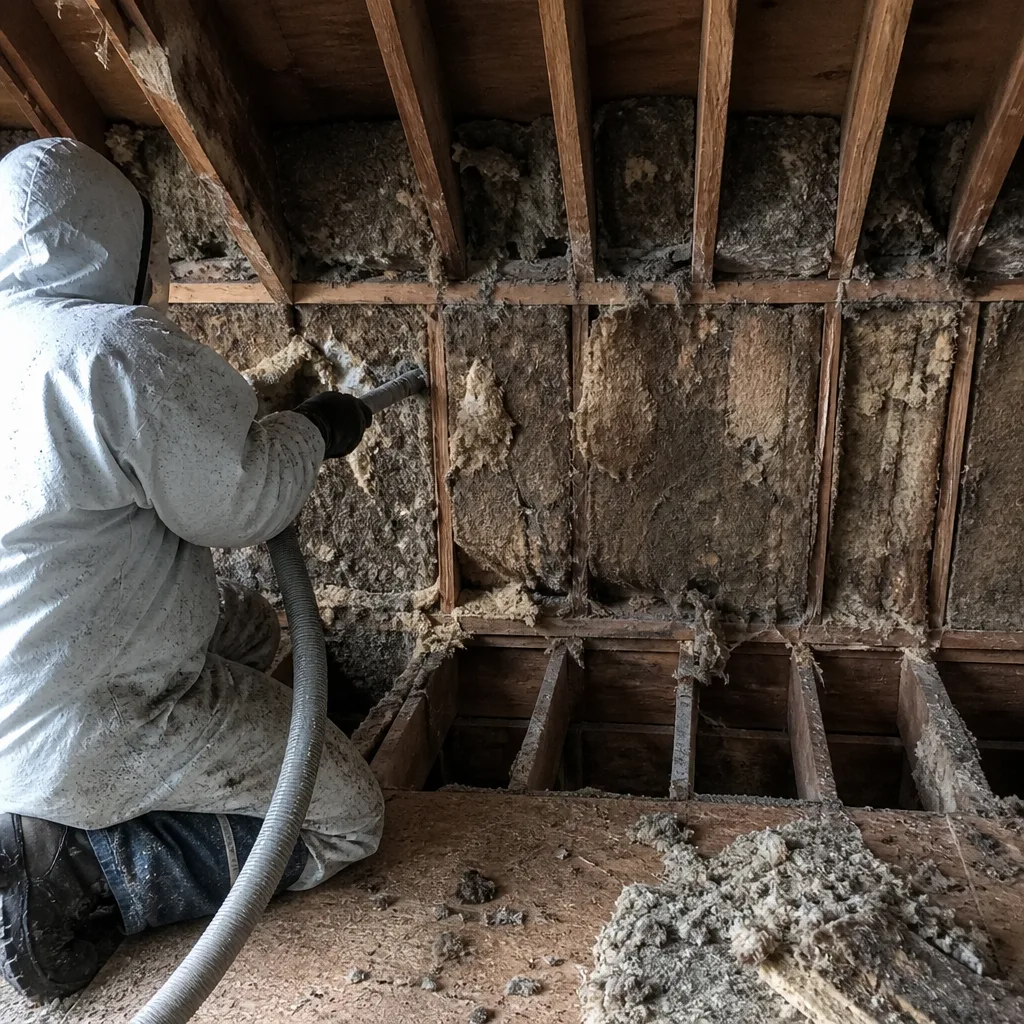 Before
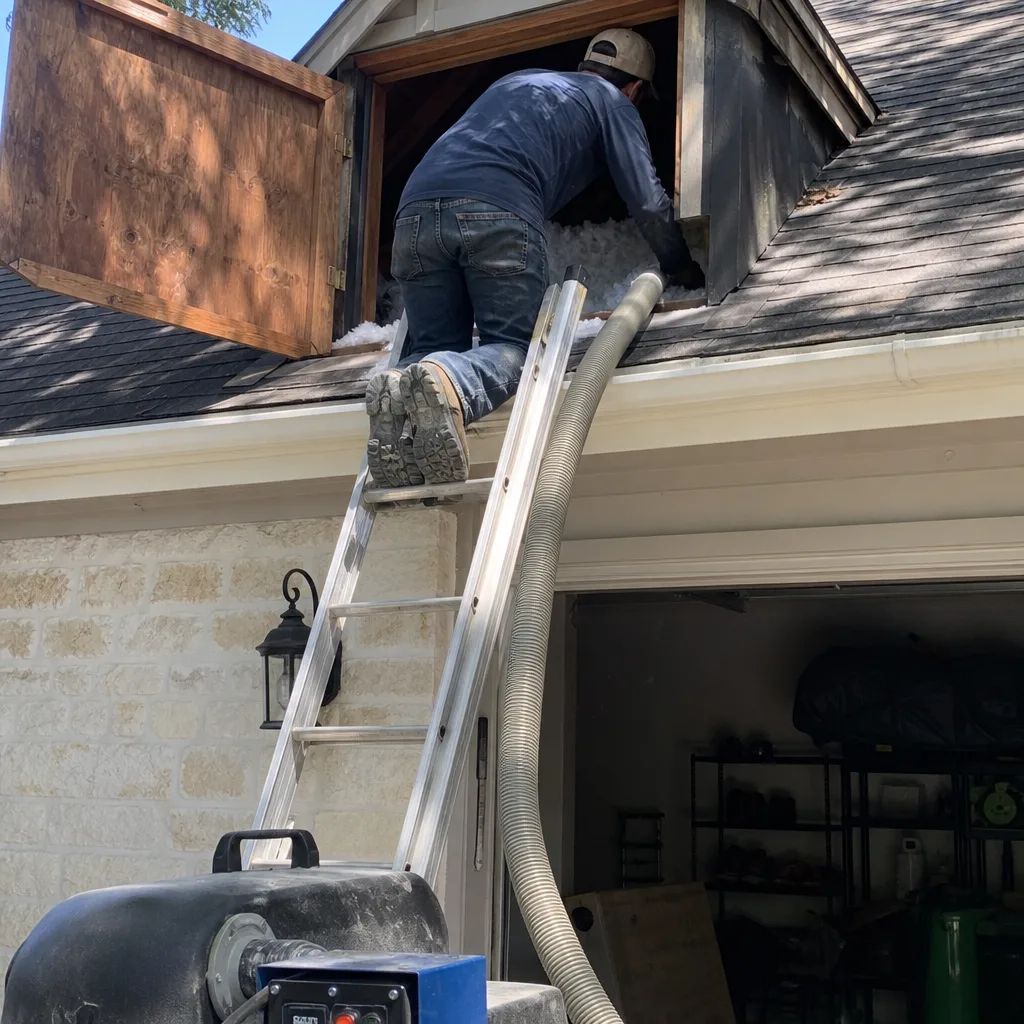 After
AfterWhy Air Leakage Beats R-Value in Georgetown Homes
R-value measures thermal resistance - how well a material slows heat transfer. It’s printed on every bag of insulation at every Georgetown Home Depot. What R-value does not measure is air movement. And in the attics we test across Georgetown, from the historic homes near Southwestern University to the 2000s-era subdivisions in Sun City, air movement is usually the dominant problem.
ACH50 - air changes per hour at 50 pascals of pressure - is the metric that captures this. A blower-door test, which pressurizes or depressurizes the house to exactly 50 pascals, yields one number that tells the whole story. The 2021 IECC sets 3 ACH50 as the target for new construction in climate zone 2A. We have never tested a pre-2010 Georgetown home that met this without intervention. Most land between 6 and 10. Some older homes in the historic district exceed 15.
Here’s what that means in practice. At 8 ACH50, your home is exchanging its entire air volume with unconditioned attic air roughly every 7.5 minutes under test conditions. Real-world conditions are less extreme, but the directional truth holds: every gap, every unsealed can light, every leaky top plate is a pipeline for 140-degree attic air to replace your conditioned air in July, or 25-degree air in January. No thickness of fiberglass can fully compensate for that continuous exchange.
We see this constantly in Georgetown’s 1990s and 2000s stock - the neighborhoods along Williams Drive, the builds near Rivery Park, the tracts off University Avenue. These homes were built fast, insulated to passing grade, and never sealed. The insulation looks adequate. The blower-door number reveals the truth.
Our protocol, and the protocol we believe every Georgetown homeowner should demand, is sealed first, then insulated. We will not blow insulation over an unsealed attic floor. Air sealing of top plates, can lights, electrical penetrations, plumbing stacks, and HVAC boots is completed before any insulation is added. The insulation then performs as designed, in a genuinely enclosed thermal boundary.
Georgetown’s Climate Zone 2A: What IECC Requires vs. What Actually Works
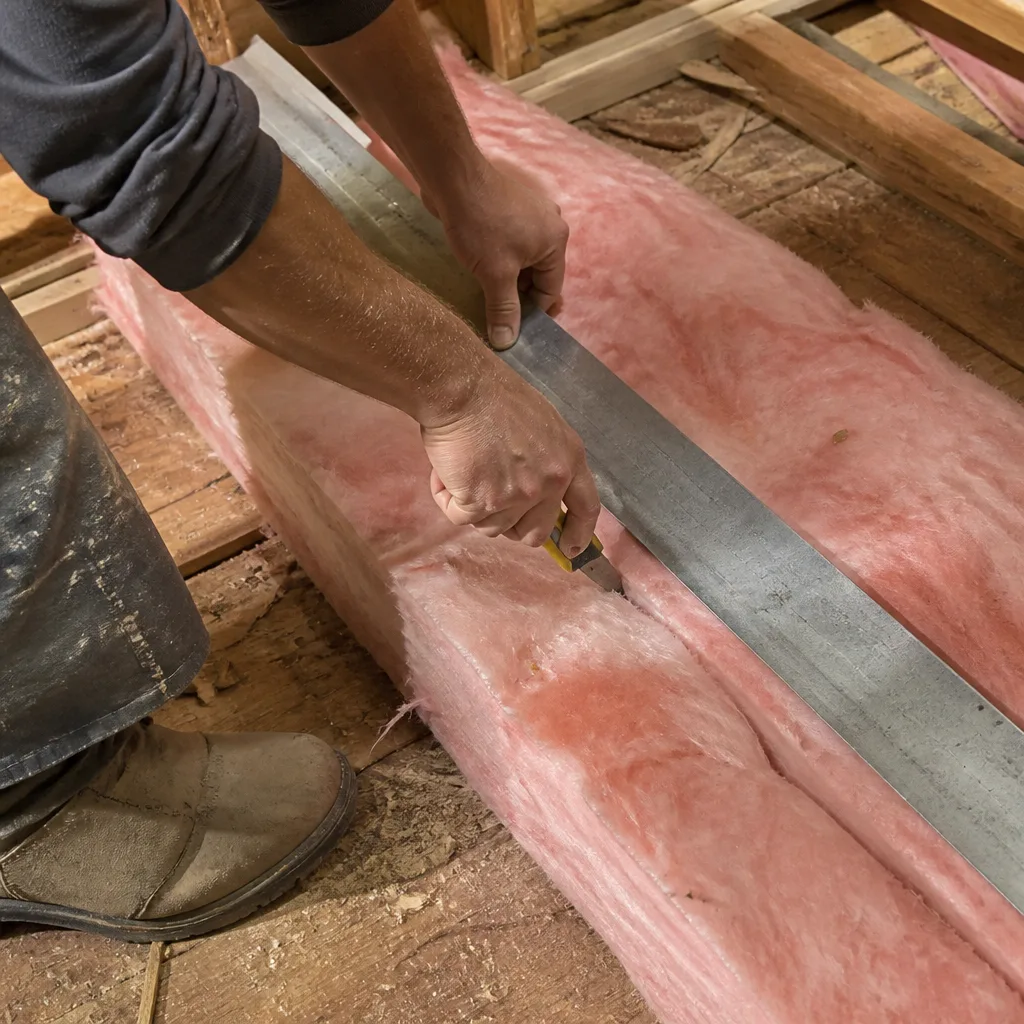
Georgetown sits in IECC climate zone 2A - hot-humid. This classification drives code-minimum R-values, but it also drives something more relevant to your utility bill: the ratio of cooling load to heating load, and the moisture management burden that comes with it.
The 2021 IECC sets attic insulation minimums at R-49 for new construction in zone 2A. Many Georgetown municipalities enforce this on new builds. Existing homes are not required to meet new-construction standards, and most don’t. Attics insulated in the 2000s typically carry R-30 or less. Walls in 1990s-2010s construction are usually R-13 fiberglass batts, sometimes poorly installed with compression gaps at electrical boxes.
But here’s the critical distinction for Georgetown homeowners: code minimum is not cost-optimum. For a full insulation cost breakdown specific to Georgetown, see our 2026 reference. With local utility rates from Oncor and Georgetown Utility Systems, and Georgetown’s specific temperature profile - roughly 70 days above 95 degrees, plus sudden winter drops into the teens - the payback math favors a different approach.
Our analysis of Georgetown utility bills, across roughly 200 homes we’ve worked since 2016, shows a consistent pattern. Homes that receive air sealing plus insulation to R-38 in the attic see greater annual savings than homes insulated to R-49 without sealing. The sealed R-38 homes average 18-24% cooling reduction. The unsealed R-49 homes average 8-12%. The difference is the leakage path.
For wall insulation, the calculus differs. Georgetown’s framed walls, especially in the expansive clay soils of the Blackland Prairie, move. We see cracked drywall, shifted framing, and compromised batt insulation in homes throughout the city, particularly in areas like Serenada and the corridor along FM 2338 where soil movement is pronounced. Dense-pack cellulose or injection foam can address this in existing walls, but only after a thorough assessment of the wall cavity condition.
Key factors specific to Georgetown:
- Summer design temperature: 99°F dry bulb, with wet-bulb temperatures that push latent cooling loads higher than dry-climate zone 2A cities
- Winter design temperature: 19°F - low enough that heating degree days matter, but not enough to justify extreme R-values over air sealing
- Soil conditions: expansive clay that cracks slab perimeters and shifts framing, compromising insulation contact over time
- Local utility structure: Georgetown Utility Systems residential rates, combined with seasonal demand charges, make peak-load reduction valuable
The practical recommendation for most Georgetown homes: air seal to below 4 ACH50, then insulate the attic to R-38 with blown fiberglass or cellulose. This outperforms R-49 in a leaky envelope on every metric we measure.
The Georgetown Attic Stack-Up: Where Your Conditioned Air Actually Escapes
Every attic has a personality. In Georgetown, we see consistent patterns across construction eras. Understanding the typical leakage stack-up helps you read a contractor’s scope and verify that they’re addressing the actual problem, not just adding insulation depth.
Here’s the typical leakage inventory we document on Georgetown blower-door tests, ranked by measured contribution:
- Top plates and wall-to-ceiling junctions. In platform-framed homes - most Georgetown construction since 1985 - the top plate is a horizontal framing member where the wall meets the ceiling drywall. The gap between top plates, and between top plates and drywall, is rarely sealed in production construction. On a typical 2,200 square foot Georgetown home, this continuous linear gap can account for 25-35% of total envelope leakage. We seal it with closed-cell foam or caulk, depending on access.
- HVAC boots and duct penetrations. Every supply and return register passes through the ceiling via a sheet-metal boot. The boot-to-drywall gap, and the boot-to-duct connection, are almost never sealed in homes built before 2015. In Georgetown’s climate, this is a direct path for 130-degree attic air to enter your supply system in summer. Measured contribution: 20-30% of total leakage in homes with attic ductwork.
- Can lights and electrical penetrations. Recessed can lights installed before 2012 are typically not IC-rated (insulation contact) and have open housings that communicate directly with the attic. Even IC-rated cans have gasket gaps. Electrical boxes for ceiling fans, smoke detectors, and pendant lights add smaller but cumulative paths. Combined contribution: 15-25%.
- Plumbing vent stacks and chimney chases. These are large penetrations with inconsistent sealing. The plumbing vent - usually 3-inch PVC - passes through a rough opening that’s rarely foamed. Chimney chases in older Georgetown homes, particularly in the historic district near the square, are often completely open to the attic. Contribution varies widely but can be dominant in pre-1980 homes.
- Attic access hatches and pull-down stairs. A 1/4-inch gap around a 22×30 inch attic hatch is equivalent to a 6-inch diameter hole in your ceiling. Pull-down stairs are worse - the stair assembly itself leaks, and the rough opening is rarely gasketed. In Georgetown’s summer, this is a chimney effect driver. Contribution: 5-15% depending on type.
- Exhaust fan housings and duct terminations. Bathroom and kitchen exhaust fans mounted in the attic often have backdraft dampers that stick open, or duct terminations that terminate poorly. The flex duct itself leaks at connections. Contribution: 5-10%.
We document every penetration with photos, measure the before-and-after blower-door result, and provide the homeowner with a written record. In Georgetown’s Serenada neighborhood, we recently completed a home where the top plate gaps alone accounted for 1,800 CFM50 of a total 4,200 CFM50 pre-sealing reading. Sealing just that path dropped the home to 3,100 CFM50 before any insulation was touched.
Real Blower-Door Results: Sealed vs. Unsealed Performance
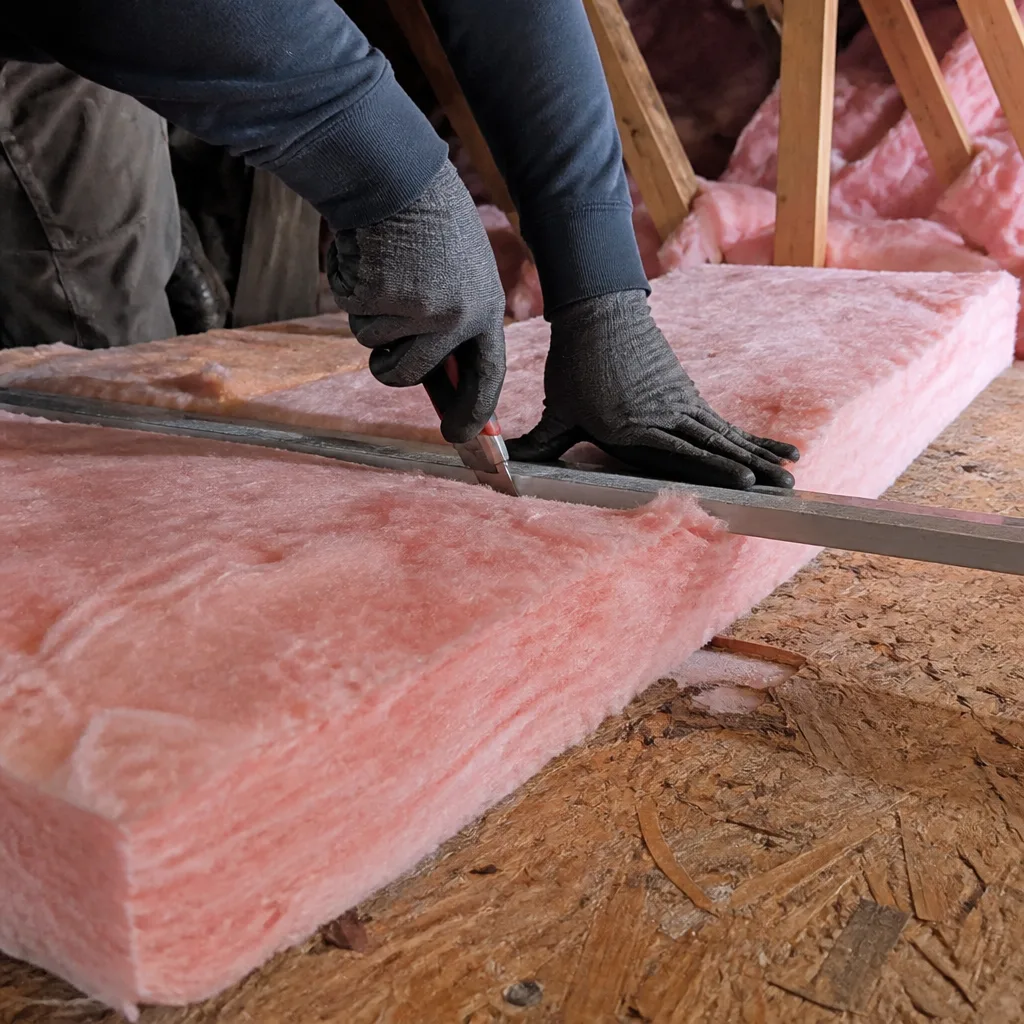
Numbers without context are noise. Here’s what measured air sealing produces in actual Georgetown homes, with utility bill data where homeowners have shared it.
Case: Williams Drive area, 2004 construction, 2,400 sq ft
This home received R-38 blown fiberglass from another contractor in spring 2022. The homeowner called us in August 2023, frustrated that summer bills hadn’t dropped. Our blower-door test read 7.8 ACH50. We inspected the attic: new insulation, uniformly deep, sitting directly on top of unsealed can lights, open top plates, and a 1/2-inch gap around every HVAC boot.
Our scope: remove insulation from perimeter areas, seal all penetrations with closed-cell foam and acrylic caulk, replace insulation, add baffles at eaves for ventilation. Blower-door result after sealing: 3.4 ACH50. We did not add insulation depth; the existing R-38 remained.
Utility bill comparison (Georgetown Utility Systems, same rate period year-over-year):
| July 2022 (pre-any work) | $287 |
| July 2023 (post-insulation only) | $271 |
| July 2024 (post-sealing) | $198 |
The sealing work cost less than the original insulation job. The savings exceeded the insulation-only result by a factor of four. This pattern repeats across our Georgetown dataset.
Case: Sun City, 2007 construction, 1,850 sq ft
Pre-sealing blower-door: 9.2 ACH50. Post-sealing: 4.1 ACH50. Attic insulated to R-30 blown cellulose after sealing. Homeowner-reported summer bill reduction: 22% in first year. Winter heating gas reduction (Texas Gas Service): 19%.
Case: Historic district near Southwestern University, 1952 construction, 1,400 sq ft
Pre-sealing: 14.6 ACH50 - the highest we’ve recorded in Georgetown. Post-sealing: 5.8 ACH50. This home had balloon framing, no top plates in the modern sense, and a completely open chimney chase. Sealing required custom blocking and extensive foam work. Even at 5.8 ACH50, the improvement was dramatic - summer second-floor temperature dropped from 86°F to 78°F with the same thermostat setting.
The documentation we provide on every job: written scope before work, blower-door numbers before and after, photos of sealed penetrations, and a written warranty. Under the Haven Standard, you know what leaving looks like before we arrive.
Insulation Types for Georgetown: When to Use What
Once air sealing is complete, insulation material selection matters. Here’s how we match materials to Georgetown applications, based on 9,000+ homes sealed and insulated since 2016.
Attic floors: blown fiberglass or cellulose
For standard vented attics in Georgetown - which describes roughly 85% of our market - we install blown insulation over the sealed attic floor. Fiberglass (Owens Corning AttiCat, Johns Manville Climate Pro) offers consistent density and doesn’t settle significantly. Cellulose (GreenFiber) provides slightly better air resistance at a given depth and fills irregular spaces well. Both perform adequately when the attic is sealed first. We typically specify R-38 to R-49 depth, depending on joist cavity depth and homeowner preference.
In Georgetown’s climate, moisture management is relevant. Cellulose is treated with borate fire retardant and handles incidental moisture well, but sustained roof leaks - common in homes with aging composition shingles, which we see frequently in the 1990s builds off Shell Road - can degrade it. Fiberglass is more tolerant of intermittent wetting. We inspect roof condition before specifying and document any concerns in the written scope.
Attic roofs: spray foam
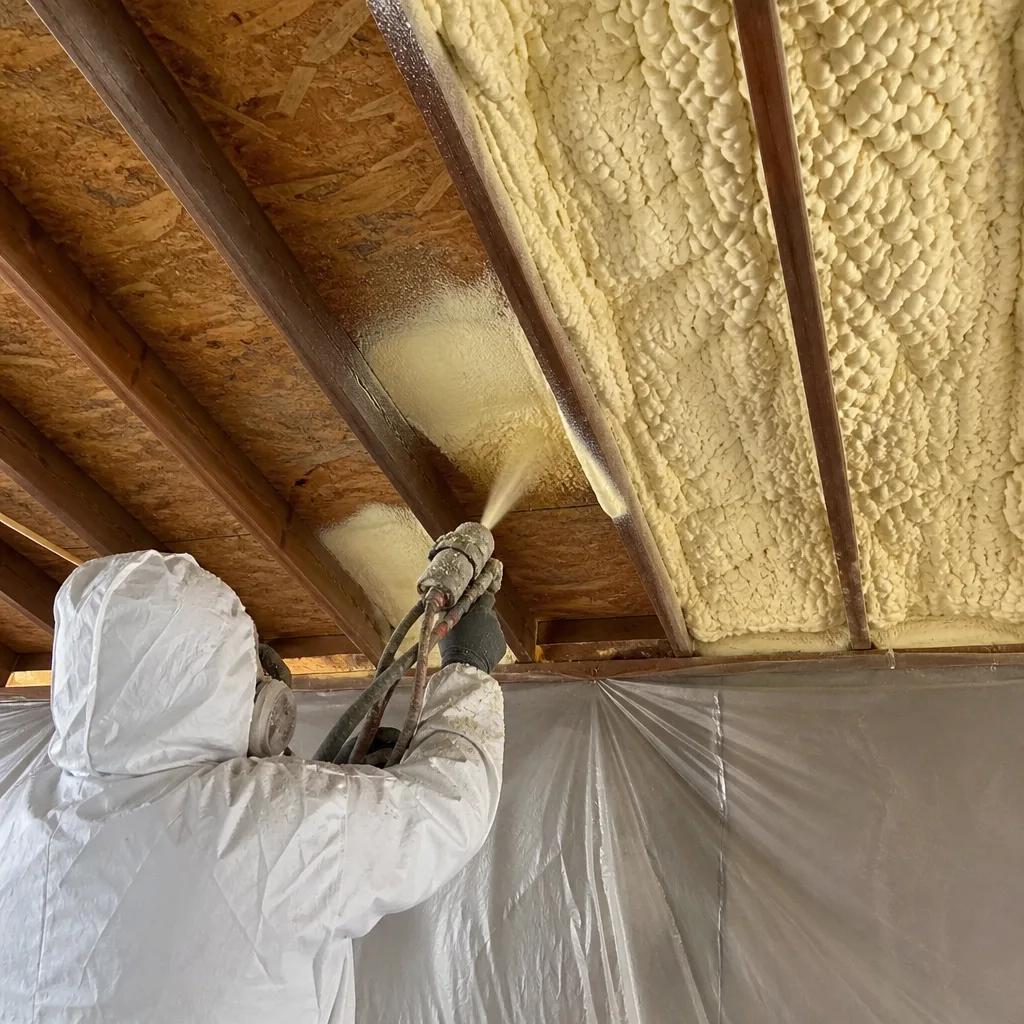
When the attic is converted to conditioned space - a growing trend in Georgetown’s infill renovations and garage apartment conversions - we apply open-cell or closed-cell spray foam to the roof deck. Open-cell (Icynene, Demilec) provides air sealing and R-value in one application, at lower cost per R. Closed-cell adds structural rigidity and vapor barrier properties, useful in certain cathedral ceiling assemblies. We do not apply spray foam over unsealed penetrations; the air sealing must still happen, whether at the roof deck or the floor below.
Walls: dense-pack cellulose or injection foam
Existing framed walls in Georgetown can be insulated without removal of drywall. Dense-pack cellulose, installed through 2-inch holes at stud bay top and bottom, fills irregular cavities and provides modest air sealing. Injection foam (Icynene’s pour foam variant) achieves higher R-value per inch and better cavity fill in walls with obstructions. Both require verification that the wall cavity is empty - we scope with a borescope before specifying.
Crawl spaces: encapsulated with closed-cell foam or rigid board
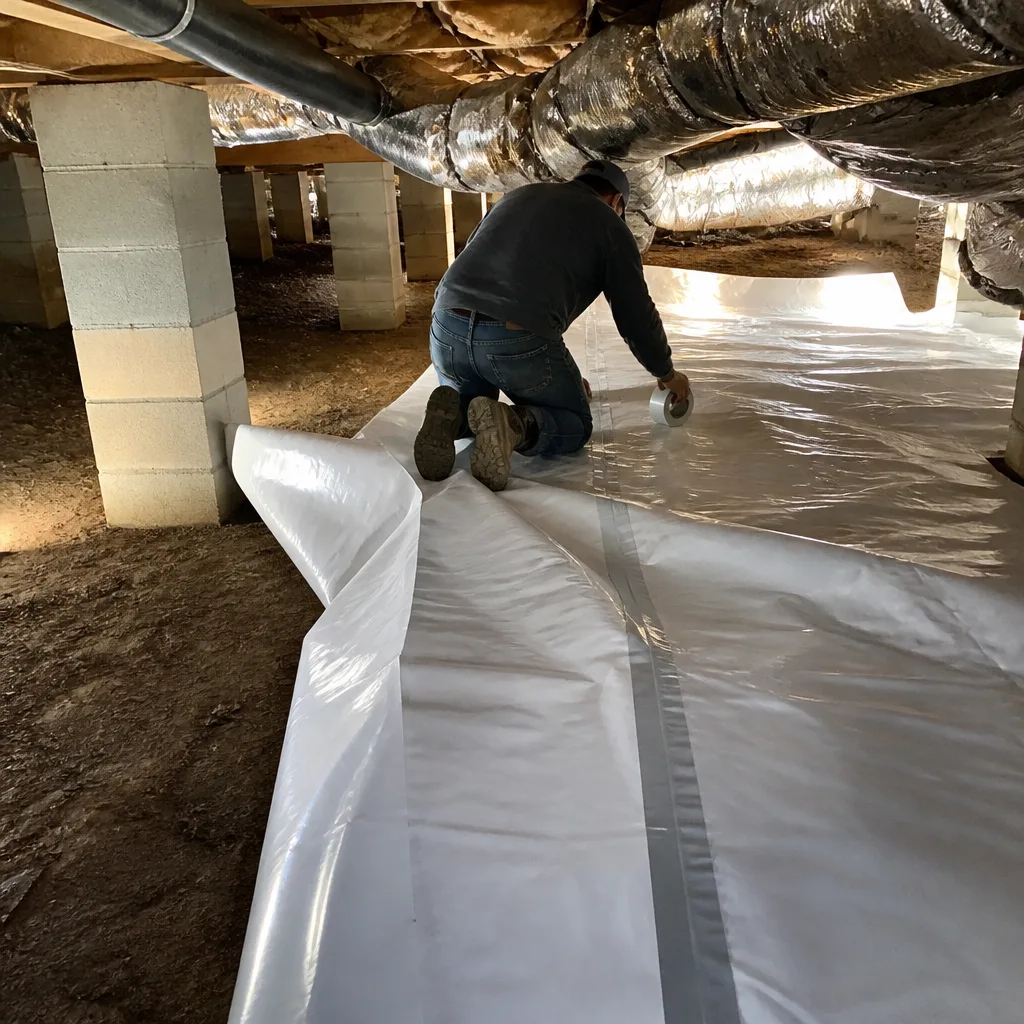
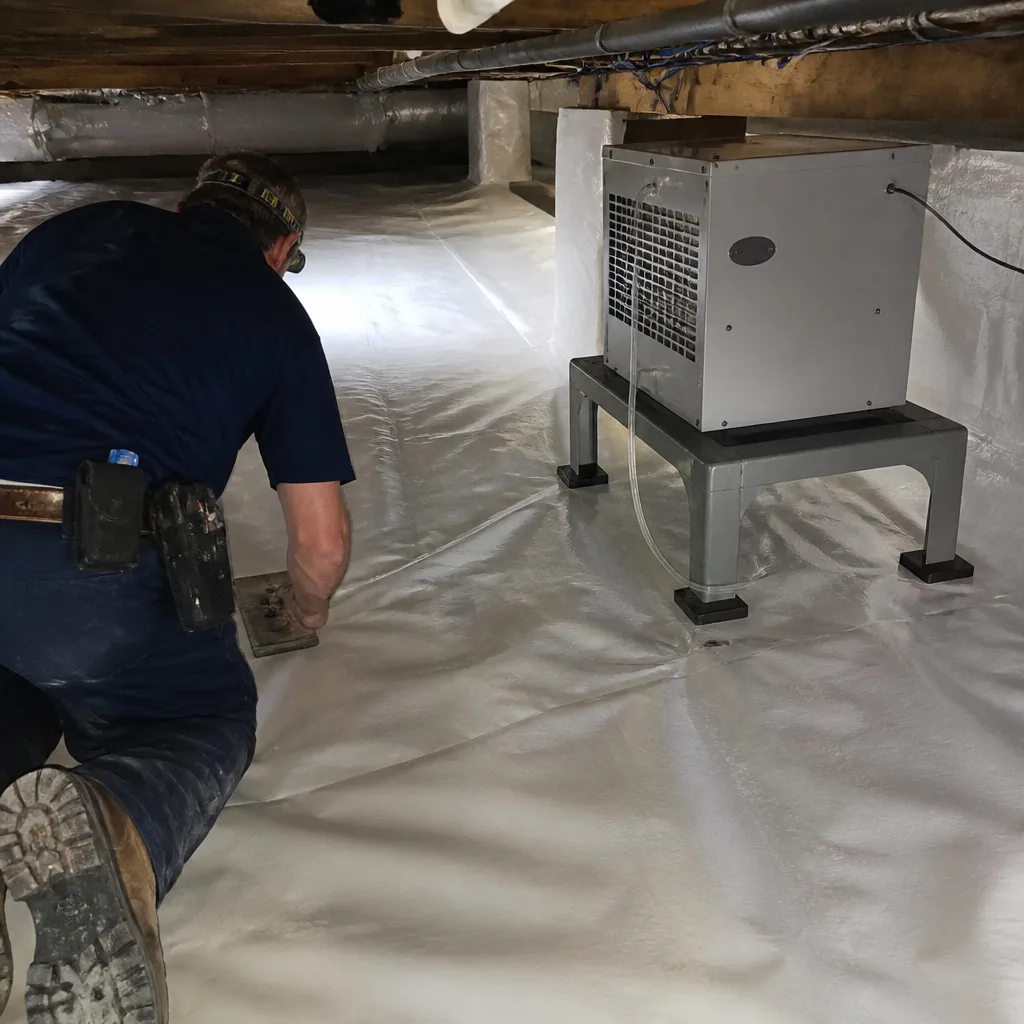
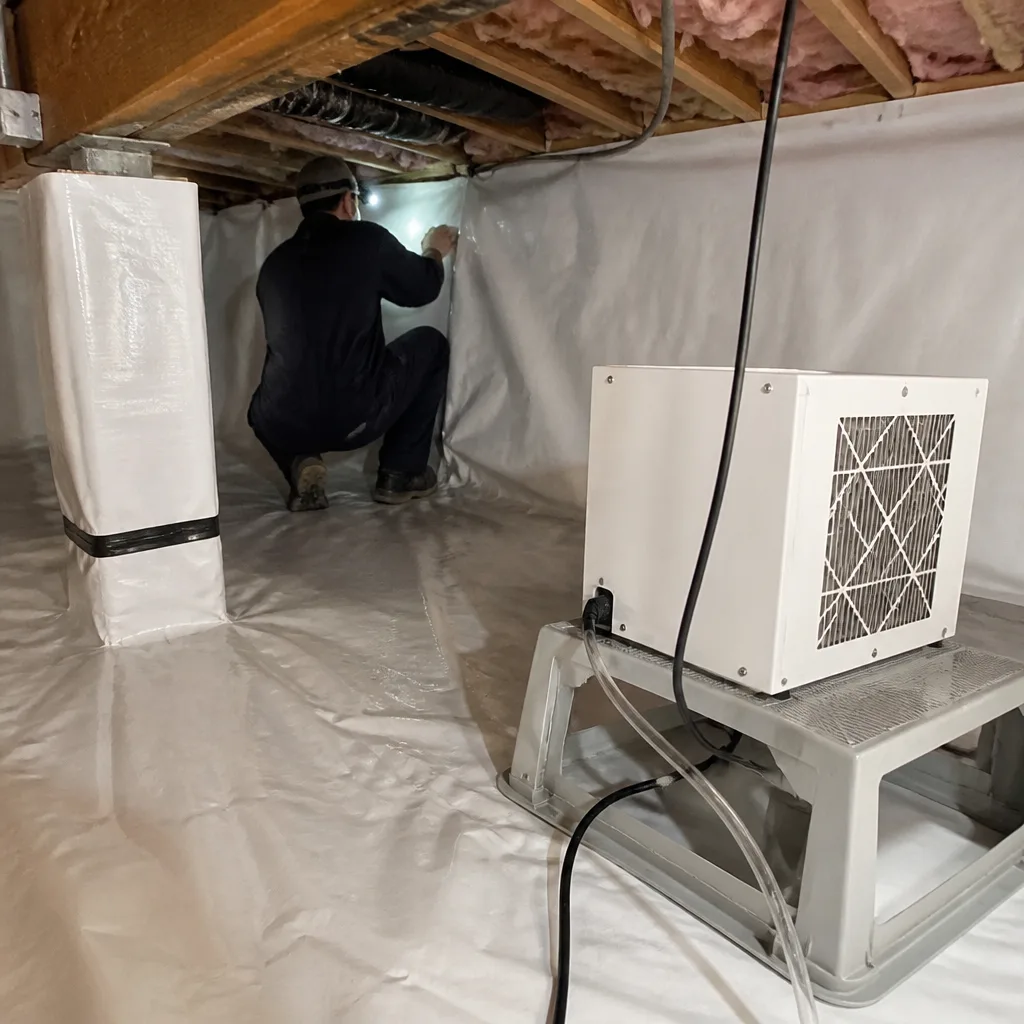
Georgetown’s clay soils and periodic heavy rains make crawl spaces problematic. We encapsulate with vapor barrier over sealed walls and floor, then insulate walls with closed-cell foam or rigid XPS board. This converts the crawl space to semi-conditioned space, protecting floor insulation from moisture degradation. Crawl Space Encapsulation & Vapor Barrier in Georgetown details our full protocol.
Materials we source: Owens Corning, Johns Manville, Knauf, Rockwool, CertainTeed, Icynene, Demilec, and GreenFiber. We specify by application, not by brand exclusivity. No proprietary product lock-in.
Radiant Barrier in Georgetown: When It Helps and When It Doesn’t
Radiant barrier - typically a reflective foil applied to roof decking or rafters - is heavily marketed in Texas. The claim: block radiant heat from the roof deck, reduce attic temperatures, lower cooling loads. In some Georgetown applications, this is true. In others, it’s a misdirection of budget from the actual problem.
Radiant barrier works by reflecting infrared radiation. It requires an air space to function - the reflective surface must face an open cavity. It addresses radiant heat transfer, which is the dominant heat gain mechanism in a vented attic with a dark roof in full sun. A Georgetown attic with south-facing composition shingles can reach 140-150°F at roof deck. Radiant barrier can reduce this by 20-30°F under ideal conditions.
But here’s the critical caveat: radiant barrier does nothing for air leakage. In a home testing 7+ ACH50, the dominant heat gain path is not radiant transfer from the roof deck. It’s convective flow - actual air movement - carrying 140-degree attic air through leaks into conditioned space. Sealing the attic floor drops the attic air temperature the home actually experiences far more than radiant barrier does, because the home is no longer breathing attic air.
We specify radiant barrier in Georgetown homes only when:
- The attic floor is already sealed to below 4 ACH50, and
- The roof deck is accessible (new construction or re-roof), and
- The homeowner has a specific comfort complaint on upper floors that persists after sealing and insulation
In a sealed attic, radiant barrier provides incremental benefit. In an unsealed attic, it’s theater. We’ve removed radiant barrier installations that cost $2,000-$3,000 and produced no measurable bill reduction because the air leakage dwarfed the radiant gain.
For Georgetown homeowners with ductwork in the attic - common in 1990s-2000s builds - the priority is always duct sealing and air sealing first. A 140-degree attic with sealed ducts and a sealed floor performs better than a 120-degree attic with leaky ducts and an unsealed floor. The temperature number is misleading if the air is moving.
Choosing an Insulation Contractor in Georgetown: What to Verify
The insulation industry in Georgetown, as in most Texas markets, has low barriers to entry. A truck, a blower, and a supplier account are sufficient. Quality varies enormously. Here’s what to verify before signing a scope.
1. Do they measure before and after?
A contractor who cannot produce a blower-door number is guessing. The number is the only objective verification that air sealing worked. Ask for the pre-work ACH50 or CFM50, and the post-work number. If they don’t test, they don’t know what they accomplished.
2. Is air sealing itemized in the scope?
Vague language like “prep work” or “seal as needed” is a red flag. The scope should list: top plates, can lights, HVAC boots, plumbing penetrations, electrical penetrations, attic access, exhaust fans. Each should be described with a method - foam, caulk, gasket - and a verification method.
3. Do they publish blower-door results?
We publish before-and-after numbers on every applicable job. Not every contractor does. Ask to see examples from recent Georgetown work.
4. Is the price written and fixed before work starts?
Under Haven Standard Clause 1, every job begins with a flat price, written scope, and written warranty before anyone lifts a tool. No verbal estimates. No “we’ll see how it goes” pricing. The price you approve is the price you pay.
5. What documentation do you receive?
You should walk away with: written scope, written warranty, photos of work areas (before and after), and blower-door results. This is standard on every Envelope job. If a contractor treats documentation as optional, they are not accountable to it.
6. Do they offer a second opinion on competing quotes?
We provide free second opinions on any written estimate. Bring us a competing scope; we’ll read it with you and identify what’s specified, what’s omitted, and what questions to ask. No obligation.
Georgetown-specific considerations: verify the contractor understands local code enforcement variations. Georgetown proper, Serenada, and unincorporated Williamson County have different amendment adoptions. A scope written for Austin may not comply in Georgetown. Ask if they’ve pulled permits in your specific jurisdiction.
Costs, Timeline, and What Documentation You Should Receive
We publish price ranges because we believe a homeowner researching at 10 PM deserves real information. These are typical ranges for Georgetown homes we’ve worked since 2016, based on 2,000-2,500 square foot homes with standard vented attics. Your specific home may vary; the only way to get an exact price is a site visit and written scope.
| Service | Typical Range | Timeline |
| Attic air sealing only | $1,800 - $3,200 | 1 day |
| Attic air sealing + blown insulation to R-38 | $3,500 - $5,800 | 1-2 days |
| Attic air sealing + insulation to R-49 | $4,200 - $6,900 | 1-2 days |
| Spray foam attic roof deck (open-cell) | $4,500 - $8,500 | 2-3 days |
| Wall insulation (dense-pack cellulose) | $2,800 - $5,200 | 1-2 days |
| Crawl space encapsulation | $4,000 - $8,500 | 2-3 days |
| Insulation removal and replacement | $3,200 - $6,500 | 2-3 days |
Factors that move price in Georgetown:
- Attic accessibility: steep pitches, limited hatch size, or truss obstructions add labor
- Existing insulation condition: contaminated or degraded material requires removal before sealing
- Roof leak history: repairs must be verified before new insulation
- Penetration density: homes with extensive recessed lighting or complex HVAC routing require more sealing time
- Soil movement damage: shifted framing in clay-soil areas may need repair before insulation
What you receive at job completion:
- Written scope, signed by both parties - the contract that defined the work
- Written warranty - 365-Day Done Right Promise on all completed work
- Documented Photo Record - photos of sealed penetrations, insulation depth verification, and any conditions found
- Before-and-after blower-door results - on applicable jobs, the pressurization measurement showing performance change
- Final invoice matching the written price - no change orders without written homeowner approval
This documentation package is included on every job. Not available on request. Standard.
Common Mistakes to Avoid
- Adding insulation over unsealed penetrations. This is the most common error we correct in Georgetown. The insulation hides the leaks, making them harder to find later, and performs poorly because air moves freely through it.
- Ignoring can lights. Pre-2012 recessed cans are open to the attic. Covering them with insulation without sealing or replacing with airtight IC-rated units creates a fire hazard and wastes energy.
- Blocking soffit vents with insulation. Georgetown attics need ventilation. Insulation pushed against soffit vents without baffles creates moisture problems and ice dam risk in rare freeze events.
- Specifying R-value without verifying depth. A bag labeled R-38 achieves that rating only at specified depth and density. Compressed insulation, or insufficient bags for the square footage, underperforms. We measure depth and calculate coverage.
- Installing radiant barrier before air sealing. In a leaky attic, radiant barrier addresses the minority heat gain path. The budget belongs in sealing first.
- Neglecting duct sealing. In Georgetown homes with attic ductwork, leaky supply ducts lose conditioned air directly to the attic. Sealing the attic floor helps, but the ducts themselves need attention. We include duct sealing assessment in every attic scope.
- Choosing spray foam for the wrong reason. Spray foam is excellent for conditioned attics and tight spaces, but it’s not magic. Open-cell foam is vapor-permeable and can allow moisture accumulation in certain assemblies. We specify by building science, not by trend.
When to Call a Professional
Call a professional when your summer upstairs temperature won’t drop below 80 degrees despite reasonable thermostat settings, when your energy bills spike without rate changes, when you find insulation disturbed by rodents or moisture, or when you’re considering any insulation project in a home built before 2015. The 1990s-2010s Georgetown housing stock we describe in this guide almost always needs air sealing assessment before insulation decisions.
Topside Attic Insulation Georgetown offers free estimates in Georgetown. We’ll conduct a blower-door test, document the leakage inventory with photos, and provide a written scope with a fixed price before any work is discussed. Call (254) 970-2136 to schedule. A live person answers 24/7 - no voicemail loops, no callback windows measured in business days.
Frequently Asked Questions
Most complete attic jobs - air sealing plus blown insulation to R-38 - run between $3,500 and $5,800 for a typical 2,000-2,500 square foot Georgetown home. Air sealing alone ranges $1,800-$3,200. The exact price depends on attic accessibility, penetration density, and whether existing insulation requires removal. We provide a written, fixed price after site assessment. Call (254) 970-2136 for a free estimate.
Current IECC code for new construction in Georgetown’s climate zone 2A requires R-49 in attics. For existing homes, we find R-38 with thorough air sealing outperforms R-49 with leakage on both comfort and utility bills. Walls benefit from R-13 minimum; many existing walls have less or degraded batts. The priority is always seal first, then insulate to appropriate depth.
In Georgetown homes, this almost always indicates air leakage or duct problems, not insufficient R-value. Hot attic air enters through unsealed penetrations, or cooled air leaks from attic ducts before reaching rooms. A blower-door test and duct blaster test identify which path dominates. We’ve solved upstairs comfort issues with air sealing alone, without adding insulation.
Spray foam excels in specific applications: conditioned attics, irregular cavities, and situations where air sealing and insulation must happen in one pass. For standard vented attics, blown fiberglass or cellulose over a sealed floor is more cost-effective and easier to modify later. We specify by application, not by material superiority.
Blown fiberglass and cellulose maintain effective R-value for 20-30 years if kept dry and undisturbed. In Georgetown, roof leaks and rodent activity are the main degradation causes. We inspect for both before installing and document conditions in the photo record. Spray foam is effectively permanent but should be inspected for shrinkage or separation at 10-year intervals.
Sometimes. If existing insulation is dry, uncontaminated, and not compressed, we can air seal and add over it. If there’s evidence of moisture, rodent activity, or significant settling, removal is necessary first. We assess this during site visit and specify in the written scope. Never add over wet or contaminated material - it traps moisture and worsens air quality.
The Bottom Line
Georgetown’s climate demands insulation that works as a system, not a product. The hot-humid summers, sudden freezes, and air-leaky housing stock built between 1990 and 2010 mean that R-value alone is a misleading metric. What matters is measured air leakage, sealed before insulation is added, verified with a blower-door test, and documented with photos and numbers you can reference. A sealed attic at R-30 outperforms a leaky attic at R-38. The homeowners who see real bill reduction and real comfort improvement are the ones who demanded this sequence. Everything else is expensive guessing.
Written by Wes Okafor, Owner at Topside Attic Insulation Georgetown, serving Georgetown since 2016.