
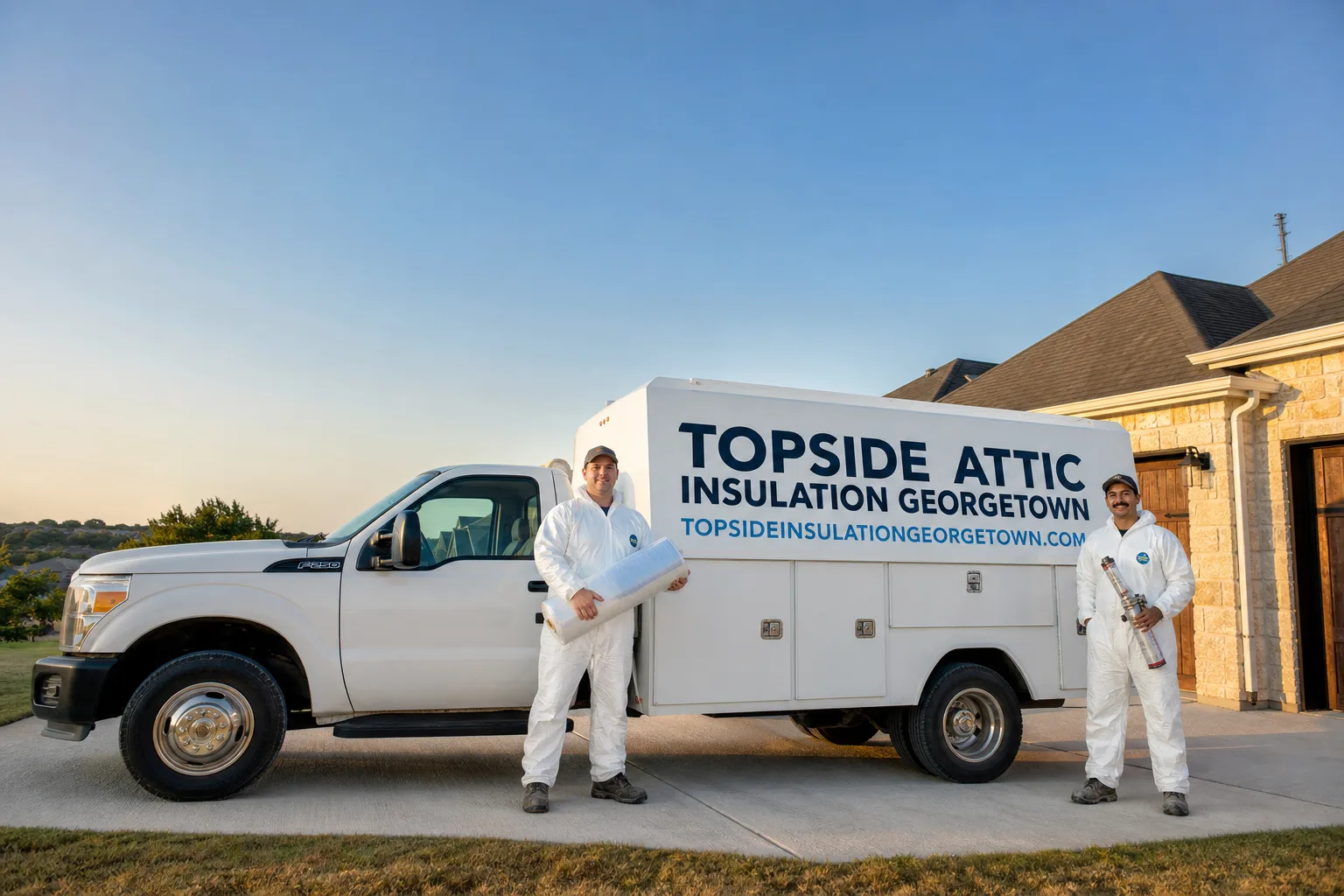
Fast, Reliable Blown-In Insulation Across Brushy Creek
Most blown-in insulation jobs in Brushy Creek run $1,800-$4,200 for a typical 2,000-2,500 sq ft two-story tract home, and our crews can usually inspect and quote within 24-48 hours. We dispatch from our Austin office and carry GreenFiber cellulose, Owens Corning fiberglass, and dense-pack equipment on every truck serving the Brushy Creek CDP. If your upstairs bonus room is running 8-10°F hotter than your downstairs living area, you’re seeing the exact failure pattern we fix weekly in the 1985-2005 subdivisions off Brushy Creek Road and Parmer Lane. Call (254) 970-2136 to schedule a free estimate with written pricing before any work starts.
Why Topside Attic Insulation Georgetown Is Brushy Creek’s Preferred Blown-In Insulation Company
We’ve sealed and insulated more than 9,000 homes since 2016, and a significant share of those have been in the Brushy Creek area where the housing stock is remarkably consistent - and so are the problems. Our Blown-In Insulation team knows the difference between a 1992 Ryland build off Great Oaks Drive and a 2004 DR Horton phase near Twin Creeks Country Club, and we know which ones have the kneewall gaps that make upstairs bedrooms unbearable in July.
Our reviews from Brushy Creek customers consistently mention two things: the crew showed up with a written price already in hand, and the before-and-after blower-door numbers proved the work. We don’t ask you to trust us - we hand you documentation. Under Haven Standard: Arrive on schedule, you get a named technician and a text when they are on the way.
Response time to Brushy Creek is typically same-day or next-day for estimates, with most blown-in jobs completed in a single day once scheduled. We coordinate dispatch from our Austin office, but the crew that arrives at your door lives and works in the northern Austin metro, not driving in from San Antonio or Houston.
Our Blown-In Insulation Services in Brushy Creek
Blown-In Cellulose
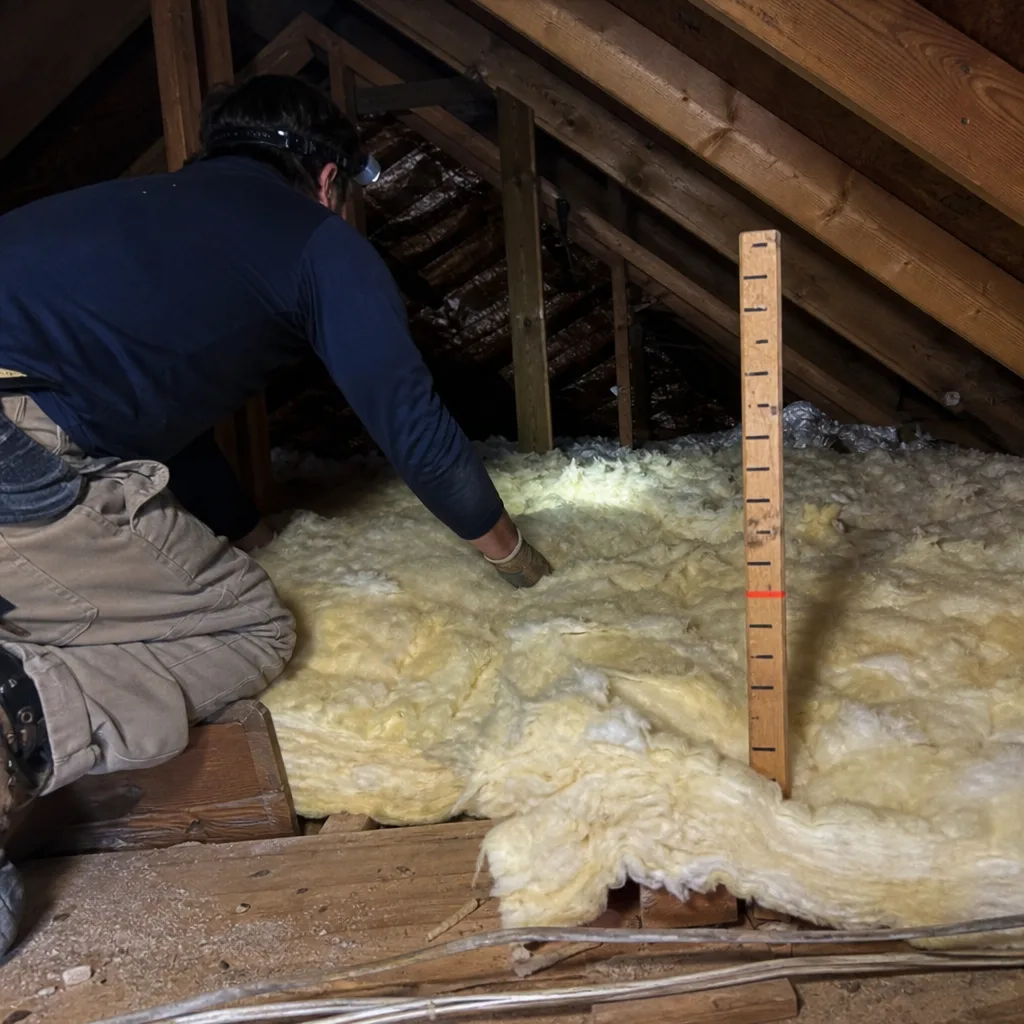
We install GreenFiber cellulose in most Brushy Creek retrofits because it performs well in our 155-165°F attic cavities and settles less than the original fiberglass it’s replacing. Cellulose also provides better resistance to air movement through the insulation layer itself, which matters in homes where the thermal bypasses at kneewalls and cantilevers have been leaking conditioned air for decades. A typical Brushy Creek two-story running 2,200 sq ft needs roughly 70-90 bags to bring a settled R-19 flat attic up to R-38 or R-49, depending on joist depth and whether we’re dense-packing the kneewalls too.
Blown-In Fiberglass
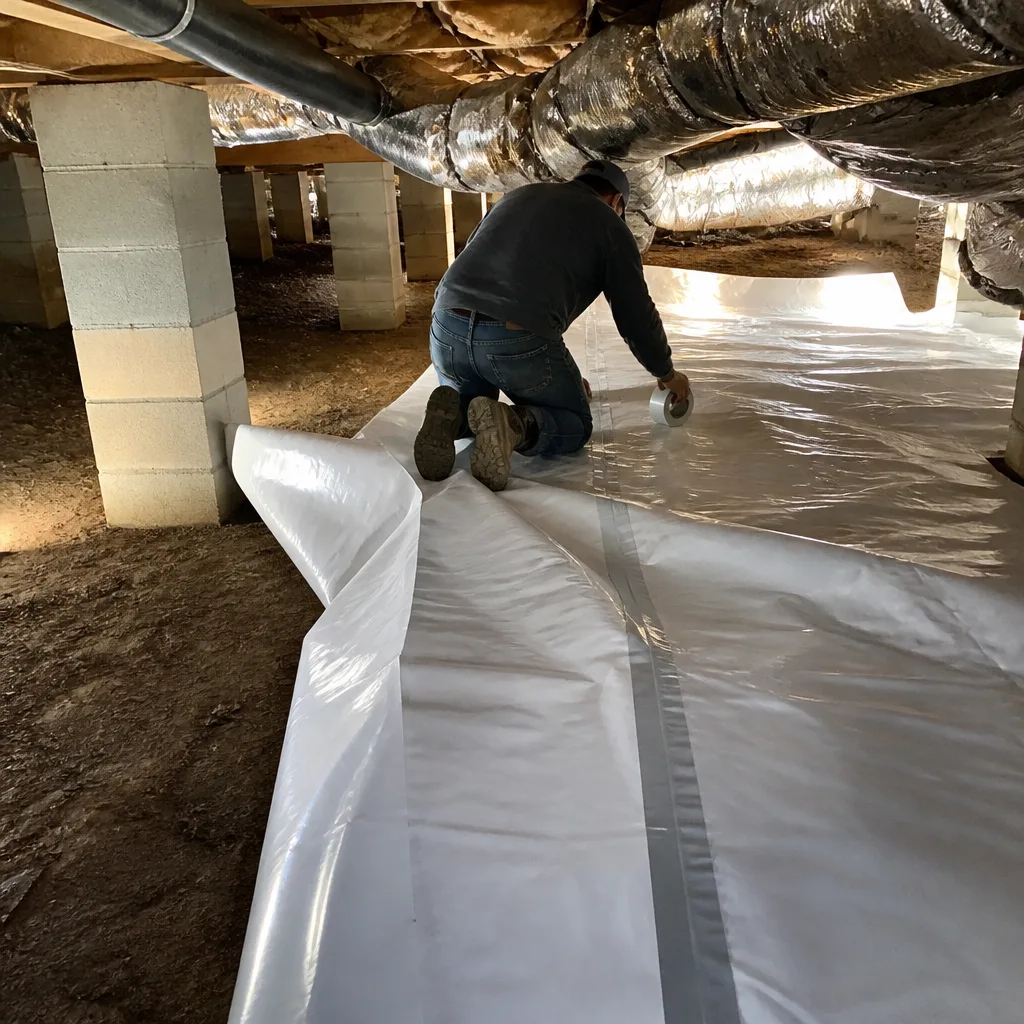
For homeowners who prefer fiberglass, we stock Owens Corning blown-in systems and can match existing material where partial top-ups make sense. In Brushy Creek’s older 1980s builds with shallow 2×6 joist bays, fiberglass sometimes wins on available thickness per inch. We don’t default to one material - we measure your joist depth, check for clearance around can lights and baffles, and specify what actually fits.
Dense-Pack Wall Insulation
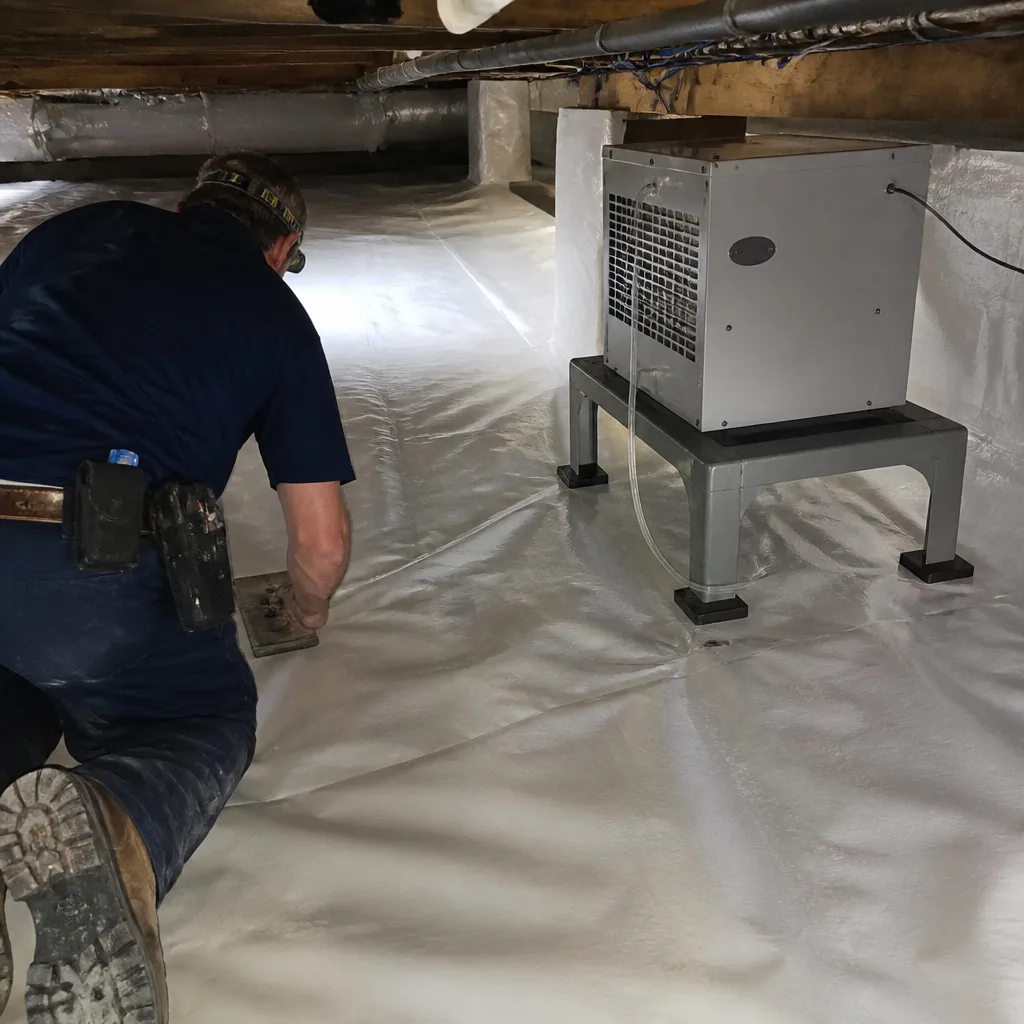
The uninsulated kneewalls in Brushy Creek’s two-story 1990s homes aren’t always accessible from the attic side. When we need to treat these from the interior, we remove a strip of drywall, dense-pack the cavity with cellulose at 3.5-4.0 lbs per cubic foot to eliminate settling and air movement, then patch and paint. This is labor-intensive work, but it’s the only way to stop attic heat from pouring into upper bedrooms through that code gap. We’ve done this exact repair on homes throughout the Brushy Creek West and Forest Creek subdivisions.
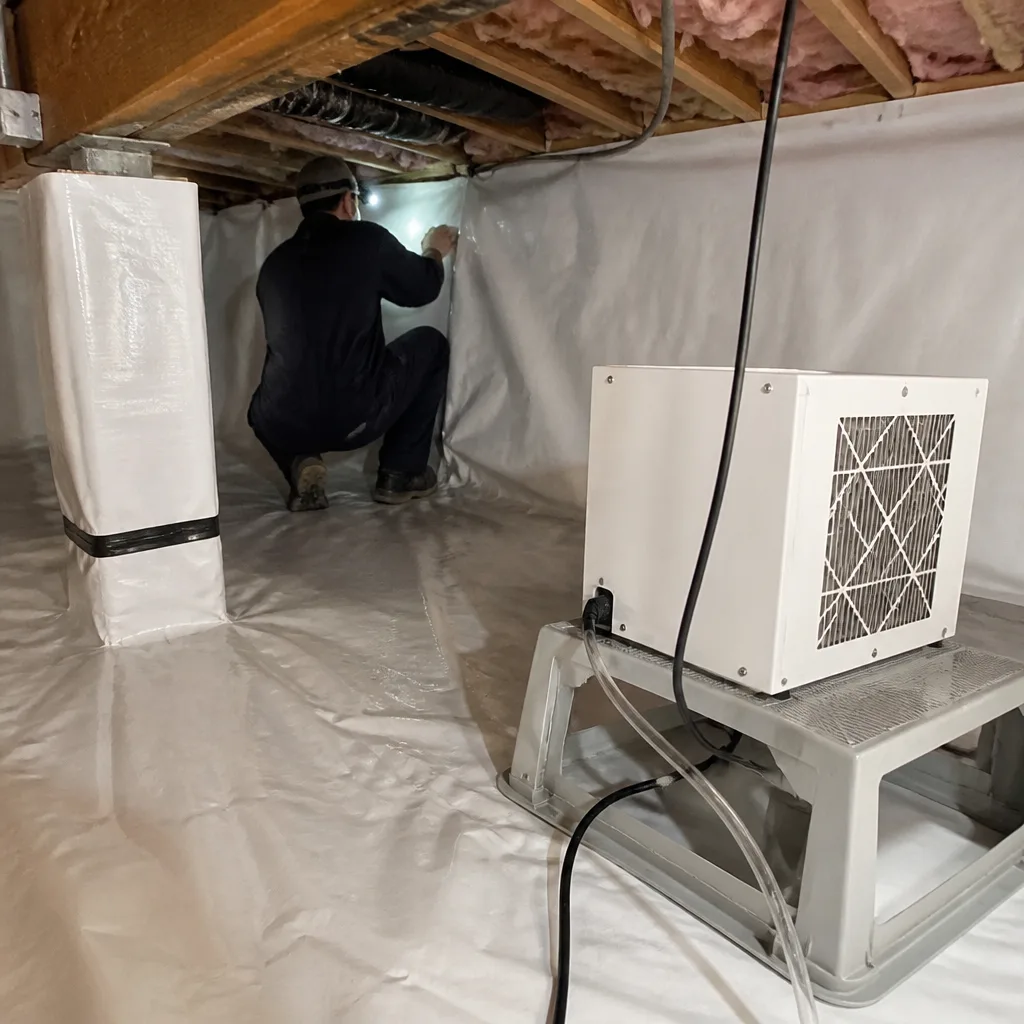
Blown-In Top-Up
Not every Brushy Creek home needs a full removal. If your original blown fiberglass is simply thin and settled but not contaminated by rodents or water, we’ll air-seal first, then blow new material over the old to reach current IRC minimums. This saves roughly 30-40% versus full removal and replacement. We only recommend this after inspecting the existing insulation - if it’s compressed, moldy, or chewed, we pull it all.
What happens when you call
- 1
A real person answersNo phone trees - you reach a local pro.
- 2
You get an upfront price rangeHonest numbers before anyone is dispatched.
- 3
A background-checked tech heads outLicensed & insured, dispatched right away.
- 4
You approve before work beginsNothing starts until you say go.
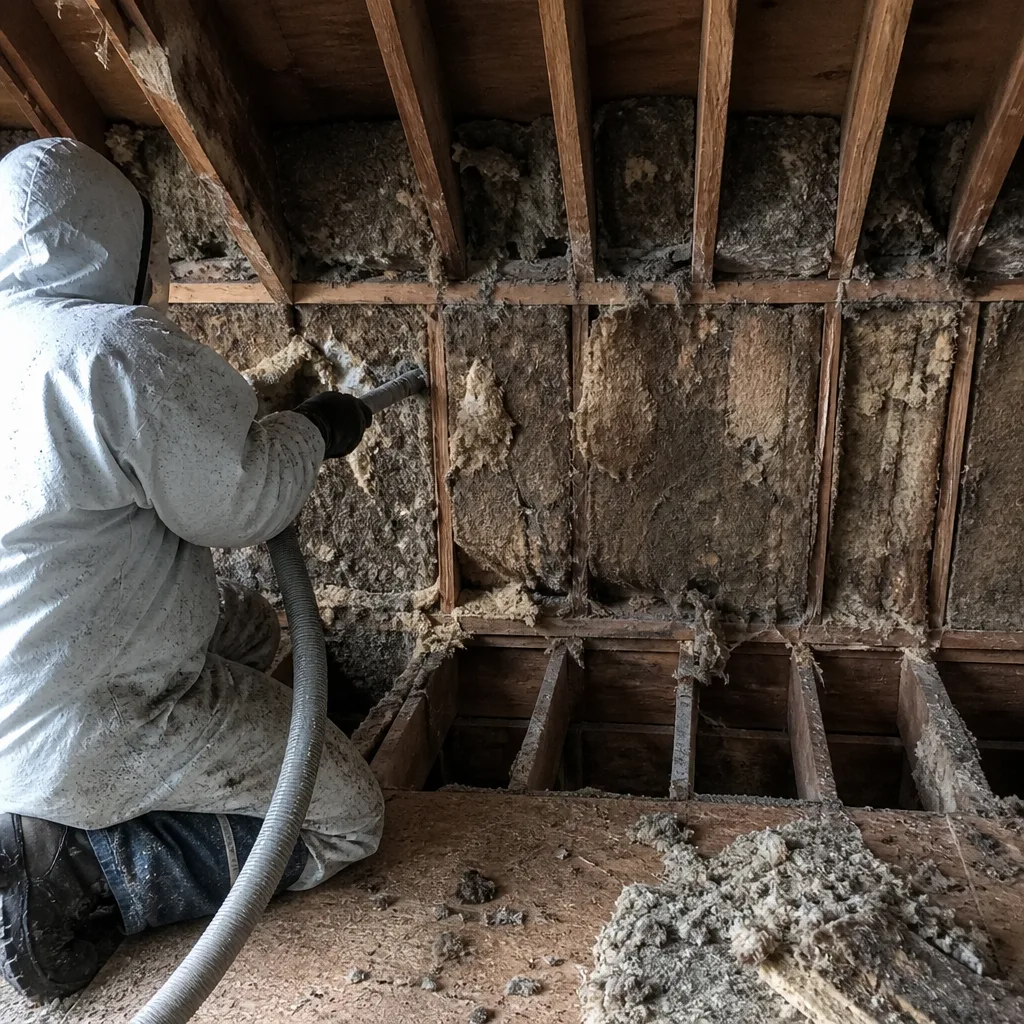 Before
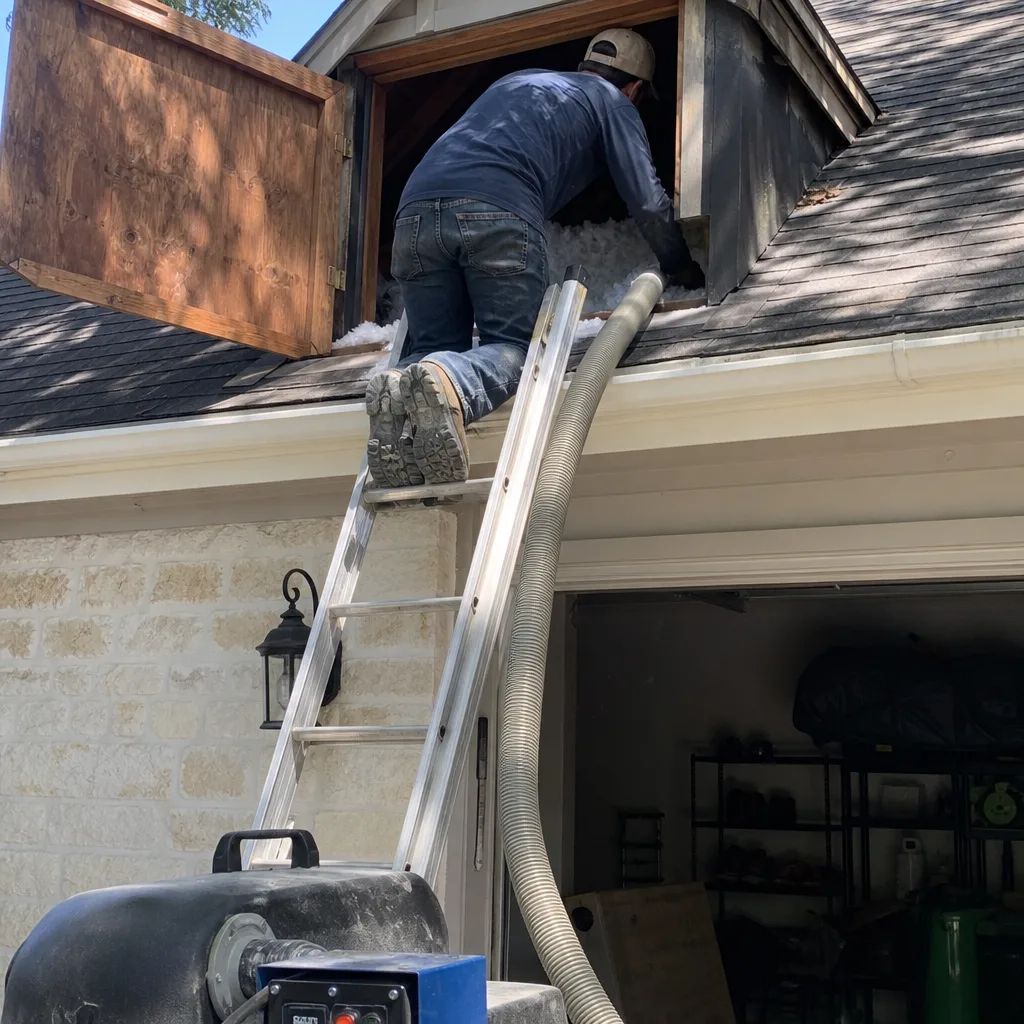 After
AfterTrusted Brands We Service in Brushy Creek
We source materials from Owens Corning, Johns Manville, Knauf, CertainTeed, Icynene, Demilec, and GreenFiber - no proprietary lock-in means we specify what performs for your specific assembly, not what our supplier needs to move. For Brushy Creek’s 1990s two-story homes with complex thermal envelopes, that often means GreenFiber cellulose for the flat attic and dense-pack kneewalls, with CertainTeed fiberglass reserved for shallow-bay situations where thickness is constrained. We carry stock for all of these on our trucks serving the Brushy Creek area, so we’re not waiting on a distributor run to Round Rock.
Common Blown-In Insulation Problems We See in Brushy Creek Homes
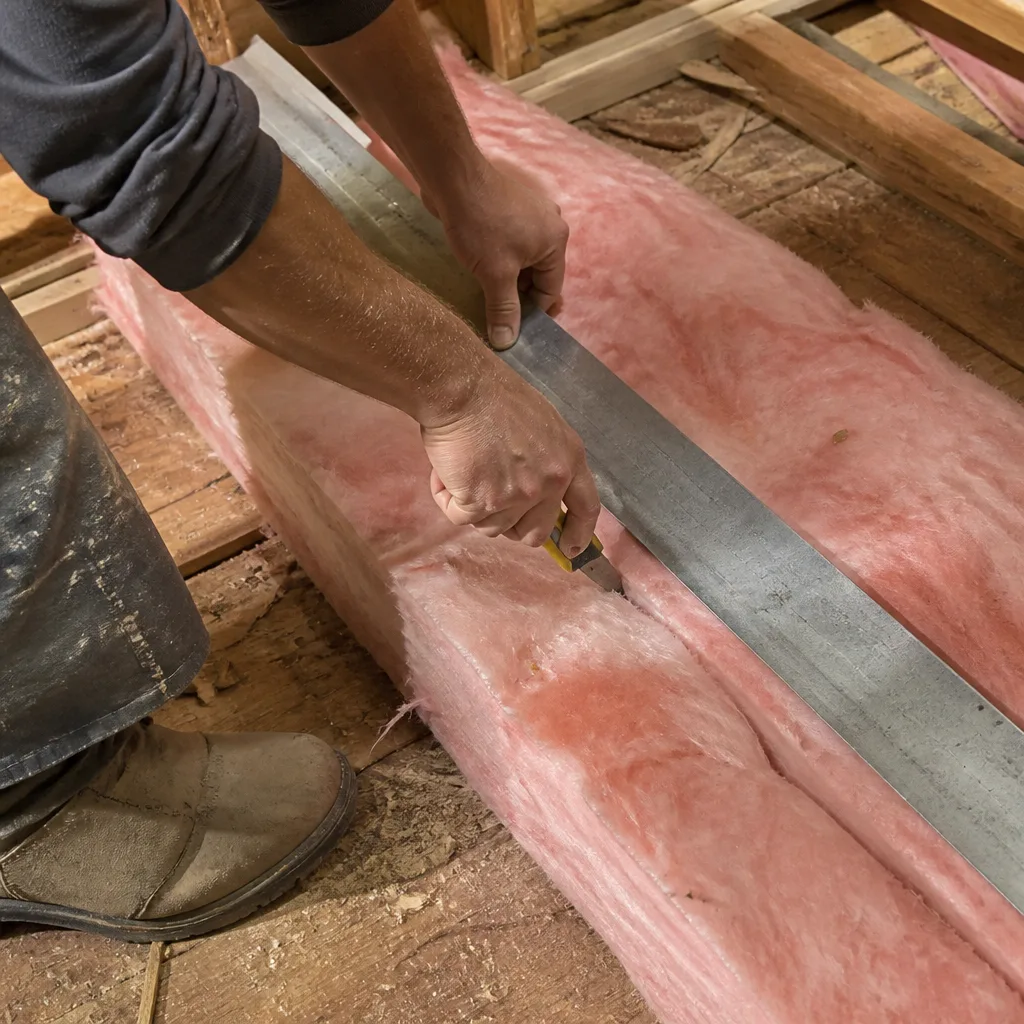
- Settled R-19 fiberglass below current code. The original blown-in or batt insulation in Brushy Creek’s 1985-2005 builds was installed to R-19 or R-22, the Texas energy code minimum of that era. After 20-35 years of settling and degradation, most of it performs at R-11 to R-15 - well below the current IRC minimum of R-38 for our climate zone. We measure this with a probe during every estimate.
- Uninsulated kneewalls baking upper bedrooms. Two-story 1990s Brushy Creek homes consistently have uninsulated or minimally insulated kneewalls where the second-floor conditioned space meets the attic. This was legal under code at the time. It’s not legal now, and it’s why your bonus room over the garage is 8-10°F hotter than the rest of the house. We find this on roughly two-thirds of the two-story homes we inspect in the CDP.
- Air-sealing failures bypassing the insulation entirely. Vaulted great rooms and bonus rooms over garages create cantilevered floor sections and complex intersections where top plates, wire penetrations, and duct chases leak conditioned air straight into the attic. The R-value on paper means nothing if the air you’re paying to cool is escaping around the insulation. Our blower-door test - a pressurization reading that shows, in one number, how much air your building envelope is losing - catches this before we blow a single bag.
- Post-Uri freeze damage and pipe protection gaps. The February 2021 Winter Storm Uri exposed how poorly Central Texas homes handle sustained cold. In Brushy Creek, we saw burst pipes in attic spaces that had adequate insulation on paper but lacked air sealing at the eaves and top plates, letting 12°F air infiltrate and freeze supply lines. That event permanently shifted local demand toward whole-envelope air sealing paired with blown-in upgrades, not just adding inches to the attic floor.
Pricing for Blown-In Insulation in Brushy Creek, TX
Here’s what blown-in insulation costs for typical Brushy Creek homes, based on jobs we’ve completed in the CDP over the past two years:
| Service | Typical Brushy Creek Range |
|---|---|
| Blown-in cellulose top-up (flat attic, 2,000-2,500 sq ft home) | $1,800-$2,800 |
| Full removal + replacement with blown cellulose to R-38/R-49 | $3,200-$4,800 |
| Kneewall dense-pack (per wall, including patch/repair) | $650-$1,100 |
| Attic air sealing + blown-in top-up package | $2,400-$3,600 |
| Cantilevered floor section treatment | $800-$1,400 |
These ranges assume standard 2×8 or 2×10 joist bays, accessible attic hatch, and no active rodent infestation requiring remediation. Vaulted ceilings, recessed can lights needing airtight covers, or HVAC equipment in the attic can add $400-$900. We provide a written price before any work starts - Haven Standard Clause 1 - and we offer a Free Second Opinion on any written estimate from another contractor. Call (254) 970-2136 for your exact quote.
We Also Serve Cities Near Brushy Creek
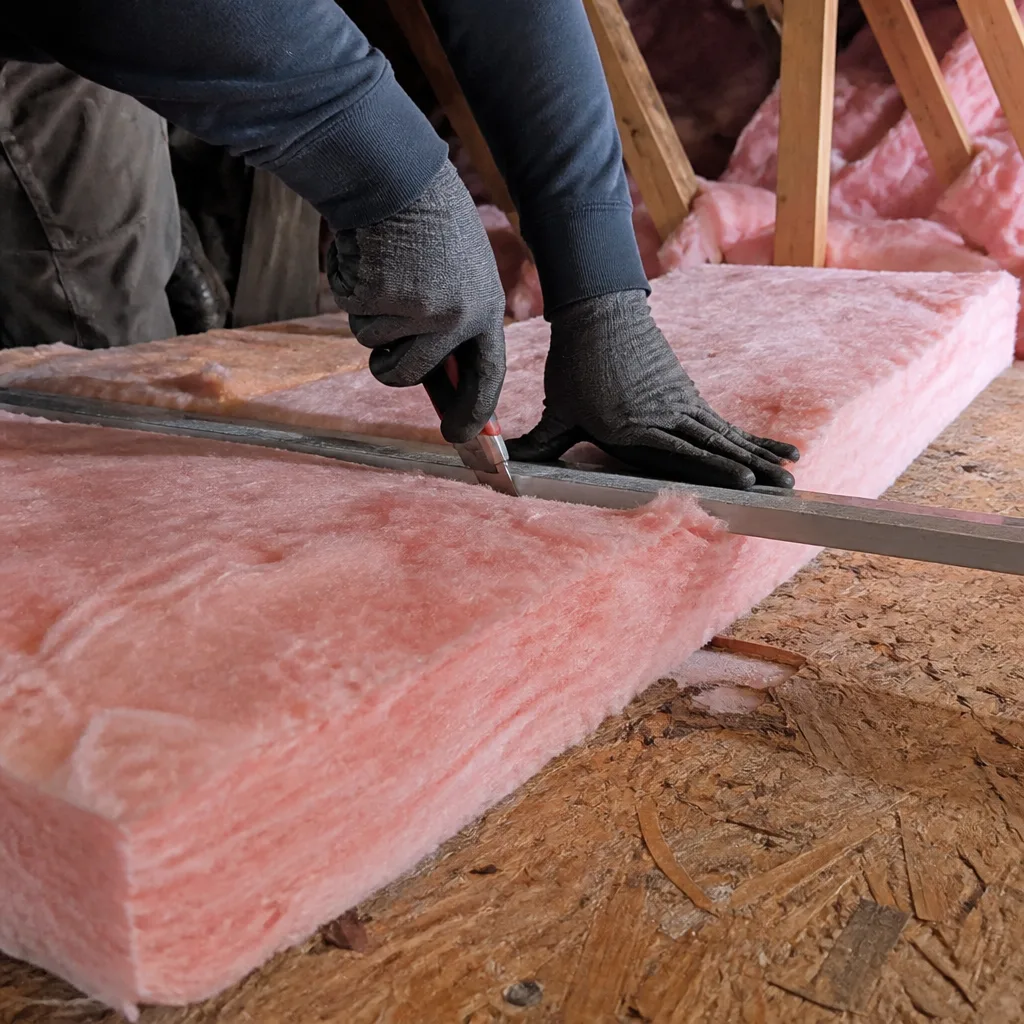
Our crews work throughout northern Williamson County and the Austin metro, including Brushy Creek, Georgetown, Round Rock, Leander, and Hutto. Dispatch and scheduling are coordinated from our Austin office, but the technician who arrives at your door knows the local building stock - whether it’s 1990s Brushy Creek tract homes, 1970s Georgetown ranch houses, or new Leander builds with spray foam already installed.
Serving Brushy Creek, TX - Our Local Coverage Area
We’re based in the Brushy Creek area and know this community well. Use the map below to see our service coverage - if you’re nearby, we can almost certainly help.
FAQs - Blown-In Insulation in Brushy Creek
No - blown-in insulation alone will not fix this, because the root cause is almost always an uninsulated kneewall where your second-floor conditioned space meets the attic, plus air leaks at the cantilevered floor over the garage. We air-seal those intersections first, then dense-pack the kneewall cavity and blow cellulose in the flat attic. In a 1990s home we treated off Forest Creek Drive, this sequence dropped the bonus room temperature delta from 9°F to 2.5°F. Call (254) 970-2136 and we’ll inspect your kneewalls during the free estimate.
We probe the existing insulation depth and condition during our estimate. If it’s simply settled and thin but not contaminated, a top-up after air sealing saves 30-40%. If it’s compressed, water-stained, or rodent-damaged, we remove it all - contaminated insulation can’t be topped off effectively. Every Brushy Creek estimate includes photos of what we found and a written recommendation with both options priced. Call (254) 970-2136 to schedule.
Yes - Uri proved that insulation without air sealing fails in sustained cold. We now prioritize whole-envelope air sealing at top plates, can lights, and penetrations before adding blown-in material, and we recommend this sequencing on every Brushy Creek job. The blower-door test we perform before and after documents the improvement. Homes we sealed and insulated post-Uri have shown 40-55% reduction in air leakage, which protects pipes in future freeze events and cuts summer cooling loads year-round.
GreenFiber cellulose, dense-packed at 3.5-4.0 lbs per cubic foot, performs best in the confined, irregular cavities typical of Brushy Creek’s vaulted great rooms and bonus rooms. It resists settling and air movement better than fiberglass in shallow or vertical applications. For very shallow 2×6 bays where R-value per inch is constrained, we may specify Owens Corning high-density fiberglass instead. We measure your actual cavity and specify - we don’t default to one product.
Most jobs in this size range run $1,800-$4,200 depending on whether we’re topping up existing material or removing and replacing, and whether kneewalls or cantilevers need treatment. A straightforward cellulose top-up to R-38 after air sealing lands near $2,400. Adding dense-packed kneewalls and a cantilevered floor over the garage pushes most homes toward $3,500-$4,200. We provide a written price before any work starts - no exceptions. Call (254) 970-2136 for your exact quote; estimates are free.
Written by Wes Okafor, Owner at Topside Attic Insulation Georgetown, serving Brushy Creek since 2016 under The Haven Standard.