
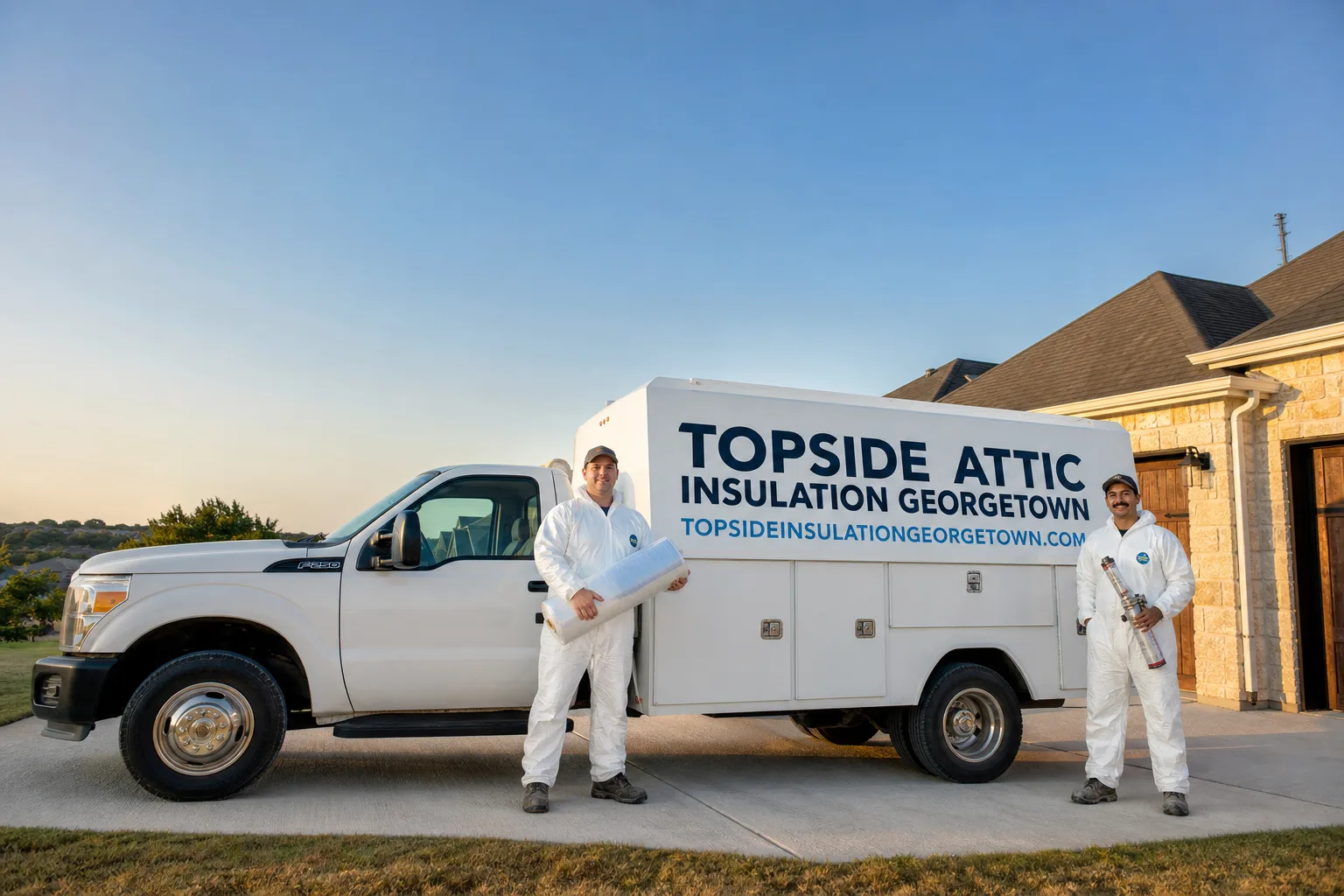
Fast, Reliable Blown-In Insulation Across Taylor
Blown-in insulation in Taylor, TX typically costs $1.80-$3.20 per square foot of attic floor, with most whole-attic jobs running $2,400-$5,800 depending on accessibility, existing material condition, and whether air sealing is needed first. We’re usually on-site in Taylor within 24-48 hours of your call, and same-day estimates are common for addresses inside the city limits. Our crews know the difference between a 1920s cotton-boom bungalow near downtown and a 2019 build off the Toll 130 corridor - and we adjust our approach accordingly. Call (254) 970-2136 to schedule your free estimate.
Why Topside Attic Insulation Georgetown Is Taylor’s Preferred Blown-In Insulation Company
We’ve sealed and insulated homes in Taylor since before Samsung announced its $17 billion fab on the eastern edge, and we’ve watched the insulation market split into two distinct tracks: new construction chasing high-performance envelopes, and legacy homes finally getting the thermal upgrades they should have received decades ago. Our Blown-In Insulation team documents every job with before-and-after blower-door numbers so you can verify the result yourself - not take our word for it.
Taylor homeowners leave reviews that mention specifics: the photo record we deliver, the written price they received before anyone touched a tool, the named technician who showed up on time. We answer calls live, 24/7, and dispatch from our Austin office so Taylor isn’t treated as a distant outpost. We know which pre-1960 pier-and-beam homes off W. 4th Street and N. Main have rim joists that need dense-pack sealing before any blown-in product goes in, because we’ve worked on those exact houses.
Our Blown-In Insulation Services in Taylor
Blown-In Cellulose
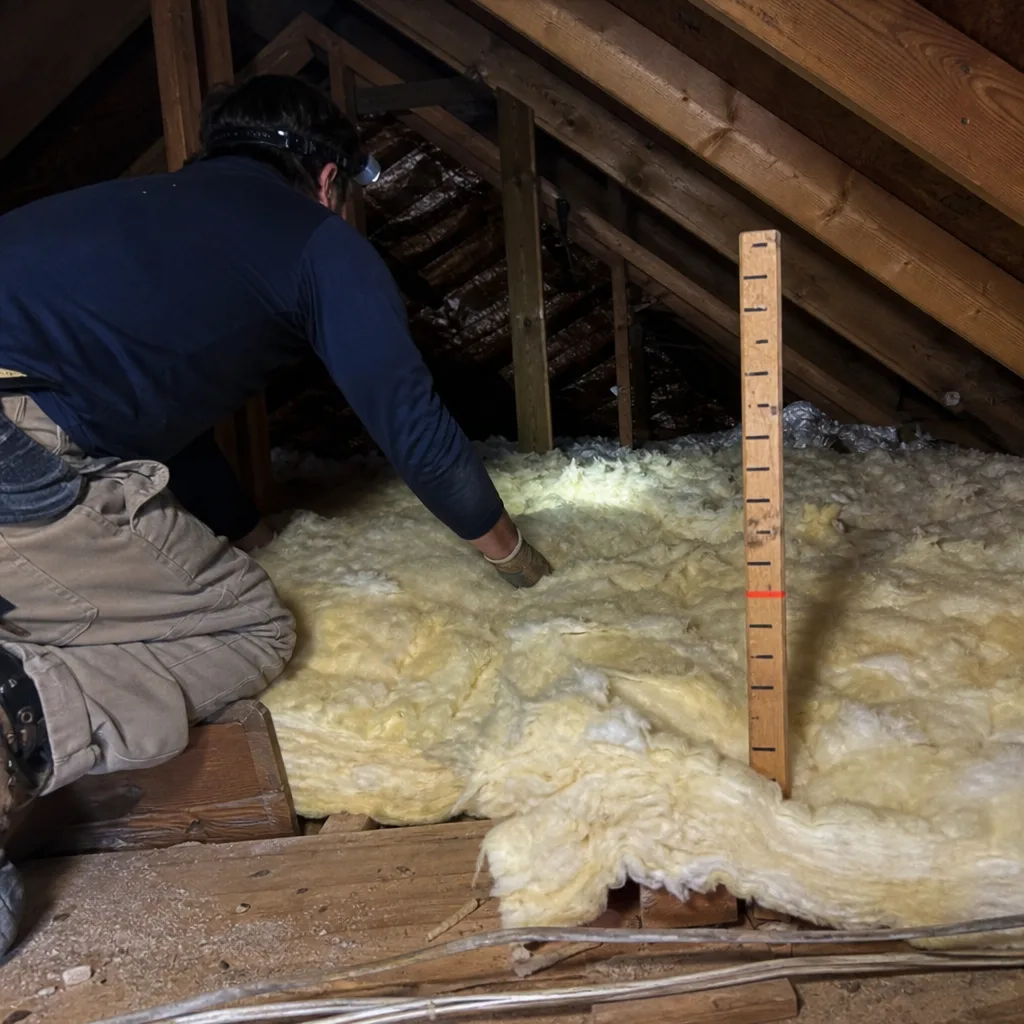
We use GreenFiber cellulose for Taylor jobs where fire resistance and sound dampening matter - the borate treatment resists pests and mold, which matters in Blackland Prairie humidity. Cellulose settles less than fiberglass over time, and we blow it to spec density, not just volume. In Taylor’s older homes with irregular joist spacing from century-old lumber, cellulose fills gaps that batts leave exposed. Most attic installations run $2.40-$3.20 per square foot installed.
Blown-In Fiberglass
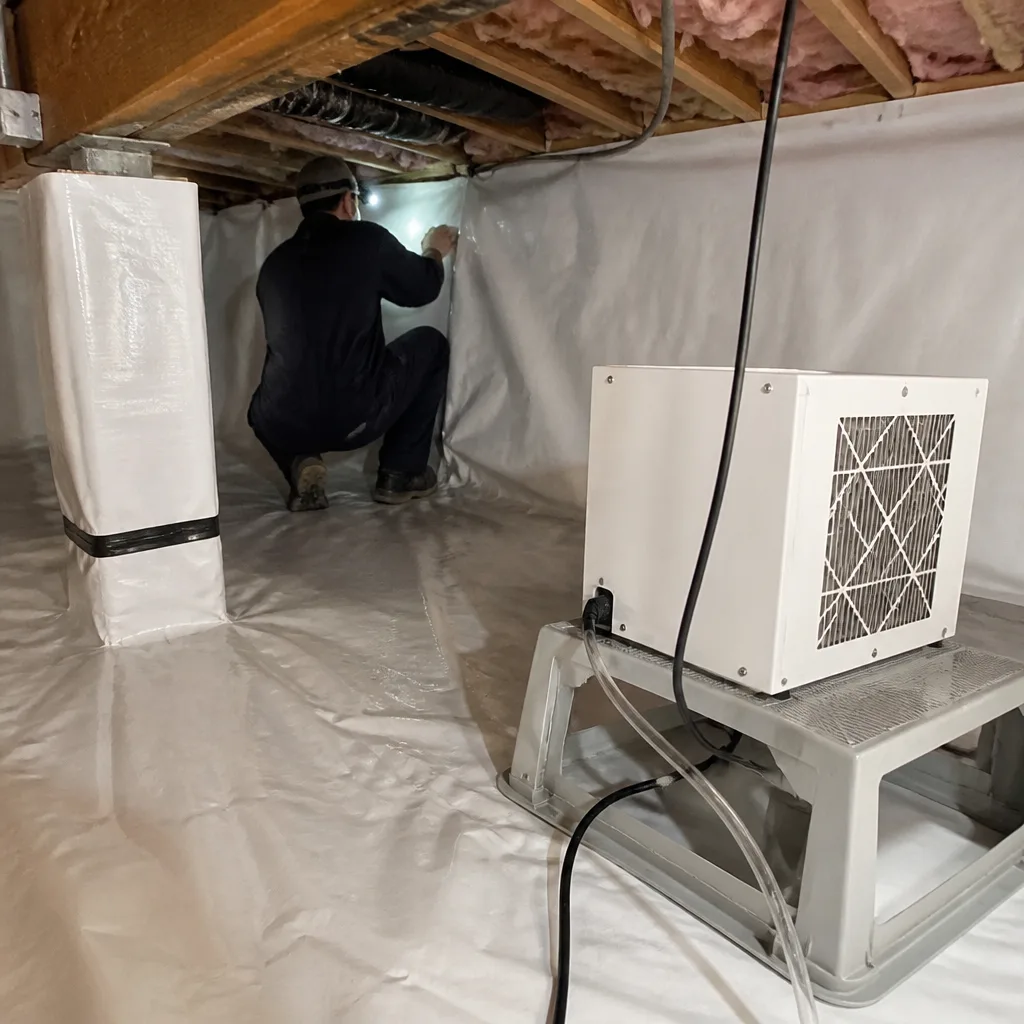
Owens Corning fiberglass works well for new Taylor construction and open attics with uniform framing. We blow to R-38 minimum for Central Texas code compliance, though many Taylor homeowners opt for R-49 given summer attic temperatures that exceed 150°F in unshaded homes. Fiberglass doesn’t absorb moisture, which is relevant for homes near the San Gabriel River floodplain with seasonal humidity spikes. Typical range: $1.80-$2.60 per square foot for attic floors.
Dense-Pack Wall Insulation
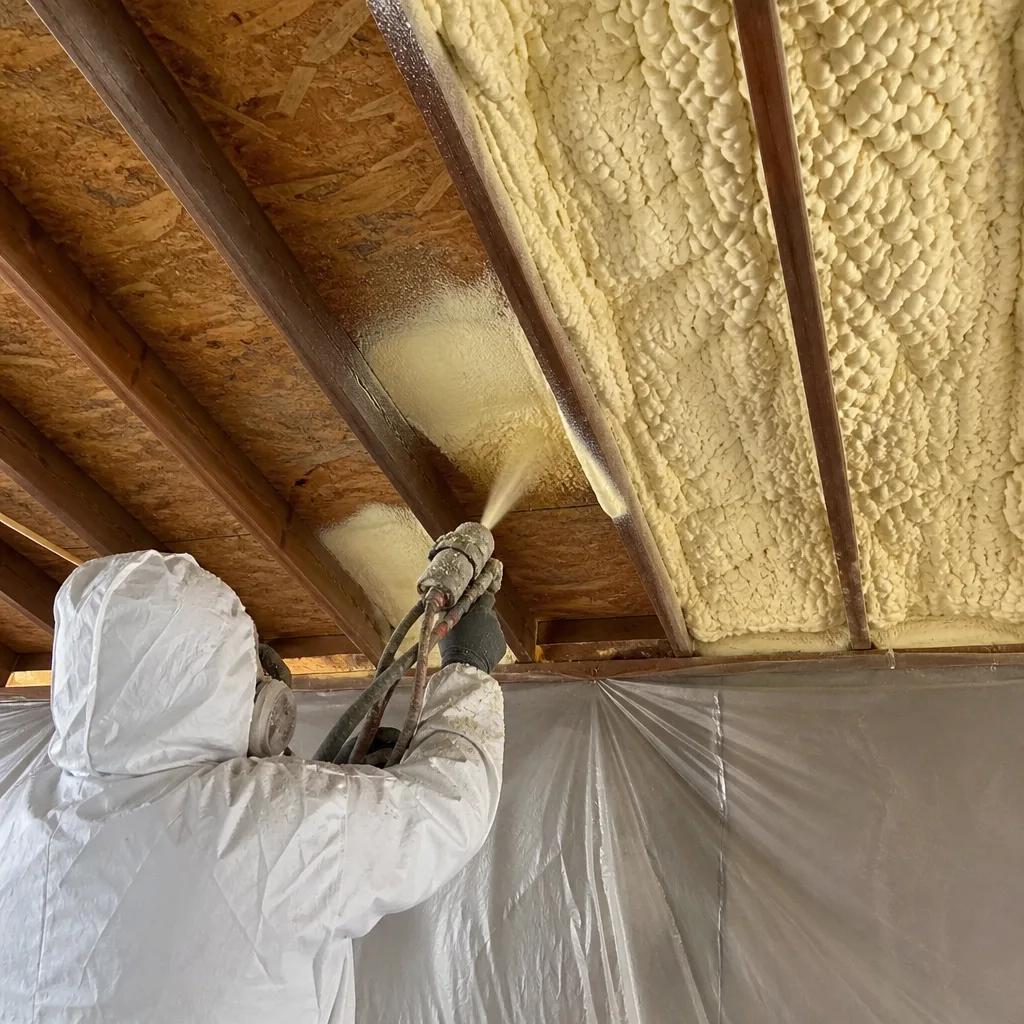
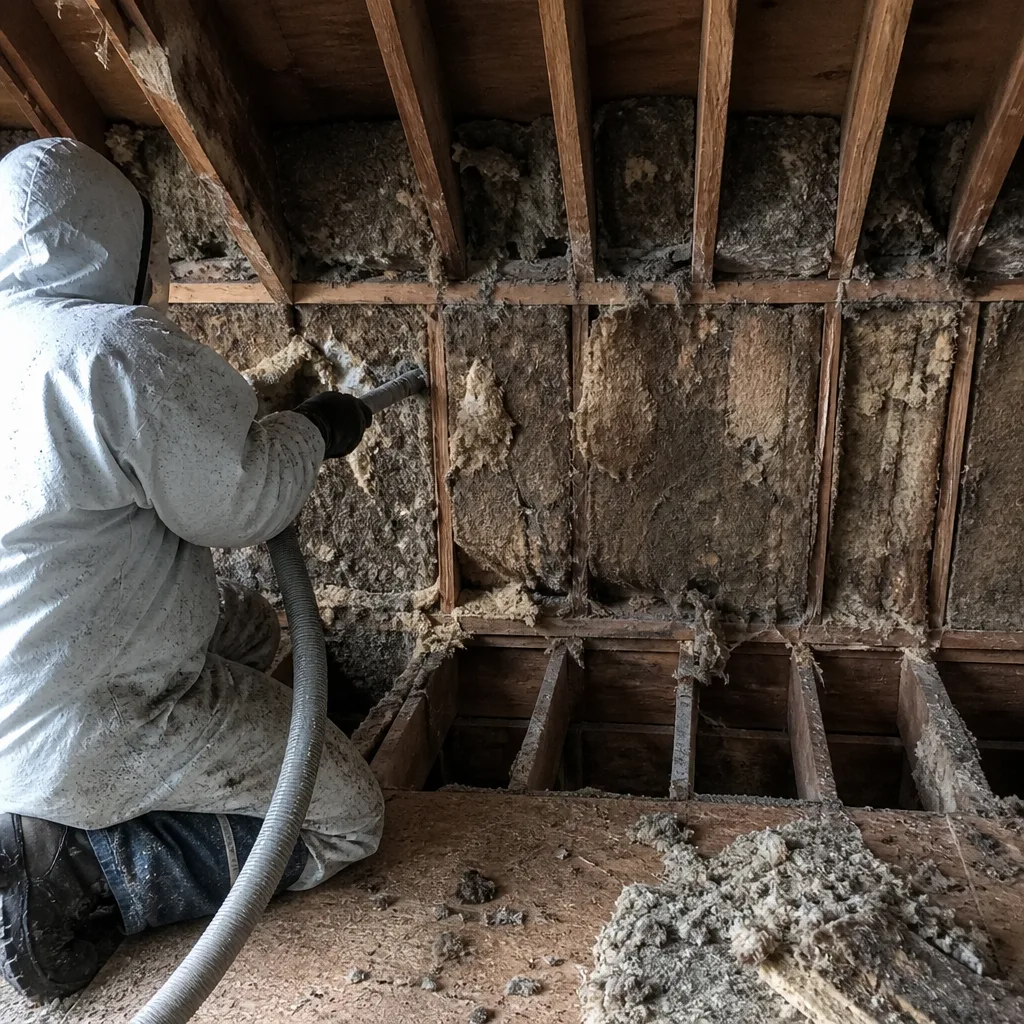
This is where Taylor’s Blackland Prairie clay becomes critical. The heavy clay beneath pre-1960 pier-and-beam homes swells in wet seasons and shrinks in drought, ratcheting open gaps at rim joists and wall plates year after year. Standard blown-in fill just leaks into these cavities. Our dense-pack method - 3.5 pounds per cubic foot minimum for cellulose - creates a self-supporting matrix that won’t settle or allow convection currents. We dense-pack wall cavities in Taylor’s 1890s-1930s core neighborhoods before any attic work, because an unsealed envelope wastes every dollar spent upstairs. Wall dense-pack runs $3.50-$5.50 per square foot of wall area, depending on cavity depth and access method.
Blown-In Top-Up
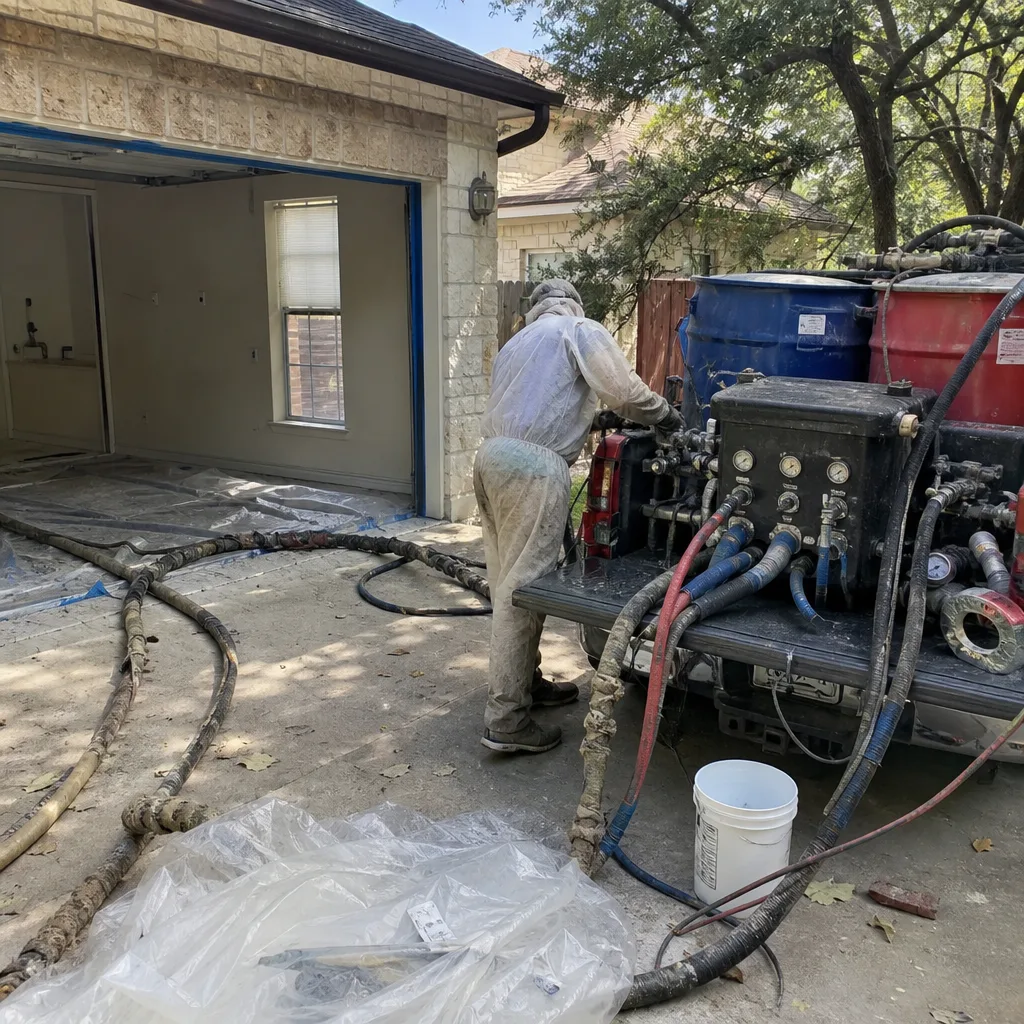
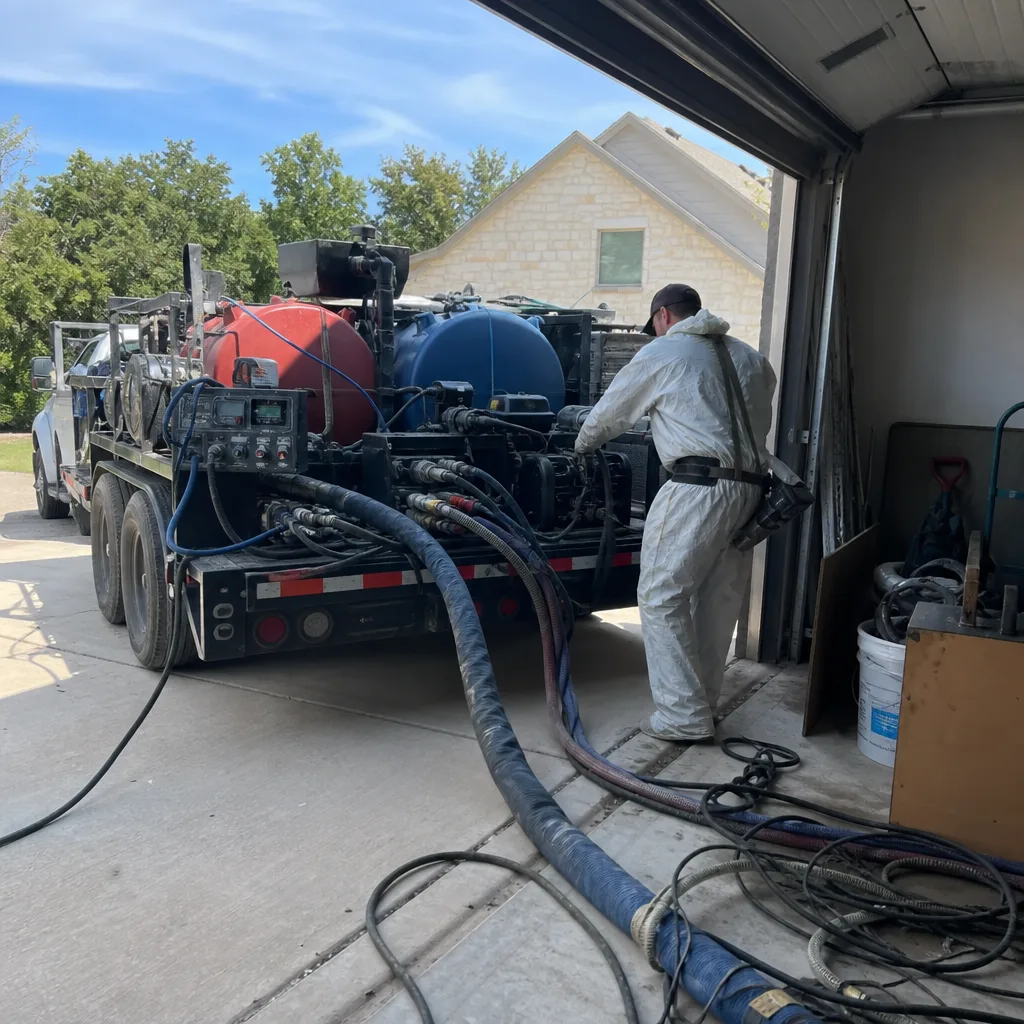
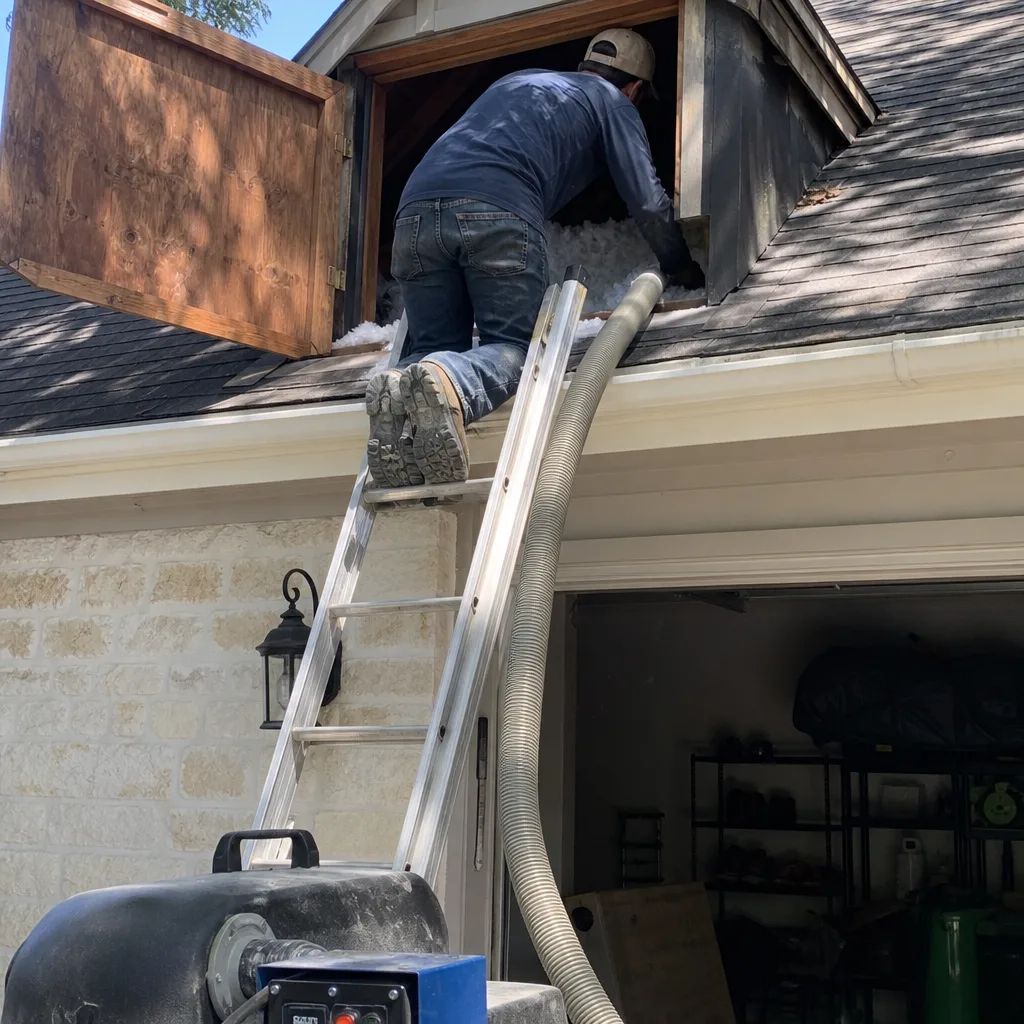
Taylor’s post-2000 subdivisions - the ones near the Toll 130 corridor and eastward - were built with builder-grade blown fiberglass that compresses and settles within 5-8 years. We see original R-30 packages performing at R-15 or below. Our top-up service tests existing depth, removes compressed or contaminated material if needed, air-seals penetrations, and blows new fill to your target R-value. A typical Taylor top-up on a 2,000-square-foot attic runs $1,800-$3,200. We blew dense-pack cellulose (GreenFiber) into the open wall cavities of a 1920s bungalow off W. 4th Street, then topped the attic to R-49 with blown fiberglass after air-sealing the top plates. The homeowner had been running window units around the clock; after the dense-pack and top-up, the back rooms held temperature through a 106°F afternoon for the first time.
What happens when you call
- 1
A real person answersNo phone trees - you reach a local pro.
- 2
You get an upfront price rangeHonest numbers before anyone is dispatched.
- 3
A background-checked tech heads outLicensed & insured, dispatched right away.
- 4
You approve before work beginsNothing starts until you say go.
 Before
 After
AfterTrusted Brands We Service in Taylor
We source blown-in materials from Owens Corning, GreenFiber, and Icynene for Taylor jobs - no proprietary lock-in that limits your options. Owens Corning fiberglass is stocked for standard attic work, GreenFiber cellulose for dense-pack and fire-rated applications, and Icynene open-cell spray foam when hybrid systems make sense. We don’t push one brand; we match the material to the assembly. For Taylor’s mix of legacy housing and new construction, that flexibility matters. Every bag is documented in your photo record, and we note manufacturer, lot, and installed depth on the written scope you receive before we start.
Common Blown-In Insulation Problems We See in Taylor Homes
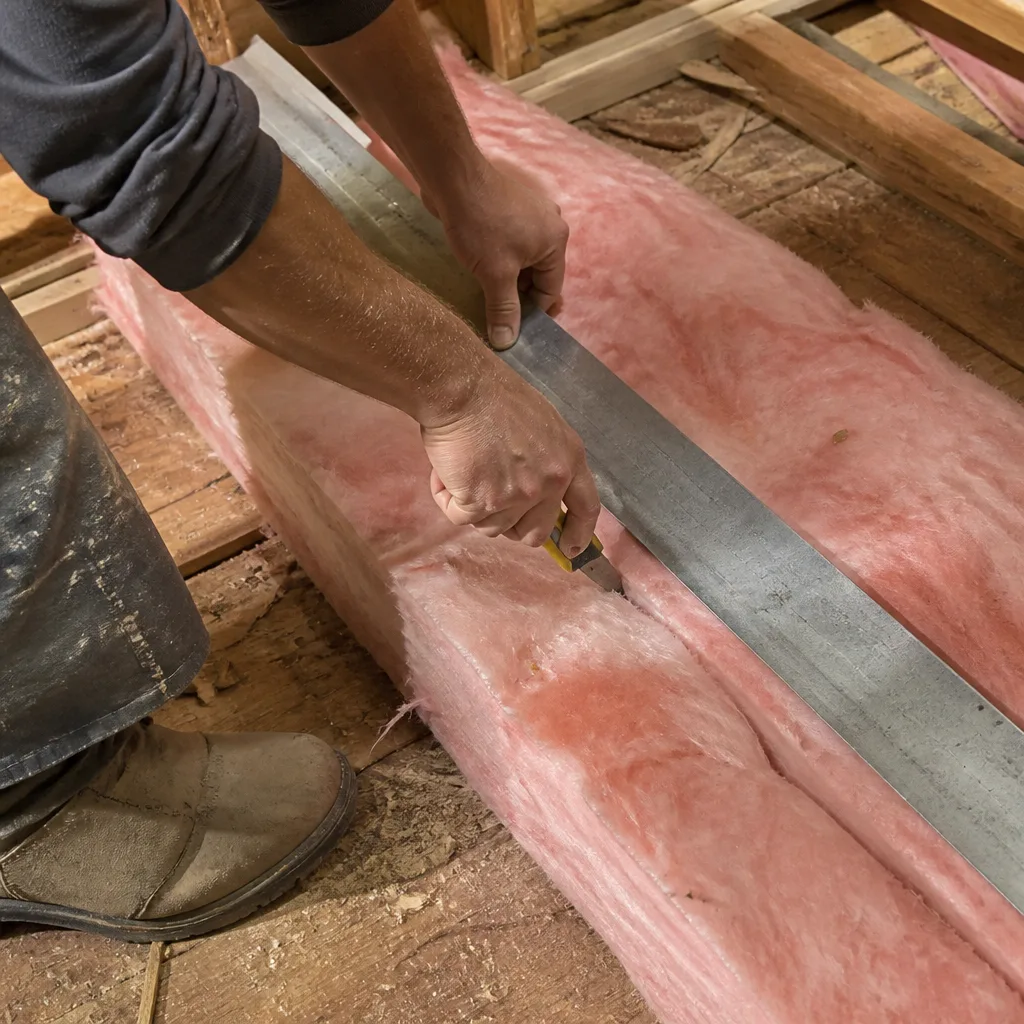
- Builder-grade blown fiberglass in post-2000 fringe subdivisions settles and compresses within a few years, dropping attic R-value well below the original package while air leaks at can lights and top plates still bleed conditioned air. We test depth with a probe and compare to manufacturer specs - most Taylor homeowners are surprised how thin the remaining layer is.
- Blackland Prairie clay movement opens seasonal gaps at rim joists and wall plates in pre-1960 cotton-era homes, so any blown-in fill without dense-pack sealing just leaks into the wall cavity. This failure mode is specific to Taylor’s soil geology and shows up far less in sandier-soil neighbors like Hutto and Georgetown.
- Older pier-and-beam crawls that sat uninsulated through Winter Storm Uri still lose heat through exposed rim joists, and a simple blown-in top-up without crawl and rim work won’t fix it. We inspect rim joist condition before recommending any attic-only solution.
- Attic air leaks sealed after insulation is installed - a sequence error we correct constantly. We never blow insulation over an unsealed attic floor; top plates, can lights, plumbing penetrations, and chimney chases get sealed first, then we blow to spec.
Pricing for Blown-In Insulation in Taylor, TX
Most blown-in attic jobs in Taylor run $2,400-$5,800 for a typical 1,800-2,800 square foot home, with dense-pack wall work adding $3,500-$7,500 depending on wall area and access. Crawl space rim-joist sealing and insulation in pre-1960 pier-and-beam homes runs $1,800-$4,200. These are installed prices with materials, labor, air sealing of accessible penetrations, and your Documented Photo Record included.
What moves the number: attic accessibility (steep pitch or limited hatch size adds labor), existing material removal (contaminated or compressed fill must come out first), and whether dense-pack wall work is needed alongside attic work. We provide a written price before any work starts - Haven Standard Clause 1 - and a Free Second Opinion on any competing written estimate you bring us. Call (254) 970-2136 for your exact number; estimates are free.
We Also Serve Cities Near Taylor
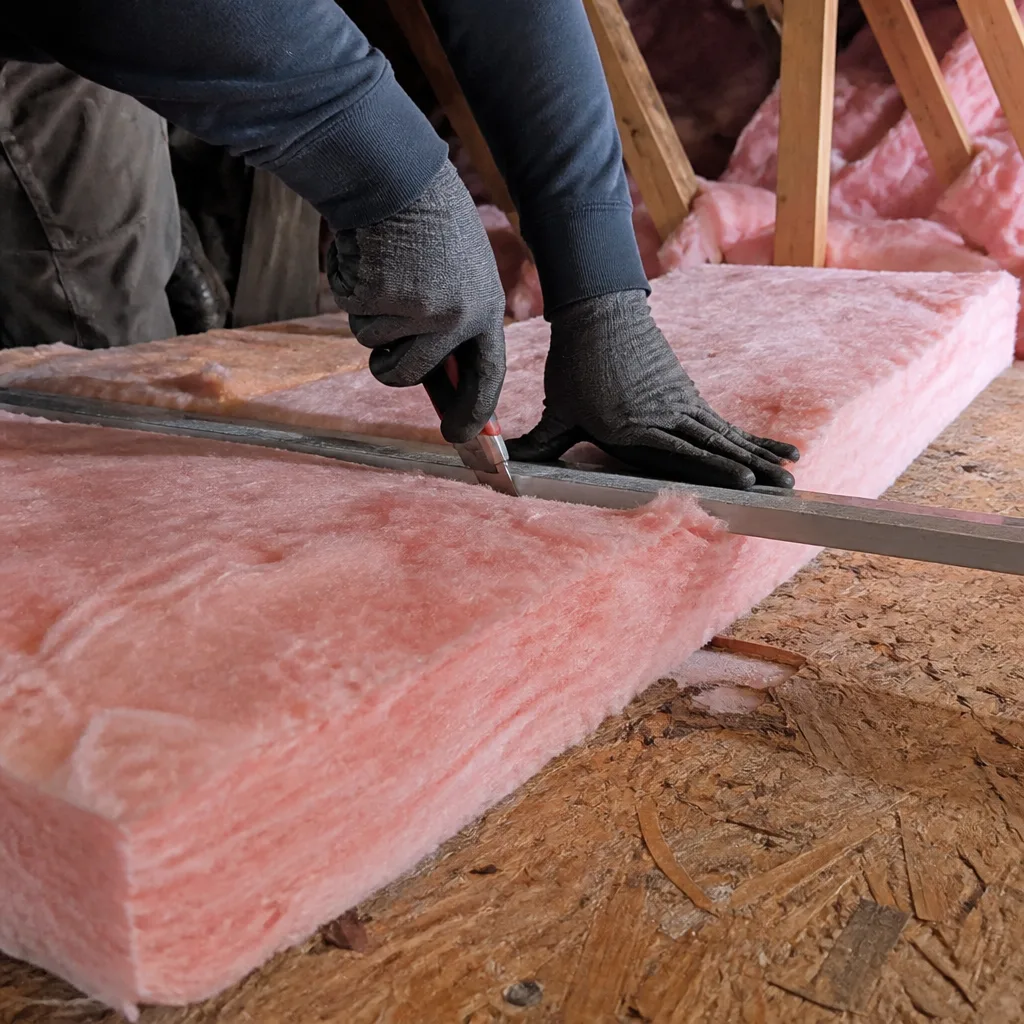
Our crews work Taylor regularly and also handle blown-in insulation calls from Hutto, Pflugerville, Round Rock, and Georgetown. Each city gets the same written-price-first protocol and photo documentation, though the building stock and failure modes differ - Georgetown’s sandier soils don’t produce the same rim-joist gaps we see in Taylor’s clay-country pier-and-beam homes.
Serving Taylor, TX - Our Local Coverage Area
We’re based in the Taylor area and know this community well. Use the map below to see our service coverage - if you’re nearby, we can almost certainly help.
FAQs - Blown-In Insulation in Taylor
The Blackland Prairie clay beneath Taylor shrinks and swells dramatically with rainfall, opening gaps at rim joists and wall plates that allow convection currents inside wall cavities - this mechanical movement degrades insulation performance faster than in Hutto’s sandier, more stable soils. Dense-pack installation at proper density resists this settling. Call (254) 970-2136 and we’ll test your wall cavity density with a borescope; estimates are free.
Yes, if the existing material isn’t contaminated and the attic floor has been air-sealed first; most post-2000 Taylor builds we inspect have compressed original fill performing at half its rated R-value, and a top-up to R-38 or R-49 after sealing penetrations typically cuts cooling load by 15-25%. We probe-test depth before recommending anything. Call (254) 970-2136 for a free assessment.
It works when the wall cavities are accessible and the rim joists are sealed first; we’ve dense-packed dozens of Taylor bungalows and shotgun houses, though balloon-framed walls and knob-and-tube wiring require modified access methods. We inspect with a borescope before committing to the approach. Call (254) 970-2136 to schedule a wall cavity evaluation.
Uri exposed that hundreds of Taylor’s older pier-and-beam homes had zero insulation at rim joists and crawl spaces, leading to frozen pipes and catastrophic heat loss; homeowners who added blown-in attic insulation after 2021 without addressing crawl and rim work still have the same vulnerability. We inspect the full envelope, not just the attic. Call (254) 970-2136 for a whole-home assessment.
We stock Owens Corning fiberglass, GreenFiber cellulose, and can source Icynene open-cell spray foam for hybrid systems; no single brand is pushed, and your photo record documents exactly what was installed. Call (254) 970-2136 to discuss which material fits your specific assembly.
Written by Wes Okafor, Owner at Topside Attic Insulation Georgetown, serving Taylor since 2016 under The Haven Standard.